Elbow Pain: Possible Causes and When to Seek Care

Elbow pain can come from tendons, muscles, ligaments, bones, nerves, or the joint itself. Overuse conditions such as tennis elbow and golfer’s elbow are frequent causes.
Key Takeaways
- Elbow pain can come from tendons, muscles, ligaments, bones, nerves, or the joint itself.
- Overuse conditions such as tennis elbow and golfer’s elbow are frequent causes.
- Sudden pain after a fall, deformity, numbness, fever, or inability to move the elbow needs prompt medical attention.
- Diagnosis is based on symptoms, physical examination, and sometimes imaging or lab tests.
- Treatment depends on the cause and may include rest, physiotherapy, medications, bracing, injections, or surgery.
Elbow pain is a common symptom that is often related to overuse, tendon irritation, joint inflammation, or injury. Many cases improve with rest and activity changes, but persistent pain, swelling, weakness, or limited movement should be assessed by a doctor.
Overview: What Elbow Pain Can Mean
Elbow pain is not a diagnosis by itself. It is a symptom that can start in the tendons, muscles, ligaments, bones, cartilage, nerves, or the elbow joint lining. In many people, it is linked to repeated arm movements, sports, manual work, or everyday habits such as prolonged gripping, lifting, or typing with poor arm support.
The location and pattern of pain often give useful clues. Pain on the outer part of the elbow is commonly related to tendon overload, while pain on the inner side may be linked to a different tendon group. Pain deep inside the joint can point to arthritis, inflammation, or an injury inside the joint. Tingling or numbness can suggest nerve involvement rather than a tendon problem alone.
Some cases improve with simple self-care, especially when symptoms follow overuse and there is no major injury. However, elbow pain that is severe, persistent, associated with swelling, loss of motion, weakness, or symptoms in the hand should be assessed by a qualified clinician to identify the cause and guide the right treatment.
Common Symptoms That May Come With Elbow Pain
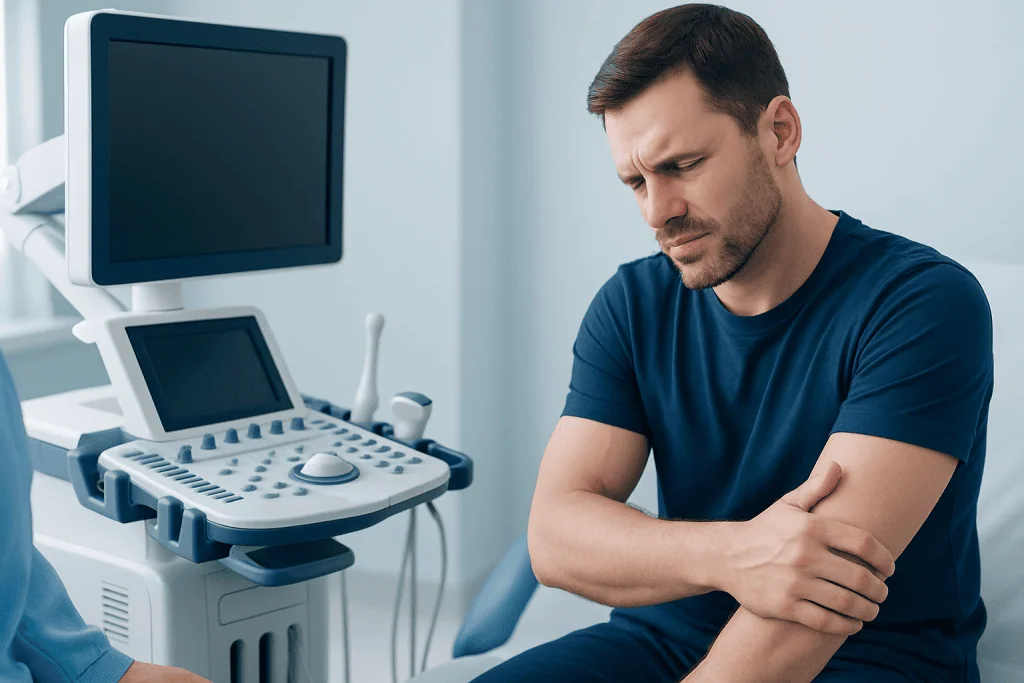
Elbow pain can feel sharp, aching, burning, or throbbing. It may happen only during activity, such as lifting a kettle, turning a doorknob, shaking hands, or playing a racket sport. In other cases, the elbow may hurt even at rest or during the night, which can suggest a more advanced overuse condition, significant inflammation, or a different underlying problem.
Other symptoms may help narrow down the cause. These include tenderness at a specific point, stiffness, clicking, reduced grip strength, swelling, redness, warmth, or difficulty fully bending and straightening the arm. Some people notice that tasks involving wrist movement worsen the discomfort because the forearm tendons attach around the elbow.
If the pain is linked to nerve irritation, symptoms may include tingling, numbness, or a “pins and needles” feeling in the forearm, ring finger, or little finger. Weakness in the hand can also occur. These symptoms should not be ignored, as they may need a different evaluation and treatment plan than a simple tendon strain.
- Outer elbow pain: often related to tennis elbow
- Inner elbow pain: often related to golfer’s elbow or strain
- Back of the elbow pain: can be linked to bursitis or pressure irritation
- Deep joint pain: may suggest arthritis, cartilage problems, or injury
- Pain with numbness: may point to nerve compression
Possible Causes of Elbow Pain
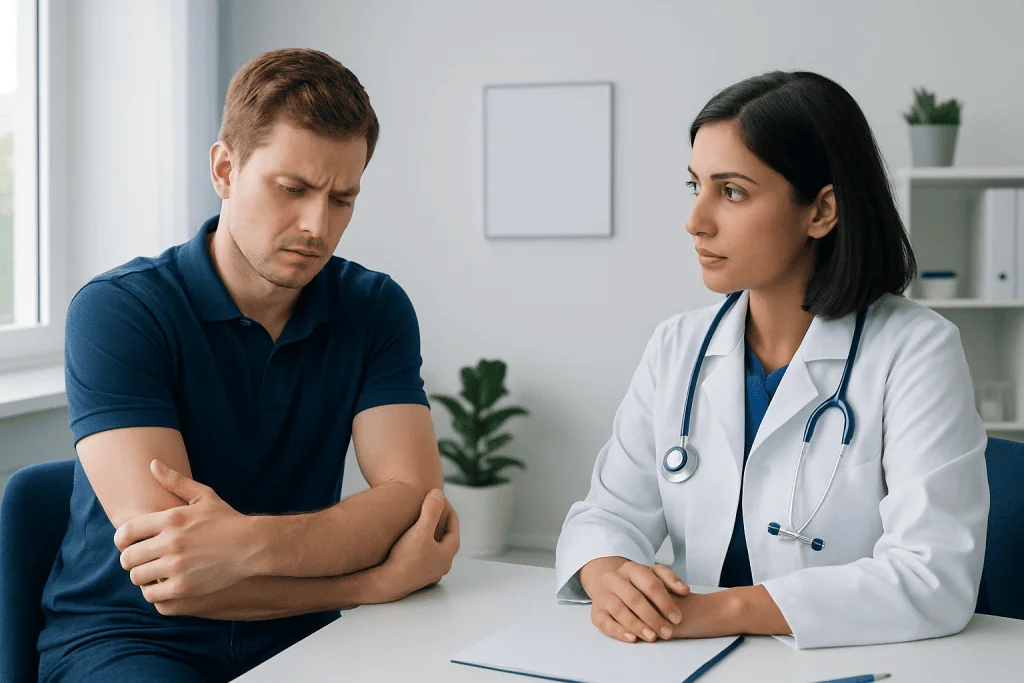
One of the most common causes of elbow pain is overuse of the tendons that help move the wrist and hand. Repeated gripping, lifting, tool use, racquet sports, and some desk-based activities can lead to irritation where tendons attach to the elbow. This often causes tennis elbow, which affects the outer elbow, or golfer’s elbow, which affects the inner elbow. Despite the names, these conditions do not only affect athletes.
Injuries are another important cause. A fall onto the hand or elbow can strain ligaments, bruise soft tissues, dislocate the joint, or cause a fracture. Pain may begin suddenly, and swelling or bruising may develop quickly. Less obvious injuries, such as small cartilage damage or repetitive stress injury, can also lead to persistent symptoms over time.
Joint conditions may also cause elbow pain. These include osteoarthritis, inflammatory arthritis, bursitis, gout, or infection. Arthritis often causes stiffness and aching, while bursitis usually leads to swelling over the tip of the elbow. Nerve-related causes, such as ulnar nerve compression near the elbow, can create pain along with numbness or tingling into the hand.
Sometimes elbow pain is referred from another area. A problem in the neck, shoulder, or upper back can occasionally be felt around the elbow. Because of this, a careful medical history and examination are important, especially when symptoms do not match a typical overuse pattern.
Risk Factors and Everyday Triggers
Elbow pain becomes more likely when the arm is exposed to repeated stress without enough recovery. Jobs that involve forceful gripping, repetitive wrist extension, carrying loads, or frequent twisting of the forearm can increase strain on the tendons and muscles around the elbow. Similar patterns can happen during home activities such as gardening, painting, DIY work, and carrying children.
Sporting activities can also contribute, especially when technique, training volume, or equipment place extra pressure on the elbow. Tennis, golf, throwing sports, climbing, rowing, and weight training are common examples. Sudden changes in activity level, poor warm-up, and returning to sport too quickly after time away can all increase the chance of symptoms.
Age-related tendon changes, reduced flexibility, muscle imbalance, previous elbow injury, and inflammatory joint disease can also raise risk. In some people, workstation setup and posture play a role, particularly if the forearm is unsupported or the wrist is held in a strained position for long periods. Identifying and modifying these triggers is often a key part of lasting recovery.
How Doctors Diagnose the Cause
Diagnosis begins with a detailed discussion of symptoms. A doctor will usually ask where the pain is felt, when it started, whether it followed an injury, which movements make it worse, and whether there are any associated symptoms such as swelling, fever, numbness, or weakness. Information about work, hobbies, sports, and past medical conditions can also be very helpful.
The physical examination often gives important answers. The doctor may check for tenderness, swelling, warmth, bruising, range of motion, joint stability, grip strength, and signs of nerve irritation. Specific movement tests can help identify tendon-related pain patterns or point toward ligament, joint, or nerve problems.
Imaging is not always needed for mild overuse symptoms, but it may be recommended when the diagnosis is unclear or an injury is suspected. X-rays can help show fractures, arthritis, or joint changes. Ultrasound and MRI can assess tendons, ligaments, bursae, cartilage, and soft tissues in more detail. If infection, inflammatory arthritis, or gout is a concern, blood tests or joint fluid analysis may be needed. In some cases, MRI scanning helps clarify the source of ongoing pain when symptoms do not improve as expected.
Treatment Options for Elbow Pain
Treatment depends on the underlying cause, the severity of symptoms, and how long the problem has been present. Many mild to moderate cases improve with a combination of rest from aggravating activities, temporary activity modification, ice, and simple pain-relieving or anti-inflammatory medicines if these are appropriate for the individual. Short-term use of a brace or support may also help reduce strain in selected cases.
Physiotherapy is often a central part of recovery, especially for tendon-related elbow pain. A tailored program may include stretching, strengthening, movement retraining, posture advice, and guidance on gradual return to sport or work. For persistent overuse injuries, supervised rehabilitation is often more helpful than rest alone. Depending on the diagnosis, a doctor may recommend physical therapy and rehabilitation to improve strength, flexibility, and function.
When symptoms continue despite conservative care, additional treatments may be considered. These can include targeted injections, treatment of an underlying inflammatory condition, aspiration of a swollen bursa in selected cases, or management of nerve compression. If pain is severe after trauma, there is significant instability, or imaging shows structural damage, orthopedic evaluation becomes important.
Surgery is not needed for most people, but it can be appropriate for certain fractures, tendon tears, ligament injuries, joint instability, or symptoms that do not improve with well-planned non-surgical treatment. In carefully selected situations, orthopedic surgery may be used to repair damaged structures or treat chronic conditions affecting elbow function.
Self-Care, Prevention, and Recovery Habits
For overuse-related elbow pain, early self-care can make a meaningful difference. Reducing or pausing the activity that triggers pain allows irritated tissues to settle. It is often better to modify the load rather than stop all arm use completely. Using the arm within a comfortable range, while avoiding repetitive strain, can help maintain mobility as recovery begins.
Prevention focuses on reducing stress on the elbow and improving how the arm handles load. Warming up before exercise, increasing training gradually, using correct sports technique, and choosing equipment that suits the individual can all help. At work or home, taking regular breaks, improving ergonomics, varying tasks, and avoiding prolonged gripping are practical steps.
Strength and flexibility in the shoulder, forearm, wrist, and hand also matter because the elbow works as part of a connected chain. A physiotherapist can guide exercises that support recovery and reduce recurrence. If elbow pain is related to a broader joint condition such as arthritis, managing the underlying disease is equally important.
Near the end of the care pathway, some people benefit from specialist assessment in a multidisciplinary setting, particularly if symptoms are ongoing or the diagnosis is uncertain. Acibadem International’s multidisciplinary specialists in JCI-accredited hospitals diagnose and treat musculoskeletal conditions for international patients, including cases involving persistent elbow pain.
When to Seek Medical Care
Medical assessment is advisable if elbow pain lasts more than a few days to weeks, keeps returning, or interferes with work, exercise, sleep, or daily tasks. Pain that steadily worsens instead of improving should also be checked. This is especially true when there is reduced range of motion, weakness, repeated locking or clicking, or concerns about nerve symptoms.
Prompt medical care is important after a significant fall or direct blow, particularly if there is marked swelling, deformity, severe pain, inability to move the elbow, or concern for fracture or dislocation. Urgent assessment is also needed if the elbow is red, hot, and swollen, or if pain is accompanied by fever, as this can suggest infection or significant inflammation.
Numbness, tingling, hand weakness, or symptoms spreading down the forearm should not be ignored. These may indicate nerve compression that needs evaluation. A doctor can determine whether the problem is likely to improve with conservative measures or whether imaging, specialist referral, or a more targeted treatment plan is needed.
Frequently asked questions
What is the most common cause of elbow pain?
A common cause of elbow pain is tendon overload from repeated gripping, lifting, or wrist movement. This often leads to outer or inner elbow tendinopathy, including tennis elbow or golfer’s elbow.
Can elbow pain go away on its own?
Yes, mild elbow pain from overuse or minor strain may improve with rest, activity changes, and gradual return to normal use. If pain persists, keeps coming back, or affects strength and movement, a medical assessment is a good idea.
How do I know if elbow pain is serious?
Elbow pain may need prompt evaluation if it follows a fall or injury, causes severe swelling, deformity, fever, numbness, or major loss of motion. Persistent pain that interferes with daily activities also deserves medical attention even if it does not feel severe.
Is elbow pain always tennis elbow?
No. Although tennis elbow is a frequent cause of pain on the outer elbow, many other conditions can cause similar symptoms. These include ligament sprains, arthritis, bursitis, nerve compression, fractures, and pain referred from the neck or shoulder.
What treatments help elbow pain most?
The best treatment depends on the cause. Common approaches include temporary rest from aggravating activities, ice, simple medicines when appropriate, bracing, and physiotherapy to improve strength and movement. Some people need imaging, injections, or surgery, but many do well without an operation.
Should I exercise if I have elbow pain?
Exercise may still be possible, but it should not significantly worsen pain. High-strain or repetitive movements may need to be reduced temporarily, while guided stretching and strengthening can support recovery. A clinician or physiotherapist can advise on safe activity based on the cause.
References
- American Academy of Orthopaedic Surgeons
- National Institute of Arthritis and Musculoskeletal and Skin Diseases
- MedlinePlus
- National Health Service
- Mayo Clinic
This article is for general information only and is not a substitute for professional medical advice. Please consult a qualified doctor about your individual situation.
Joint and spine care in Turkey — expert assessment & treatment
JCI-accredited · board-certified surgeons · reply within 24h
Add us as a Preferred Source to see more of our trusted health content across Google Search, AI Overviews and Discover.

More from the Health Library



Related Specialists

Assoc. Prof. Dr. Mehmet Barburoğlu
Interventional Neuroradiology
Prof. Dr. Hatem Hakan Selçuk
Interventional Neuroradiology
Dr. Zehra Elban
Acibadem Life Clinical Service
Dr. Rehile Zengin
Infectious Diseases & Clinical Microbiology