Endoscopy: Preparation, Procedure and Results
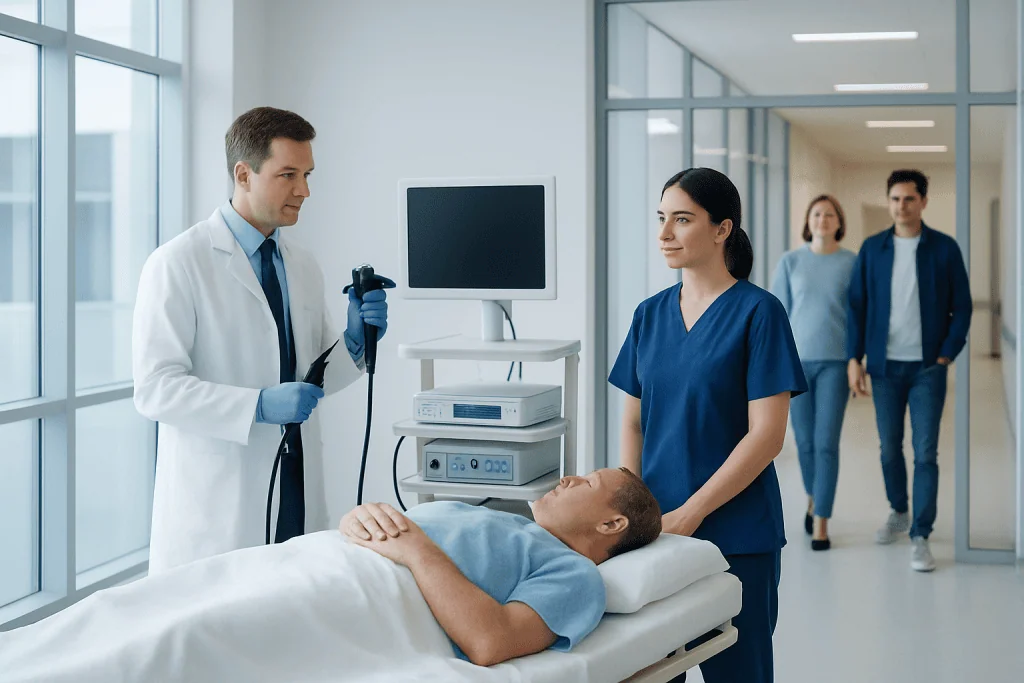
Endoscopy usually refers to an upper gastrointestinal examination of the esophagus, stomach and first part of the small intestine. Fasting and medication instructions are important because they help make the procedure safer and improve visibility.
Key Takeaways
- Endoscopy usually refers to an upper gastrointestinal examination of the esophagus, stomach and first part of the small intestine.
- Fasting and medication instructions are important because they help make the procedure safer and improve visibility.
- Most people receive sedation, go home the same day and return to ordinary light activities within 24 hours.
- Common findings include inflammation, reflux-related changes, ulcers, polyps, infection and changes that may need biopsy assessment.
- Serious complications are uncommon, but urgent symptoms after the procedure require prompt medical attention.
Endoscopy is a minimally invasive procedure in which a doctor uses a thin, flexible tube with a camera to view the lining of the upper digestive tract. It can help identify the cause of symptoms, collect small tissue samples and, in some cases, treat a problem during the same visit.
Endoscopy overview: what it is and why it is done
Endoscopy is a medical procedure that allows a doctor to examine the inside of the body using an endoscope: a narrow, flexible tube with a light and camera at its tip. In digestive care, the term commonly means an upper endoscopy, also called gastroscopy or esophagogastroduodenoscopy (EGD). It examines the esophagus, stomach and duodenum, the first part of the small intestine.
The camera sends detailed images to a monitor, helping the doctor look for changes in the lining of the digestive tract. Endoscopy may be used to investigate persistent symptoms, check a known condition, take biopsies or provide treatment. A biopsy is a tiny tissue sample examined in a laboratory; it does not necessarily mean cancer is suspected.
Compared with open surgery, endoscopy does not involve an external incision and is commonly performed as an outpatient procedure. The findings can guide next steps, such as medication, monitoring, further tests or a procedure to manage a specific problem.
Who may need an endoscopy and how it works
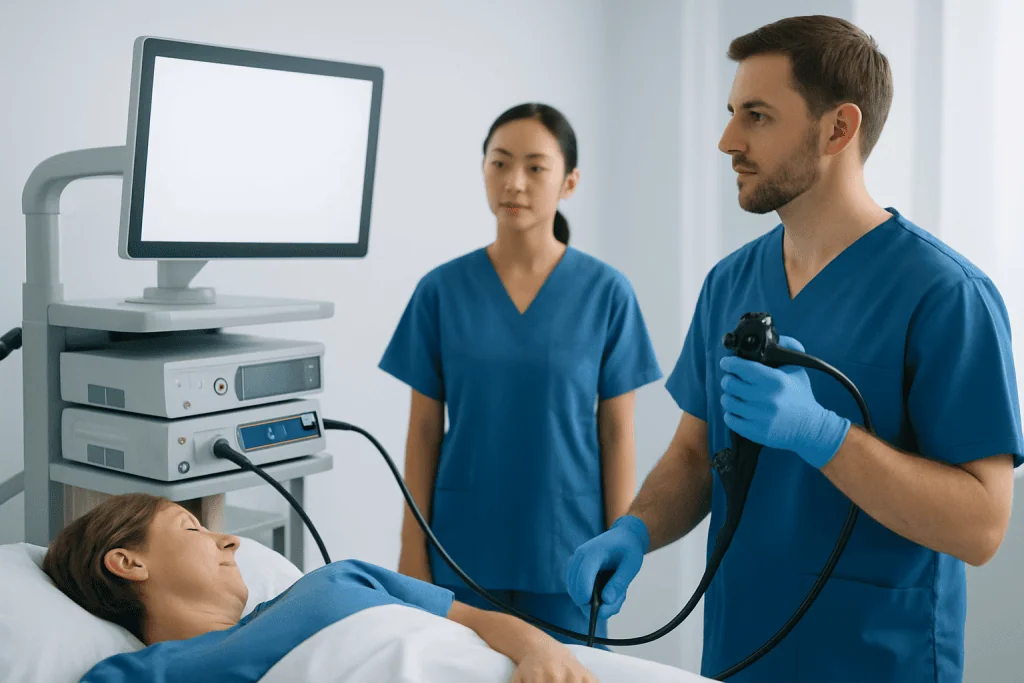
A clinician may recommend endoscopy for ongoing swallowing difficulty, upper abdominal pain, persistent nausea or vomiting, unexplained iron-deficiency anemia, bleeding from the digestive tract, unintentional weight loss or symptoms that do not improve with initial treatment. It can also monitor conditions such as Barrett’s esophagus, ulcers or certain inherited gastrointestinal risks.
During the examination, the doctor gently passes the endoscope through the mouth and throat into the upper digestive tract. Air or carbon dioxide may be introduced to expand the area slightly and allow a clearer view. This can cause temporary bloating or belching afterward, but it does not interfere with breathing.
Endoscopy can be both diagnostic and therapeutic. Through the endoscope, the doctor may collect biopsies, test for infection, stop some types of bleeding, remove selected polyps, widen a narrowed area or retrieve an object when appropriate. The choice depends on the reason for the examination and the findings seen at the time.
How to prepare for an endoscopy
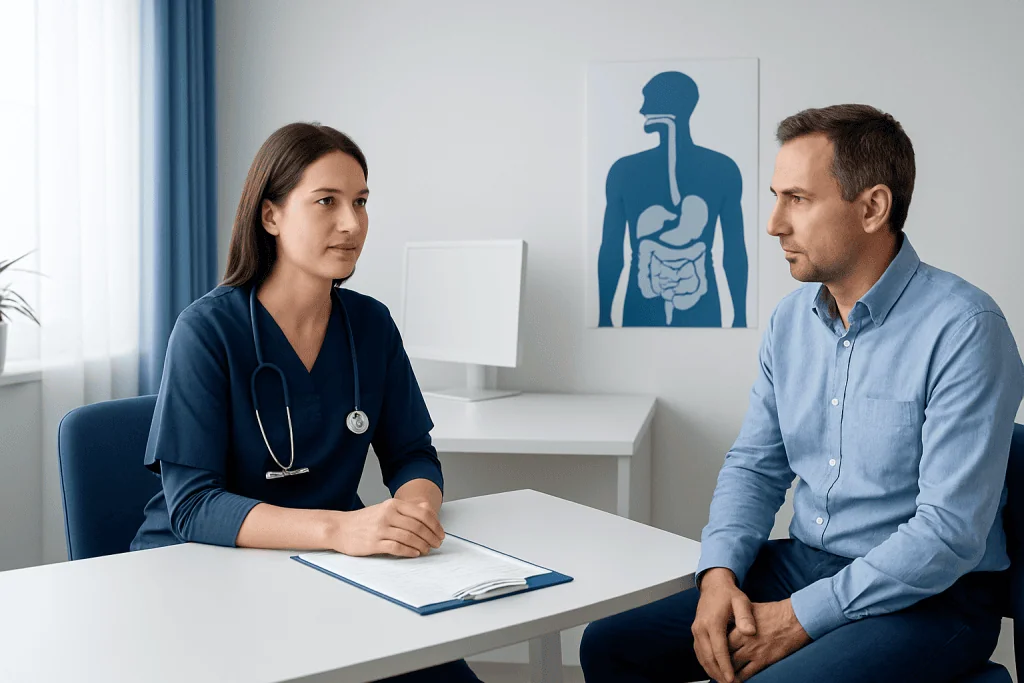
Preparation instructions vary according to the type of endoscopy, the reason it is being performed and the planned sedation. For an upper endoscopy, people are usually asked not to eat for a set period beforehand and may be asked to stop drinking clear liquids a few hours before the appointment. The endoscopy unit will provide the exact fasting schedule, which should be followed carefully.
It is important to tell the healthcare team about all prescription medicines, over-the-counter products, vitamins, herbal supplements, allergies, pregnancy and health conditions. In particular, blood thinners, diabetes medicines and medicines that affect appetite or stomach emptying may need individual instructions. People should not stop prescribed medication unless the clinician who manages their care advises them to do so.
Because sedating medicines can temporarily affect alertness and coordination, a responsible adult is generally needed to take the person home and stay available after the procedure. Bringing a medication list, identification and relevant medical records can also make the visit smoother.
What not to do the morning of an endoscopy? A person should not eat, drink or take medicines outside the instructions given by the endoscopy team. They should also avoid driving themselves, drinking alcohol, smoking or using recreational drugs. If fasting instructions were not followed, the team should be informed before sedation begins, as the procedure may need to be delayed for safety.
What happens during the endoscopy procedure
On arrival, the care team reviews medical history, medications, allergies and consent. Vital signs are checked, and an intravenous line may be placed if sedation is planned. Dentures or removable dental appliances are usually removed, and a mouthguard is placed to protect the teeth and endoscope.
A numbing spray may be used in the throat, and many adults receive sedation through a vein to promote comfort and relaxation. Some people remember little of the procedure, while others may have lighter sedation depending on their health, preferences and local practice. The procedure itself often takes less than 30 minutes, although the overall appointment is longer because of preparation and recovery.
Once the examination is complete, the person rests in a recovery area while the effects of sedation lessen. The doctor may discuss initial visual findings soon afterward, but biopsy and laboratory results usually take longer. The final report may also include recommendations for treatment, follow-up or further testing.
Benefits, common findings and possible risks
The main benefit of endoscopy is that it provides a direct view of the upper digestive tract. It can clarify the cause of symptoms and may avoid the need for more invasive testing. It also allows the doctor to take biopsies or address certain abnormalities immediately, rather than arranging a separate procedure.
What are the most common things found in endoscopy? Common findings include acid reflux-related inflammation of the esophagus, gastritis, hiatal hernia, stomach or duodenal ulcers, polyps and narrowing of the esophagus. Some examinations are normal, which is still useful information when planning further care. Biopsies may identify infection with Helicobacter pylori, celiac disease-related changes or other microscopic inflammation not visible on camera alone.
Endoscopy is generally safe, but no procedure is risk-free. Temporary sore throat, bloating, nausea or drowsiness are relatively common aftereffects. Less common but important complications include a reaction to sedation, bleeding after a biopsy or treatment, aspiration, infection and a tear in the digestive tract. The team takes precautions to reduce these risks and explains any individual concerns before the procedure.
What is a red flag for endoscopy? Red-flag symptoms that may lead a clinician to recommend prompt endoscopy include vomiting blood, black or tar-like stools, progressive difficulty swallowing, unexplained weight loss, persistent vomiting, anemia thought to be due to bleeding, or ongoing upper abdominal symptoms with concerning features. These symptoms have several possible causes, so prompt assessment is important rather than self-diagnosis.
Endoscopy recovery timeline and self-care
After sedation, most people remain in recovery for about one to two hours before going home. A mild sore throat, bloating or gas can occur for a short time. Eating and drinking can usually resume when swallowing is comfortable and the care team confirms it is appropriate; a light meal is often easier initially.
How many days bed rest after endoscopy? Bed rest is usually not needed after a routine upper endoscopy. Most people can walk, eat and carry out gentle activities later the same day, but should rest at home and avoid driving, operating machinery, signing important documents, drinking alcohol or making major decisions until the next day if sedation was used.
Many people return to work, school and usual activities the following day. Recovery may be different when a treatment was performed, such as removal of a larger lesion or dilation of a narrowing. The endoscopy team will give individualized instructions about food, medicines, activity and follow-up based on what was done.
If biopsy samples were taken, results may take several days or longer depending on the laboratory. A normal-looking examination does not always rule out every digestive condition, and the clinician may recommend other tests if symptoms continue.
When to seek medical care
Urgent medical assessment is needed after endoscopy for severe or worsening chest, throat or abdominal pain; fever; shortness of breath; repeated vomiting; vomiting blood; black stools; or dizziness and fainting. These symptoms are uncommon but can indicate bleeding, infection or another complication requiring prompt care.
People should also contact their clinician if a sore throat, nausea, abdominal discomfort or swallowing difficulty is not improving as expected, or if they are uncertain about when to restart medicines. For new symptoms before a planned procedure, especially illness with fever, chest symptoms or inability to follow fasting instructions, contacting the endoscopy unit in advance is helpful.
Acibadem International’s multidisciplinary specialists and JCI-accredited hospitals provide diagnostic endoscopy and digestive care for international patients. A qualified gastroenterology team can explain whether endoscopy is appropriate and interpret results in the context of the person’s symptoms, history and other tests.
Frequently asked questions
Is endoscopy painful?
Most people do not experience pain during an upper endoscopy. A throat spray and sedation are commonly used to improve comfort, although there may be a brief sensation of pressure in the throat or temporary bloating. Mild throat discomfort afterward is common and usually settles quickly.
How long does an upper endoscopy take?
The examination itself often takes less than 30 minutes. However, preparation, sedation, monitoring and recovery mean the full appointment commonly takes several hours. Additional treatment during the procedure may take longer.
Can a person eat after endoscopy?
Eating and drinking can usually resume once the throat numbness has worn off and the care team says it is safe. Starting with water and a light meal may be more comfortable. Individual instructions may differ if a treatment was performed or if there are swallowing concerns.
Will an endoscopy show cancer?
Endoscopy can identify areas that look abnormal, including changes that may need further evaluation. However, a diagnosis of cancer generally requires biopsy results reviewed by a laboratory specialist. Many abnormal-looking areas have non-cancerous causes.
Can endoscopy detect H. pylori infection?
Yes. During endoscopy, a doctor can take stomach biopsies that may be tested for Helicobacter pylori, a bacterium associated with gastritis and some ulcers. Other non-endoscopic tests may also be appropriate in certain situations.
Is it normal to have a sore throat after endoscopy?
A mild sore throat, hoarseness or sensation of throat irritation can occur for a day or two because the endoscope passes through the mouth and throat. Drinking fluids and choosing soft foods may help if permitted. Severe, worsening or persistent pain should be discussed with a clinician.
References
- National Institute of Diabetes and Digestive and Kidney Diseases
- American Society for Gastrointestinal Endoscopy
- American College of Gastroenterology
- Mayo Clinic
- NHS
This article is for general information only and is not a substitute for professional medical advice. Please consult a qualified doctor about your individual situation.
Persistent digestive symptoms? Get evaluated in Turkey
JCI-accredited · board-certified surgeons · reply within 24h
Add us as a Preferred Source to see more of our trusted health content across Google Search, AI Overviews and Discover.