Endovascular Treatment in Turkey: How International Patients Can Choose a Hospital Safely

Patients should confirm the hospital’s accreditation, specialist qualifications, and emergency capabilities before making plans. A safe choice depends on the right team, including interventional specialists, neurologists, neurosurgeons, anesthesiologists, and intensive care support.
Key Takeaways
- Patients should confirm the hospital’s accreditation, specialist qualifications, and emergency capabilities before making plans.
- A safe choice depends on the right team, including interventional specialists, neurologists, neurosurgeons, anesthesiologists, and intensive care support.
- Clear communication, a written treatment plan, and realistic information about risks and recovery are essential.
- Advanced imaging, 24/7 stroke or neurovascular services, and structured follow-up can improve coordination of care.
- Costs and travel logistics matter, but they should never outweigh medical suitability and patient safety.
Endovascular treatment in Turkey may be an option for international patients who need minimally invasive care for conditions affecting the brain and blood vessels. Choosing a hospital safely means looking beyond travel arrangements and focusing on medical expertise, accreditation, emergency readiness, and continuity of care.
Overview
Endovascular treatment in Turkey refers to minimally invasive procedures performed inside blood vessels, usually with catheters guided by imaging. In interventional neurology, these procedures may be used to diagnose or treat conditions such as stroke caused by a blocked artery, certain aneurysms, vascular malformations, or narrowing of blood vessels that supply the brain. Rather than open surgery, the specialist typically reaches the target area through a small puncture, often in the wrist or groin.
For international patients, Turkey can be appealing because major hospitals may offer advanced imaging, multidisciplinary neurovascular teams, and support for cross-border care. However, the safest hospital is not simply the one with the lowest price or the fastest appointment. A good decision depends on whether the hospital is truly equipped for the patient’s condition, including emergency treatment, intensive care, and specialist follow-up.
Because endovascular procedures are highly specialized, hospital choice should be based on medical fit. The right center should be able to review previous scans, explain whether the procedure is appropriate, discuss alternatives, and outline what happens before, during, and after treatment. When patients understand these details clearly, they are better positioned to make a safe and informed decision.
Which Conditions May Need Endovascular Treatment
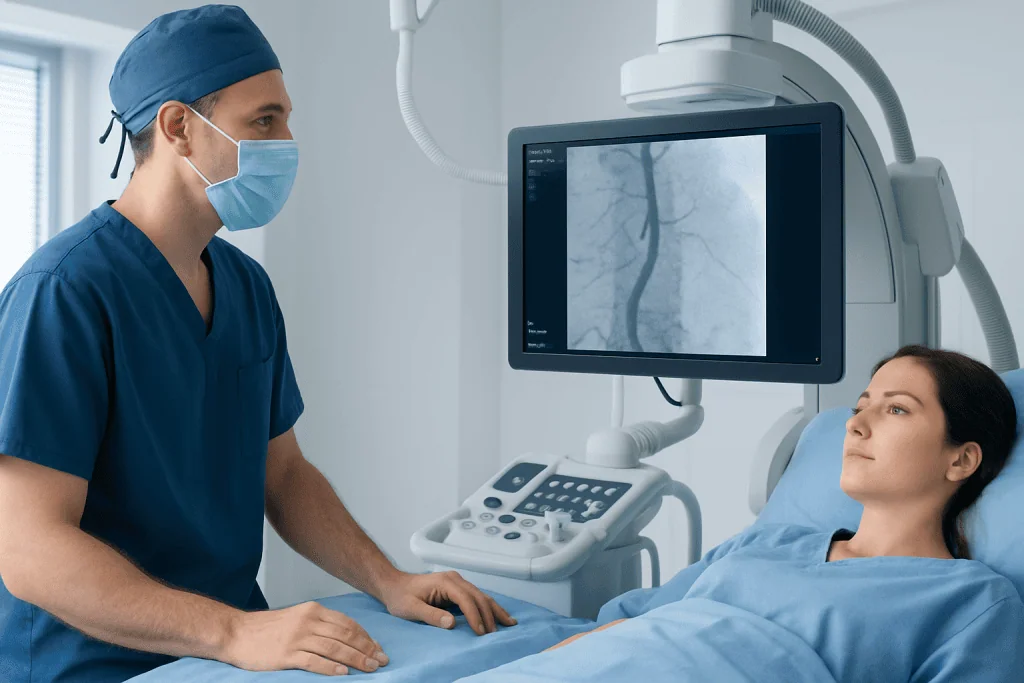
In interventional neurology, endovascular treatment is commonly considered for acute ischemic stroke, especially when a large brain artery is blocked and fast removal of the clot may restore blood flow. This approach is often called mechanical thrombectomy and is time-sensitive. Some patients with brain aneurysms may also be treated through the blood vessels rather than with open surgery, depending on the aneurysm’s size, shape, and location.
Other conditions that may involve endovascular techniques include arteriovenous malformations, dural arteriovenous fistulas, carotid or intracranial artery narrowing, and selected cases of vascular bleeding. Some people travel specifically for procedures such as thrombectomy for stroke or endovascular aneurysm treatment, while others are referred after imaging reveals a neurovascular problem needing specialist review.
Not every patient is a suitable candidate. The decision depends on symptom timing, brain imaging findings, overall health, bleeding risk, anatomy of the blood vessels, and whether other treatments may be safer or more effective. A reliable hospital will explain why endovascular treatment is recommended and will also discuss situations where observation, medication, surgery, or rehabilitation may be more appropriate.
How to Assess a Hospital Safely

The first checkpoint is accreditation and institutional standards. International patients should look for hospitals with recognized quality systems and a strong record in complex hospital-based care. Accreditation does not guarantee outcomes, but it helps show that the hospital follows structured processes for safety, infection control, medication management, and patient rights. It is also useful to ask whether the hospital has a dedicated stroke unit, neuro-intensive care, and 24/7 access to emergency imaging.
The second checkpoint is the team itself. Endovascular care is safest when delivered by an experienced multidisciplinary group rather than a single physician working alone. Patients can ask whether care involves interventional neuroradiologists or endovascular neurosurgeons, stroke neurologists, neurosurgeons, anesthesiologists, critical care specialists, and rehabilitation physicians. If the hospital treats both planned and emergency neurovascular cases, that is often a sign of broader readiness.
Technology and workflow matter as much as reputation. A center should be able to provide rapid CT, MRI, angiography, laboratory support, and operating room or intensive care backup if complications arise. For example, a patient being assessed for stroke or brain aneurysm treatment may need urgent decisions based on high-quality imaging. Hospitals should also explain how often the procedure is performed, what recovery monitoring is available, and how unexpected problems are handled.
Finally, communication is a safety issue, not just a convenience. International patients should receive a clear written plan in a language they understand, including diagnosis, proposed treatment, possible alternatives, likely hospital stay, follow-up needs, and expected costs. If answers are vague, rushed, or inconsistent, patients may wish to seek a second opinion before traveling.
Questions International Patients Should Ask Before Booking
Before choosing a hospital, patients and families can prepare a focused list of questions. This helps compare centers using medical criteria rather than marketing claims. It is reasonable to ask who will perform the procedure, what their specialty training is, whether the hospital manages complex neurovascular emergencies, and what type of anesthesia or sedation may be used.
It is also helpful to ask how the hospital reviews records before travel. Safe hospitals usually want to see prior scans, reports, blood test results, medication lists, and a summary from the referring doctor. If a hospital offers a procedure without first reviewing the medical details, that may not reflect careful patient selection.
- Is the hospital accredited and does it have a dedicated stroke or neurovascular service?
- Who will decide whether the procedure is suitable, and can a second specialist review the case?
- What imaging tests will be needed before treatment?
- What are the main risks, possible benefits, and alternatives?
- Will intensive care or neurosurgical backup be available if needed?
- How will follow-up be arranged after discharge and after the patient returns home?
- What services are available for interpretation, records translation, and discharge documentation?
Practical questions matter too, but they should come after medical suitability is confirmed. These include the estimated length of stay, whether a companion can assist, payment policies, and how urgently treatment should occur. Time-sensitive conditions should never be delayed for travel if safe treatment is available locally sooner.
Diagnosis, Planning, and Second Opinions
Endovascular treatment should start with a careful diagnosis, not with a preselected procedure. In many neurovascular conditions, treatment planning depends on detailed imaging such as CT, MRI, CT angiography, MR angiography, or catheter angiography. These tests help show the exact anatomy of the blood vessels, the extent of brain injury if a stroke has occurred, and whether the target lesion can be reached safely.
Patients should expect the treating team to review symptoms, medical history, allergies, kidney function, medications such as blood thinners, and previous procedures. A good hospital will explain whether the treatment goal is urgent rescue, prevention of future bleeding or stroke, symptom control, or further diagnostic clarification. If the condition is complex, a multidisciplinary conference may be appropriate.
Second opinions can be especially useful for non-emergency decisions such as aneurysm treatment, vascular malformations, or artery narrowing discovered on imaging. A second opinion may confirm the first recommendation or suggest a different approach, including observation. Reliable hospitals generally support informed decision-making and do not discourage patients from asking for another specialist review.
Treatment, Hospital Stay, and Recovery
The procedure itself usually takes place in an angiography suite. A catheter is guided through the blood vessels under imaging, and the specialist may remove a clot, place coils or other devices in an aneurysm, open a narrowed vessel, or block abnormal blood flow depending on the condition. The exact technique differs from one diagnosis to another. Hospitals may discuss related services such as cerebral angiography when diagnosis and treatment planning require direct vessel imaging.
After treatment, patients are monitored closely for blood pressure changes, new neurologic symptoms, bleeding at the puncture site, and other early complications. Some people go home within a short time, while others need intensive care, especially after emergency stroke treatment or a ruptured aneurysm. Recovery may include medications, repeat imaging, physical therapy, speech therapy, or cognitive rehabilitation.
International patients should understand discharge planning before the procedure. This includes how long they may need to stay in Turkey, when it is safe to fly, what warning signs require urgent review, and which medicines must be continued. Written discharge summaries, imaging copies, and communication with the home physician are important for continuity of care.
Near the end of the care journey, some international patients prefer centers that can coordinate different specialties under one roof. Acibadem International’s multidisciplinary specialists and JCI-accredited hospitals diagnose and treat neurovascular conditions for international patients, which may support integrated planning when endovascular care, imaging, critical care, and rehabilitation all need to be coordinated.
Risks, Red Flags, and Warning Signs to Watch For
All invasive procedures carry some risk, and a trustworthy hospital should discuss these openly in clear language. Depending on the condition and procedure, risks may include bleeding, infection, contrast reactions, kidney strain, vessel injury, stroke, or the need for additional treatment. The purpose of this discussion is not to alarm patients, but to make sure consent is informed and realistic.
There are also red flags during the hospital selection process. Patients should be cautious if they receive guaranteed results, oversimplified claims, pressure to pay quickly without clinical review, or recommendations that do not match the diagnosis. Another warning sign is poor communication about who will perform the procedure or what emergency support is available if something unexpected happens.
After treatment, patients and families should know which symptoms need urgent medical attention. These may include sudden weakness, trouble speaking, severe headache, confusion, chest pain, shortness of breath, fever, or significant bleeding or swelling where the catheter was inserted. The hospital should provide written emergency instructions and a contact path for post-discharge concerns.
Prevention, Self-Care, and When to Seek Medical Advice
Not all neurovascular conditions can be prevented, but general vascular health still matters. Managing blood pressure, diabetes, cholesterol, smoking, physical activity, and medicines prescribed by a doctor may lower the risk of some strokes and blood vessel problems. People with known aneurysms or vascular abnormalities should follow their specialist’s advice on imaging surveillance and symptom monitoring.
For those planning care abroad, self-care also includes organization. Patients should keep copies of scans and reports, make an updated medication list, bring information about allergies, and ensure a family member or trusted companion understands the care plan. Travel insurance, if applicable, and emergency contact arrangements may also be worth reviewing before departure.
Medical advice should be sought promptly if there are symptoms that could suggest stroke, bleeding in the brain, or rapidly worsening neurologic function. Sudden facial drooping, arm weakness, speech difficulty, severe new headache, vision loss, or collapse need urgent emergency evaluation. For non-emergency decisions, a scheduled consultation with a qualified neurovascular team can help clarify whether endovascular treatment is appropriate and where it can be performed most safely.
Frequently asked questions
What is endovascular treatment in interventional neurology?
It is a group of minimally invasive procedures performed through blood vessels to diagnose or treat conditions affecting the brain and its circulation. Doctors use imaging guidance and thin catheters rather than traditional open surgery in many cases.
Is endovascular treatment in Turkey safe for international patients?
It can be safe when patients choose a hospital with appropriate accreditation, experienced specialists, advanced imaging, and emergency support. Safety depends more on the hospital’s neurovascular capabilities and patient selection than on travel convenience alone.
How can a patient verify whether a hospital is suitable?
Patients can ask about accreditation, the specialist team, 24/7 emergency services, neuro-intensive care, and whether prior scans will be reviewed before travel. Clear written treatment plans and transparent answers are also important signs of a careful center.
Do all strokes need endovascular treatment?
No. Only certain strokes, especially some large-vessel ischemic strokes, may benefit from procedures such as thrombectomy. The decision depends on imaging results, timing, symptoms, and the patient’s overall condition.
Should a patient get a second opinion before traveling?
For non-emergency conditions, a second opinion is often helpful and may confirm whether a procedure is necessary. In emergencies such as acute stroke, treatment should not be delayed if urgent local care is available sooner.
What should patients bring when traveling for treatment?
They should bring previous scan images and reports, medication lists, allergy information, a summary from their doctor, and identification documents. It also helps to keep discharge and follow-up records organized for the home medical team.
References
- World Health Organization
- American Stroke Association
- National Institute of Neurological Disorders and Stroke
- Society of NeuroInterventional Surgery
- Joint Commission International
This article is for general information only and is not a substitute for professional medical advice. Please consult a qualified doctor about your individual situation.
Explore treatments in Turkey — costs, top hospitals & a free quote
JCI-accredited · board-certified surgeons · reply within 24h
Add us as a Preferred Source to see more of our trusted health content across Google Search, AI Overviews and Discover.