Epistaxis Treatment: How It Works, Results and What to Expect

Most nosebleeds begin in the front part of the nasal septum and stop with steady pressure and simple nasal care. Epistaxis treatment may include moisturising measures, topical medication, chemical or electrical cautery, nasal packing, or treatment of an underlying condition.
Key Takeaways
- Most nosebleeds begin in the front part of the nasal septum and stop with steady pressure and simple nasal care.
- Epistaxis treatment may include moisturising measures, topical medication, chemical or electrical cautery, nasal packing, or treatment of an underlying condition.
- Cautery is commonly used for a visible, repeatedly bleeding vessel and is usually performed as an outpatient procedure.
- Persistent heavy bleeding, bleeding after an injury, or nosebleeds accompanied by weakness, fainting or breathing difficulty need urgent medical assessment.
- Avoid nose blowing, picking, heavy exertion and medications that may affect bleeding unless a clinician advises otherwise after treatment.
Epistaxis treatment is tailored to the location, severity and cause of a nosebleed. Most episodes settle with correct first aid, while recurrent or persistent bleeding may require examination by an ear, nose and throat specialist and treatments such as cautery, nasal packing or, less commonly, a procedure to control a deeper blood vessel.
Overview: how epistaxis treatment works
Epistaxis is the medical term for a nosebleed. Epistaxis treatment works by applying pressure to stop active bleeding, identifying the area where bleeding started and protecting or sealing the affected blood vessel when necessary. The best approach depends on whether bleeding is from the front of the nose, which is most common, or from deeper nasal structures.
Many front nosebleeds can be managed safely at home. Sitting upright, leaning slightly forward and firmly pinching the soft part of the nose continuously for 10 to 15 minutes is often effective. Leaning forward helps prevent blood from running into the throat, where it can cause nausea or coughing.
If bleeding does not settle, occurs repeatedly or is heavy, a clinician may assess the nasal lining, blood pressure, medicines and possible contributing conditions. Specialist care focuses both on controlling the immediate bleed and reducing the chance that it returns.
Why nosebleeds happen and who may need treatment
The nasal lining contains many delicate blood vessels, especially on the front part of the septum, the wall between the nostrils. Dry air, colds, allergies, forceful nose blowing, nose picking and minor injury can irritate this area. A nosebleed may also follow nasal surgery or an injury to the nose.
Some people are more likely to need medical epistaxis treatment. This includes people with frequent episodes, those using anticoagulant or antiplatelet medicines, and people with bleeding disorders. High blood pressure may be present during a nosebleed, although it is not usually the sole cause; it should still be assessed and managed appropriately.
Less commonly, recurrent one-sided bleeding can be related to a structural nasal problem, chronic inflammation, an abnormal blood vessel or, rarely, a growth in the nasal passages. An ENT assessment is particularly useful when bleeds are recurrent, predominantly from one nostril, or associated with persistent blockage, facial symptoms or unexplained bruising.
- Dry, irritated nasal lining
- Allergies, infections or frequent rubbing and blowing
- Trauma, including sports injuries
- Blood-thinning medicines or a clotting problem
- Previous nasal procedures or underlying nasal disease
Assessment and candidacy for procedures

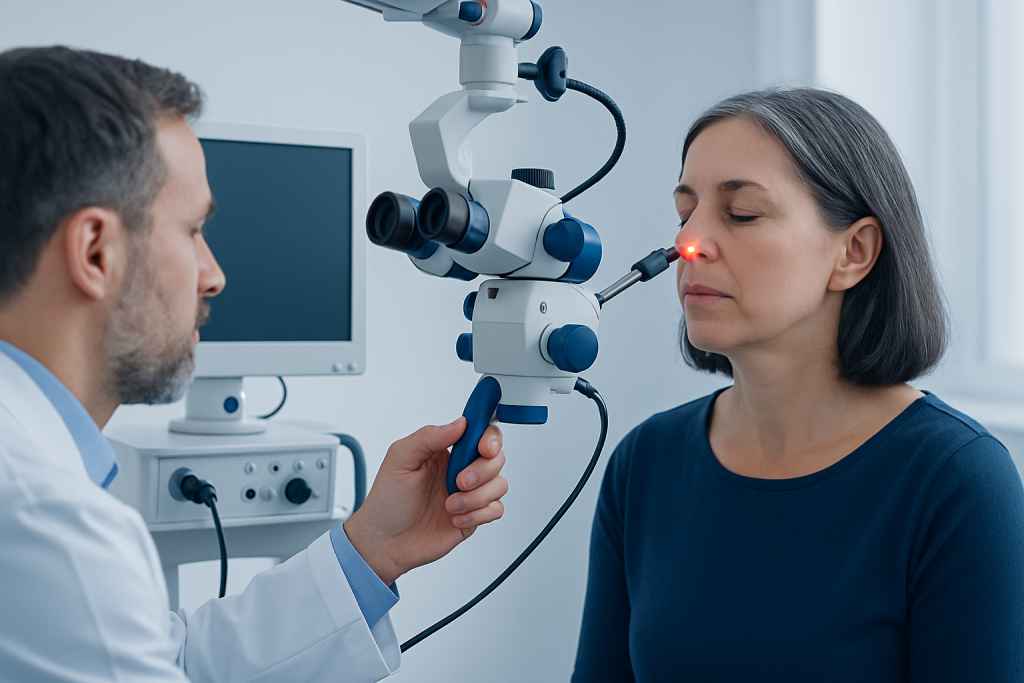
Before recommending a procedure, a doctor asks about the timing, frequency and amount of bleeding, recent injury, medications and medical history. They may examine the inside of the nose with a light and, if needed, use a nasal endoscope to inspect areas that cannot be seen easily from the nostril.
Cautery may be suitable when the clinician can identify a small bleeding point, typically in the front of the nose, and conservative measures have not prevented further episodes. Nasal packing may be used when active bleeding continues and the source is unclear or cannot be controlled with pressure and local treatment alone.
People with persistent posterior nosebleeds, significant blood loss, unstable vital signs, substantial facial trauma or complex medical conditions may need care in an emergency department or hospital. Blood tests or imaging are not required for every nosebleed, but may be appropriate when bleeding is severe, recurrent or linked to an underlying health concern.
Epistaxis treatment procedures: step by step
For an active front nosebleed, the first clinical steps are usually gentle removal of clots, a topical medicine to narrow blood vessels and continued pressure. Once the bleeding point can be seen, the clinician may apply a chemical agent, often silver nitrate, to cauterise the vessel. Electrical cautery may be considered in selected cases. The treatment is typically brief and performed with local anaesthetic.
Only the appropriate small area is treated, because excessive cautery can damage the septum. It is generally avoided on both sides of the septum at the same sitting unless a specialist judges it necessary. A protective ointment or moisturising regimen may be advised afterward to support healing.
If cautery is not possible or does not stop the bleed, the clinician may place nasal packing. Packing may consist of an expandable sponge, gauze or a balloon-like device that applies pressure inside the nose. Depending on the material used, it may be removed after a short period or dissolve on its own. For difficult posterior bleeds, hospital monitoring and treatment by ENT specialists may be required.
Rarely, ongoing severe bleeding needs more advanced treatment, such as endoscopic surgery to seal a blood vessel or an interventional radiology procedure to block a bleeding artery. These options are reserved for cases that do not respond to simpler measures and are planned around the person’s overall health and bleeding risk.
Benefits, risks and expected results
The main benefit of epistaxis treatment is rapid control of bleeding and a lower risk of repeated bleeding from the same visible vessel. Cautery is often effective for a localised anterior source, while packing provides temporary pressure when bleeding is more diffuse or difficult to pinpoint. Treating dryness, allergies or medication-related risks can further reduce recurrence.
It is possible for a nosebleed to recur, particularly if the nasal lining remains dry or irritated or if an underlying cause has not yet been addressed. Some people need follow-up treatment, and recurrent episodes may prompt a more detailed ENT evaluation.
Common short-term effects after cautery include mild stinging, crusting and nasal tenderness. Packing can feel uncomfortable and may cause blocked-nose sensations, watery eyes or mild pressure. Less common risks include infection, rebleeding, injury to the nasal lining or a small hole in the septum. A clinician will explain the risks most relevant to the planned treatment.
Recovery timeline and self-care after treatment
After simple pressure treatment or cautery, many people return to usual light activities the same day. The treated area may form a crust as it heals over the following days. If packing is placed, the recovery plan depends on the material and the reason it was needed; the clinician will explain when it should be removed and whether follow-up is required.
For several days, it is usually helpful to avoid blowing the nose, picking or rubbing inside the nostrils, heavy lifting, strenuous exercise, hot baths and alcohol, as these can increase blood flow or disturb a healing clot. Sneezing with the mouth open may reduce pressure within the nose.
Saline spray, saline gel or a clinician-recommended moisturising ointment can help keep the nasal lining comfortable. A humidifier may also be useful in dry environments. People should not stop prescribed blood-thinning medication on their own; any adjustment must be discussed with the clinician who manages that medicine.
Acibadem International’s multidisciplinary specialists and JCI-accredited hospitals assess and treat nosebleeds for international patients, including cases that require ENT, emergency, haematology or interventional care.
When to seek medical care
Urgent medical care is appropriate when a nosebleed remains heavy after 15 to 20 minutes of correct, uninterrupted pressure, or when bleeding is difficult to control. Emergency assessment is also needed if there is fainting, marked weakness, shortness of breath, vomiting large amounts of swallowed blood, or concern about significant blood loss.
A person should seek prompt assessment after a major facial or head injury, particularly if the nose appears deformed, clear fluid is leaking from the nose, or there are changes in vision or consciousness. Children, older adults and people taking blood-thinning medicines may need earlier advice because their individual risks can differ.
A non-urgent appointment with a doctor or ENT specialist is sensible for frequent nosebleeds, one-sided recurring bleeding, persistent nasal blockage, easy bruising or bleeding from other sites. Medical assessment can identify treatable nasal problems and help review medicines or conditions that may contribute to bleeding.
Frequently asked questions
What is the first aid for a nosebleed?
The person should sit upright, lean slightly forward and pinch the soft part of the nose firmly. Pressure should be continuous for 10 to 15 minutes without repeatedly checking whether the bleeding has stopped. Blood should be spat out rather than swallowed where possible.
Does epistaxis treatment always require cautery?
No. Most nosebleeds stop with pressure and supportive nasal care. Cautery is considered when a clinician sees a suitable bleeding point, especially with recurring anterior nosebleeds.
Is nasal cautery painful?
A local anaesthetic or topical numbing medicine may be used before cautery. People may feel brief stinging or pressure, followed by mild soreness or crusting while the nasal lining heals.
How long does it take to recover after nosebleed cautery?
Most people can continue light daily activities on the same day. The treated spot generally heals over the next several days, and avoiding nose blowing, strenuous exercise and nasal irritation can help protect the healing area.
Can people taking blood thinners receive treatment for epistaxis?
Yes. A clinician can use local measures such as pressure, cautery or packing while considering the person's medication and overall health. Blood-thinning medicines should not be stopped or changed without advice from the prescribing clinician.
Why do nosebleeds keep coming back?
Recurrent nosebleeds often result from persistent dryness, allergies, nasal irritation or a fragile blood vessel that has not fully healed. Medication effects, a bleeding tendency and less common structural nasal problems can also contribute, so recurrent episodes should be reviewed by a qualified doctor.
References
- American Academy of Otolaryngology–Head and Neck Surgery
- Mayo Clinic
- National Health Service
- Merck Manual Consumer Version
This article is for general information only and is not a substitute for professional medical advice. Please consult a qualified doctor about your individual situation.
Explore treatments in Turkey — costs, top hospitals & a free quote
JCI-accredited · board-certified surgeons · reply within 24h
Add us as a Preferred Source to see more of our trusted health content across Google Search, AI Overviews and Discover.
Check your numbers in seconds
BMI, calories, due date, blood pressure and 30+ more clinical calculators — free, instant, doctor-reviewed ranges.