Esophageal Cancer Screening: How It Works, Results and What to Expect

Upper endoscopy is the main test used for esophageal cancer screening in selected higher-risk people. Screening aims to identify Barrett’s esophagus and abnormal cells before cancer develops or while it is early.
Key Takeaways
- Upper endoscopy is the main test used for esophageal cancer screening in selected higher-risk people.
- Screening aims to identify Barrett’s esophagus and abnormal cells before cancer develops or while it is early.
- Long-standing reflux, male sex, older age, excess weight, smoking, and a family history may increase the likelihood of being offered screening.
- Blood tests do not reliably detect esophageal cancer at an early stage.
- Persistent trouble swallowing, unexplained weight loss, or vomiting blood need prompt medical assessment.
- An abnormal screening result does not always mean cancer; biopsies and follow-up testing clarify the finding.
Esophageal cancer screening is not routinely recommended for everyone. It is mainly considered for people with risk factors for Barrett’s esophagus or esophageal adenocarcinoma, using an upper endoscopy to examine the esophageal lining and take biopsies when needed.
Overview: how esophageal cancer screening works
Esophageal cancer screening means testing people who do not necessarily have cancer symptoms but may have a higher-than-average risk of changes in the esophagus. The main purpose is to find Barrett’s esophagus, precancerous cell changes called dysplasia, or cancer at an earlier and more treatable point.
The usual screening examination is an upper endoscopy, also called esophagogastroduodenoscopy (EGD). A gastroenterologist passes a thin, flexible camera through the mouth to inspect the esophagus, stomach, and first part of the small intestine. Small tissue samples may be collected during the procedure and examined in a laboratory.
Most people do not need esophageal cancer screening. It is usually offered after an individual discussion of reflux history, age, sex, weight, smoking history, family history, and other health factors. Screening is different from diagnostic testing, which is performed when a person develops concerning symptoms.
Who may be a candidate for screening?
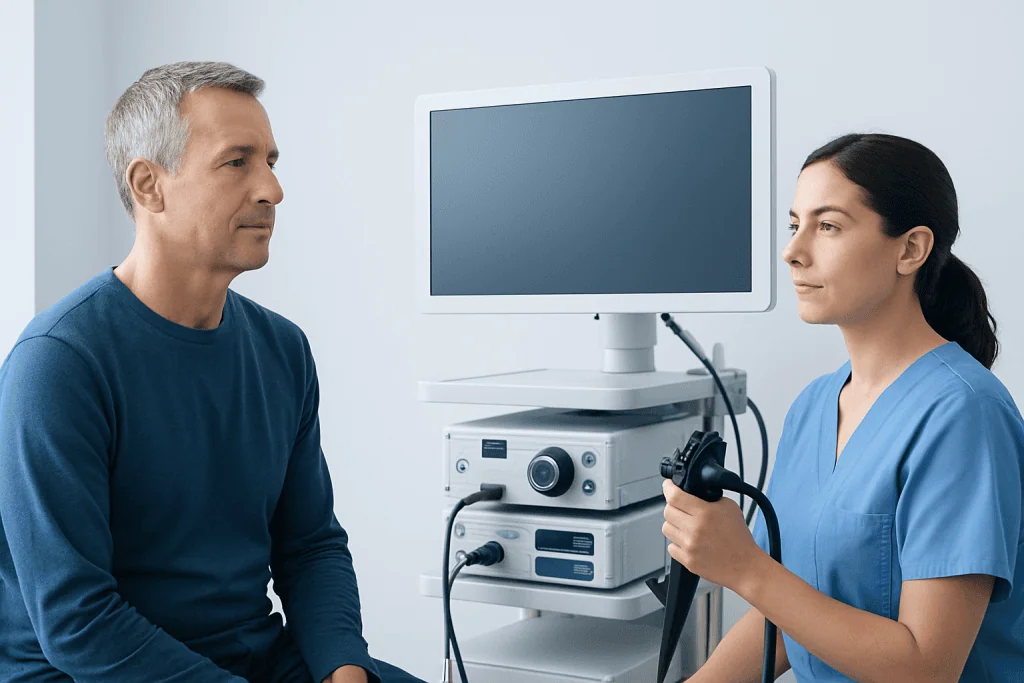
Healthcare professionals may consider screening for Barrett’s esophagus in people with long-standing, frequent gastroesophageal reflux disease (GERD), especially when other risk factors are present. Barrett’s esophagus is a change in the cells lining the lower esophagus that can raise the chance of adenocarcinoma, although most people with Barrett’s esophagus do not develop cancer.
Factors that may support a discussion about screening include being male, being older, having central excess weight, smoking now or in the past, having a first-degree relative with Barrett’s esophagus or esophageal adenocarcinoma, and having chronic reflux symptoms. The appropriate approach varies by person, and clinicians also consider whether someone is fit enough to benefit from follow-up care if an abnormality is found.
Screening can also be relevant for selected people with uncommon inherited or medical conditions associated with esophageal cancer risk. A gastroenterologist can review the personal and family history and explain whether an endoscopy is appropriate. People with established Barrett’s esophagus may need surveillance endoscopies at intervals based on biopsy results rather than one-time screening.
What happens during an upper endoscopy?
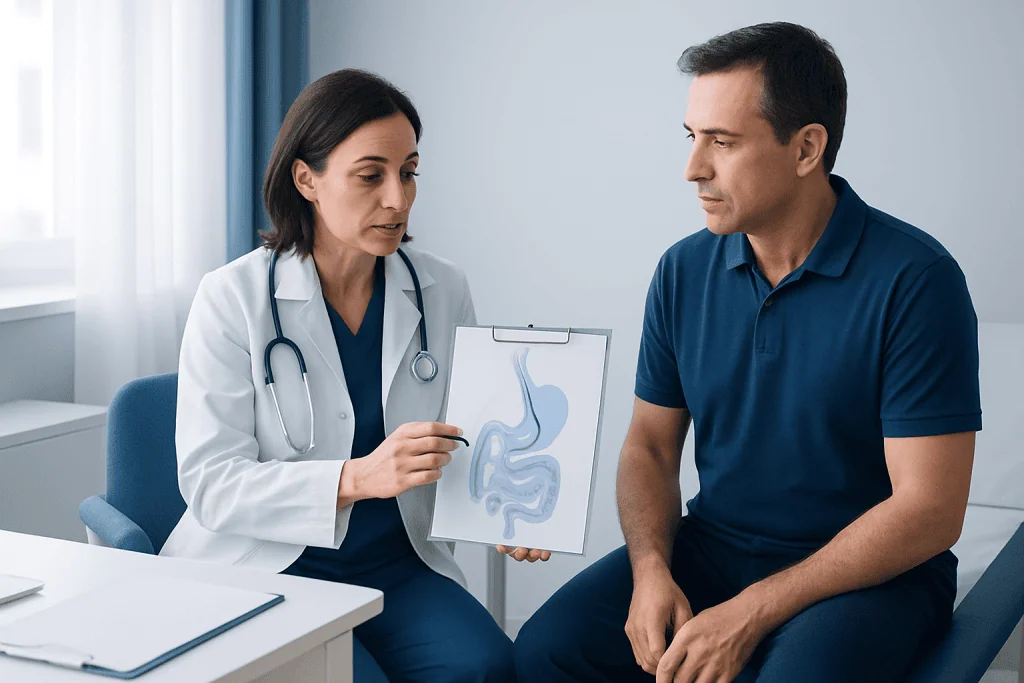
Before an upper endoscopy, the patient receives instructions about fasting, usually including avoiding food for a period before the appointment. The clinical team should be told about all medicines, allergies, pregnancy, bleeding problems, and conditions such as heart or lung disease. Some medicines may need temporary adjustment, but this should only be done on medical advice.
At the endoscopy unit, a nurse checks vital signs and places an intravenous line when sedation is planned. Most patients receive sedative medication that makes the procedure more comfortable and means they remember little of it. A mouth guard protects the teeth, and the endoscope is gently guided through the mouth and into the esophagus. The scope does not interfere with breathing.
The clinician examines the lining carefully and may use enhanced imaging techniques to identify subtle changes. If an area appears abnormal, or if Barrett’s esophagus is suspected, biopsies are taken with small instruments passed through the scope. Tissue collection is generally painless. The examination itself often takes less than 30 minutes, though preparation and recovery take longer.
For individuals requiring detailed assessment after an abnormal finding or symptoms, an upper endoscopy evaluation can help guide biopsy, monitoring, and treatment planning.
Results, recovery timeline, risks and benefits
A clinician may discuss the visual findings shortly after the procedure, but biopsy results take longer because a pathologist must examine the tissue. Results may show normal tissue, inflammation related to reflux, Barrett’s esophagus without dysplasia, Barrett’s with dysplasia, or cancer. Further tests are only arranged when they are needed to clarify the result or plan care.
After sedation, patients are monitored until awake and stable. A mild sore throat, bloating, or gas can occur for a short time because air is used to improve visibility during the examination. People who receive sedation should arrange for a responsible adult to take them home and should not drive, drink alcohol, or make important decisions until the effects have worn off, following their team’s instructions.
The benefit of screening is the opportunity to identify high-risk changes before they become invasive cancer, allowing monitoring or endoscopic treatment when appropriate. Risks from diagnostic upper endoscopy are uncommon but include reactions to sedation, bleeding after biopsies, infection, aspiration, and a tear in the digestive tract. The team reviews individual risks before consent and provides clear advice about symptoms that require urgent attention afterward.
What are the very first signs of esophageal cancer?
Early esophageal cancer may cause no symptoms, which is one reason screening can be useful for carefully selected higher-risk people. When symptoms occur, difficulty swallowing is a common concern. It may begin as a feeling that solid foods are sticking in the chest or throat and can gradually progress.
Other possible signs include painful swallowing, persistent indigestion or heartburn that is new or changing, chest discomfort, unexplained weight loss, reduced appetite, persistent cough, hoarseness, or vomiting. These symptoms are not specific to cancer and are often caused by more common conditions such as reflux, inflammation, or a narrowing of the esophagus.
Nevertheless, new or progressive swallowing difficulty should not be self-treated for long periods. A clinician can assess symptoms and determine whether prompt endoscopy or other testing is needed.
Would esophageal cancer show up in routine blood work?
Routine blood tests cannot diagnose or reliably screen for esophageal cancer. There is currently no standard blood test that can detect early esophageal cancer accurately enough to replace endoscopy in people at risk.
Blood work may still be useful during an evaluation. For example, a complete blood count can show anemia, which sometimes occurs with slow bleeding, and liver or kidney tests may help doctors assess overall health before imaging or treatment. However, normal blood test results do not rule out esophageal cancer.
If symptoms or endoscopy findings raise concern, diagnosis depends on examining tissue obtained by biopsy. If cancer is confirmed, imaging and other tests may be used to determine whether it has spread and to support treatment planning.
Can esophagus cancer be cured completely?
Esophageal cancer can sometimes be treated with curative intent, particularly when it is found at an early stage and has not spread to distant parts of the body. The likelihood of cure depends on the cancer type, location, stage, the person’s overall health, and how the tumor responds to treatment.
Very early cancers or high-grade dysplasia may sometimes be removed or treated through the endoscope. Other localized cancers may be managed with surgery, chemotherapy, radiation therapy, or a combination of these approaches. Advanced cancer can often still be treated to control disease, relieve symptoms, and support quality of life, even when complete cure is less likely.
Treatment decisions should be made by a multidisciplinary team that includes gastroenterology, surgery, medical oncology, radiation oncology, pathology, nutrition, and supportive-care specialists. Esophageal cancer treatment is tailored after staging and a discussion of the person’s goals and preferences.
At what stage is esophageal cancer usually diagnosed?
Esophageal cancer is often diagnosed after symptoms develop, and symptoms may not appear until the tumor has narrowed the esophagus or affected nearby structures. For this reason, some cases are diagnosed at a later stage than many people would expect. However, diagnosis at an early stage is possible, particularly through evaluation of new symptoms or surveillance of known Barrett’s esophagus.
Staging describes how deeply the cancer has grown into the esophageal wall, whether it has reached nearby lymph nodes, and whether it has spread to distant organs. Doctors may use endoscopy with biopsy, endoscopic ultrasound, CT, PET-CT, and other tests depending on the situation.
Stage is important, but it is not the only factor that informs prognosis or treatment. Individual tumor biology, treatment response, nutrition, fitness, and access to coordinated care also matter. It is best to discuss stage and likely treatment goals directly with the cancer team.
When to seek medical care
Medical assessment is important for persistent or worsening swallowing problems, food getting stuck, unexplained weight loss, repeated vomiting, chest pain not clearly related to a known condition, black stools, vomiting blood, or ongoing hoarseness. These symptoms do not necessarily indicate cancer, but they deserve timely evaluation.
Emergency care is appropriate for vomiting blood, passing black tar-like stools, severe chest pain, inability to swallow liquids, severe breathing difficulty, or signs of significant weakness or fainting. A doctor can identify the safest next steps based on the symptoms and medical history.
People with chronic reflux and several risk factors can ask their primary care clinician or gastroenterologist whether screening is suitable. Acibadem International’s multidisciplinary specialists and JCI-accredited hospitals diagnose and treat esophageal conditions for international patients, with care plans guided by individual clinical needs.
Frequently asked questions
Is esophageal cancer screening recommended for everyone with heartburn?
No. Heartburn is common, while esophageal cancer remains relatively uncommon, so routine screening for everyone with reflux is not generally recommended. Screening may be discussed when reflux is long-standing and is combined with other factors that increase the likelihood of Barrett’s esophagus or esophageal adenocarcinoma.
How often should screening endoscopy be repeated?
The interval depends on what the first endoscopy and any biopsies show. If Barrett’s esophagus is found, follow-up timing is based largely on whether dysplasia is present. A gastroenterologist can recommend a surveillance schedule tailored to the pathology results and personal risk factors.
Is upper endoscopy painful?
Most patients receive sedation and do not experience pain during the examination. Some may notice brief throat discomfort, bloating, or a mild sore throat afterward. The care team monitors the patient throughout the procedure and recovery.
Can a biopsy during endoscopy spread cancer?
Biopsies are a standard and important part of diagnosing suspected esophageal cancer. They do not generally cause cancer to spread. The tissue information from a biopsy helps ensure that any treatment recommendation is appropriate.
Can reflux medicine prevent esophageal cancer?
Acid-reducing treatment can improve reflux symptoms and help heal reflux-related inflammation, but it does not eliminate cancer risk in every person. People with Barrett’s esophagus or significant risk factors should follow their clinician’s recommendations for medication, lifestyle measures, and surveillance.
What lifestyle changes may lower the risk of esophageal cancer?
Avoiding tobacco, limiting alcohol, maintaining a weight that supports health, and managing chronic reflux can help reduce risk. A balanced diet rich in fruits and vegetables may also support general health. Lifestyle changes do not replace medical assessment for persistent symptoms or recommended surveillance.
References
- American College of Gastroenterology
- American Cancer Society
- National Cancer Institute
- American Society for Gastrointestinal Endoscopy
- World Health Organization
This article is for general information only and is not a substitute for professional medical advice. Please consult a qualified doctor about your individual situation.
Esophageal Cancer in Turkey — costs, top hospitals & a free quote
JCI-accredited · board-certified surgeons · reply within 24h
Add us as a Preferred Source to see more of our trusted health content across Google Search, AI Overviews and Discover.

Medical Oncology Department
Medical treatment of cancer with chemotherapy, immunotherapy and targeted therapies under a multidisciplinary tumor board.
60 specialists in this unit