Exercise Using Kettlebell: A Complete Medical Overview
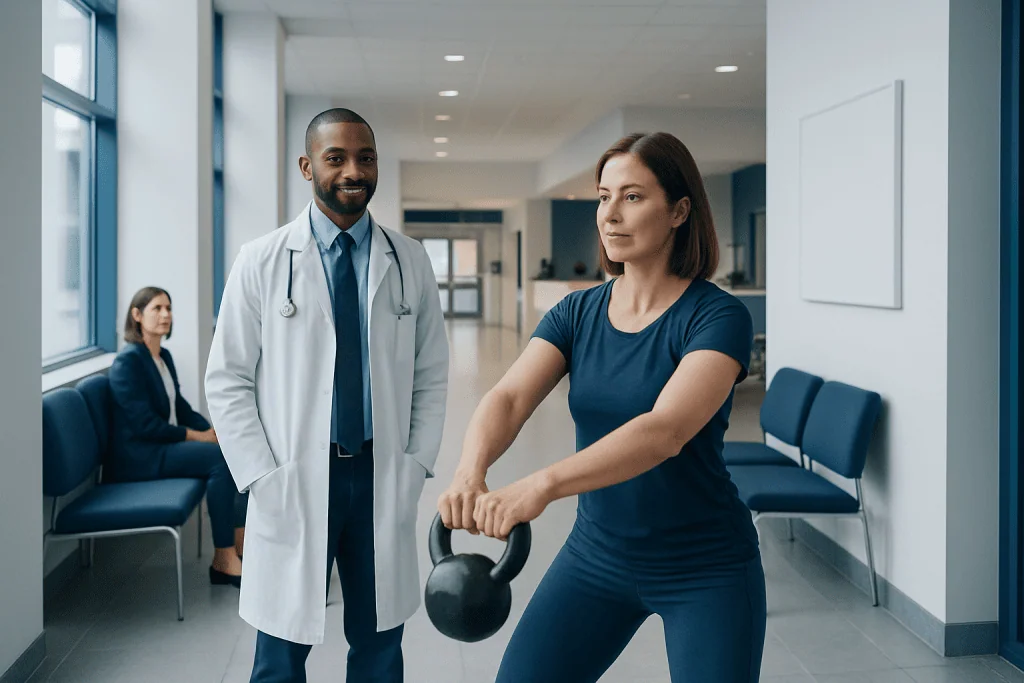
Kettlebell training can support whole-body strength, endurance, balance, and functional movement. Good technique matters more than lifting heavier weight, especially for swings, presses, and overhead movements.
Key Takeaways
- Kettlebell training can support whole-body strength, endurance, balance, and functional movement.
- Good technique matters more than lifting heavier weight, especially for swings, presses, and overhead movements.
- Common risks include back strain, shoulder irritation, wrist discomfort, and overuse injuries from poor form or rapid progression.
- Beginners benefit from learning core bracing, hip hinge mechanics, and controlled breathing before advanced drills.
- Persistent pain, swelling, numbness, dizziness, chest symptoms, or sudden weakness should be assessed by a doctor.
Exercise using kettlebell can improve strength, balance, coordination, and cardiovascular fitness when technique and load are appropriate. A medically informed approach focuses on posture, controlled progression, and knowing when pain or symptoms need professional evaluation.
Overview: What exercise using kettlebell means
Exercise using kettlebell refers to strength and conditioning movements performed with a cast-iron or steel weight that has an offset handle. This design changes how the body controls the load, often challenging grip, core stability, coordination, and balance more than some traditional dumbbell exercises. Common kettlebell movements include deadlifts, swings, squats, carries, presses, and Turkish get-ups.
From a medical and movement perspective, kettlebell training is not a single exercise but a style of resistance training that can be adapted for many fitness levels. It may help improve muscular strength, power, posture awareness, and daily function when exercises are selected carefully and performed with proper form. It can also raise heart rate, so some routines provide both strength and aerobic benefits.
The main question is not whether kettlebells are inherently good or bad, but whether the chosen exercise matches the person’s health status, mobility, training experience, and goals. For many healthy adults, kettlebell training can be a useful part of an exercise program. For people with joint pain, prior injury, heart or lung disease, balance problems, or pregnancy-related changes, exercise choice and intensity may need adjustment.
Potential benefits for strength, fitness, and daily function

Kettlebell exercises often involve multiple joints and muscle groups working together. Because of this, they can support functional strength used in daily life, such as lifting, carrying, standing from a chair, climbing stairs, and maintaining balance. The offset weight may also increase the demand on stabilizing muscles around the trunk, hips, and shoulders.
When programmed appropriately, exercise using kettlebell may improve several aspects of fitness at the same time. A session may combine resistance work with intervals or circuits that challenge the cardiovascular system. This can be helpful for people who want efficient workouts, although the intensity should always be tailored to the person’s baseline condition and medical history.
Possible benefits include:
- Improved lower-body and upper-body strength
- Better hip hinge mechanics and posterior chain activation
- Enhanced balance, coordination, and grip strength
- Core stability and trunk control during movement
- Moderate support for bone and joint health through weight-bearing activity
- Increased exercise variety and adherence for some people
These benefits depend on consistency, correct form, and recovery. Kettlebells are a tool, not a shortcut. They work best as part of a broader plan that also includes walking or other aerobic activity, mobility work, sleep, and balanced nutrition.
How kettlebell training affects the body

A kettlebell’s center of mass sits below the handle, so the body must continuously control the weight through motion. In a swing, for example, the power should come primarily from the hips rather than the arms or lower back. In a carry or overhead hold, the body must resist rotation and maintain alignment through the shoulders, spine, and pelvis.
This means kettlebell training can teach efficient movement patterns, especially the hip hinge, bracing of the abdominal wall, and coordinated breathing. These patterns may translate well to daily tasks. However, when technique is poor, the same features can place excess stress on vulnerable areas such as the lumbar spine, shoulder tendons, wrist, or knee.
Different exercises create different demands. Ballistic exercises such as swings, cleans, and snatches require more timing and force control. Grind exercises such as deadlifts, squats, floor presses, and carries are usually easier to learn and are often better starting points for beginners or people returning after injury. A gradual approach is especially important if there is a history of herniated disc, shoulder pain, or recurrent back strain.
Risks, common mistakes, and who should be cautious
Like any resistance training, exercise using kettlebell can cause injury if the load is too heavy, the movement is rushed, or pain is ignored. The most common problems are muscle strains, tendon irritation, bruising from poor handling, and flare-ups of pre-existing back, shoulder, neck, or knee conditions. Repetitive overhead lifting may aggravate some shoulder problems, while repeated swinging with poor hinge mechanics may overload the lower back.
Common technique errors include rounding the back during deadlifts or swings, lifting with the arms instead of driving from the hips, letting the knees collapse inward during squats, pressing overhead without adequate shoulder mobility, and progressing too quickly. Grip fatigue can also reduce control. If form breaks down, the safest choice is usually to stop, rest, or reduce the weight.
Extra caution is sensible for people who have:
- Current or recent back, shoulder, wrist, hip, or knee injury
- Balance problems or a history of falls
- Uncontrolled high blood pressure or known heart disease
- Dizziness, fainting episodes, or unexplained shortness of breath
- Pregnancy, especially if they are new to this type of training
- Neurologic conditions that affect coordination or strength
These situations do not always rule out kettlebell use, but they may require medical advice, supervised exercise, or a modified program. In some cases, evaluation in physical therapy and rehabilitation can help identify safer movement patterns and appropriate progression.
Getting started safely: form, load, and progression
For most beginners, the safest way to start is with slower, controlled exercises rather than fast or overhead drills. A simple progression might begin with bodyweight movement practice, then kettlebell deadlifts, goblet squats, carries, and floor presses before moving to swings or cleans. Learning how to brace the core, keep a neutral spine, and hinge from the hips is often more important than learning many exercises quickly.
General safety principles include warming up, choosing a manageable weight, and maintaining enough space around the body. Footwear should be stable, and the floor should not be slippery. During the set, breathing should stay controlled, and the person should be able to stop the movement safely at any time. Pain is a signal to reassess technique, range of motion, or suitability of the exercise.
Practical starting tips include:
- Begin with 2 to 3 sessions per week on nonconsecutive days
- Use a load that allows smooth, controlled repetitions
- Prioritize quality over speed or fatigue
- Increase only one variable at a time: weight, repetitions, or complexity
- Rest if grip fails or posture changes noticeably
- Seek coaching for swings, cleans, snatches, and Turkish get-ups
People with ongoing musculoskeletal pain may benefit from assessment by specialists in orthopedics and traumatology or rehabilitation before starting a more demanding program.
When exercise using kettlebell may help in recovery or prevention
In the right setting, kettlebell-based exercises can be used as part of prevention or recovery plans. Controlled carries, deadlifts, sit-to-stand patterns, and light squats may help rebuild strength, confidence, and movement efficiency after periods of inactivity. The key is that exercises are selected according to the person’s diagnosis, symptoms, and stage of healing rather than copied from a generic online workout.
For example, someone with desk-related deconditioning may benefit from learning the hip hinge, glute activation, and postural endurance. Someone recovering from a mild strain may need a temporary reduction in range of motion, slower tempo, and lower training volume. In contrast, a person with unresolved nerve symptoms or significant joint instability may need diagnostic evaluation before continuing exercise.
Underlying conditions can shape exercise decisions. People with persistent low back pain, recurring sciatica, or painful movement may need evaluation for problems such as lumbar disc herniation or other spine disorders. A structured exercise plan can still be valuable, but it should be guided by the clinical picture rather than by the exercise trend itself.
Self-care, recovery, and training habits that reduce injury risk
Recovery is part of training. Muscles and connective tissues adapt during rest, not only during exercise. Adequate sleep, balanced nutrition, hydration, and spacing hard sessions across the week may lower injury risk and improve results. Sudden increases in training volume are a frequent reason people develop overuse pain even when individual sessions seem manageable.
It is also useful to vary the training stimulus. A weekly plan may include kettlebell sessions alongside walking, cycling, swimming, flexibility work, or mobility drills. This helps distribute stress across tissues and supports broader health. People whose jobs involve heavy lifting may need to account for workplace physical load when planning exercise intensity.
Helpful habits include:
- Warm up with gentle mobility and rehearsal of the planned movement pattern
- Stop a session if sharp pain, loss of control, or unusual symptoms occur
- Record exercises, repetitions, and symptoms to identify patterns
- Allow extra recovery after illness, travel, poor sleep, or long inactivity
- Return gradually after pain flares, rather than resuming at the same level immediately
If symptoms repeatedly return despite sensible adjustments, assessment may be needed. In selected cases, clinicians may recommend imaging, rehabilitation, or a more tailored exercise plan through services such as sports medicine.
When to seek medical care
Most mild muscle soreness after an unfamiliar workout improves within a few days. Medical advice is more important when pain is severe, does not improve, or interferes with walking, sleep, work, or normal arm movement. Joint swelling, repeated locking, or a feeling that a joint is unstable also deserves attention.
Urgent assessment is appropriate if symptoms started suddenly during lifting and include a popping sensation, marked weakness, deformity, severe back pain with leg numbness, loss of bladder or bowel control, chest pain, fainting, or significant shortness of breath. These symptoms are not typical delayed-onset muscle soreness and should not be ignored.
A doctor may assess range of motion, strength, nerve function, and movement pattern, and decide whether rest, rehabilitation, medication, or imaging is needed. For international patients who need specialist evaluation, Acibadem International’s multidisciplinary teams in JCI-accredited hospitals diagnose and treat musculoskeletal and exercise-related problems with individualized care.
Frequently asked questions
Is exercise using kettlebell good for beginners?
Yes, kettlebell training can be suitable for beginners when it starts with simple, controlled movements and light to moderate loads. Learning the hip hinge, posture, and breathing pattern first usually makes training safer and more effective.
Can kettlebell exercise help with weight management?
Kettlebell workouts can support weight management by increasing physical activity and building muscle strength. However, body weight changes usually depend on the overall pattern of exercise, nutrition, sleep, and long-term consistency.
Why does the lower back sometimes hurt during kettlebell swings?
Lower back pain during swings often relates to technique issues such as rounding the spine, using the arms to lift, or lacking hip drive and core bracing. It can also reflect an underlying back condition or using a load that is too heavy.
Are kettlebells better than dumbbells?
Neither tool is universally better. Kettlebells can be especially useful for carries, hinge patterns, and certain dynamic movements, while dumbbells may be easier for some isolated strength exercises and for people learning basic resistance training.
How often should a person do kettlebell workouts?
For many adults, two to three nonconsecutive sessions per week is a reasonable starting point. The ideal frequency depends on fitness level, goals, age, recovery, and whether other sports or physical work are part of the week.
Who should talk to a doctor before starting kettlebell training?
People with heart disease, uncontrolled blood pressure, recent surgery, significant joint or spine pain, dizziness, balance problems, or pregnancy-related concerns should consider medical advice first. A clinician can help decide what type of exercise is appropriate and whether any modifications are needed.
This article is for general information only and is not a substitute for professional medical advice. Please consult a qualified doctor about your individual situation.
Joint and spine care in Turkey — expert assessment & treatment
JCI-accredited · board-certified surgeons · reply within 24h
Add us as a Preferred Source to see more of our trusted health content across Google Search, AI Overviews and Discover.
Check your numbers in seconds
BMI, calories, due date, blood pressure and 30+ more clinical calculators — free, instant, doctor-reviewed ranges.

More from the Health Library

Arthrodesis: What Patients Need to Know

Stevia: A Complete Medical Overview

Retina — Explained by Medical Evidence, Not Myths

Fresh Kurkuma: What Patients Need to Know

Cortizone cream: Symptoms, Causes, and Treatment — Complete Patient Guide