External Radiation: How It Works, Results and What to Expect
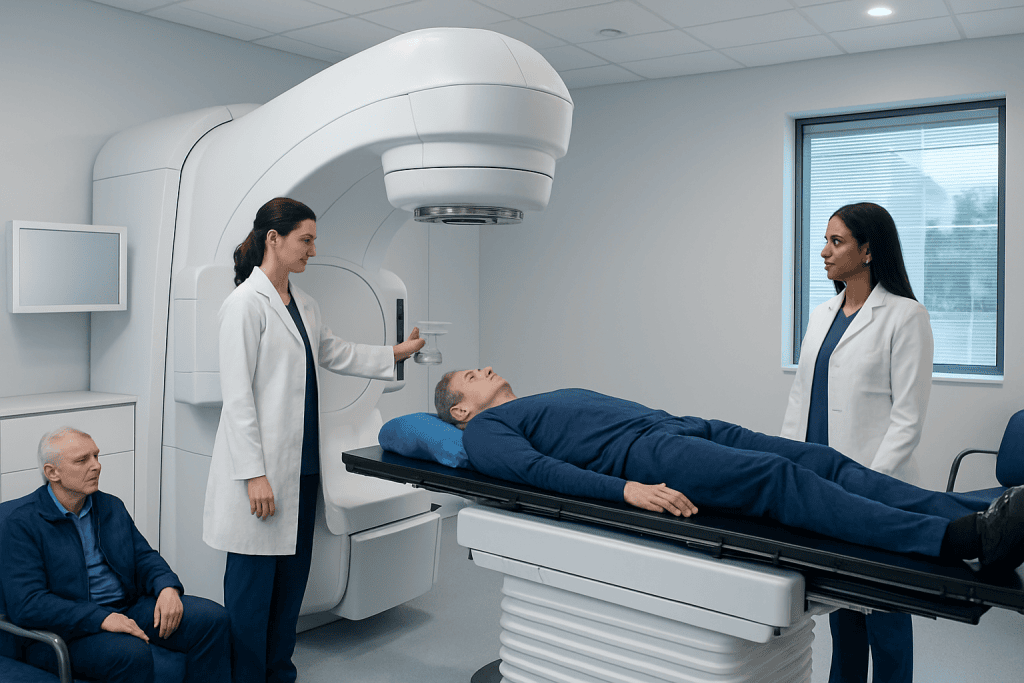
External radiation directs radiation from outside the body toward a planned treatment target. It is commonly used alone or alongside surgery, chemotherapy, immunotherapy, or hormone therapy.
Key Takeaways
- External radiation directs radiation from outside the body toward a planned treatment target.
- It is commonly used alone or alongside surgery, chemotherapy, immunotherapy, or hormone therapy.
- Planning scans and image guidance help the team deliver treatment accurately while limiting dose to nearby healthy tissue.
- Most people are not radioactive after external beam treatment and can safely be around others.
- Side effects depend mainly on the body area treated, total dose, and whether other treatments are used at the same time.
- Follow-up care is important to assess treatment response, manage side effects, and support long-term health.
External radiation, also called external beam radiation therapy, uses carefully planned high-energy beams delivered from a machine outside the body to treat cancer and some noncancerous conditions. Treatment is painless during each session, individualized to the diagnosis and treatment area, and supported by a team that monitors side effects and recovery throughout care.
External Radiation Overview
External radiation is a form of radiation therapy in which a machine directs high-energy beams toward a tumor or another carefully selected area of the body. The external radiation definition is treatment delivered from outside the body, unlike internal radiation therapy, where a radioactive source is placed inside or close to the treatment area. It is most often used to treat cancer.
In practical terms, external radiation meaning is a precisely planned treatment designed to damage the DNA of cancer cells so they can no longer grow or divide effectively. Healthy cells near the treatment field can also be affected, but they often recover better than cancer cells between treatments. Radiation oncologists shape and aim the beams to give the intended dose to the target while reducing exposure to nearby organs.
External radiation examples include treatment for breast, prostate, lung, head and neck, brain, gynecologic, skin, and colorectal cancers. It may be used to cure a cancer, lower the chance of recurrence after surgery, shrink a tumor before surgery, relieve symptoms caused by advanced cancer, or treat selected noncancerous conditions.
How External Radiation Works
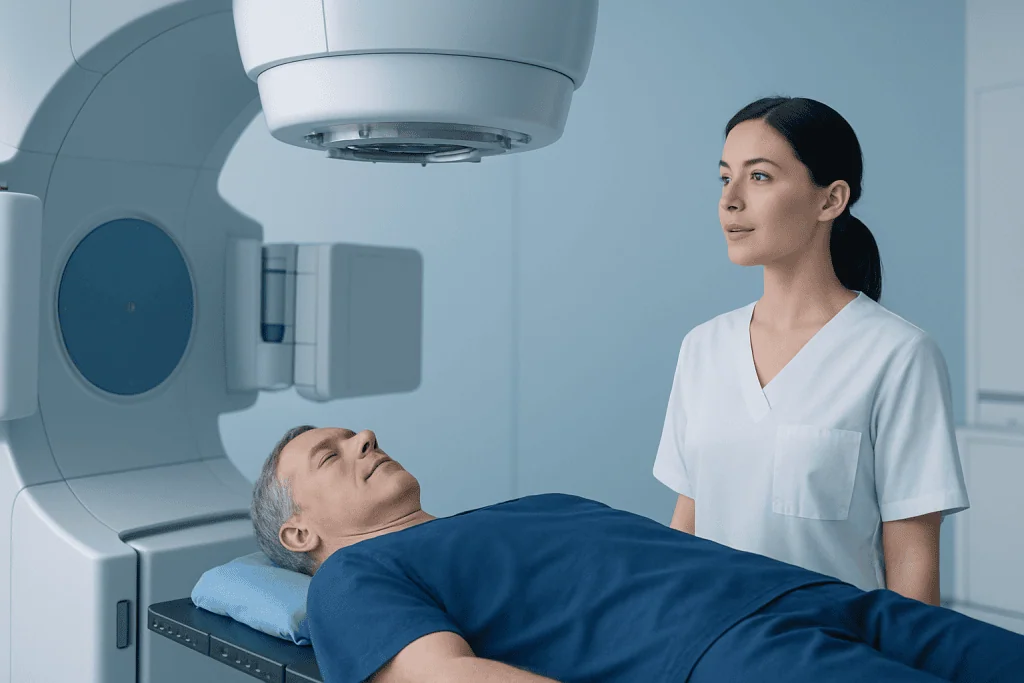
Modern external beam radiation therapy is delivered by a large machine called a linear accelerator. The machine moves around the treatment couch without touching the patient and sends radiation beams through the skin to the planned target. The treatment team remains nearby and can see and hear the patient throughout the session.
Radiation is a physical form of energy. In cancer treatment, its effect is measured in gray (Gy), a unit describing absorbed radiation dose. Outside medical treatment, external radiation exposure is measured by different units depending on what is being assessed; for example, millisieverts may be used to describe exposure and related biological effect. These measurements should not be compared directly without clinical context.
Techniques may include three-dimensional conformal radiation therapy, intensity-modulated radiation therapy, image-guided radiation therapy, stereotactic radiation therapy, and proton therapy in selected settings. The best approach depends on the tumor type, size, location, previous treatments, and the need to protect nearby structures such as the spinal cord, heart, bowel, eyes, or salivary glands.
External radiation does not make a person radioactive. After a standard external beam session, patients may usually spend time with family members, children, and pregnant people without radiation safety restrictions. The care team will explain if any special precautions apply because of a different type of radiation treatment.
Who May Be a Candidate

Eligibility for external radiation is determined by a multidisciplinary cancer team, usually including a radiation oncologist, medical oncologist, surgeon, radiologist, pathologist, and other specialists as needed. It may be recommended as the main treatment, after surgery to target microscopic cancer cells that may remain, before surgery to reduce tumor size, or with systemic treatments such as chemotherapy or immunotherapy.
The decision is individualized. The team considers the confirmed diagnosis, cancer stage, tumor location, imaging findings, prior surgery or radiation, overall health, current medicines, and personal treatment goals. Some people may need radiation urgently to ease pain, bleeding, pressure, or other symptoms caused by a tumor.
Previous radiation to the same body area does not always rule out further treatment, but it requires especially careful assessment. Certain conditions, including connective tissue disorders, implanted medical devices, pregnancy, or significant difficulty lying still, may affect planning. These factors are discussed openly so the expected benefits and possible risks can be balanced appropriately.
For many cancers, radiation is part of coordinated care rather than an isolated decision. Patients may also wish to learn about related diagnoses such as breast cancer or prostate cancer when these conditions are relevant to their treatment plan.
What Happens Before and During Treatment
The process usually begins with a consultation. The radiation oncologist reviews medical records, pathology results, scans, symptoms, and previous treatments. They explain the purpose of treatment, likely schedule, alternatives, possible short- and long-term effects, and the practical support available during care.
Next comes simulation, which is a planning appointment rather than a treatment session. A CT scan is often used to map the treatment area. The team may make a customized mask, cushion, body mold, or other positioning aid to help the patient stay in the same position each day. Small skin marks or tiny permanent tattoo dots may be used as alignment guides.
Radiation oncologists, medical physicists, and dosimetrists then create a detailed plan. They decide the beam angles, total dose, number of sessions, and protections for nearby normal tissue. This planning can take several days or longer, depending on the complexity of treatment.
At each treatment visit, radiographers or radiation therapists position the patient and may take imaging to confirm alignment. The actual beam delivery is usually brief and painless, although the full appointment can take longer because careful positioning is essential. Treatment may be given in a single session, over several days, or on weekdays for several weeks, depending on the condition and technique. Radiation therapy plans should always be followed as prescribed, and patients should tell the team if positioning becomes uncomfortable.
Benefits, Risks and Possible Side Effects
The main benefit of external radiation is its ability to target a defined area without surgery. It can preserve organs and function in some situations, improve the likelihood of local cancer control, and reduce symptoms such as pain, bleeding, or blockage when cure is not possible. The expected benefit varies by cancer type and treatment goal.
Side effects happen because normal cells in the treatment field may also be affected. Early effects often begin during treatment or in the weeks afterward and can include tiredness, skin redness or sensitivity, hair loss in the treated area, and symptoms related to the body part being treated. For example, abdominal or pelvic radiation may cause bowel or bladder changes, while head and neck treatment can affect the mouth and throat.
Most short-term effects improve gradually after treatment ends, though recovery may take several weeks. Some people develop late effects months or years later, such as changes in skin texture, tissue firmness, hormonal function, fertility, bowel or bladder function, or nerve function. The care team explains the risks most relevant to the planned field before treatment begins.
Serious complications are uncommon but possible, and their likelihood depends on the dose, location, other treatments, and individual health factors. Reporting symptoms early allows the team to provide supportive care, adjust practical strategies, and arrange review when needed. Patients should not stop or miss treatment without speaking with their radiation team.
Recovery Timeline and Self-Care
Most people return home after each external radiation appointment and can continue many usual activities. However, fatigue may build gradually across the treatment course and can continue for a few weeks afterward. Rest, gentle activity when tolerated, regular meals, adequate fluids, and accepting help with daily tasks can support recovery.
Skin in the treatment area should be treated gently. The radiation team may advise using mild products, avoiding friction, protecting the area from sun exposure, and not applying creams, deodorants, or dressings immediately before treatment unless approved. Individual instructions are important because skin care recommendations differ according to the treatment site.
Nutrition needs can change during radiation, particularly when the mouth, throat, chest, stomach, abdomen, or pelvis is treated. A dietitian may help with maintaining calorie and protein intake, managing swallowing difficulty, nausea, diarrhea, constipation, or appetite changes. The oncology team can also recommend medicines and other measures for symptom relief.
Follow-up appointments are scheduled to assess recovery and treatment response. Imaging and blood tests may be needed at intervals, but the timing varies by diagnosis. Acibadem International’s multidisciplinary specialists and JCI-accredited hospitals provide evaluation and radiation treatment planning for international patients, with follow-up coordinated according to individual needs.
When to Seek Medical Care
Patients should contact their radiation oncology team promptly if side effects are difficult to manage, symptoms worsen quickly, or they are unable to eat, drink, take prescribed medicines, or attend treatment. The team is the best first point of contact because it knows the treatment field and current plan.
Urgent medical assessment is needed for symptoms such as severe shortness of breath, chest pain, confusion, fainting, uncontrolled bleeding, a high fever, severe allergic-type swelling, persistent vomiting, or severe pain. New weakness, loss of bladder or bowel control, or sudden changes in vision or speech also require urgent attention.
After treatment, any new or persistent symptom should be discussed at follow-up rather than assumed to be a normal radiation effect. Ongoing communication helps distinguish expected recovery changes from conditions that need further assessment or treatment.
Frequently asked questions
Is external radiation painful?
External radiation treatment itself is painless. A person does not feel the radiation beam, although holding the treatment position may become uncomfortable for some people. The treatment team can help with positioning and comfort concerns.
How long does external radiation take?
The schedule varies widely. Some treatments are completed in one to five sessions, while others are delivered on weekdays over several weeks. Each visit includes setup and verification, while the actual radiation delivery often takes only a few minutes.
Will I be radioactive after external radiation?
No. Standard external beam radiation comes from a machine outside the body and does not leave radioactive material inside the patient. People can generally be near others as usual after treatment.
What are common external radiation side effects?
Common effects include fatigue, skin irritation in the treatment area, and symptoms related to the body part receiving radiation. For example, treatment near the pelvis may affect bowel or bladder habits, while treatment to the head and neck can affect the mouth and swallowing. Side effects vary significantly between individuals.
Can external radiation be combined with chemotherapy?
Yes, radiation may be combined with chemotherapy, immunotherapy, hormone therapy, surgery, or other treatments. In some situations, chemotherapy can make cancer cells more sensitive to radiation. Combining treatments can also increase side effects, so close monitoring is important.
When will results from external radiation be known?
Radiation effects develop over time, so results may not be immediate. Some symptoms improve during or shortly after treatment, while tumor response on scans may take weeks or months to assess. The follow-up schedule depends on the cancer type and treatment purpose.
References
- National Cancer Institute
- American Cancer Society
- American Society for Radiation Oncology
- International Atomic Energy Agency
- World Health Organization
This article is for general information only and is not a substitute for professional medical advice. Please consult a qualified doctor about your individual situation.
Oncology care in Turkey — second opinion and treatment plan
JCI-accredited · board-certified surgeons · reply within 24h
Add us as a Preferred Source to see more of our trusted health content across Google Search, AI Overviews and Discover.