Eye Doctor for LASIK: An Evidence-Based Patient Guide

LASIK is performed by ophthalmologists, medical doctors who specialize in eye surgery and refractive care. A detailed preoperative examination is essential because not everyone is a suitable LASIK candidate.
Key Takeaways
- LASIK is performed by ophthalmologists, medical doctors who specialize in eye surgery and refractive care.
- A detailed preoperative examination is essential because not everyone is a suitable LASIK candidate.
- LASIK reshapes the cornea to reduce dependence on glasses or contact lenses, but it does not prevent age-related vision changes.
- Most people notice improved vision quickly, while healing and visual stabilization continue over several weeks to months.
- Potential effects include dry eye, glare or halos, undercorrection or overcorrection, and rare but important corneal complications.
- Long-term eye examinations remain important after LASIK, including screening for cataracts, glaucoma and retinal conditions.
An eye doctor for LASIK should be an ophthalmologist trained and experienced in refractive surgery, not simply a provider who performs a vision screening. A full assessment of eye health, corneal shape, prescription stability and visual needs helps determine whether LASIK, another laser procedure or non-surgical correction is the safest option.
Overview: Choosing an Eye Doctor for LASIK
An eye doctor for LASIK should usually be an ophthalmologist: a medical doctor who diagnoses eye disease, performs eye surgery and provides ongoing eye care. For laser vision correction, the most appropriate clinician has specific training and practical experience in refractive surgery, including evaluating the cornea and managing possible postoperative concerns.
LASIK, or laser-assisted in situ keratomileusis, is an elective procedure that changes the shape of the cornea, the clear front surface of the eye. This can improve how light focuses on the retina and reduce reliance on glasses or contact lenses for nearsightedness, farsightedness or astigmatism. It is not the best choice for every person, and a careful consultation matters more than a quick eligibility check.
A trustworthy eye doctor for LASIK surgery should discuss expected benefits, alternatives, limitations and risks in terms the patient can understand. The consultation should also consider daily activities, night-driving needs, contact sports, work environment, general health and the possibility that reading glasses may still be needed later in life.
What Type of Eye Doctors Do LASIK?
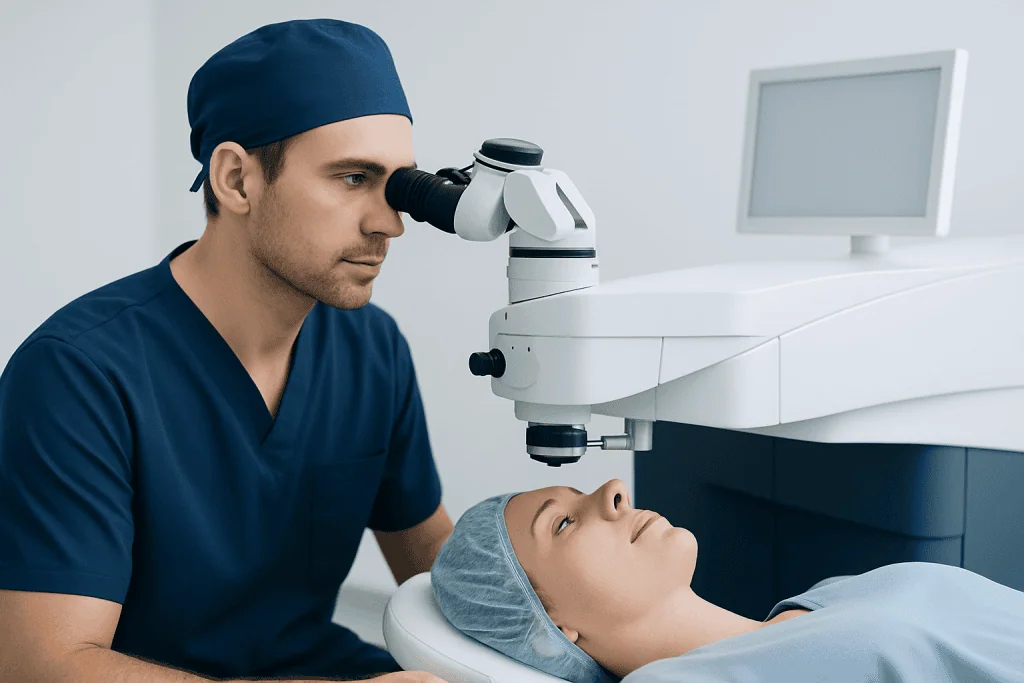
LASIK is performed by an ophthalmologist, a physician who has completed medical training and specialist education in eye diseases and eye surgery. Many LASIK surgeons have additional focused experience in corneal and refractive surgery. They are qualified to assess whether laser surgery is appropriate, perform the procedure and treat complications if they occur.
Optometrists are important eye-care professionals who examine vision, prescribe glasses and contact lenses, and help identify eye-health concerns. Depending on local regulations and the care setting, they may take part in preoperative assessments or postoperative monitoring. However, they do not generally perform LASIK surgery.
Patients may wish to ask a prospective surgeon about their refractive surgery training, experience with the recommended technique, approach to managing dry eye and corneal findings, and the planned follow-up schedule. A good consultation includes time for questions and does not assume that laser surgery is necessary simply because a person wants less dependence on corrective lenses.
- Ask which laser vision correction options are suitable and why.
- Ask how corneal thickness and shape will be measured.
- Ask what symptoms should prompt urgent contact after surgery.
- Ask whether the surgeon will personally provide postoperative care or coordinate it with another eye-care clinician.
How LASIK Works and What Happens During the Procedure
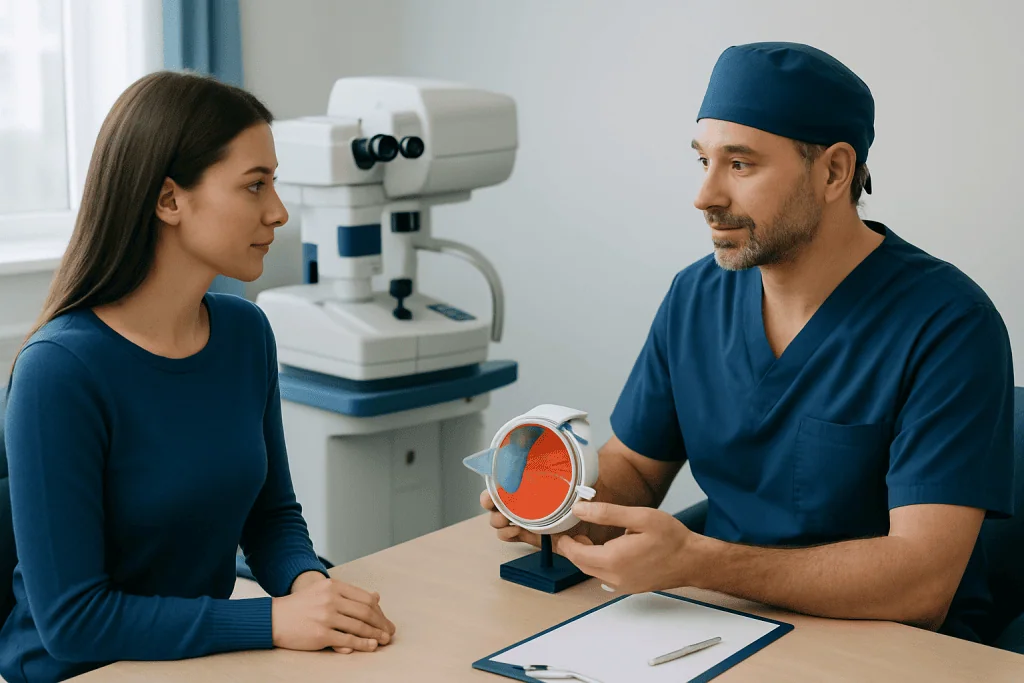
LASIK corrects refractive error by reshaping the cornea. In a commonly used approach, the surgeon creates a thin hinged corneal flap with a femtosecond laser. The flap is gently lifted, and an excimer laser removes microscopic amounts of corneal tissue according to the planned prescription. The flap is then returned to its original position, where it naturally adheres without stitches.
Before surgery, the eye doctor uses detailed tests to measure prescription, corneal thickness, curvature and surface regularity. Pupil size, tear production and overall eye health are also reviewed. Modern planning may include corneal mapping and wavefront measurements to help personalize treatment, although the appropriate approach depends on individual findings.
On the day of the procedure, numbing eye drops are used. The person is awake but should not feel pain; there may be pressure and temporary blurred vision. The laser portion is brief, and both eyes are often treated during the same visit. The eye doctor provides protective shields and written aftercare instructions before the patient goes home with an accompanying adult.
LASIK is one form of laser eye surgery. Other options, such as surface laser procedures or implantable lenses, may be more appropriate when corneal measurements, prescription level or lifestyle considerations make LASIK less suitable.
Who Is a Candidate for LASIK and What Disqualifies You for LASIK Surgery?
Appropriate candidates are adults whose vision prescription has been stable for a period determined by the surgeon and whose corneas and eye surface are healthy enough for surgery. They should understand that LASIK aims to reduce dependence on glasses or contacts, not necessarily provide perfect vision in every setting or permanently eliminate the need for future visual correction.
What disqualifies you for LASIK surgery? Disqualification may be temporary or permanent. Reasons include an unstable prescription, corneas that are too thin or irregular, keratoconus or suspected corneal weakness, significant dry eye, active eye infection or inflammation, uncontrolled glaucoma, certain retinal conditions, and cataracts that are already affecting vision. Pregnancy and breastfeeding commonly lead to postponement because hormonal changes can alter vision and tear production.
Some medical conditions or medicines may affect healing and need individual assessment. Autoimmune disease, diabetes that is not well controlled, immune suppression and a history of poor wound healing do not automatically rule out treatment, but they require careful evaluation. A previous eye injury or surgery may also influence the safest option.
Corneal thinning disorders such as keratoconus are particularly important to identify before any laser vision correction. In these situations, removing corneal tissue could further weaken the cornea. An experienced refractive ophthalmologist will recommend against LASIK when the expected safety margin is not adequate.
At What Age Is LASIK Not Worth It?
At what age is LASIK not worth it? There is no single age at which LASIK automatically stops being worthwhile. Suitability depends more on eye health, prescription stability, corneal measurements, near-vision needs, cataract development and personal goals than on chronological age alone.
LASIK is generally not offered to people younger than 18, and many surgeons prefer evidence that the prescription has stabilized before proceeding. In the 40s and beyond, presbyopia becomes common. This is the age-related loss of near focusing ability that makes reading glasses more likely, even for people who have previously seen clearly at distance without glasses.
For some people in midlife, monovision—correcting one eye more for distance and the other more for near tasks—may be discussed. A contact lens trial can help assess whether the brain adapts comfortably before surgical monovision is considered. For people with early or established cataracts, lens-based procedures may be more relevant than corneal laser surgery.
The best decision is based on a personalized discussion of present vision and likely future needs. A patient should not choose LASIK solely because of age, nor reject it solely because they are older; a comprehensive ophthalmic examination provides the information needed to weigh the options.
Recovery Timeline, Benefits and Possible Risks
Many people notice clearer vision within a day after LASIK, although vision can fluctuate during early healing. Mild burning, watering, light sensitivity, grittiness and blurred vision are common during the first several hours. Eye drops and protective shields are typically prescribed, and the surgeon gives specific advice about washing, screen use, exercise, makeup and returning to work.
During the first week, patients should avoid rubbing their eyes and follow all instructions about medications and follow-up visits. Swimming, hot tubs and activities with a higher risk of eye trauma may need to be avoided for a longer period. Vision often continues to refine over several weeks, and dry-eye symptoms can take months to settle in some individuals.
Potential benefits include reduced dependence on glasses or contact lenses and improved convenience for suitable candidates. Potential risks include temporary or persistent dry eye, glare, halos, starbursts around lights, reduced contrast sensitivity, undercorrection, overcorrection and the need for further correction. Rarely, flap problems, infection, inflammation or corneal ectasia can affect vision and require prompt specialist care.
Patients should attend all scheduled reviews even if vision feels good. Follow-up helps the ophthalmologist assess healing, corneal stability and eye-surface health, and it provides an opportunity to discuss symptoms that may be affecting comfort or night vision.
What Happens 10 Years After LASIK?
What happens 10 years after LASIK? For many people, the corneal reshaping achieved by LASIK remains stable over the long term. However, the eyes continue to change naturally with age. A person may develop presbyopia and need reading glasses, while some may have a gradual change in distance prescription or consider an enhancement after a new assessment.
LASIK does not prevent cataracts, glaucoma, diabetic eye disease, retinal tears or macular disease. It is therefore important to continue routine comprehensive eye examinations. Patients should tell future eye-care professionals that they have had LASIK, as prior corneal surgery can affect how certain measurements, including eye pressure and lens calculations for cataract surgery, are interpreted.
Some people experience long-term dry eye or night-vision symptoms, while others have no ongoing symptoms. New or worsening blur, pain, redness, flashes of light, a shower of floaters or a curtain-like shadow in vision should not be attributed to old LASIK without examination. These symptoms may have causes unrelated to the earlier procedure and need timely assessment.
An eye doctor PDF or online checklist can be helpful for organizing questions before consultation, but it cannot replace a full eye examination. The decision should be based on measured eye findings and a direct discussion with a qualified ophthalmologist.
When to Seek Medical Care
Anyone considering LASIK should arrange a comprehensive consultation with an ophthalmologist rather than relying on an online screening tool alone. This is particularly important for people with dry eye symptoms, a history of contact lens intolerance, previous eye injury or surgery, diabetes, autoimmune disease, glaucoma, or a family history of keratoconus.
After LASIK, urgent eye assessment is needed for significant or increasing pain, worsening redness, sudden reduction in vision, increasing sensitivity to light, discharge, trauma to the eye, or a new visual field shadow. These symptoms are uncommon but should be evaluated promptly because early treatment can protect eye health.
For international patients, Acibadem International’s multidisciplinary specialists and JCI-accredited hospitals can assess refractive surgery candidacy and coordinate eye care when treatment is appropriate. The safest pathway remains an individualized evaluation, clear informed consent and planned follow-up with an experienced eye-care team.
Frequently asked questions
How do I choose the best eye doctor for LASIK?
The appropriate doctor is an ophthalmologist with training and experience in refractive surgery. Patients can ask about the evaluation process, the techniques offered, expected follow-up and how the practice handles complications or unexpected healing issues. The consultation should include a full eye-health assessment and a balanced discussion of alternatives.
Can an optometrist perform LASIK?
LASIK surgery is generally performed by an ophthalmologist, who is a medical doctor and eye surgeon. Optometrists may contribute to vision assessments, referrals and follow-up care depending on the healthcare system. The surgical decision and procedure should be led by a qualified refractive ophthalmologist.
Is LASIK permanent?
The corneal reshaping from LASIK is intended to be permanent, but the eye can still change with time. Age-related presbyopia can create a need for reading glasses, and some people develop a change in prescription years later. LASIK also does not prevent cataracts or other eye conditions.
Can LASIK be repeated after 10 years?
An enhancement may be possible for some people if a meaningful residual prescription develops and the cornea remains healthy and thick enough. A new, detailed examination is required before considering additional laser treatment. Not everyone is a suitable candidate for an enhancement, particularly if dry eye, corneal changes or lens changes are present.
How long should contact lenses be stopped before a LASIK examination?
Contact lenses can temporarily change corneal shape, which may affect the accuracy of LASIK measurements. The required break depends on the lens type and the surgeon’s protocol. Patients should ask the clinic for specific instructions and follow them before their assessment.
Will I need reading glasses after LASIK?
Many people eventually need reading glasses because presbyopia is a normal age-related change in near focusing. LASIK can correct distance vision but does not stop presbyopia from developing. Monovision and other strategies may be discussed during the consultation, depending on visual needs and eye health.
References
- American Academy of Ophthalmology
- U.S. Food and Drug Administration
- National Eye Institute
- Royal College of Ophthalmologists
This article is for general information only and is not a substitute for professional medical advice. Please consult a qualified doctor about your individual situation.
LASIK in Turkey — costs, top hospitals & a free quote
JCI-accredited · board-certified surgeons · reply within 24h