Eye Movement Disorders: How Neuro-Ophthalmologists Diagnose Misalignment and Nerve Palsies

Eye movement disorders can cause double vision, eye misalignment, blurred vision, dizziness, or difficulty reading. These problems may result from nerve palsies, muscle disorders, thyroid eye disease, stroke, head injury, or other neurological conditions.
Key Takeaways
- Eye movement disorders can cause double vision, eye misalignment, blurred vision, dizziness, or difficulty reading.
- These problems may result from nerve palsies, muscle disorders, thyroid eye disease, stroke, head injury, or other neurological conditions.
- Diagnosis usually includes a careful eye exam, alignment testing, and sometimes blood tests or brain and orbit imaging.
- Treatment depends on the cause and may include prisms, patching, medications, eye muscle surgery, or treatment of the neurological condition.
- New or sudden double vision, drooping eyelid, severe headache, or weakness needs prompt medical evaluation.
Eye movement disorders are conditions that affect how the eyes move together, align, or focus on a target. A neuro-ophthalmologist helps identify whether the cause is related to the eye muscles, the nerves controlling them, or the brain, and then guides treatment based on the underlying problem.
Overview of Eye Movement Disorders
Eye movement disorders are a group of conditions that affect the ability of the eyes to move normally, stay aligned, or work together as a team. When the eyes do not point to the same place at the same time, the brain may receive two different images. This can lead to double vision, blurred vision, eye strain, or a sense that the world is tilted or unstable.
These disorders can arise from problems in different parts of the visual system. The issue may involve the eye muscles themselves, the nerves that control those muscles, the brain centers that coordinate eye movements, or the communication between nerves and muscles. Because many body systems can be involved, evaluation often requires both eye expertise and neurological assessment.
A neuro-ophthalmologist is a specialist who evaluates visual problems related to the nervous system. In people with suspected eye movement disorders, this specialist looks closely at how the eyes move in different directions, whether the eyes are aligned, and whether there are signs of nerve weakness or other neurological disease. The goal is not only to confirm the eye movement problem but also to identify its underlying cause.
Common Symptoms and Signs
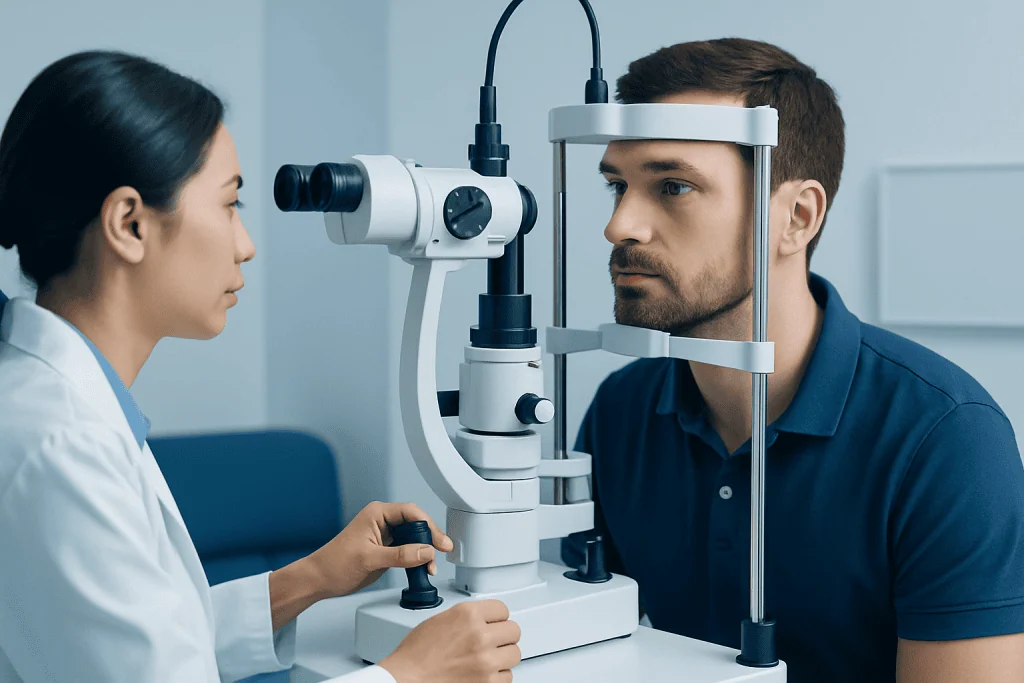
Symptoms vary depending on which eye movement system is affected and whether the problem is constant or intermittent. Double vision is one of the most common complaints, especially when looking in certain directions or when reading. Some people notice one eye drifting inward, outward, upward, or downward. Others may not see obvious misalignment but feel that focusing is difficult or tiring.
Children and adults can present differently. Adults often describe sudden double vision because the brain is less likely to suppress one image. Children may adapt more easily and may not complain of double vision, but they can develop head tilting, squinting, poor depth perception, or difficulty with visual tasks. Persistent misalignment in childhood can affect visual development and may be associated with strabismus.
Other symptoms can include headaches, trouble reading lines of text, dizziness, nausea, imbalance, or needing to close one eye to see clearly. In some disorders, there may also be drooping of the eyelid, unequal pupil size, facial numbness, weakness, or changes in speech. These associated signs can help doctors determine whether the cause is primarily in the eyes, the nerves, or the brain.
- Double vision that worsens in one direction of gaze
- An eye that appears crossed or wanders
- Head tilt or turning the face to reduce symptoms
- Difficulty tracking moving objects
- Blurred vision or eye strain when reading
Causes and Risk Factors

Eye movement disorders have many possible causes. One important group includes cranial nerve palsies, in which one of the nerves controlling eye muscles does not function normally. Third, fourth, and sixth nerve palsies can cause characteristic patterns of misalignment and limited movement. These may occur because of reduced blood flow to a nerve, inflammation, infection, compression, head trauma, or other neurological conditions.
Another group involves diseases of the muscles or the connection between the nerve and muscle. Thyroid eye disease can restrict eye movement because tissues around the eye muscles become inflamed or enlarged. Myasthenia gravis can cause fluctuating weakness, leading to variable double vision or drooping eyelids that worsen with fatigue. Some people have long-standing or childhood-onset alignment problems that become more noticeable later in life.
Brain-related causes also need to be considered. Stroke, multiple sclerosis, tumors, increased pressure inside the skull, migraine-related neurological symptoms, and degenerative neurological diseases can all affect eye movement control. Traumatic brain injury may disturb coordination even when the eyes themselves are healthy. In addition, orbital fractures or inflammation around the eye can mechanically limit movement.
Risk factors depend on the underlying condition but may include older age, diabetes, high blood pressure, thyroid disease, autoimmune disorders, smoking, recent infection, and head injury. Because some causes are urgent while others are less serious, the pattern of symptoms and the time course are very important in deciding how quickly testing is needed.
How Neuro-Ophthalmologists Diagnose Misalignment and Nerve Palsies
Diagnosis begins with a detailed medical history. The doctor asks when the symptoms started, whether they came on suddenly or gradually, whether they are constant or variable, and whether they are worse in certain directions of gaze or at certain times of day. A history of vascular risk factors, thyroid disease, autoimmune disease, recent infection, cancer, trauma, or neurological symptoms may provide important clues.
The examination is highly structured. A neuro-ophthalmologist checks visual acuity, pupils, eyelid position, eye alignment in primary gaze, and how each eye moves in all directions. Special alignment tests measure the size and pattern of any deviation. The doctor also looks for abnormal head posture, jerky eye movements, nystagmus, and signs that suggest a particular cranial nerve palsy or restrictive problem. The optic nerve and retina may be examined after dilating the pupils.
Additional testing is chosen based on the findings. Blood tests may help identify thyroid eye disease, myasthenia gravis, inflammation, infection, or other systemic illness. Imaging such as MRI or CT of the brain and orbits may be needed if there is concern for stroke, tumor, inflammation, orbital disease, or nerve compression. In selected cases, doctors may recommend specialized eye movement testing or consultation with neurology, endocrinology, or other specialists.
The purpose of diagnosis is not only to label the eye movement disorder but also to determine whether it is isolated and likely to improve, or whether it is part of a broader condition that needs prompt treatment. This is especially important when symptoms are sudden, painful, progressive, or accompanied by other neurological signs.
Treatment Options
Treatment depends on the cause, severity, and duration of the problem. In some cases, especially certain small-vessel nerve palsies, the main approach is careful observation while the nerve recovers over time. Temporary symptom relief may include covering one eye, using a translucent patch, or prescribing prism glasses to help bring the two images together. These options can make daily activities more comfortable while the doctor monitors healing.
When an underlying disease is identified, treatment focuses on that condition. For example, myasthenia gravis may require medical therapy, and thyroid eye disease may need coordinated management with endocrinology and ophthalmology. If the eye movement disorder is related to stroke, inflammation, or another brain disorder, treatment is directed at that cause. When imaging is needed to clarify a suspected neurological problem, doctors may use MRI imaging as part of the evaluation.
If misalignment remains stable and continues to cause symptoms, more targeted options may help. Prism correction can reduce double vision in selected patients. Some people benefit from botulinum toxin injection into certain eye muscles. Others may be considered for eye muscle surgery to improve alignment, reduce abnormal head posture, and support binocular vision. The right approach depends on careful measurement and specialist assessment.
In complex cases, coordinated care is especially valuable. A neuro-ophthalmologist may work with neurology, endocrinology, radiology, and pediatric or adult ophthalmology. Near the end of the diagnostic pathway, some international patients seek evaluation at centers such as Acibadem International, where multidisciplinary specialists in JCI-accredited hospitals diagnose and treat eye movement disorders based on the individual cause.
Prevention and Self-Care
Not all eye movement disorders can be prevented, but some steps may reduce the risk of certain causes or lessen symptoms. Managing diabetes, blood pressure, and cholesterol helps protect blood vessels that supply the cranial nerves. Avoiding smoking and following treatment plans for thyroid disease or autoimmune conditions may also support overall eye and nerve health.
For people already experiencing symptoms, self-care focuses on safety and comfort. Double vision can affect driving, climbing stairs, using tools, and reading. Until the cause is known and symptoms are controlled, it may be wise to avoid activities that could become unsafe. Good lighting, larger print, regular breaks during screen use, and temporary occlusion of one eye may help some people cope with daily tasks.
Follow-up is important because symptoms can change over time. A problem that is improving may need only monitoring, while worsening misalignment, new pain, or additional neurological symptoms may require more testing. People should not start treatments such as patching, prisms, or exercises on their own without a professional assessment, because the best strategy depends on the exact diagnosis.
When to See a Doctor
Any new or unexplained double vision should be assessed by a qualified eye doctor promptly, especially in adults. Although some causes are temporary or less serious, others require urgent attention. An evaluation is also important if an eye appears newly misaligned, eyelids suddenly droop, or eye movement becomes painful or restricted.
Emergency care may be needed when double vision occurs with severe headache, facial drooping, weakness, numbness, difficulty speaking, confusion, loss of balance, or sudden vision loss. These symptoms can suggest a stroke, aneurysm, or another urgent neurological problem. Rapid assessment helps identify conditions that need immediate treatment.
Children should also be evaluated if a parent notices a persistent eye turn, frequent head tilt, squinting, or poor visual coordination. Early diagnosis can help protect visual development and identify whether the problem is isolated or related to a neurological condition. If needed, further assessment may include neurological examination and related testing to define the cause more clearly.
Frequently asked questions
What is an eye movement disorder?
An eye movement disorder is a problem that affects how the eyes move, align, or work together. It may cause double vision, a wandering eye, blurred vision, head tilt, or difficulty tracking objects.
What does a neuro-ophthalmologist do for double vision?
A neuro-ophthalmologist evaluates whether double vision is caused by an eye muscle problem, a cranial nerve palsy, a brain-related condition, or another medical disorder. The specialist uses a detailed eye and neurological examination and may arrange imaging or blood tests when needed.
Can a nerve palsy in the eye get better on its own?
Some cranial nerve palsies, especially those related to small blood vessel problems, can improve over weeks to months. However, not all nerve palsies are benign, so proper evaluation is important to rule out causes such as compression, inflammation, or stroke.
Are eye movement disorders always a sign of a brain problem?
No. Some are caused by local eye muscle or orbital problems, thyroid eye disease, or conditions that affect the nerve-muscle connection, such as myasthenia gravis. Still, brain and nerve causes must be considered, particularly when symptoms start suddenly or occur with other neurological signs.
How are eye movement disorders treated?
Treatment depends on the cause. Options may include observation, prism glasses, temporary patching, medication for the underlying condition, botulinum toxin, or eye muscle surgery if the misalignment becomes stable and remains troublesome.
When is double vision an emergency?
Double vision needs urgent evaluation if it starts suddenly or happens with severe headache, weakness, facial droop, trouble speaking, imbalance, eye pain, or vision loss. These symptoms can point to a serious neurological or vascular condition that requires immediate care.
References
- American Academy of Ophthalmology
- North American Neuro-Ophthalmology Society
- National Eye Institute
- National Institute of Neurological Disorders and Stroke
- Mayo Clinic
This article is for general information only and is not a substitute for professional medical advice. Please consult a qualified doctor about your individual situation.
Movement Disorders in Turkey — costs, top hospitals & a free quote
JCI-accredited · board-certified surgeons · reply within 24h
Add us as a Preferred Source to see more of our trusted health content across Google Search, AI Overviews and Discover.
Check your numbers in seconds
BMI, calories, due date, blood pressure and 30+ more clinical calculators — free, instant, doctor-reviewed ranges.

More from the Health Library



Related Specialists

Dr. Hasan Kamburoğlu
Anesthesiology
Dr. Mehmet Dolanbay
Gynecology & Obstetrics
Dr. Ecem Yurdadoğan
Physical Medicine & Rehabilitation
Assoc. Prof. Dr. Yeşim Sağlıcan
Pathology