Face Bone Fracture Treatment: How It Works, Results and What to Expect

A facial fracture should be assessed promptly because it can affect breathing, vision, dental alignment and brain injury risk. Not every face fracture needs surgery; stable, well-aligned fractures may heal with monitoring and supportive care.
Key Takeaways
- A facial fracture should be assessed promptly because it can affect breathing, vision, dental alignment and brain injury risk.
- Not every face fracture needs surgery; stable, well-aligned fractures may heal with monitoring and supportive care.
- Surgery may use small plates, screws, wires or implants to restore facial structure and function.
- Most facial bones begin to unite over several weeks, while swelling, numbness and full recovery can take longer.
- Emergency care is needed for trouble breathing, uncontrolled bleeding, vision changes, loss of consciousness or clear fluid from the nose or ears.
Face bone fracture treatment depends on which facial bones are broken, whether they have moved out of position, and whether breathing, vision, bite or nerve function is affected. Care may range from observation and dietary changes to surgery that precisely realigns and stabilizes the bones while they heal.
Face bone fracture treatment: how it works
Face bone fracture treatment is the medical care used to assess, realign and stabilize broken bones of the face. The goal is not only to help the bone heal, but also to protect essential functions such as breathing, sight, chewing, speech and facial sensation. Treatment is individualized because fractures can involve the nose, cheekbones, eye sockets, upper jaw, lower jaw or forehead.
Some fractures are stable and remain in a good position. These may be managed without an operation through pain control, cold compresses, a modified diet, infection prevention when appropriate, and follow-up examinations. If the bones are displaced, the bite is altered, the eye is affected, or the facial shape and function are at risk, a facial trauma surgeon may recommend repair.
Specialists typically plan care using an examination and detailed imaging. Facial fracture treatment may involve oral and maxillofacial surgery, plastic and reconstructive surgery, ear, nose and throat care, ophthalmology, dentistry and neurosurgery, depending on the injury pattern.
Symptoms, causes and how serious a face fracture can be
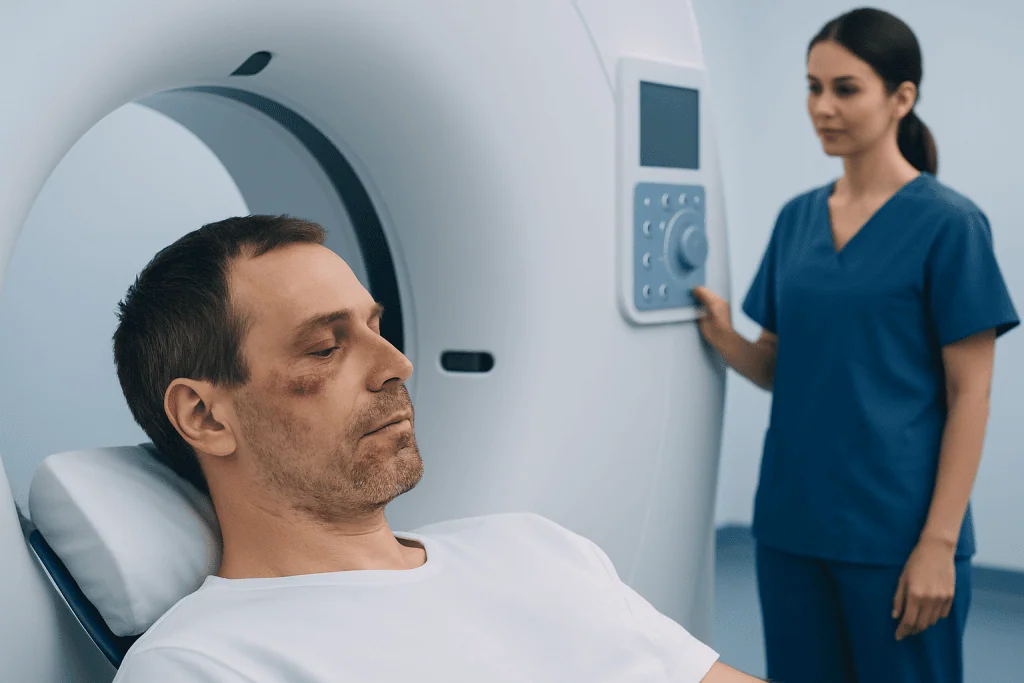
Facial fractures most often result from falls, road traffic collisions, sports injuries, workplace trauma, interpersonal violence or other direct impacts. Symptoms can include pain, swelling, bruising, tenderness, numbness, nosebleeds, loose teeth, a changed bite, difficulty opening the mouth, double vision or a visible change in facial contour. Swelling can initially hide the full extent of an injury.
A face fracture can range from a small, stable crack to a complex injury involving several bones. Its seriousness depends less on the visible bruising alone and more on the structures involved. Fractures near the eye may threaten vision or eye movement, jaw fractures can interfere with eating and airway safety, and fractures of the central face may be associated with head or neck injury.
Facial injury also does not always occur alone. A clinician may assess for concussion, brain injury, cervical spine injury, dental trauma and injuries to the chest or other parts of the body. Early assessment helps ensure urgent problems are recognized and that treatment is planned in the right sequence.
It is not possible to predict an exact force that will break a face bone. Bone strength differs with age, bone density, facial anatomy, impact direction and protective equipment. A fall can cause a fracture in one person, while a much higher-energy impact may be required in another; any significant blow to the face with concerning symptoms warrants medical evaluation.
When to seek medical care

Emergency assessment is important after facial trauma when there is difficulty breathing, heavy or persistent bleeding, loss of consciousness, confusion, seizures, repeated vomiting, severe headache, weakness, clear watery drainage from the nose or ears, or a suspected neck injury. These signs may indicate an urgent airway, brain or spinal concern.
Urgent medical care is also appropriate for double vision, reduced vision, inability to move an eye normally, a sunken or prominent eye, a new facial deformity, numbness that is spreading, teeth that no longer meet properly, inability to open or close the mouth, or a loose jaw. A person should avoid eating or drinking if surgery or sedation may be needed until a clinician provides guidance.
For a less severe injury, persistent facial pain, swelling, bruising, nosebleeds, dental changes or altered sensation should still be assessed promptly. Avoid trying to push bones back into place. Applying a wrapped cold pack briefly at intervals and keeping the head elevated may reduce swelling while arranging care.
Diagnosis and candidacy for treatment
Diagnosis begins with a careful history of the injury and a physical examination. Clinicians check facial symmetry, skin wounds, jaw movement, tooth alignment, sensation, eye movements, pupil responses and nasal airflow. They also evaluate whether there are signs of infection, cerebrospinal fluid leakage or injury to the brain and neck.
Computed tomography (CT) is commonly used to show the facial bones in detail and to guide treatment decisions. Dental X-rays, standard X-rays, eye assessment or additional head and neck imaging may be required in selected cases. The findings help determine whether the fracture is stable, displaced, open, comminuted (broken into several pieces), or affecting a sinus, orbit or joint.
People may be candidates for non-surgical care when a fracture is minimally displaced, function is preserved and close follow-up is possible. Surgery is more likely to be considered when bone position affects the bite, airway, vision, eye movement, facial width or projection, or when an open fracture needs cleaning and stabilization. Overall health, anesthesia safety, swelling, infection risk and the timing of injury are included in the decision.
Jaw and dental injuries often require coordinated planning. A person with a suspected lower-jaw injury may benefit from assessment related to jaw surgery, while nasal obstruction or deformity following trauma may need input from specialists experienced in nasal reconstruction and rhinoplasty.
How do they fix a fractured face?
When surgery is needed, the procedure is often called open reduction and internal fixation. “Reduction” means returning bone fragments to their intended position, and “fixation” means holding them steady while healing occurs. The operation is generally performed under general anesthesia, particularly for complex fractures.
The surgical team may use incisions inside the mouth, through the eyelid, within natural facial creases or in the scalp to reduce visible scarring where possible. After carefully exposing the fracture, the surgeon repositions the bone using clinical landmarks, dental alignment and imaging. Small titanium plates and screws may be placed to stabilize the repaired area; these are usually designed to remain in place unless they later cause a problem.
For jaw fractures, temporary elastic bands, splints or fixation methods may help restore the bite while the bone heals. If bone or soft tissue has been lost in a severe injury, graft material or reconstructive techniques may be considered. Wounds are cleaned, and antibiotics may be used when clinically indicated, especially for open fractures or fractures involving the mouth or sinuses.
Some operations are performed soon after injury, while others are scheduled after early swelling improves if there is no immediate threat to vision, airway or other vital function. The exact timing is determined by the injury and the person’s clinical condition. Surgery aims to restore anatomy and function, but no procedure can remove every risk of residual symptoms after a significant injury.
Benefits, risks and recovery timeline
The potential benefits of properly selected treatment include improved bone alignment, restoration of the bite and chewing ability, more normal eye position or movement, better nasal airflow, reduced pain from unstable bone fragments and improved facial symmetry. Non-surgical care avoids procedural risks when the fracture is already stable and aligned.
Risks vary by fracture location and treatment approach. They may include bleeding, infection, scarring, persistent swelling, numbness or tingling from nerve irritation, asymmetry, altered bite, sinus problems, double vision, hardware irritation, delayed union or need for further treatment. Anesthesia also has risks. The surgeon explains the relevant risks and expected benefits before a procedure and provides individualized consent information.
Many facial bones take about six weeks to achieve substantial healing, although the timeline is influenced by the specific bone, fracture complexity, tobacco use, nutrition, other illnesses and whether surgery was required. Swelling and bruising commonly improve over the first one to two weeks. Numbness, stiffness and changes in facial sensation may take weeks to months to improve, and some symptoms can occasionally persist.
After treatment, patients may need a soft or liquid diet for a period, especially after jaw or midface injury. They may be asked to avoid contact sports, heavy lifting, forceful nose blowing, smoking and alcohol during early healing. Follow-up visits allow the team to monitor alignment, wound healing, vision, dental occlusion and any signs of infection or healing complications.
Self-care, prevention and long-term outlook
Following the care plan closely supports recovery. Patients should take prescribed medicines only as directed, keep incisions and mouth wounds clean according to instructions, attend scheduled follow-up appointments and maintain adequate nutrition despite temporary dietary restrictions. Protein-rich foods and overall balanced nutrition can support healing; the clinical team can advise when a dietitian is helpful.
Preventing another injury is an important part of recovery. Seat belts, correctly fitted helmets, protective sports equipment, workplace safety measures and fall-prevention strategies can reduce the risk of facial trauma. People who have vision difficulties, balance concerns or repeated falls should discuss these with a clinician.
Emotional effects are also common after an unexpected facial injury. Temporary changes in appearance, eating, sleep and social confidence can be difficult. Speaking with the care team about pain control, sleep, return to work or school, and emotional support can make recovery more manageable.
Acibadem International’s multidisciplinary specialists and JCI-accredited hospitals assess and treat facial fractures for international patients, coordinating surgical, dental, eye and rehabilitation care when needed. A personalized review is important because each injury has different functional and reconstructive priorities.
Frequently asked questions
How long does it take for fractured facial bones to heal?
Many facial fractures achieve substantial bone healing in about six weeks. Recovery is not identical for everyone: swelling may improve within one to two weeks, while numbness, stiffness and return to normal activities can take longer. Complex fractures, smoking, poor nutrition and other health conditions can slow healing.
How serious is a face fracture?
A face fracture can be mild or serious depending on the bone involved and whether breathing, vision, dental alignment, facial nerves or the brain are affected. Some stable fractures heal with observation, while others require surgery to prevent long-term functional problems. Any facial trauma with vision changes, altered bite, breathing difficulty or neurological symptoms needs urgent evaluation.
How much force does it take to break a face bone?
There is no reliable single amount of force because bone strength and injury risk vary among individuals. Age, bone density, the direction of impact, the area struck and whether protective equipment is used all influence whether a fracture occurs. Even a fall or low-speed impact can cause a facial fracture in some circumstances.
How do they fix a fractured face?
Clinicians first determine whether the fracture is stable and well aligned. If it is displaced or affects function, surgeons may reposition the bone and secure it with small plates, screws, wires, splints or elastic bands. The approach depends on the location of the fracture and may use incisions inside the mouth or in less visible facial areas.
Can a facial fracture heal without surgery?
Yes, some non-displaced facial fractures can heal without surgery when breathing, vision, bite and facial structure are not significantly affected. Treatment may include pain management, a soft diet, activity restrictions and follow-up imaging or examinations. A specialist should make this decision because a fracture that appears minor can still affect important structures.
What should someone avoid after a facial fracture?
People should avoid contact sports, another risk of facial impact and activities restricted by their clinical team while the bone heals. Depending on the fracture, they may also need to avoid forceful nose blowing, chewing hard foods, smoking and alcohol. Individual instructions are important because restrictions differ for jaw, nose, eye socket and midface fractures.
References
- American Association of Oral and Maxillofacial Surgeons
- American Academy of Otolaryngology–Head and Neck Surgery
- American Academy of Ophthalmology
- Merck Manual Professional Edition
- National Institute of Neurological Disorders and Stroke
This article is for general information only and is not a substitute for professional medical advice. Please consult a qualified doctor about your individual situation.
Joint and spine care in Turkey — expert assessment & treatment
JCI-accredited · board-certified surgeons · reply within 24h
Add us as a Preferred Source to see more of our trusted health content across Google Search, AI Overviews and Discover.