Fertility check Recovery: Week-by-Week Timeline

Most routine fertility tests do not require recovery time and allow a return to normal activities the same day. Mild cramping, light spotting, or temporary fatigue may occur after some tests involving the uterus or fallopian tubes.
Key Takeaways
- Most routine fertility tests do not require recovery time and allow a return to normal activities the same day.
- Mild cramping, light spotting, or temporary fatigue may occur after some tests involving the uterus or fallopian tubes.
- People can usually return to desk work quickly; strenuous exercise may need to wait for 24 to 48 hours after certain procedures.
- Severe pain, heavy bleeding, fever, fainting, or worsening symptoms should be assessed promptly by a medical professional.
- A fertility check does not always identify one clear cause, but it helps the care team plan appropriate next steps.
Fertility check recovery is usually minimal because most fertility assessments involve consultations, blood tests, ultrasound scans, semen analysis, and other non-surgical tests. The return to work, exercise, and usual activities depends mainly on whether the assessment includes procedures such as hysterosalpingography, hysteroscopy, or testicular sperm retrieval.
Overview: What Fertility Check Recovery Usually Involves
A fertility check is a structured assessment of factors that may affect the ability to conceive. For most people, recovery is straightforward because the evaluation begins with non-invasive or minimally invasive tests, such as a medical history review, hormone blood tests, pelvic ultrasound, ovulation assessment, and semen analysis.
In many cases, there is no physical recovery period. A person can usually travel home independently, return to work, and continue normal daily tasks after an appointment. Recovery may be slightly longer when testing includes an examination of the uterus or fallopian tubes, because temporary cramping or light vaginal bleeding can occur.
The precise plan is individual. A fertility specialist considers age, menstrual history, previous pregnancies, sexual and medical history, medications, and the length of time a couple or individual has been trying to conceive. For a broader explanation of testing and care pathways, see fertility check and assessment options.
How a Fertility Check Works and Who May Benefit
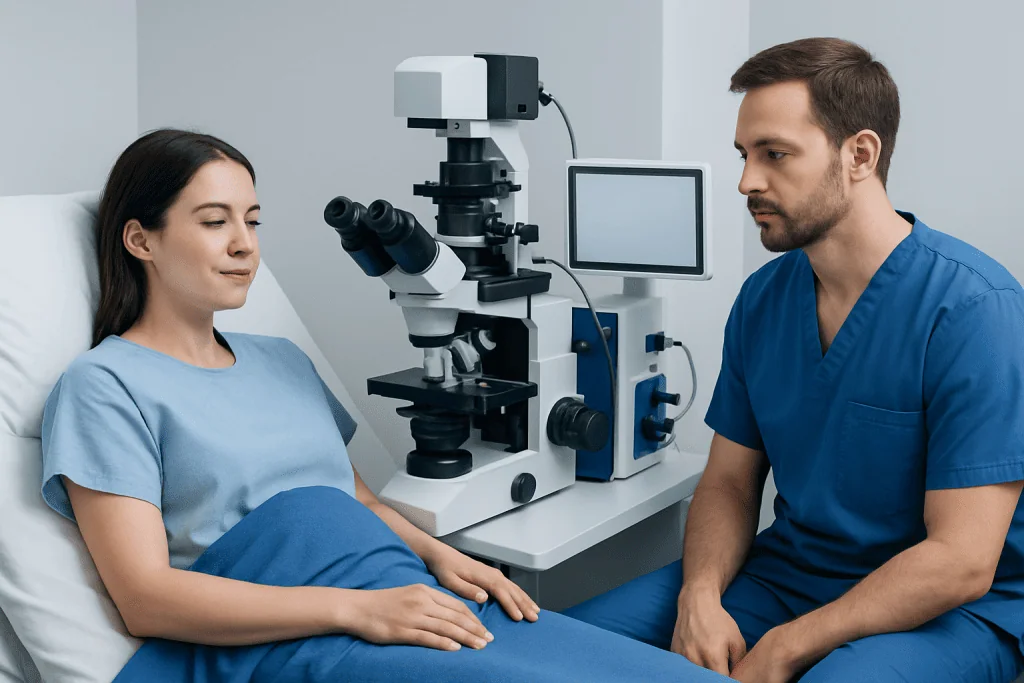
A fertility evaluation looks at female, male, and shared factors that can influence conception. It is not always a single appointment; tests may be timed around the menstrual cycle, and results are reviewed together to build a complete picture. Both partners may be assessed at the same time when relevant, since fertility can be affected by factors in either partner.
People may consider a fertility check after 12 months of regular unprotected intercourse without pregnancy if the woman is under 35. Earlier assessment may be appropriate after 6 months for women aged 35 or older, and sooner where there are irregular or absent periods, prior pelvic surgery, known reproductive conditions, repeated pregnancy loss, previous cancer treatment, or concerns about sperm production.
Individuals planning pregnancy independently, using donor sperm, or wishing to understand reproductive health before trying to conceive may also benefit from professional advice. The assessment is not a test of personal worth or a guarantee of future pregnancy; it is a clinical tool that can help identify manageable concerns and guide informed decisions.
Step by Step: What May Happen During Testing

The first visit commonly includes a detailed discussion and a review of medical records. The clinician may ask about menstrual cycles, previous pregnancies, pelvic infections, long-term health conditions, medications, lifestyle factors, and family history. A physical examination may be performed when indicated, but it is not required in every consultation.
For women, common investigations include blood tests for hormones and other health markers, pelvic ultrasound to assess the uterus and ovaries, and tests that help estimate whether ovulation is occurring. In selected cases, a clinician may recommend a fallopian tube patency test, such as hysterosalpingography, saline infusion sonography, or another appropriate method. These tests are often scheduled at a particular time in the cycle.
For men, semen analysis is a central investigation. The sample is assessed for characteristics including sperm concentration, movement, and shape. If results are outside the expected range, repeat testing, hormone testing, genetic assessment, ultrasound, or referral to a urologist may be considered. Results are interpreted in context rather than in isolation.
Some people need no further procedures. Others may be advised to have hysteroscopy or laparoscopy if symptoms, imaging, or history suggest a condition affecting the uterus, tubes, or pelvis. These are more invasive tests and have different aftercare requirements than routine blood tests or ultrasound.
Fertility Check Recovery: A Practical Week-by-Week Timeline
Day of testing: Blood tests, ultrasound, consultation, and semen analysis usually require no recovery. People can generally eat, drive, work, and carry on with normal activity unless their clinician gives different instructions. After a pelvic examination or transvaginal ultrasound, mild discomfort may occur but usually settles quickly.
First 24 to 48 hours: After a tube test or saline ultrasound, mild period-like cramping, brief dizziness, light spotting, or a small amount of watery vaginal discharge can occur. A clinician may recommend avoiding intercourse, tampon use, swimming, or strenuous activity for a short period depending on the test performed. Desk work is often possible the same day or the following day, provided the person feels well.
Days 3 to 7: Most temporary symptoms should be improving or resolved. Gentle walking and ordinary movement are usually appropriate. Return to gym exercise, running, heavy lifting, and sports depends on the procedure: routine tests do not typically require restrictions, while a clinician may advise a longer pause after hysteroscopy, laparoscopy, sedation, or surgery.
Week 2 and beyond: The focus generally shifts from physical recovery to reviewing results and discussing next steps. Some results are available quickly, while others require laboratory processing or repeat tests during another menstrual cycle. If a procedure involved sedation or surgery, the recovery timeline should follow the individual discharge plan rather than this general guide.
Benefits, Limitations, and Possible Risks
The main benefit of a fertility check is that it can clarify potential contributors to delayed conception and support timely care. It may identify issues related to ovulation, ovarian reserve, the uterus, fallopian tubes, sperm, hormonal health, or medical conditions that could affect pregnancy planning. It can also help avoid unnecessary delays and allow appropriate referral for treatment when needed.
However, fertility testing has limitations. A normal evaluation cannot guarantee pregnancy, and an abnormal result does not always mean pregnancy is impossible. In some cases, no single explanation is found; this may be described as unexplained infertility. Care decisions should consider the full clinical picture, personal priorities, and the time spent trying to conceive.
Routine blood tests and ultrasound have low risk. Tube tests can cause temporary cramps, spotting, or rarely infection or an allergic reaction to contrast material where contrast is used. More invasive procedures carry additional risks, such as bleeding, infection, anesthesia-related complications, or injury to nearby organs, although these are uncommon and are discussed before consent.
Emotional responses are also important. Waiting for results or discussing fertility can feel stressful, disappointing, or overwhelming. Support from a partner, trusted person, counselor, or fertility care team can be helpful throughout the process.
Self-Care and Returning to Work, Exercise, and Sex
After routine fertility testing, self-care is usually simple: rest if needed, drink fluids, eat normally, and use only pain relief recommended by a clinician if mild cramps occur. Wearing a sanitary pad rather than using a tampon may be advised after procedures that cause spotting. Any specific medication or activity instructions from the treating team should take priority.
Most people can return to office-based work on the same day after standard testing. If a test causes cramps, bleeding, or fatigue, taking the remainder of the day more gently may be preferable. Those whose work involves heavy physical effort should ask their clinician about timing after a tube test, hysteroscopy, laparoscopy, or sedation.
Light activity such as walking is generally suitable when the person feels comfortable. High-intensity workouts, contact sports, and heavy lifting can often resume quickly after non-invasive tests, but may need to be delayed after invasive procedures. Sexual activity is usually safe after routine assessment, although it may be temporarily restricted following a uterine or tubal procedure.
A specialist may recommend treatment only after reviewing all results. Depending on the findings, options can include cycle tracking, medication to support ovulation, surgery for selected conditions, intrauterine insemination, or assisted reproduction such as IVF treatment.
When to Seek Medical Care
Most discomfort after fertility investigations is mild and short-lived. People should contact the clinic for advice if cramps, spotting, or nausea do not improve as expected, or if they are uncertain about returning to work, exercise, travel, or sexual activity after a specific procedure.
Urgent medical assessment is important for severe or increasing pelvic or abdominal pain, heavy vaginal bleeding, fever, chills, fainting, shortness of breath, persistent vomiting, or foul-smelling vaginal discharge. These symptoms are uncommon, but they may indicate a complication that needs prompt evaluation.
It is also appropriate to seek support if fertility concerns are affecting sleep, mood, relationships, or daily functioning. Fertility care includes emotional wellbeing as well as physical testing. Acibadem International’s multidisciplinary specialists and JCI-accredited hospitals diagnose and treat fertility-related conditions for international patients, with care plans based on individual needs.
Frequently asked questions
How long does it take to recover from a fertility check?
Most routine fertility checks have little or no recovery time. Blood tests, ultrasound, consultations, and semen analysis usually allow a return to regular activities immediately. Tests involving the uterus or fallopian tubes may cause mild cramping or spotting for one to two days.
Can someone go to work after fertility testing?
Most people can return to work after routine testing, especially if their work is not physically demanding. After a tube test, sedation, hysteroscopy, or surgery, time away from work may be appropriate depending on symptoms and the clinician's advice. It is sensible to arrange a lighter schedule if possible after an invasive procedure.
When can exercise resume after a fertility check?
Normal walking and gentle activity are usually fine after standard fertility tests. Intense exercise can often resume quickly if there has been no invasive procedure and the person feels well. After sedation, hysteroscopy, laparoscopy, or another procedure, the care team should provide individualized guidance.
Is bleeding normal after a fertility test?
Light spotting may occur after a pelvic examination, cervical procedure, saline ultrasound, or fallopian tube test. It should usually be mild and settle within a short time. Heavy bleeding, worsening pain, fever, or unpleasant-smelling discharge should be discussed with a clinician promptly.
Can a fertility check affect the chance of getting pregnant?
Most fertility tests do not reduce fertility. Some tubal tests may be followed by pregnancy in the subsequent months, but this is not guaranteed and should not be considered a treatment on its own. The main purpose of testing is to identify factors that may guide care.
When will fertility test results be ready?
Some results, such as ultrasound findings, may be discussed during the appointment. Blood tests, semen analysis, and specialized laboratory testing may take longer, and some tests need to be repeated or timed to a different point in the menstrual cycle. The clinician will explain when to expect a complete review.
References
- American Society for Reproductive Medicine
- American College of Obstetricians and Gynecologists
- National Institute for Health and Care Excellence
- World Health Organization
- European Society of Human Reproduction and Embryology
This article is for general information only and is not a substitute for professional medical advice. Please consult a qualified doctor about your individual situation.
IVF & fertility treatment in Turkey — success rates and costs
JCI-accredited · board-certified surgeons · reply within 24h
Add us as a Preferred Source to see more of our trusted health content across Google Search, AI Overviews and Discover.
Check your numbers in seconds
BMI, calories, due date, blood pressure and 30+ more clinical calculators — free, instant, doctor-reviewed ranges.

More from the Health Library



Related Specialists

Prof. Dr. Ferda Özdemir
Physical Medicine & Rehabilitation
Dr. Uğur Saraçoğlu
Urology
Prof. Dr. Alp Dinçer
Radiology
Fzt. Munise Nilay Güven
Physical Medicine & Rehabilitation