Fetal Station — Explained by Medical Evidence, Not Myths

Fetal station measures the baby's position in relation to the mother's ischial spines in the pelvis. A station of 0 means the presenting part is level with the ischial spines; negative numbers are higher, positive numbers are lower.
Key Takeaways
- Fetal station measures the baby's position in relation to the mother's ischial spines in the pelvis.
- A station of 0 means the presenting part is level with the ischial spines; negative numbers are higher, positive numbers are lower.
- Fetal station helps assess labor progress, but it is only one piece of the clinical picture.
- A baby may engage before labor, during labor, or later, especially in first or later pregnancies.
- Assessment is usually done by pelvic examination and may be supported by ultrasound when needed.
Fetal station is a way clinicians describe how far a baby has moved down into the pelvis during late pregnancy or labor. It is one useful finding, but it does not predict labor on its own and is interpreted together with cervical dilation, contractions, the baby's position, and the overall health of parent and baby.
What fetal station means
Fetal station is the clinical term used to describe how low the baby has moved into the pelvis. In most cases, it refers to the position of the baby’s presenting part, usually the head, in relation to small bony landmarks in the pelvis called the ischial spines. This gives the care team a standard way to describe descent during late pregnancy and labor.
The scale usually runs from -5 to +5, although some hospitals use slightly different ranges. Negative numbers mean the baby’s head is still above the ischial spines. A station of 0 means the head is level with them. Positive numbers mean the baby has moved below them and is descending toward birth.
In practical terms, fetal station helps answer a common question: how far down is the baby? However, it does not work as a countdown clock. A baby can stay at one station for some time and then descend more quickly later. Labor patterns vary from person to person, so clinicians use fetal station together with several other findings rather than by itself.
How the fetal station scale is interpreted
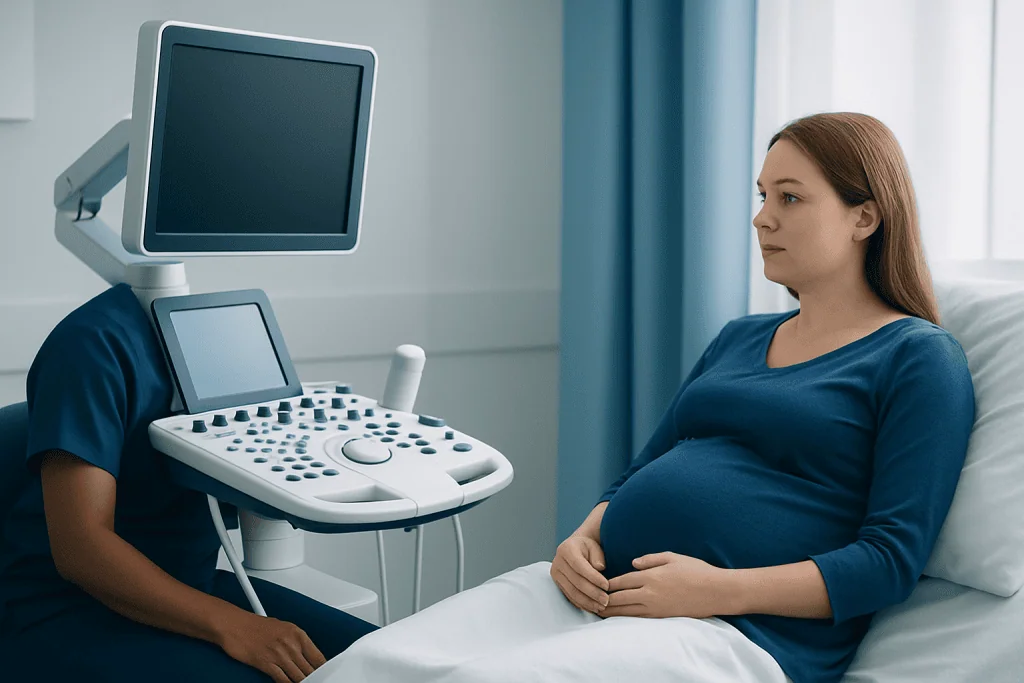
Understanding the numbers can make labor discussions easier to follow. When the baby’s head is still relatively high in the pelvis, a clinician may document a station such as -3, -2, or -1. When the head reaches 0 station, it is considered engaged in many cases, meaning the widest part of the head has entered the pelvic inlet. As descent continues, the station may be recorded as +1, +2, or lower.
Although many people hear that 0 station means labor is close, this is not always true. Some babies engage weeks before labor begins, especially in a first pregnancy. Others do not engage until active labor or even later. The timing depends on pelvic shape, the baby’s size and position, parity, and how contractions change the cervix and pelvis.
The station number also needs context. A baby at +1 station with a closed cervix means something very different from a baby at +1 with regular contractions and near-complete dilation. For this reason, healthcare professionals often discuss station alongside:
- cervical dilation
- cervical effacement
- strength and pattern of contractions
- the baby’s position, such as occiput anterior or posterior
- rupture of membranes and overall fetal well-being
Why fetal station matters in labor

Fetal station is useful because descent is one sign that labor is progressing. During labor, the cervix dilates and thins, the uterus contracts, and the baby gradually rotates and moves downward. Station provides a structured way for the team to describe this downward movement and compare changes over time.
It can also help guide decisions during the second stage of labor, when pushing begins. If the cervix is fully dilated but the baby’s head remains high, the team may look more closely at the baby’s position, the effectiveness of contractions, or the possibility of cephalopelvic mismatch. If the head is low and labor is otherwise appropriate, this may support continued pushing or, in selected cases, a carefully considered assisted vaginal birth.
Even so, station is not a stand-alone decision tool. A normal labor may involve slow changes, pauses, and variation in descent. Safe care depends on the full clinical picture, including maternal comfort, signs of infection or bleeding, fetal heart rate monitoring, and the likely route of delivery. Patients who want a broader overview of pregnancy and birth planning often find it helpful to discuss these terms before labor starts.
How fetal station is assessed
Fetal station is most commonly assessed during a vaginal examination. A trained clinician gently examines the pelvis and estimates the position of the baby’s presenting part relative to the ischial spines. This is a standard part of intrapartum assessment when it is clinically needed, but repeated examinations are usually kept to the minimum necessary for comfort and infection control.
Assessment is not perfectly exact. Different clinicians may describe the same station slightly differently, particularly if there is swelling of the scalp, a variation in fetal position, or limited access during the exam. That is one reason why fetal station is always interpreted alongside the rest of the labor assessment rather than as a precise measurement.
Ultrasound may also be used in certain situations, especially if the baby’s position is unclear or if there is a question about how the head is descending. Imaging can complement the physical exam but does not replace bedside clinical judgment. When labor becomes complex, additional evaluation may be needed to determine whether continued vaginal birth is likely to be safe or whether cesarean section should be considered.
What affects fetal station and descent
Several factors influence how quickly a baby moves from a higher station to a lower one. The baby’s position matters a great deal. A baby facing the parent’s back, called occiput posterior, may descend more slowly than one in an occiput anterior position. Head flexion, size, and molding also affect how the head fits through the pelvis.
Maternal anatomy and labor dynamics are equally important. Pelvic shape, tissue flexibility, contraction strength, and whether this is a first or later birth can all change the pace of descent. Epidural analgesia may change the sensation of pressure and pushing, though care teams manage labor progression by monitoring the whole clinical picture rather than assuming one factor explains everything.
Station can also be affected by membrane status, bladder fullness, and maternal movement or positioning. In some cases, the issue is not descent alone but another condition affecting labor, such as placenta previa or concerns related to preeclampsia. These conditions require individualized obstetric care and may change the safest delivery plan.
If labor is prolonged or descent is limited, supportive measures may include hydration, rest, changes in maternal position, augmentation when appropriate, or further evaluation. In selected situations, treatment options may range from continued monitoring to induction of labor strategies or operative delivery, depending on gestational age, fetal status, and cervical findings.
Common myths and misunderstandings
A frequent myth is that once a baby reaches 0 station, birth is imminent. In reality, engagement may happen well before labor, especially in a first pregnancy, and labor still depends on cervical change, contractions, and rotation of the head. A high station late in pregnancy also does not necessarily mean something is wrong.
Another misconception is that station alone predicts whether vaginal birth is possible. It does not. A single station measurement cannot define the entire course of labor, and many healthy births involve gradual progress rather than a steady, predictable descent. Care teams look at trends over time, not just one examination.
People also sometimes assume that feeling more pelvic pressure always means the station has changed significantly. Pressure can increase for many reasons, including contractions, fetal position, bladder fullness, or simple variation in body awareness. If there is uncertainty, a clinician can interpret symptoms within the broader labor assessment.
Finally, online charts can make the process seem more exact than it really is. Fetal station is a useful clinical language, not a guarantee of timing. A balanced, evidence-based discussion with a qualified maternity team is usually more helpful than comparing one station number with someone else’s labor story.
Self-care, preparation, and communication during labor
There is no proven home method that reliably changes fetal station on demand. Gentle walking, changing positions, rest, hydration, and emptying the bladder may support comfort and help labor function naturally, but they are not guaranteed to move the baby lower. Efforts to force progress can increase stress without improving outcomes.
Preparation is often more useful than trying to control station itself. Before labor, many patients benefit from learning common terms such as dilation, effacement, station, and fetal position. This can make bedside updates easier to understand and support informed questions about how labor is unfolding.
During labor, it can help to ask the care team what the station means in context. Good questions include whether the cervix is changing, whether the baby’s position is favorable, how the baby is tolerating labor, and what options are available if descent slows. In cases where extra support is needed, clinicians may discuss pain relief, assisted vaginal delivery, or epidural anesthesia as part of an individualized plan.
Near the end of care planning, some international patients prefer a center with coordinated obstetric, anesthesia, neonatal, and surgical services. Acibadem International’s multidisciplinary specialists and JCI-accredited hospitals diagnose and treat pregnancy and birth-related conditions for international patients when higher-level maternity care is needed.
When to seek medical care
Anyone who is pregnant should contact a qualified maternity professional or seek urgent care for symptoms that may signal labor complications or another medical problem. Fetal station itself is not usually something a patient can assess at home, so concerning symptoms should be taken seriously even if labor progress is uncertain.
Medical attention is especially important for heavy vaginal bleeding, severe abdominal pain, regular painful contractions before term, a sudden gush or steady leaking of fluid, decreased fetal movements, fever, severe headache, vision changes, chest pain, or shortness of breath. These symptoms can have different causes and need professional evaluation.
During labor, patients should also alert the care team if there is worsening pain between contractions, a feeling that something is not right, or signs of exhaustion and distress. Prompt assessment helps determine whether labor is progressing normally or whether additional monitoring and treatment are needed.
Frequently asked questions
What is fetal station in simple terms?
Fetal station is a way to describe how low the baby is in the pelvis. It is measured in relation to the ischial spines, which are bony landmarks inside the pelvis. Clinicians use it to help track descent during late pregnancy and labor.
What does 0 station mean?
A station of 0 means the baby's presenting part is level with the ischial spines. In many cases this means the head is engaged in the pelvis. It is an important milestone, but it does not reliably predict exactly when labor or birth will happen.
Can fetal station change before labor starts?
Yes. Some babies move lower into the pelvis weeks before labor, while others remain higher until labor is well established. This variation can be normal and depends on several factors, including parity, fetal position, and pelvic anatomy.
Is a high fetal station dangerous?
Not necessarily. A baby can be at a negative station late in pregnancy or even early in labor without this meaning there is a problem. The significance depends on the whole clinical picture, including contractions, cervical change, fetal well-being, and gestational age.
How accurate is fetal station during an exam?
Fetal station is a useful clinical estimate, but it is not perfectly exact. Different clinicians may record slightly different numbers, especially if the baby's head is molded or swollen. That is why station is interpreted together with other findings rather than alone.
Can walking or certain positions improve fetal station?
Movement and position changes may support comfort and may help labor function naturally, but they do not guarantee a change in station. Walking, upright positions, rest, hydration, and bladder emptying are reasonable supportive measures unless a clinician advises otherwise. Any concerns about labor progress should be discussed with a maternity professional.
This article is for general information only and is not a substitute for professional medical advice. Please consult a qualified doctor about your individual situation.
Explore treatments in Turkey — costs, top hospitals & a free quote
JCI-accredited · board-certified surgeons · reply within 24h
Add us as a Preferred Source to see more of our trusted health content across Google Search, AI Overviews and Discover.
Check your numbers in seconds
BMI, calories, due date, blood pressure and 30+ more clinical calculators — free, instant, doctor-reviewed ranges.

More from the Health Library

Fractionated Coconut Oil: A Complete Medical Overview

Eosinophils: An Evidence-Based Guide for Patients

Red Splotches on Top of Mouth — Explained by Medical Evidence, Not Myths

Blood Transmitted: What Patients Need to Know

Intramuscular Injection — Explained by Medical Evidence, Not Myths