Fibrous Papule: A Complete Medical Overview

Fibrous papule is a benign skin lesion, often seen as a small dome-shaped bump on the nose. It is usually painless, stable, and mainly a cosmetic concern rather than a health threat.
Key Takeaways
- Fibrous papule is a benign skin lesion, often seen as a small dome-shaped bump on the nose.
- It is usually painless, stable, and mainly a cosmetic concern rather than a health threat.
- Diagnosis is often made during a skin examination, though biopsy may be used if the appearance is unclear.
- Treatment is not required unless the lesion bleeds, changes, is irritated, or a person wants it removed.
- Because other skin conditions can resemble a fibrous papule, new or changing facial bumps should be assessed by a qualified clinician.
A fibrous papule is a small, harmless, noncancerous skin bump that most often appears on the nose or central face. It usually does not need treatment, but medical evaluation can confirm the diagnosis and rule out other lesions that may look similar.
Overview
A fibrous papule is a small, benign growth of the skin that usually appears on the nose, especially around the tip or bridge, though it can also develop on other areas of the face. It is typically firm, smooth, skin-colored or slightly pink, and only a few millimeters wide. In most cases, it is a cosmetic finding rather than a sign of disease.
This lesion is considered noncancerous and usually grows slowly or remains unchanged over time. Many people notice just one bump, and it often causes no pain, itching, or other symptoms. Because it can resemble other facial lesions, including some that need treatment, professional evaluation is often the most reliable way to identify it.
Fibrous papules are sometimes described in medical literature as a type of angiofibroma, which refers to a lesion containing fibrous tissue and small blood vessels. A solitary fibrous papule on the face is common and is usually unrelated to a broader health problem. This differs from multiple facial angiofibromas, which may be associated with certain genetic conditions and need a different medical assessment.
What a Fibrous Papule Looks and Feels Like
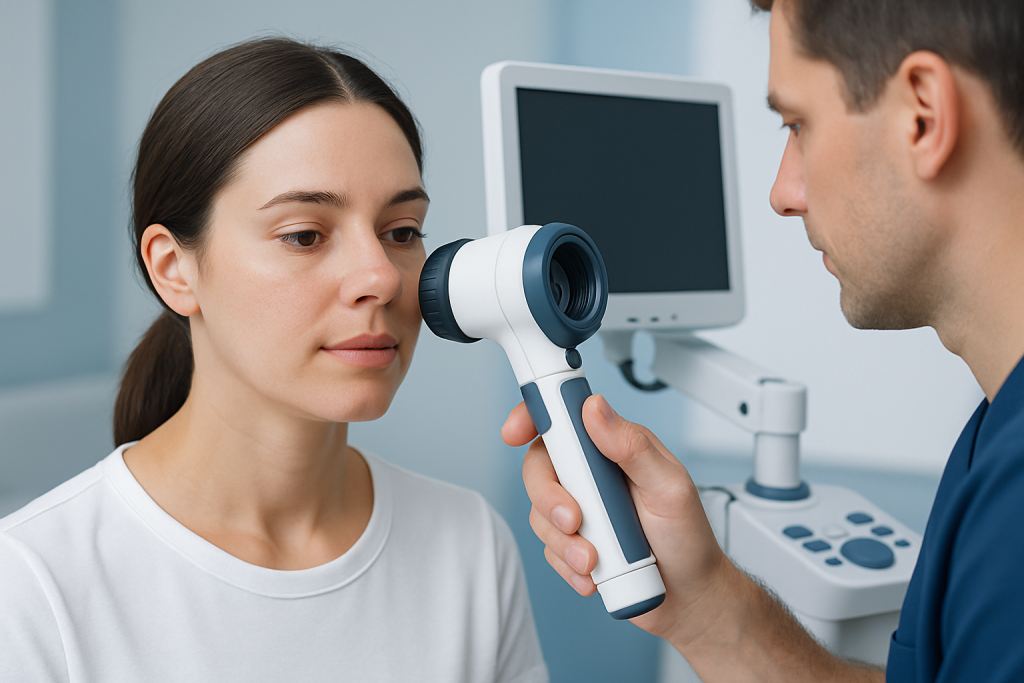
A fibrous papule is often a rounded, dome-shaped bump with a smooth surface. Its color may blend with the surrounding skin or appear slightly pink, pale, or pearly. It is generally small, commonly about 1 to 5 millimeters, and often found in a single spot rather than in clusters.
Most fibrous papules are firm to the touch and do not feel tender. They usually do not ooze, crust, or itch. Some people first notice them while washing the face, applying makeup, or seeing them in close-up photographs, especially when the lesion is on the nose where it may be more visible.
Even though these bumps are harmless, they can be confused with other skin lesions such as moles, acne bumps, basal cell carcinoma, or skin cancer in its early stages. This is one reason a facial bump that is new, changing, bleeding, or repeatedly irritated should not be self-diagnosed based on appearance alone.
- Usually solitary
- Most common on the nose or central face
- Small, smooth, and dome-shaped
- Typically painless and stable
Causes and Risk Factors
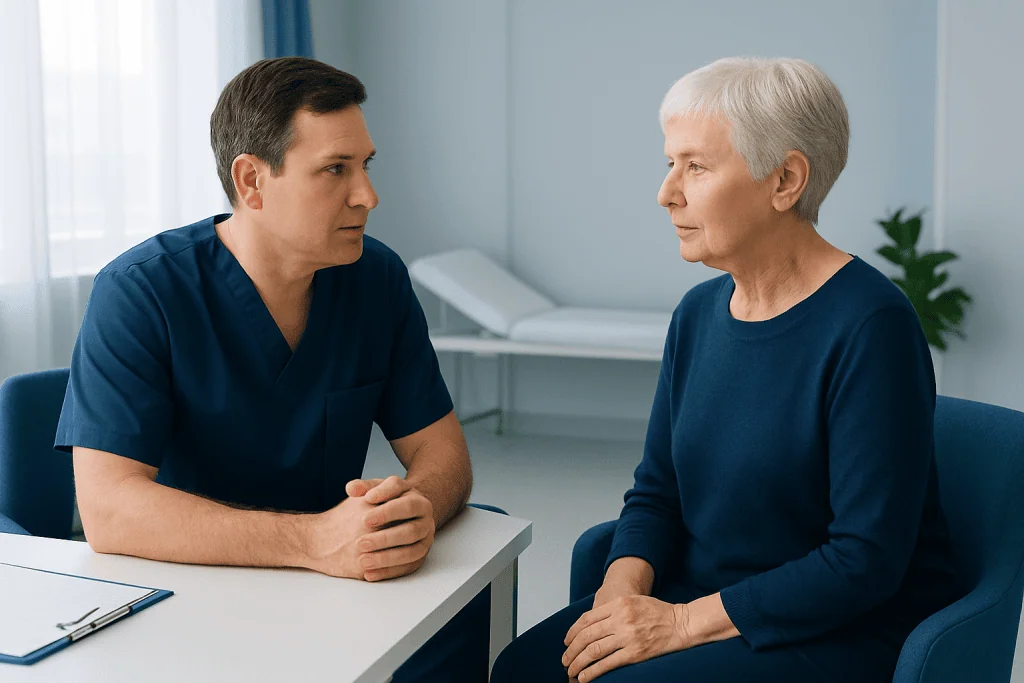
The exact cause of a fibrous papule is not always clear. It is thought to arise from a localized overgrowth of fibrous tissue and blood vessels in the skin. This process is benign, meaning it is not an infection and is not contagious. It is also not caused by poor hygiene.
Fibrous papules can occur in adults of many skin types and may develop without any obvious trigger. They are commonly seen in middle adulthood, but they may appear at other ages as well. There is no strong evidence that a solitary fibrous papule is related to sun exposure in the same way as many skin cancers, although the lesion often appears on sun-exposed facial skin.
In most cases, a single fibrous papule does not suggest an inherited disorder. However, when multiple similar papules are present, especially alongside other signs or a family history of genetic disease, a doctor may consider whether there is an underlying syndrome. This is uncommon, but it highlights the importance of looking at the full clinical picture rather than the bump alone.
How Doctors Diagnose Fibrous Papule
Diagnosis usually begins with a clinical skin examination. A dermatologist or other qualified doctor looks at the size, shape, color, texture, and location of the lesion, along with how long it has been present and whether it has changed. In many cases, an experienced clinician can strongly suspect a fibrous papule based on this exam.
A dermatoscope, which is a handheld magnifying device with light, may help the doctor inspect surface and vascular patterns more closely. This can improve diagnostic confidence and help distinguish a benign papule from other lesions that may need more urgent attention, such as basal cell carcinoma or certain moles.
If the diagnosis remains uncertain, a biopsy may be recommended. During a biopsy, the lesion or part of it is removed and examined under a microscope. This is the most definitive way to confirm a fibrous papule and exclude other conditions. In selected cases, diagnostic support may be coordinated with dermatology care or tissue analysis following a simple office procedure.
Treatment Options and Removal
Most fibrous papules do not need treatment because they are harmless. If the lesion is not changing, not bleeding, and not bothersome, a doctor may simply recommend observation. Many people choose no treatment once they understand that the bump is benign.
Removal may be considered if the papule is cosmetically bothersome, catches on clothing or glasses, bleeds after shaving, or if there is any diagnostic uncertainty. Common methods include shave removal, excision, electrosurgery, or laser-based approaches, depending on the lesion’s features and the clinician’s judgment. The aim is to remove or flatten the bump while minimizing scarring.
Because the face is a cosmetically sensitive area, removal should be performed by an appropriately trained medical professional rather than attempted at home. Home cutting, burning, or use of over-the-counter wart or acid treatments can injure the skin and may delay diagnosis of a different condition. For suitable patients, treatment planning may overlap with skin lesion treatment pathways when the main concern is to confirm exactly what the bump is before or during removal.
After removal, the area usually heals with basic wound care instructions from the treating doctor. Although recurrence is not common after complete removal, any new bump or regrowth should be reassessed rather than assumed to be the same lesion.
Self-care, Skin Monitoring, and Prevention
There is no proven way to prevent a fibrous papule from forming, because it is not usually linked to a modifiable lifestyle factor. Still, healthy skin habits are useful for overall skin care and for noticing changes early. Gentle cleansing, avoiding trauma to the bump, and using facial products that do not irritate the skin can help reduce unnecessary inflammation.
Daily sun protection is also sensible, especially for the face. While a fibrous papule itself is benign, protecting the skin with shade, hats, and broad-spectrum sunscreen supports long-term skin health and can reduce the risk of other lesions that may appear similar. Sun-safe habits also make it easier to monitor the skin without the added effects of sun damage.
People are encouraged to watch for changes in any facial bump, including growth, darkening, crusting, ulceration, spontaneous bleeding, or repeated irritation. Taking a clear photograph every few months can sometimes help track whether a lesion is truly stable. If a person already has a history of unusual moles, prior skin cancer, or many facial lesions, regular skin review with a clinician may be advised.
When to Seek Medical Care
A fibrous papule is usually harmless, but a doctor should assess any skin bump that is new, changing, or difficult to identify. Medical review is especially important if the lesion grows quickly, becomes darker, develops an irregular border, bleeds without injury, forms a scab that does not heal, or feels persistently sore.
It is also reasonable to seek care if the bump is on a prominent area of the face and causes cosmetic concern or repeated friction. Facial lesions can affect confidence and daily comfort even when they are medically benign, and a doctor can explain whether observation or removal is the better option.
People with multiple similar papules, a personal or family history of inherited syndromes, or a past history of skin cancer should mention this during evaluation. Near the end of the care pathway, patients who need international assessment or treatment may also be supported by Acibadem International, where multidisciplinary specialists in JCI-accredited hospitals diagnose and treat skin conditions, including lesions that may require specialist dermatology evaluation.
Frequently asked questions
Is a fibrous papule dangerous?
A fibrous papule is usually not dangerous. It is a benign skin lesion and does not typically cause health problems. The main reason to have it checked is that other skin conditions can look similar.
Can a fibrous papule turn into cancer?
A true fibrous papule is noncancerous and is not generally expected to turn into cancer. However, a bump that is assumed to be a fibrous papule without proper examination could actually be a different lesion. That is why medical confirmation is helpful if the diagnosis is uncertain.
What is the difference between a fibrous papule and a pimple?
A fibrous papule is usually firm, stable, and long-lasting, while a pimple is often inflamed, tender, and changes over days to weeks. Pimples may contain pus or become red and swollen, whereas fibrous papules are typically smooth and persistent. If a facial bump does not behave like acne, a doctor can assess it.
Does a fibrous papule need to be removed?
Removal is not medically necessary in many cases because the lesion is harmless. Some people choose removal for cosmetic reasons or because the bump is irritated by shaving, glasses, or touching. A doctor can explain the likely result, healing process, and whether biopsy is recommended.
Will a fibrous papule go away on its own?
Most fibrous papules do not disappear spontaneously. They often remain stable for long periods without causing symptoms. If the appearance is bothersome, a clinician can discuss safe removal options.
Can I remove a fibrous papule at home?
Home removal is not recommended. Trying to cut, burn, or treat a facial bump with over-the-counter products can cause scarring, infection, or delayed diagnosis if the lesion is something else. A medical professional can remove it more safely and confirm what it is.
This article is for general information only and is not a substitute for professional medical advice. Please consult a qualified doctor about your individual situation.
Explore treatments in Turkey — costs, top hospitals & a free quote
JCI-accredited · board-certified surgeons · reply within 24h
Add us as a Preferred Source to see more of our trusted health content across Google Search, AI Overviews and Discover.

More from the Health Library

Ammonia Sickness: What Patients Need to Know

Non Blanchable: A Complete Medical Overview

Borborygmi: What Patients Need to Know

Does eggs have fiber? A Doctor-Reviewed Answer

Myotonica: A Complete Medical Overview