Fit Test vs Colonoscopy: Differences Explained
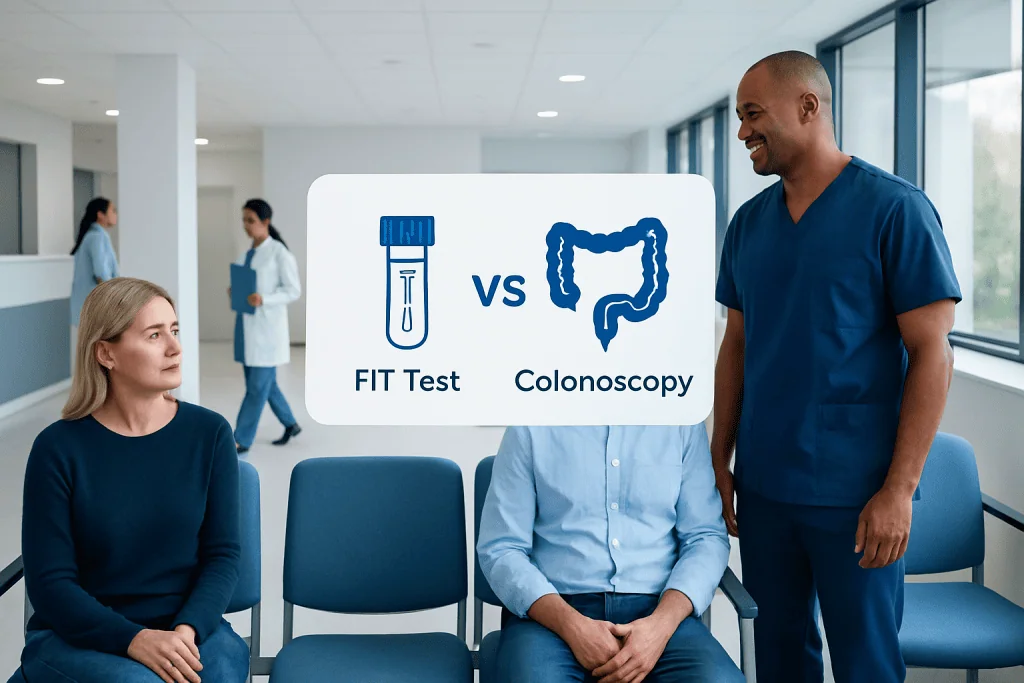
FIT is a convenient home stool test that detects hidden blood, not cancer itself. Colonoscopy is more comprehensive because it visualizes the colon, allows biopsy, and can remove polyps.
Key Takeaways
- FIT is a convenient home stool test that detects hidden blood, not cancer itself.
- Colonoscopy is more comprehensive because it visualizes the colon, allows biopsy, and can remove polyps.
- A positive FIT result needs timely follow-up with colonoscopy.
- Screening choice depends on personal risk, symptoms, preferences, access, and medical history.
- People with rectal bleeding, unexplained anemia, persistent bowel changes, or a strong family history may need colonoscopy rather than FIT.
FIT and colonoscopy are both effective colorectal cancer screening options, but they work differently. A FIT test checks stool for hidden blood and is usually repeated yearly, while colonoscopy views the inside of the colon and can find and remove polyps in the same procedure.
FIT Test vs Colonoscopy: What Is the Difference?
When comparing a FIT test vs colonoscopy, the main difference is that FIT is a noninvasive stool test that looks for tiny amounts of blood, whereas colonoscopy is a procedure that directly examines the rectum and colon with a flexible camera. FIT is generally used for routine screening in people at average risk who do not have symptoms. Colonoscopy can screen for cancer, investigate symptoms, take tissue samples, and remove many polyps before they become cancerous.
Neither option is automatically best for every person. FIT is convenient, requires no bowel preparation or sedation, and is usually repeated every year when used as a screening strategy. Colonoscopy requires bowel cleansing and sedation in many cases, but it is usually performed less often when results are normal and preparation is adequate.
The important point is that screening should be completed using an approach appropriate to the individual. If FIT detects blood, it is not a final diagnosis and should be followed by a diagnostic colonoscopy. People should discuss their age, family history, symptoms, prior polyps, and other health conditions with a qualified clinician before deciding.
How FIT and Colonoscopy Work
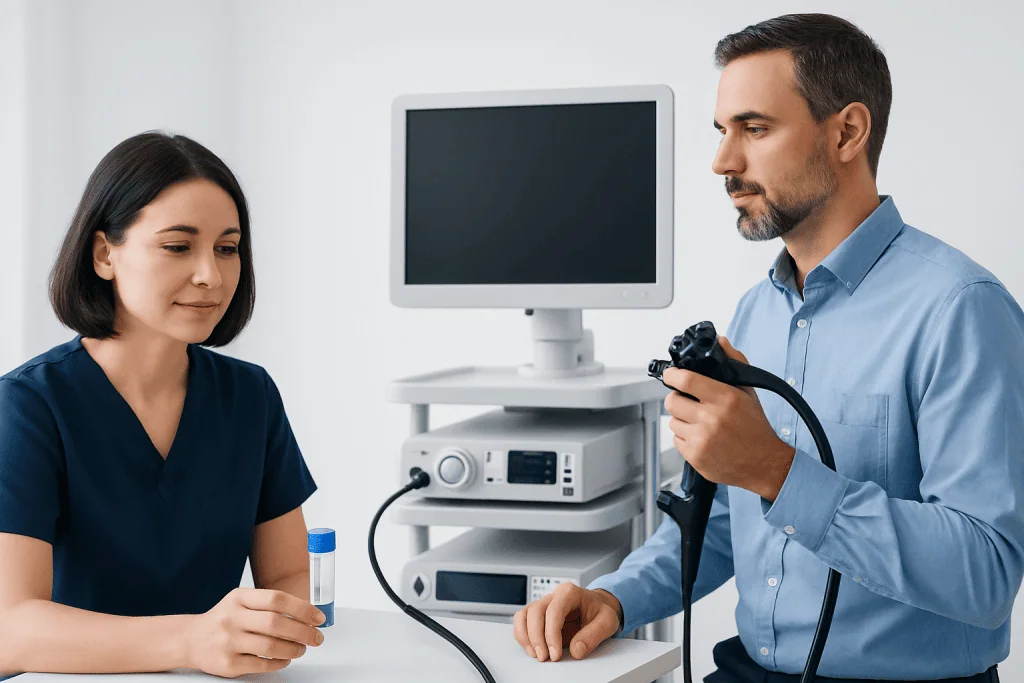
FIT stands for fecal immunochemical test. It uses antibodies to detect human hemoglobin, a protein in red blood cells, in a small stool sample. Blood may enter the stool for several reasons, including polyps, colorectal cancer, hemorrhoids, inflammation, or other conditions. A negative FIT means no blood was detected above the test threshold; it does not completely rule out polyps or cancer.
For a FIT test, the person collects a small sample at home using the kit instructions and returns it to the laboratory or healthcare service. Most FIT tests do not require dietary restrictions or stopping usual foods beforehand, although instructions for a specific kit should always be followed. Results are commonly reported as negative or positive.
During a colonoscopy, a gastroenterologist passes a thin, flexible tube with a camera through the rectum to inspect the lining of the large intestine. The doctor can identify inflammation, bleeding sites, polyps, and cancers. Suspicious tissue can be biopsied, and many polyps can be removed during the same examination. Colonoscopy is therefore both a diagnostic and preventive procedure.
The phrase fit test colon vs colonoscopy can be misleading because the tests have different roles. FIT checks for a possible sign of disease, while colonoscopy looks directly for the disease or its precursors. A clinician may recommend one, then the other, rather than treating them as interchangeable in every situation.
Who Is a Candidate for Each Screening Test?

FIT may suit adults at average risk of colorectal cancer who are due for screening, have no concerning bowel symptoms, and prefer a home-based option. Average risk generally means no personal history of colorectal cancer, advanced polyps, or certain inflammatory bowel diseases, and no strong family history or inherited cancer syndrome that changes screening recommendations.
Colonoscopy is commonly recommended after a positive stool test. It may also be preferred from the outset for people with a previous polyp or colorectal cancer, a close family history of colorectal cancer, unexplained iron-deficiency anemia, persistent rectal bleeding, or a meaningful change in bowel habits. The exact screening start age and interval vary by country, risk category, and current guidance.
People with inflammatory bowel disease involving the colon, such as ulcerative colitis or Crohn’s colitis, often need individualized surveillance with colonoscopy because their cancer risk and monitoring needs differ from those of average-risk adults. Similarly, those with known hereditary syndromes require specialist-led screening plans.
A clinician will also consider whether a person can safely undergo bowel preparation and sedation, along with kidney, heart, lung, medication, and bleeding-risk considerations. The most appropriate screening method is the one that fits the person’s risk level and is completed on schedule.
What Happens Before, During, and After Each Test?
FIT preparation is usually straightforward. The person receives a collection kit, takes a small stool sample as directed, labels it, and returns it promptly. There is no recovery period, and normal activities can continue immediately. If the result is positive, the next step is generally colonoscopy rather than repeating the FIT, because the source of bleeding must be assessed.
Colonoscopy preparation begins several days before the appointment with instructions about diet, medications, and a prescribed bowel-cleansing solution. A clean bowel is essential because stool can hide polyps or lesions. On the day of the procedure, sedating medication is often used for comfort, and the examination itself commonly takes less than an hour, although appointment time is longer due to preparation and recovery.
After colonoscopy, temporary bloating, cramping, or passing gas can occur as air or carbon dioxide leaves the bowel. Most people return home the same day with an accompanying adult if sedation was used, and they should not drive, make major decisions, or drink alcohol until the sedative effects have fully worn off. Many resume usual activities the following day, depending on their clinician’s advice and whether a polyp was removed.
Biopsy and polyp results may take several days. Follow-up timing depends on the findings, the quality of bowel preparation, pathology results, and personal risk. If a colonoscopy finds polyps, removal can reduce the likelihood that certain polyps will progress to colorectal cancer.
Is the FIT Test as Accurate as a Colonoscopy?
No. FIT is not as comprehensive or as accurate as colonoscopy for finding all colorectal polyps and cancers. FIT is designed to detect blood that may be shed by a cancer or some larger polyps, but not every cancer or polyp bleeds at the time of testing. A negative result can therefore occur even when an abnormality is present.
Colonoscopy allows direct inspection of the colon lining and can identify many lesions that do not bleed. It also permits immediate biopsy or removal of polyps. However, no test is perfect: colonoscopy quality can be affected by bowel preparation, the completeness of the examination, and the size or location of a lesion.
FIT remains a valuable evidence-based screening tool when it is performed regularly and positive results are followed by colonoscopy. For average-risk people who would otherwise not be screened, completing an annual FIT is generally more protective than delaying or avoiding screening altogether. The key is to use the chosen method consistently and act promptly on abnormal results.
Which option is most suitable depends on the person. A doctor may favor colonoscopy for someone at higher risk, while FIT may be a reasonable initial screening option for an average-risk person without symptoms.
Would Colon Cancer Show Up on a FIT Test?
Colon cancer can show up on a FIT test if it releases enough blood into the stool to be detected. Many colorectal cancers bleed intermittently or in very small amounts, which is why the test is used repeatedly at regular intervals rather than only once. Still, a FIT test cannot diagnose cancer, identify where bleeding comes from, or rule out cancer with complete certainty.
A positive FIT may be caused by colorectal cancer, a polyp, hemorrhoids, diverticular disease, inflammation, or another source of lower gastrointestinal bleeding. It should not be assumed to mean cancer, but it should be taken seriously and investigated with colonoscopy in a timely way. Waiting for symptoms to develop is not recommended.
A negative FIT does not explain ongoing symptoms. Anyone with visible blood in the stool, black or tar-like stool, unexplained weight loss, persistent abdominal pain, new lasting bowel changes, or unexplained anemia should seek medical assessment even if their FIT result was negative.
Colorectal cancer may develop from precancerous growths called polyps. Learning about colon cancer and screening options can help people understand why finding and removing polyps is an important preventive step.
Which Is More Accurate, Stool Test or Colonoscopy?
Colonoscopy is generally more accurate than a stool test for detecting colorectal cancer and, especially, for finding precancerous polyps. It examines the entire colon directly and enables the clinician to remove or sample abnormalities at the same time. This makes it particularly useful for people with symptoms, elevated risk, or a positive FIT result.
Stool-based tests differ from one another. FIT checks for hidden blood. Multitarget stool DNA tests, often recognized by the brand name Cologuard in some countries, combine blood detection with testing for certain DNA changes associated with colorectal cancer or advanced polyps. When considering FIT test vs Cologuard vs colonoscopy, colonoscopy remains the procedure that confirms abnormal stool-test findings and can provide treatment during the examination.
Stool testing may be easier to complete because it is performed at home and does not require bowel preparation, sedation, or time away from normal activities. Its benefit depends on repeating it at the recommended interval and completing follow-up colonoscopy if the result is abnormal. A stool test should not be used to evaluate concerning symptoms without medical guidance.
Each method has trade-offs in convenience, frequency, preparation, and diagnostic ability. Shared decision-making with a healthcare professional can help align the screening plan with an individual’s medical risk and practical circumstances.
Why Don't Doctors Like Cologuard?
Doctors do not universally dislike Cologuard or other multitarget stool DNA tests. They may recommend them for selected average-risk adults when they are appropriate and likely to be completed. However, clinicians may prefer another screening method for reasons such as a person’s individual risk, symptoms, previous polyps, test availability, recommended testing interval, or the likelihood of false-positive results.
A positive Cologuard result still requires colonoscopy. The test can identify people who need further assessment, but it cannot remove polyps or determine the cause of an abnormal result. It can also miss some cancers and advanced polyps, so a negative result does not replace clinical evaluation when symptoms are present.
For people with higher-than-average risk or certain medical histories, colonoscopy may be the clearer first choice. FIT can be another well-established stool-based alternative in eligible people. The best test is not a brand preference; it is the test that matches clinical guidance and is completed with appropriate follow-up.
Patients should ask their clinician which screening options are available locally and why one method may suit them better than another. The decision should be based on safety, risk level, medical history, and informed preference.
Risks, Benefits, and When to Seek Medical Care
FIT has very low physical risk because it only involves collecting a stool sample. Its limitations are mainly related to accuracy: blood can be absent despite disease, and detected blood may have a noncancerous cause. Its major benefits are convenience, privacy, no sedation, and the ability to support regular screening for eligible adults.
Colonoscopy offers the important benefit of direct diagnosis and possible polyp removal in one visit. Risks are uncommon but can include reactions to sedation, bleeding after polyp removal, perforation of the bowel, and complications related to bowel preparation. A healthcare team reviews these risks and any relevant medications or health conditions before the procedure.
Medical care should be sought promptly for rectal bleeding, black stools, severe or persistent abdominal pain, unexplained anemia, ongoing change in bowel habits, unexplained weight loss, or symptoms that concern the person. After colonoscopy, urgent medical attention is appropriate for severe or worsening abdominal pain, fever, heavy rectal bleeding, fainting, or persistent vomiting.
Acibadem International’s multidisciplinary specialists and JCI-accredited hospitals diagnose and treat colorectal conditions for international patients. A gastroenterology clinician can help determine whether FIT, colonoscopy, or another evaluation is appropriate based on the individual’s symptoms and risk factors.
Frequently asked questions
How often should a FIT test be done?
When FIT is used for colorectal cancer screening, it is commonly repeated every year. The exact schedule can vary by local screening guidance and personal risk. A clinician can confirm the right interval for an individual.
Does a positive FIT test mean cancer?
No. A positive FIT means blood was detected in the stool, not that cancer has been diagnosed. Polyps, hemorrhoids, inflammation, and other conditions can also cause bleeding. Colonoscopy is usually needed to identify the source.
Can hemorrhoids cause a positive FIT result?
Yes, hemorrhoids can contribute to blood in stool and may be one possible reason for a positive result. However, a positive FIT should not be attributed to hemorrhoids without appropriate evaluation. Colonoscopy is generally recommended to rule out other causes.
Can a colonoscopy remove cancer?
Colonoscopy can remove many polyps and some very early superficial lesions, depending on their size and features. If invasive cancer is found, treatment may involve surgery and, in some cases, oncology care. The treatment plan depends on the cancer stage and location.
Do people need a colonoscopy after a negative FIT?
Not necessarily if they are average risk, have no symptoms, and are following a FIT-based screening program. They should continue FIT testing at the recommended interval. A colonoscopy may still be needed if symptoms develop, risk changes, or a clinician advises it.
Is colonoscopy painful?
Many people receive sedation or anesthesia medication and do not feel pain during the procedure. Mild bloating or cramping can occur afterward because air is introduced into the colon. The care team can explain sedation options and what to expect.
References
- American Cancer Society
- U.S. Preventive Services Task Force
- National Cancer Institute
- Centers for Disease Control and Prevention
- World Gastroenterology Organisation
This article is for general information only and is not a substitute for professional medical advice. Please consult a qualified doctor about your individual situation.
Persistent digestive symptoms? Get evaluated in Turkey
JCI-accredited · board-certified surgeons · reply within 24h
Add us as a Preferred Source to see more of our trusted health content across Google Search, AI Overviews and Discover.

More from the Health Library



Related Specialists

Prof. Dr. Hasan M. Tanyeri
Ear Nose & Throat
Embriyolog Feray Farsak
Vitro Fertilization and Reproductive Medicine Center
Dr. Cem Burak Kalaycı
Radiology
Assoc. Prof. Dr. Tuna Bilecik
General Surgery