Food Digestion Time Chart: Evidence-Based Benefits, Risks, and Practical Guidance

Digestion is a continuous process, not a fixed schedule for individual foods. Most mixed meals leave the stomach over several hours, while complete travel through the intestines commonly takes longer.
Key Takeaways
- Digestion is a continuous process, not a fixed schedule for individual foods.
- Most mixed meals leave the stomach over several hours, while complete travel through the intestines commonly takes longer.
- Higher-fat meals tend to empty from the stomach more slowly, while liquids usually leave sooner than solid foods.
- Fiber supports regular bowel function, but a sudden increase may temporarily cause gas or bloating.
- Persistent nausea, vomiting, severe pain, unexplained weight loss, or major bowel changes need medical assessment.
A food digestion time chart can provide broad estimates for how long foods may remain in the stomach or travel through the digestive tract, but it cannot predict an individual’s digestion precisely. Meal size, fat and fiber content, hydration, medicines, activity, stress, and digestive health all influence timing.
What Is a Food Digestion Time Chart?
A food digestion time chart is a simplified guide that estimates how quickly different foods move through the stomach and digestive tract. These charts often group foods as liquids, fruits, vegetables, grains, protein foods, or high-fat meals. They can be useful for understanding general patterns, but they should not be treated as a test of digestive health or a timetable that applies equally to everyone.
Digestion begins in the mouth, continues in the stomach and small intestine, and ends with water absorption and stool formation in the large intestine. A person may feel hungry again before a previous meal has fully completed this journey. For this reason, feeling hungry, full, bloated, or ready for a bowel movement does not accurately show how long a specific food took to digest.
Clinical testing focuses more precisely on gastric emptying, meaning the rate at which the stomach passes food into the small intestine. Whole-gut transit is a different measure and usually takes considerably longer. Healthcare professionals use validated tests when symptoms suggest a motility disorder, rather than relying on food charts.
Typical Digestion Time Ranges

There is no universally accurate digestion time for a single food. In broad terms, clear liquids generally leave the stomach faster than solid food, while meals containing more fat, protein, or calories usually remain there longer. A mixed meal commonly takes several hours to empty from the stomach, and the remaining intestinal transit may take roughly one to several days.
Carbohydrate-rich foods such as bread, rice, pasta, potatoes, and fruit can be processed at different speeds depending on whether they are refined or high in fiber, whether they are eaten with fat or protein, and how large the serving is. A fruit smoothie, for example, does not behave exactly like whole fruit because blending changes its texture and may make it easier to consume quickly, even though it can still contain fiber.
Protein foods, including eggs, fish, poultry, meat, beans, lentils, and dairy products, are usually part of meals that take longer to leave the stomach than a small carbohydrate-only snack. Fried foods, rich sauces, full-fat dairy, pastries, and other high-fat foods may slow gastric emptying further. This is a normal physiological response and may help sustain fullness after eating.
- Liquids: often move through the stomach relatively quickly.
- Low-fat mixed meals: commonly empty over a few hours.
- High-fat or large meals: may remain in the stomach longer.
- Whole-gut transit: is much longer and varies widely between individuals.
What Determines How Fast Food Is Digested?
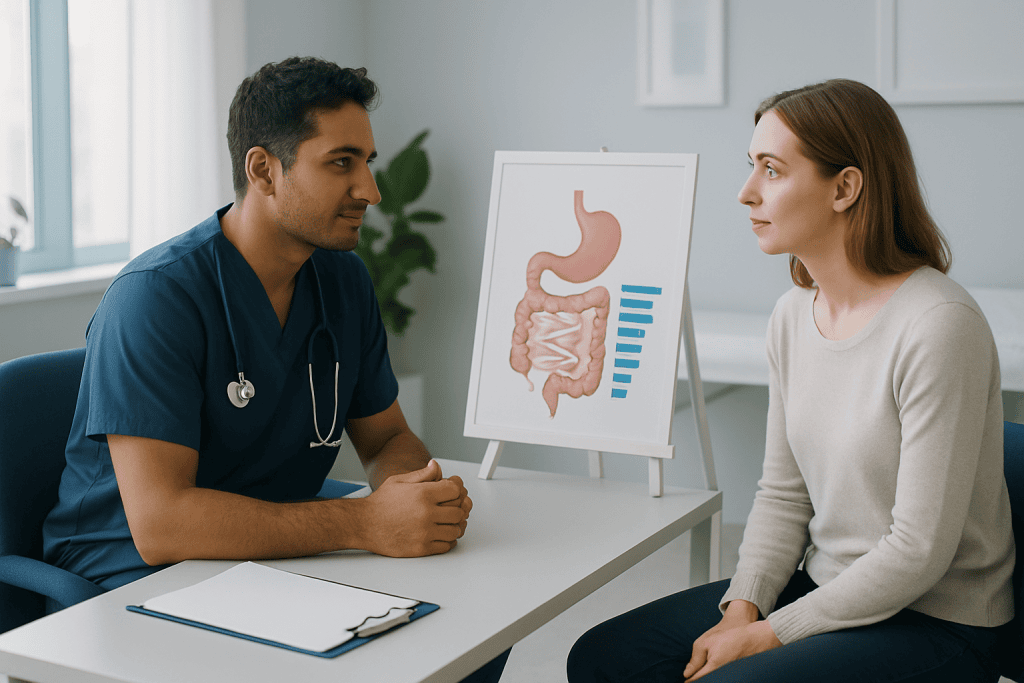
Meal composition is one of the strongest influences on digestion time. Fat slows the emptying of food from the stomach, while protein and fiber may also increase the feeling of fullness. Fiber is not fully broken down by human digestive enzymes; it adds bulk, holds water, and is partly fermented by gut bacteria in the colon. These effects can support regular bowel movements, although they may also increase gas in some people.
Portion size matters. A larger meal generally takes longer to process than a small meal with the same ingredients. Eating speed, alcohol intake, hydration, sleep, emotional stress, hormonal changes, and recent physical activity can also influence digestive symptoms and bowel habits. These factors explain why the same person may experience different digestion patterns on different days.
Age, pregnancy, diabetes, thyroid conditions, prior abdominal surgery, neurological conditions, and gastrointestinal diseases can alter motility. Certain medicines may contribute to constipation, nausea, diarrhea, or delayed stomach emptying. Examples include some opioid pain medicines, anticholinergic medicines, iron supplements, diabetes medicines, and certain medications used for weight management. A person should not stop prescribed medicine based on digestive symptoms without discussing it with the prescribing clinician.
What Clinical Evidence Supports—and Does Not Support
Research supports the general principle that fat, meal volume, calorie content, and food texture can affect gastric emptying. It also supports the importance of adequate dietary fiber, fluids, and physical activity for many people with constipation. However, there is limited clinical value in assigning exact digestion times to individual foods in everyday life.
Popular claims that certain food combinations “rot” in the stomach, that food should always be eaten in a strict order, or that a particular food must be avoided because it takes too long to digest are not supported by normal digestive physiology. The stomach mixes foods into a semi-liquid material and releases it gradually. In most healthy people, mixed meals are expected and do not cause harmful food “backups.”
A digestion time chart also cannot diagnose food intolerance, food allergy, irritable bowel syndrome, inflammatory bowel disease, reflux, constipation, or delayed gastric emptying. Symptoms after a meal may be linked to food type, meal quantity, fermentation of carbohydrates in the colon, sensitivity of the gut-brain connection, or an underlying medical condition. A structured medical evaluation is more reliable than self-diagnosis from a chart.
Practical Ways to Support Comfortable Digestion
For most people, comfortable digestion is supported by regular meals, varied food choices, adequate fluid intake, and a gradual approach to dietary changes. Eating slowly and chewing thoroughly can reduce swallowed air and may help a person notice fullness before overeating. Smaller meals may be more comfortable than one very large meal for people who experience post-meal heaviness or reflux.
Fiber-containing foods such as vegetables, fruit, legumes, whole grains, nuts, and seeds can support stool regularity. Fiber should usually be increased gradually, especially for someone who currently eats little fiber. Increasing fiber without sufficient fluids, or making major changes abruptly, can lead to temporary bloating, cramping, or constipation.
Light movement after eating, such as a gentle walk, may be comfortable for many people. Remaining upright after meals can be helpful for those with heartburn. People with recurring reflux symptoms may benefit from clinical guidance about meal timing, portions, and trigger foods. Information about gastroesophageal reflux disease can help explain why symptoms may occur after particular meals.
Risks, Side Effects, and Who Should Be Cautious
Following a digestion time chart is generally low risk when it is used as a flexible educational tool. Problems can arise when someone restricts nutritious foods unnecessarily, skips meals to follow rigid timing rules, or interprets normal fullness as evidence that food is not digesting properly. Restrictive eating can make it harder to meet energy, protein, vitamin, and mineral needs.
People with diabetes should be especially cautious about using generic food-timing advice to make dietary decisions, since carbohydrates can affect blood glucose differently depending on the food, meal composition, insulin use, activity, and individual metabolism. People with kidney disease, bowel disease, eating disorders, pregnancy-related nutritional needs, or medically prescribed diets should obtain individualized advice from their healthcare team.
Those with known delayed gastric emptying, also called gastroparesis, may need a tailored meal plan that considers texture, fat, fiber, portion size, glucose control when relevant, and symptom severity. Dietary changes should be guided by a gastroenterologist and dietitian rather than by a general chart. Gastroparesis can cause symptoms that require careful assessment because similar symptoms may have other causes.
When to Seek Medical Care
Occasional indigestion, gas, or a change in bowel habits after a rich meal is common. Medical assessment is advisable when digestive symptoms are frequent, worsening, disrupt eating or daily life, or persist despite reasonable dietary adjustments. A clinician can review symptoms, medications, diet, medical history, and appropriate tests.
Urgent medical care is needed for severe or persistent abdominal pain, repeated vomiting, vomiting blood, black or bloody stools, inability to keep fluids down, a swollen abdomen with inability to pass stool or gas, fainting, or signs of dehydration. Unexplained weight loss, progressive difficulty swallowing, ongoing diarrhea, persistent constipation, or anemia also deserve timely evaluation.
Testing may include blood tests, stool studies, imaging, endoscopy, or specialized motility studies depending on the symptoms. For suspected delayed gastric emptying, clinicians may consider a gastric emptying study or another validated assessment. Acibadem International’s multidisciplinary specialists and JCI-accredited hospitals diagnose and treat digestive conditions for international patients.
Frequently asked questions
How long does food usually take to digest?
A meal usually leaves the stomach gradually over several hours, but the complete trip through the intestines can take much longer. Timing varies substantially with meal size, fat and fiber content, fluid intake, activity, medicines, and individual gut motility.
Do fruits digest faster than meat?
Fruit may leave the stomach relatively quickly when eaten in a small, low-fat meal, but it is not possible to assign a precise time to every fruit. Meat and other protein-rich foods are often consumed in mixed meals that may remain in the stomach longer, particularly when the meal is high in fat.
Can food sit in the stomach for days?
In normal digestion, food does not usually remain in the stomach for days. Significant delay can occur with certain medical conditions, including gastroparesis, and should be assessed when it is associated with nausea, vomiting, early fullness, abdominal discomfort, or poor intake.
Does slow digestion cause weight gain?
Slow digestion does not automatically cause weight gain. Body weight is influenced by many factors, including overall energy intake, activity, sleep, medications, hormones, and medical conditions. Persistent symptoms should be evaluated rather than attributed to metabolism alone.
Can drinking water improve digestion time?
Adequate hydration supports normal digestive function and can help prevent hard stools for many people. Water does not force food through the stomach or cure a motility disorder, but regular fluid intake is an important part of bowel health.
Should people avoid eating different foods together?
There is no medical need for most people to separate proteins, carbohydrates, fruits, and vegetables according to strict food-combining rules. The digestive system is designed to process mixed meals. Individual trigger foods may still matter for people with reflux, intolerances, or certain digestive conditions.
References
- National Institute of Diabetes and Digestive and Kidney Diseases
- American College of Gastroenterology
- National Institute of Diabetes and Digestive and Kidney Diseases: Gastroparesis
- Academy of Nutrition and Dietetics
- Mayo Clinic
This article is for general information only and is not a substitute for professional medical advice. Please consult a qualified doctor about your individual situation.
Persistent digestive symptoms? Get evaluated in Turkey
JCI-accredited · board-certified surgeons · reply within 24h
Add us as a Preferred Source to see more of our trusted health content across Google Search, AI Overviews and Discover.
Check your numbers in seconds
BMI, calories, due date, blood pressure and 30+ more clinical calculators — free, instant, doctor-reviewed ranges.