Labia Minora Menopause: A Complete Clinical Guide for Patients

Lower estrogen after menopause can affect the size, color, moisture, and elasticity of the labia minora. Dryness, burning, itching, and discomfort with sexual activity may reflect vulvar and vaginal tissue changes, not poor hygiene.
Key Takeaways
- Lower estrogen after menopause can affect the size, color, moisture, and elasticity of the labia minora.
- Dryness, burning, itching, and discomfort with sexual activity may reflect vulvar and vaginal tissue changes, not poor hygiene.
- Symptoms can respond to non-hormonal moisturizers and lubricants, local estrogen therapy, or other individualized treatments.
- New sores, bleeding, a lump, persistent itching, or pain should be assessed rather than assumed to be menopause.
- Regular gynecologic care helps distinguish normal menopausal changes from skin conditions, infections, or other concerns.
Labia minora menopause changes can occur as estrogen levels decline, making the inner vulvar lips appear smaller, thinner, paler, drier, or less elastic. These changes are usually part of genitourinary syndrome of menopause and can often be managed with gentle vulvar care and clinician-guided treatment.
What happens to the labia minora during menopause?
Labia minora menopause refers to changes in the inner folds of skin around the vaginal opening that may develop during perimenopause and after menopause. As ovarian estrogen production decreases, vulvar and vaginal tissues can become thinner, less flexible, and less well lubricated. The labia minora may look smaller, flatter, paler, or less defined than before.
These changes are common and are not caused by poor hygiene or sexual activity. They are often part of genitourinary syndrome of menopause (GSM), a term that includes symptoms affecting the vulva, vagina, urinary tract, and sexual comfort. Some people notice visible changes without troublesome symptoms, while others experience dryness, irritation, or pain.
The labia minora naturally vary widely in size, shape, color, and symmetry at every age. Menopause does not affect everyone in the same way, and a change in appearance alone does not necessarily require treatment. Care is appropriate when symptoms affect comfort, daily activities, intimacy, or quality of life.
Why estrogen loss affects vulvar tissue
Estrogen supports blood flow, collagen, elasticity, moisture, and thickness in the vulvar and vaginal tissues. With lower estrogen, the skin and mucosal tissue may become more delicate and more prone to friction or small tears. Reduced natural lubrication can make ordinary activities, tight clothing, wiping after urination, exercise, or sexual contact feel uncomfortable.
Lower estrogen may also change the vaginal environment. The tissues can become less acidic and less resilient, which may contribute to burning, recurrent urinary symptoms, or a tendency toward some vaginal infections. These effects can begin in perimenopause and may continue or progress after the final menstrual period without treatment.
Other factors can influence how the labia minora look and feel, including aging, childbirth history, smoking, diabetes, certain cancer treatments, medications that lower estrogen, and autoimmune or inflammatory skin disorders. A clinician can help identify whether menopause is the likely explanation or whether another condition should be considered.
Symptoms that may accompany labia minora changes
Some menopausal labia minora changes are visible but painless. When symptoms occur, they may be mild and intermittent or persistent. Itching and burning can be especially frustrating, but they should not automatically be attributed to menopause because skin conditions and infections may produce similar symptoms.
- Vulvar or vaginal dryness, tightness, or a feeling of reduced elasticity
- Stinging, burning, itching, or sensitivity to soaps, sweat, or friction
- Discomfort while sitting, walking, cycling, exercising, or wearing close-fitting clothing
- Pain, dryness, or light spotting with penetrative sexual activity
- Urinary urgency, burning with urination, or recurrent urinary tract infection symptoms
- Changes in the appearance of the labia minora, such as thinning, paleness, shrinkage, or less distinct folds
Symptoms can overlap with vaginal dryness and other conditions involving the vulva and vagina. A careful assessment is particularly important if there is a localized patch of altered skin, a persistent sore, unusual discharge, bleeding, or a new lump.
How clinicians assess menopausal vulvar symptoms
Diagnosis usually begins with a conversation about symptoms, menstrual history, medications, sexual comfort, urinary concerns, hygiene products, and medical conditions. Menopause can often be recognized from age, menstrual changes, and symptoms; hormone blood tests are not routinely needed for typical cases.
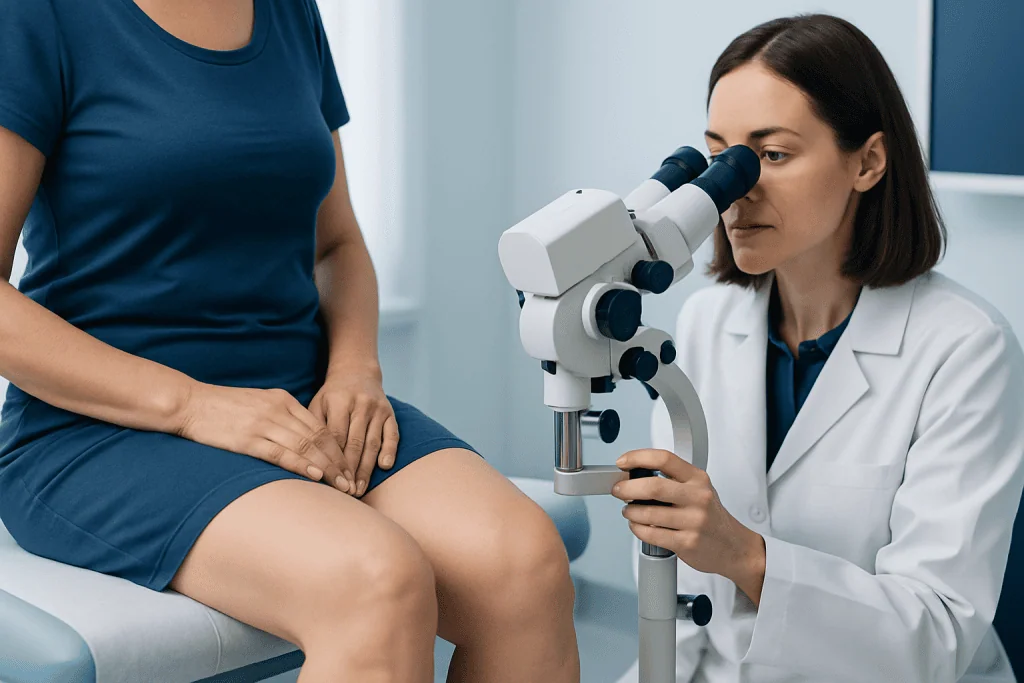
A gynecologic examination allows the clinician to look for thinning, dryness, color changes, irritation, fissures, or narrowing around the vaginal opening. The examination also helps rule out causes such as contact dermatitis, yeast or other infections, lichen sclerosus, lichen planus, psoriasis, or vulvar lesions.
Depending on the findings, testing may include a vaginal swab, urine test, or screening for sexually transmitted infections when relevant. A small skin biopsy may be recommended if an area looks unusual, symptoms do not improve, or there is concern for a vulvar skin disorder. This is a targeted diagnostic step, not a routine part of menopause care.
Treatment options and comfort measures
Treatment is based on symptoms, personal preferences, medical history, and whether hormonal therapy is suitable. People with mild symptoms may benefit from a regular vaginal moisturizer designed for internal or vulvar use, as well as a water- or silicone-based lubricant during sexual activity. Moisturizers are used on a schedule, whereas lubricants are used to reduce friction at the time of activity.
For ongoing GSM symptoms, local vaginal estrogen is among the most effective options. It is available in several forms, such as creams, tablets, inserts, or rings, and works primarily in nearby tissues. Other prescription approaches may be considered in selected cases. Anyone with a history of breast cancer, unexplained vaginal bleeding, blood clots, or other hormone-sensitive conditions should discuss the most appropriate option with the clinician involved in their care.
Systemic menopausal hormone therapy may improve some genital symptoms, but it is not prescribed solely for vulvar symptoms in every case. If pain has led to tightening of the pelvic floor muscles, pelvic floor physical therapy may also be helpful. For individualized evaluation of menopausal symptoms, clinicians may discuss options such as menopause treatment in the context of the person’s overall health.
Procedures marketed as vaginal or vulvar “rejuvenation,” including energy-based laser and radiofrequency treatments, should be approached carefully. Their safety and effectiveness for menopausal symptoms are not established to the same standard as evidence-based medical therapies, and they are not a first-line treatment for GSM.
Daily vulvar care and sexual wellbeing
Simple habits can reduce irritation and protect delicate tissue. The vulva generally needs only warm water or a mild, fragrance-free cleanser used externally. Douching, scented wipes, perfumes, deodorant sprays, and harsh soaps can disrupt the skin barrier and worsen burning or itching.
Breathable cotton underwear, changing out of damp exercise clothing, and avoiding very tight garments can reduce friction. If pads or liners are needed, unscented products may be less irritating. A bland, fragrance-free barrier ointment may help protect external skin from rubbing, although it should not be used as a substitute for assessment of persistent symptoms.
Sexual activity is optional and should not be painful. Regular arousal, lubrication, gentle touch, or vaginal activity can help some people maintain comfort and tissue flexibility, but there is no requirement to be sexually active. Open discussion with a partner and a clinician can support comfort, consent, and treatment choices.
When to seek medical care
A routine appointment is appropriate for bothersome dryness, burning, itching, painful sex, urinary symptoms, or visible labia minora changes that are causing concern. These symptoms are treatable, and an examination can identify whether menopause-related tissue changes are contributing.
Prompt medical assessment is important for unexplained vaginal bleeding after menopause, a new lump, an ulcer or sore that does not heal, a changing dark or white patch of skin, severe pain, fever, or unusual discharge with a strong odor. Persistent itching should also be checked, especially if it does not improve with avoiding irritants.
Acibadem International’s multidisciplinary specialists and JCI-accredited hospitals can assess and treat menopausal vulvar and vaginal concerns for international patients. A gynecologist can provide a respectful examination, explain the findings, and develop an individualized plan without assuming that every symptom is simply due to menopause.
Frequently asked questions
Can menopause make the labia minora smaller?
Yes. Lower estrogen can make the labia minora thinner, less plump, and sometimes less prominent. This is a common age-related hormonal change, although the degree of change varies greatly between individuals.
Are labia minora changes after menopause normal?
Many changes, including reduced fullness, dryness, and paler tissue, can be normal in menopause. However, a new lump, sore, bleeding, marked color change, or persistent itch should be examined to rule out another cause.
Can labia minora menopause changes be reversed?
The appearance may not return completely to its premenopausal state, but symptoms and tissue comfort can often improve substantially. Vaginal moisturizers, lubricants, and clinician-prescribed local hormone treatments can improve dryness and elasticity for many people.
Does local vaginal estrogen affect the labia minora?
Local vaginal estrogen can improve estrogen-responsive tissues in and around the vagina, including vulvar tissues. It may reduce dryness, burning, fragility, and discomfort, but suitability should be discussed with a qualified clinician.
Why do my labia itch after menopause?
Dry, thinner vulvar tissue may itch or sting more easily after menopause. Itching can also result from irritants, infection, eczema, lichen sclerosus, or other skin conditions, so ongoing symptoms deserve medical assessment.
Is painful sex after menopause inevitable?
No. Pain with sex is common but not something a person needs to accept as unavoidable. Lubricants, moisturizers, local therapies, adjustments to sexual activity, and sometimes pelvic floor therapy can help improve comfort.
References
- The North American Menopause Society
- American College of Obstetricians and Gynecologists
- National Institute on Aging
- Mayo Clinic
- International Society for the Study of Women’s Sexual Health
This article is for general information only and is not a substitute for professional medical advice. Please consult a qualified doctor about your individual situation.
Explore treatments in Turkey — costs, top hospitals & a free quote
JCI-accredited · board-certified surgeons · reply within 24h
Add us as a Preferred Source to see more of our trusted health content across Google Search, AI Overviews and Discover.