Foods High in Iron Explained: Reference Ranges and What Affects Them

Foods high in iron include both animal and plant foods, but iron from animal foods is generally absorbed more easily. Daily iron needs are not the same for everyone; menstruation, pregnancy, growth, and certain medical conditions can increase needs.
Key Takeaways
- Foods high in iron include both animal and plant foods, but iron from animal foods is generally absorbed more easily.
- Daily iron needs are not the same for everyone; menstruation, pregnancy, growth, and certain medical conditions can increase needs.
- Vitamin C can improve iron absorption, while tea, coffee, calcium, and some high-fiber foods may reduce it when eaten at the same time.
- A meaningful iron problem is not defined by diet alone; doctors usually interpret iron studies together with hemoglobin, ferritin, and symptoms.
- Persistent fatigue, pale skin, shortness of breath, or abnormal blood test results should be discussed with a healthcare professional.
Foods high in iron include heme sources such as red meat, poultry, and seafood, as well as non-heme sources such as beans, lentils, tofu, spinach, seeds, and fortified cereals. How much iron a person needs, how well it is absorbed, and when a low or high iron result matters depend on age, sex, pregnancy, diet, and the pattern seen on blood tests.
Overview: what foods high in iron means
Foods high in iron are foods that provide a meaningful amount of this essential mineral, which the body uses to make hemoglobin, carry oxygen, support muscle function, and help many enzymes work properly. Common high-iron foods include red meat, liver, shellfish, dark poultry meat, beans, lentils, soy foods, pumpkin seeds, spinach, and iron-fortified cereals.
For many people, the practical question is not only which foods contain iron, but also whether the body can absorb enough of it. Iron from animal foods, called heme iron, is usually absorbed more efficiently than non-heme iron from plant foods and fortified products. This is why two foods may list similar iron amounts yet affect iron status differently.
Iron needs also vary by context. Children, teenagers, people who menstruate, pregnant women, endurance athletes, and people recovering from blood loss may need more iron than others. A person can also eat iron-rich foods and still have low iron if there is poor absorption, chronic blood loss, inflammation, or an underlying digestive condition.
Because of this, low or high iron is best understood through symptoms and blood tests rather than diet alone. If a clinician is evaluating possible iron deficiency anemia, they often look beyond food intake to ferritin, hemoglobin, red blood cell indices, and the person’s medical history.
Reference ranges: iron intake, iron tests, and what variation means
There is no single number that defines a “normal” iron intake for everyone. Recommended intake varies by age, sex, and life stage. In general, adult men and many postmenopausal women need less iron than women of reproductive age, while pregnancy raises iron requirements further. Infants, children, and teenagers also have changing needs because of growth.
Lab interpretation is also more complex than a single iron value. Serum iron can rise and fall during the day and may be affected by recent meals, supplements, inflammation, or illness. For that reason, doctors often rely more heavily on ferritin, transferrin saturation, total iron-binding capacity, and a complete blood count when deciding whether iron stores are low, normal, or elevated.
Ferritin generally reflects iron stores, but it can also increase during infection, liver disease, or chronic inflammation. A person may have symptoms of deficiency with borderline or mixed results, especially if ferritin is affected by another condition. Likewise, a normal serum iron level does not always rule out deficiency if other markers suggest low stored iron.
In practice, variation becomes medically meaningful when blood results are consistently outside the laboratory’s reference range, when several iron-related markers move in the same direction, or when symptoms fit the pattern. Clinicians interpret results in context rather than using diet lists alone as proof of deficiency or excess.
Best food sources of iron
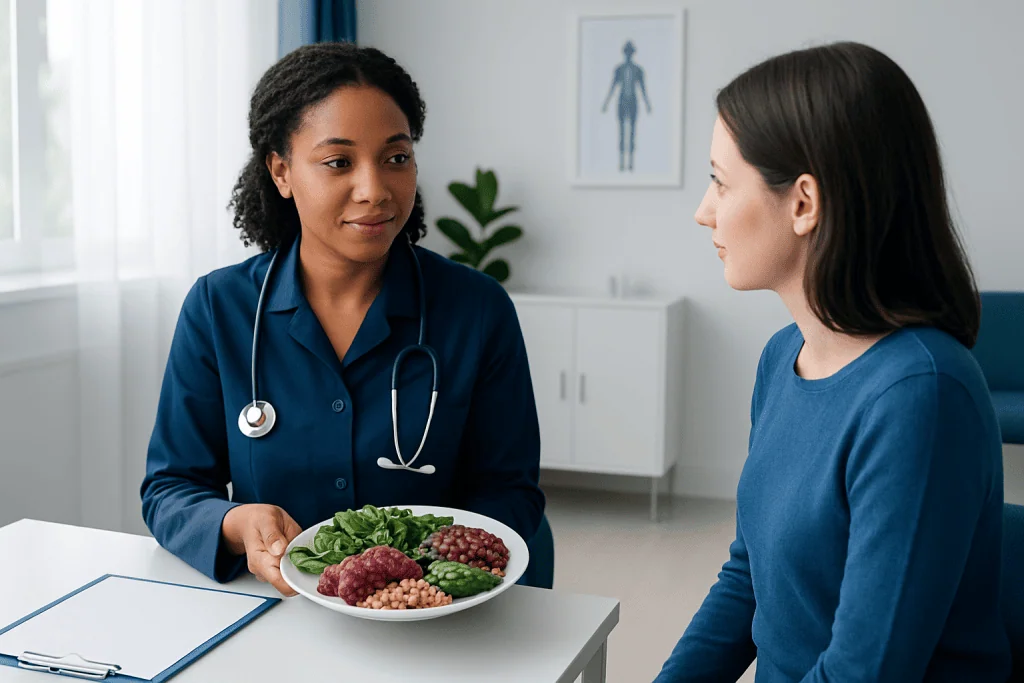
The richest natural sources of iron are often animal foods, especially red meat, organ meats, and shellfish. Lean beef, lamb, dark turkey meat, sardines, oysters, mussels, and clams are well-known examples. These foods contain heme iron, which tends to be absorbed more efficiently than plant-based iron.
Plant foods can also contribute important amounts of iron, especially when eaten regularly and paired with foods that support absorption. Good choices include lentils, chickpeas, beans, soybeans, tofu, tempeh, pumpkin seeds, sesame seeds, quinoa, spinach, dried apricots, and iron-fortified cereals or breads. For people who avoid meat, variety and meal planning matter more because the body absorbs non-heme iron less readily.
A useful way to think about foods high in iron is to combine dense sources with supportive foods rather than focusing on one “superfood.” For example, beans with tomatoes, fortified cereal with berries, or lentils with bell peppers can help improve iron uptake. Cooking in cast iron cookware may slightly increase the iron content of some foods, especially acidic dishes.
- Heme iron sources: beef, lamb, liver, poultry, fish, oysters, clams, mussels
- Non-heme iron sources: lentils, beans, tofu, spinach, pumpkin seeds, quinoa, fortified cereals
- Mixed meals can help: combining iron-rich foods with vitamin C sources often supports absorption
What affects iron absorption
Iron absorption depends on more than the amount listed on a nutrition label. Heme iron from animal foods is naturally easier for the body to absorb. Non-heme iron from plants and fortified foods is more sensitive to what is eaten alongside it, which can either improve or reduce uptake.
Vitamin C is one of the best-known enhancers of iron absorption. Citrus fruits, strawberries, kiwi, tomatoes, and peppers can make non-heme iron easier to absorb when included in the same meal. Meat, fish, and poultry may also help the body absorb non-heme iron from plant foods eaten at the same time.
Some foods and substances can decrease absorption if taken with iron-rich meals. Tea and coffee contain compounds that can bind iron. Calcium from supplements or large amounts of dairy can also reduce absorption in some situations, and phytates in whole grains and legumes may have a similar effect. This does not mean these foods are unhealthy; it simply means timing can matter for people trying to raise low iron levels.
Medical factors are equally important. Conditions that affect the stomach or intestines, previous gastrointestinal surgery, chronic inflammation, heavy menstrual bleeding, pregnancy, and occult blood loss can all influence iron status. In some cases, a person with persistent deficiency may need evaluation for celiac disease or other digestive causes that limit absorption.
When low or high iron becomes medically meaningful
A low-iron pattern becomes clinically important when it affects how the body makes red blood cells or when symptoms appear. Common symptoms include fatigue, weakness, pale skin, dizziness, headaches, feeling short of breath with activity, brittle nails, or reduced exercise tolerance. Some people also notice restless legs or cravings for non-food items such as ice.
Not everyone with low intake develops anemia, and not everyone with symptoms has a simple dietary problem. Iron deficiency may result from menstrual blood loss, pregnancy, gastrointestinal bleeding, ulcers, polyps, inflammatory bowel conditions, or poor absorption. This is why doctors often look for a cause rather than recommending iron supplements automatically.
High iron can also matter, although it is less often caused by food alone. Repeatedly elevated iron markers may prompt evaluation for liver disease, repeated transfusions, excessive supplementation, or inherited iron overload conditions. People should not start long-term iron supplements unless advised by a healthcare professional, because unnecessary supplementation can sometimes do harm.
When test results are unclear, a clinician may repeat blood work, review medications and diet, and look for related disorders such as anemia. If treatment is needed, this may involve dietary counseling, oral supplements, investigation for bleeding, or other targeted care depending on the cause.
How doctors evaluate iron-related symptoms or test results
If someone has symptoms of low iron or receives an abnormal result, evaluation usually begins with a medical history and a complete blood count. The clinician may ask about menstrual bleeding, pregnancy, recent surgery, digestive symptoms, weight loss, medications such as aspirin or anti-inflammatory drugs, and any family history of blood disorders or gastrointestinal disease.
Additional tests often include ferritin, serum iron, transferrin saturation, and total iron-binding capacity. Depending on the situation, a doctor may also check vitamin B12, folate, kidney function, thyroid function, or markers of inflammation. If there is concern about blood loss from the digestive tract, stool testing, endoscopy, or colon evaluation may be considered.
Nutrition review can be helpful, but it is only one part of the picture. Someone who eats few iron-rich foods may improve with dietary changes, while another person may need a deeper evaluation for bleeding or malabsorption. In selected cases, specialists may recommend endoscopy to look for ulcers, inflammation, or other sources of blood loss.
Treatment depends on the underlying cause. It may include food planning, oral iron, management of heavy menstrual bleeding, treatment of digestive disease, or occasionally intravenous iron therapy when oral treatment is not tolerated or does not work well enough.
Practical self-care: using foods high in iron effectively
For people trying to maintain healthy iron levels, the goal is usually to build regular eating patterns rather than rely on one occasional iron-rich meal. Including an iron source at most meals can be a simple strategy. Animal foods can be used when suitable, and plant-based eaters can mix legumes, soy foods, seeds, fortified grains, and leafy greens throughout the week.
Meal pairing can make a noticeable difference. Adding vitamin C-rich produce to meals may support non-heme iron absorption, while separating tea, coffee, or calcium supplements from iron-focused meals may help in some cases. A doctor or dietitian can help tailor this advice if a person has kidney disease, inflammatory bowel disease, pregnancy, or another condition with special dietary needs.
It is also sensible to be cautious with supplements. Over-the-counter iron products are not the right choice for everyone, and they can cause side effects such as nausea, constipation, or stomach discomfort. More importantly, self-treating may delay diagnosis of bleeding or another underlying condition if symptoms are simply attributed to diet.
If specialized care is needed, Acibadem International’s multidisciplinary specialists and JCI-accredited hospitals evaluate iron-related symptoms and underlying causes for international patients. Depending on the findings, care may involve digestive evaluation, nutritional support, or treatments such as colonoscopy when a source of blood loss needs to be investigated.
When to seek medical care
Medical advice is important if fatigue is persistent, shortness of breath develops with usual activity, the skin appears noticeably pale, or a blood test shows low hemoglobin, low ferritin, or other iron abnormalities. Care is also warranted if symptoms continue despite eating more foods high in iron or taking supplements recommended by a clinician.
Prompt assessment is especially important for pregnant women, infants, older adults, people with heavy menstrual bleeding, and anyone with black stools, visible blood loss, unexplained weight loss, chest discomfort, or fainting. These symptoms do not always mean a serious problem, but they do deserve timely medical attention.
A person should also speak with a doctor before taking long-term iron supplements if they have liver disease, a family history of iron overload, repeated transfusions, or previously high iron test results. Guidance from a qualified professional helps ensure that treatment is appropriate and that the real cause of abnormal iron levels is not missed.
Frequently asked questions
What foods are highest in iron?
Some of the highest-iron foods are red meat, liver, oysters, clams, and mussels. Among plant foods, lentils, beans, tofu, pumpkin seeds, spinach, and fortified cereals are commonly used to increase iron intake.
Is iron from plant foods as good as iron from meat?
Both can help meet iron needs, but they are absorbed differently. Iron from meat, poultry, and seafood is usually absorbed more easily than iron from plant foods, so plant-based diets often benefit from careful meal pairing and variety.
How can someone improve iron absorption from food?
Pairing iron-rich foods with vitamin C sources such as citrus, berries, tomatoes, or peppers can help. It may also help to avoid tea, coffee, or calcium supplements at the same time as iron-focused meals, especially when trying to correct low iron.
Can a person have low iron even if they eat foods high in iron?
Yes. Low iron can happen because of heavy menstrual bleeding, gastrointestinal blood loss, poor absorption, pregnancy, inflammation, or certain digestive conditions, even when diet seems adequate.
Should everyone with fatigue take iron supplements?
No. Fatigue has many possible causes, and iron supplements are not appropriate for everyone. A healthcare professional can use symptoms and blood tests to decide whether low iron is actually the problem.
What blood tests are usually checked for iron deficiency?
Doctors often order a complete blood count, ferritin, serum iron, transferrin saturation, and total iron-binding capacity. These tests are interpreted together, because one test alone may not give the full picture.
References
- National Institutes of Health Office of Dietary Supplements
- World Health Organization
- Centers for Disease Control and Prevention
- American Society of Hematology
- National Heart, Lung, and Blood Institute
This article is for general information only and is not a substitute for professional medical advice. Please consult a qualified doctor about your individual situation.
Explore treatments in Turkey — costs, top hospitals & a free quote
JCI-accredited · board-certified surgeons · reply within 24h
Add us as a Preferred Source to see more of our trusted health content across Google Search, AI Overviews and Discover.

More from the Health Library



Related Specialists

Dr. Burcu Kesmez Evirgen
Pediatrics
Dr. Fahrî Fatih Tipi
Cardiology
Dr. Mustafa Mutlu
Inpatient Clinic Physicians Clinical Service
Psk. Duygu Gökyıldırım Uslu
Psychology