Foot Tendons: A Complete Medical Overview

Foot tendons help the foot move, stay balanced, and support the arch. Overuse, sudden injury, poor footwear, and structural foot problems can all affect foot tendons.
Key Takeaways
- Foot tendons help the foot move, stay balanced, and support the arch.
- Overuse, sudden injury, poor footwear, and structural foot problems can all affect foot tendons.
- Common symptoms include pain, swelling, stiffness, tenderness, and weakness with walking or pushing off.
- Diagnosis often relies on a physical exam, with ultrasound or MRI used when needed.
- Treatment may include rest, activity changes, supportive footwear, physical therapy, and sometimes surgery.
Foot tendons are strong bands of tissue that connect muscles to bones, allowing the foot and ankle to move, stabilize, and absorb force during walking and standing. When a foot tendon becomes irritated, strained, or torn, it can cause pain, swelling, weakness, and difficulty with everyday movement.
Overview: what foot tendons do and why they matter
Foot tendons are tough, flexible bands of connective tissue that attach muscles to bones in the foot and ankle. Their main job is to transfer the pull of a muscle into movement, helping the foot point, flex, grip the ground, and adapt to uneven surfaces. They also play an important role in balance and shock absorption during standing, walking, and sports.
Rather than acting as isolated structures, foot tendons work together as part of a coordinated system with bones, joints, ligaments, muscles, and nerves. Some tendons help lift the foot and toes, while others help push the body forward or support the arch. When even one tendon becomes irritated or weakened, it can affect walking mechanics and place extra strain on neighboring tissues.
Many people use the term “tendonitis” for any tendon-related pain in the foot, but several conditions are possible. These include inflammation from overuse, tendon degeneration over time, partial tears, complete ruptures, or problems caused by foot alignment. Because symptoms may overlap with plantar fasciitis, sprains, or arthritis, a proper assessment can be helpful when pain does not improve.
Main tendons in the foot and ankle
The foot contains several important tendons, each with a different function. The Achilles tendon connects the calf muscles to the heel and helps with walking, running, and jumping. The posterior tibial tendon supports the arch and helps turn the foot inward. Peroneal tendons run along the outer side of the ankle and help stabilize the foot. Extensor tendons on the top of the foot lift the toes, while flexor tendons on the underside help curl the toes and assist with push-off.
Because these tendons are under regular load, they can be affected by repetitive use, poor biomechanics, or a sudden twist or impact. For example, the posterior tibial tendon may become painful in people with flattening of the arch, while extensor tendons may be irritated by tight shoes or long periods of walking uphill. Peroneal tendon problems can occur after repeated ankle sprains.
Understanding which tendon may be involved can guide treatment. Pain at the back of the heel may point to the Achilles tendon, while pain along the inner ankle and arch may suggest a posterior tibial tendon problem. Pain on the top of the foot may involve the extensor tendons, and pain along the outer ankle may involve the peroneal tendons. In some cases, symptoms may also overlap with ankle sprain or other foot and ankle conditions.
Symptoms of foot tendon problems

Symptoms depend on the tendon affected and the type of injury, but pain is the most common complaint. This pain may be sharp during movement, dull at rest, or worse first thing in the morning. Some people notice discomfort only with exercise, while others have ongoing pain that interferes with normal walking.
Other common signs include swelling, tenderness when pressing on the tendon, stiffness, warmth, and a feeling of weakness or instability. A person may limp, avoid putting full weight on the foot, or find it hard to climb stairs, stand on tiptoes, or push off while walking. If the tendon helps support the arch, the shape of the foot may gradually change.
A sudden tear or rupture can cause a popping sensation, immediate pain, bruising, or sudden loss of strength. Chronic tendon problems may develop more slowly, with symptoms that come and go before becoming more persistent. Prompt evaluation is especially important when symptoms are severe, rapidly worsening, or associated with deformity.
- Pain during walking, running, or standing
- Swelling around the foot or ankle
- Stiffness after rest
- Tenderness along a tendon path
- Weakness, limping, or reduced balance
- Difficulty wearing shoes comfortably
Causes and risk factors
Foot tendon problems often result from overuse. Repeated walking, running, jumping, dancing, or standing for long periods can place stress on the tendons, especially if activity increases too quickly. Poorly fitted shoes, hard training surfaces, and limited recovery time can add to the strain.
Structural and biomechanical factors also matter. Flat feet, high arches, tight calf muscles, leg length differences, or abnormal gait patterns can change how force moves through the foot. These issues may overload certain tendons, particularly the posterior tibial, Achilles, or peroneal tendons. Age-related wear can also reduce tendon flexibility and healing capacity.
Direct injury is another cause. A twist, fall, sudden pivot, or forceful push-off can stretch or tear a tendon. Previous ankle injuries may make tendon problems more likely by affecting stability and movement patterns. In some people, inflammatory conditions, diabetes, or medications that affect tendon health may increase risk, so treatment should be individualized and medically supervised when needed.
How foot tendon problems are diagnosed
Diagnosis usually begins with a medical history and physical examination. A clinician asks where the pain is felt, when it began, what activities make it worse, and whether there was a specific injury. The foot and ankle are then examined for swelling, tenderness, alignment, range of motion, strength, and gait changes.
In many cases, the pattern of pain and the exam findings give strong clues about which tendon is involved. The clinician may ask the patient to stand on tiptoes, move the foot against resistance, or walk to assess tendon function. They may also check for arch collapse, ankle instability, or signs that another structure is contributing to symptoms.
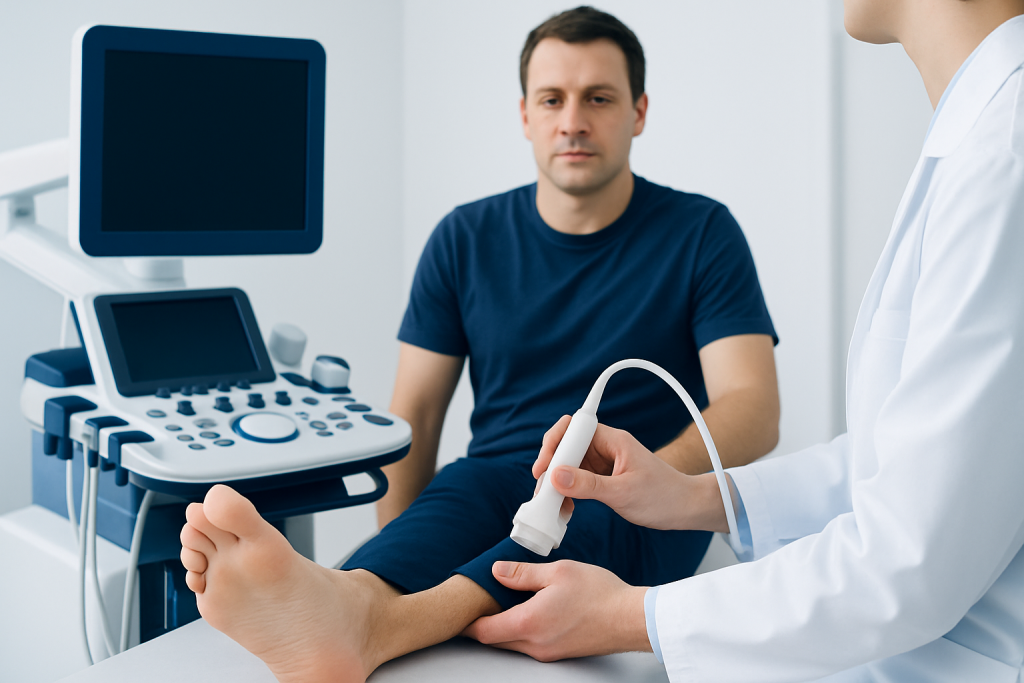
Imaging is used when the diagnosis is unclear, symptoms are severe, or a tear is suspected. Ultrasound can show tendon thickening, inflammation, or tearing in real time. MRI provides more detailed images and may be helpful for complex injuries or surgical planning. X-rays do not show tendons directly, but they may help identify bone problems, alignment changes, or arthritis. Some patients may benefit from advanced assessment in orthopedics and traumatology or physical therapy and rehabilitation.
Treatment options for foot tendon injuries
Treatment depends on the tendon involved, the severity of the injury, and the person’s activity level. Many mild to moderate cases improve with relative rest, ice, activity modification, and temporary reduction of weight-bearing stress. Supportive shoes, braces, taping, or orthotic inserts may reduce strain and improve alignment while the tendon heals.
Physical therapy is often a key part of recovery. A rehabilitation plan may focus on stretching tight muscles, strengthening the foot and ankle, improving balance, and correcting walking or training mechanics. Tendon loading exercises are usually introduced gradually because too much rest for too long can lead to weakness, while returning too early can prolong symptoms.
Medication may be used for short-term pain relief if appropriate, under medical advice. If a tendon is badly torn, the arch is collapsing, symptoms do not improve, or function remains limited, surgery may be considered. Surgical care depends on the specific problem and may involve tendon repair, reconstruction, or correction of related structural issues. In selected cases, an evaluation by foot and ankle surgery specialists may be recommended, especially when pain is persistent or the tendon has ruptured.
Prevention and self-care
Protecting foot tendons begins with reducing repetitive strain and supporting healthy movement patterns. Shoes should fit well, provide appropriate cushioning and support, and match the activity being performed. Replacing worn footwear can be helpful for people who walk or exercise frequently.
A gradual approach to exercise is one of the most effective prevention strategies. Sudden increases in distance, speed, hills, or intensity can overload tendons. Warm-up routines, calf and foot flexibility work, and strength training for the lower leg may improve tendon resilience over time. Rest days are also important, especially after higher-impact activities.
At home, early self-care for mild symptoms may include reducing the provoking activity, applying ice for short periods, elevating the foot, and avoiding shoes that increase pressure on the painful area. However, self-care should not replace evaluation when pain is significant, keeps returning, or interferes with normal function. For people with recurring tendon problems, a broader assessment may help identify underlying issues such as flat feet or gait imbalance.
When to seek medical care
Medical review is important if foot tendon pain lasts more than a few days, keeps returning, or limits walking, exercise, work, or daily tasks. Ongoing symptoms may mean the tendon is not simply irritated but structurally overloaded or partially torn. Early diagnosis can help prevent progression and support a safer recovery.
Urgent assessment is advisable after a sudden injury, especially if there is a popping sensation, rapid swelling, visible bruising, marked weakness, or inability to bear weight. These signs can suggest a tendon tear or another significant foot or ankle injury. Numbness, redness with fever, or severe deformity should also be checked promptly.
People with diabetes, inflammatory joint disease, poor circulation, or repeated ankle injuries should be especially cautious about new foot pain. Near the end of the care pathway, specialist evaluation may be useful when symptoms are complex or persistent. Acibadem International’s multidisciplinary specialists in JCI-accredited hospitals diagnose and treat foot tendon conditions for international patients, with care plans that may include imaging, rehabilitation, and surgical consultation when needed.
Frequently asked questions
What are foot tendons?
Foot tendons are strong bands of tissue that connect muscles to the bones of the foot and ankle. They help the foot move, stabilize the arch, and absorb force during standing, walking, and sports.
What causes foot tendon pain?
Foot tendon pain commonly develops from overuse, sudden increases in activity, poor footwear, or an injury such as a twist or fall. Foot shape, tight calf muscles, and previous ankle problems can also increase stress on specific tendons.
Can foot tendonitis go away on its own?
Mild tendon irritation may improve with rest, activity changes, and supportive footwear. However, pain that persists, returns often, or affects walking should be evaluated, because some tendon conditions worsen if the underlying cause is not addressed.
How do doctors diagnose a foot tendon injury?
Doctors usually begin with a history and physical exam to identify where the pain is and which movements trigger it. If a tear is suspected or symptoms are not straightforward, ultrasound or MRI may be used to look more closely at the tendon.
Do all foot tendon injuries need surgery?
No. Many foot tendon problems improve with conservative care such as rest, bracing, physical therapy, and gradual return to activity. Surgery is usually reserved for significant tears, tendon rupture, ongoing disability, or structural problems that do not respond to non-surgical treatment.
How long does recovery take?
Recovery time depends on which tendon is affected and how severe the injury is. Mild overuse problems may improve over weeks, while more serious injuries or post-surgical recovery can take much longer and usually require a structured rehabilitation plan.
This article is for general information only and is not a substitute for professional medical advice. Please consult a qualified doctor about your individual situation.
Joint and spine care in Turkey — expert assessment & treatment
JCI-accredited · board-certified surgeons · reply within 24h
Add us as a Preferred Source to see more of our trusted health content across Google Search, AI Overviews and Discover.

More from the Health Library

Last Bowel Movement Before Death: What Patients Need to Know

Cell Salts: A Complete Medical Overview

Receding Gums — Explained by Medical Evidence, Not Myths

Pap Smear — Explained by Medical Evidence, Not Myths

Sunosi — Explained by Medical Evidence, Not Myths

Light Skin: What Patients Need to Know
Orthopedic Surgery & Traumatology Specialists at Acibadem

Dr. Bengü Kasım
Physical Medicine & Rehabilitation
Dr. Berhan Bayram
Orthopedic Surgery & Traumatology
Assoc. Prof. Dr. Berkin Toker
Orthopedic Surgery & Traumatology
Assoc. Prof. Dr. Bertan Cengiz
Orthopedic Surgery & Traumatology