Forearm: What Patients Need to Know

The forearm contains two bones, many muscles and tendons, important nerves, and blood vessels that work together for movement and grip. Forearm pain is often caused by overuse, strain, tendon irritation, or injury, but numbness, deformity, severe swelling, or sudden weakness need medical attention.
Key Takeaways
- The forearm contains two bones, many muscles and tendons, important nerves, and blood vessels that work together for movement and grip.
- Forearm pain is often caused by overuse, strain, tendon irritation, or injury, but numbness, deformity, severe swelling, or sudden weakness need medical attention.
- Diagnosis may include a physical exam and, when needed, imaging or nerve tests to identify the exact source of symptoms.
- Treatment depends on the cause and may include rest, splinting, physiotherapy, medicines, or surgery for fractures or serious soft-tissue injuries.
- Early care and activity changes can help prevent chronic forearm problems, especially in people with repetitive work or sports demands.
The forearm is the part of the arm between the elbow and wrist, and it plays a central role in lifting, gripping, rotating the hand, and everyday movement. Forearm symptoms can come from muscles, tendons, nerves, blood vessels, or bone, so evaluation depends on where the pain is felt, how it started, and whether there is weakness, swelling, numbness, or loss of function.
Overview: what the forearm does
The forearm is the area between the elbow and the wrist. Although many people think of it simply as the lower arm, it is a complex structure that allows the hand to turn palm up and palm down, supports gripping and lifting, and helps coordinate fine motor tasks such as writing, typing, cooking, and dressing.
Two long bones form the forearm: the radius on the thumb side and the ulna on the little-finger side. Around them are muscles, tendons, ligaments, nerves, and blood vessels. Because so many structures pass through a relatively narrow space, symptoms in the forearm can feel similar even when the underlying cause is different.
Forearm concerns are common in daily life. Some begin after a specific event, such as a fall, direct blow, or sports injury. Others develop gradually from repeated gripping, twisting, lifting, computer use, racket sports, or manual work. In some cases, pain felt in the forearm actually starts at the elbow, wrist, neck, or shoulder.
Understanding the forearm matters because treatment is not one-size-fits-all. A strained muscle, irritated tendon, pinched nerve, or broken bone may all cause discomfort, but each is managed differently. A careful medical assessment helps identify the source and plan the most appropriate care.
Common forearm symptoms
Forearm symptoms can vary from mild aching to severe pain with loss of movement. Some people notice discomfort only during activity, while others feel symptoms at rest or at night. The location of the pain often offers clues. Pain near the elbow may be linked to tendon problems, while pain closer to the wrist may relate to strain, nerve compression, or injury around the wrist joint.
Common symptoms include tenderness, swelling, stiffness, bruising, muscle cramping, weakness when gripping, or pain when twisting a doorknob, lifting a bag, typing, or playing sports. Some people feel a pulling sensation along the inner or outer side of the forearm. Others describe burning, tingling, or numbness, which can suggest nerve involvement.
Warning signs that need prompt assessment include visible deformity after an injury, inability to move the wrist or fingers, severe swelling, color change in the hand, intense pain that does not improve, or numbness that lasts. Pain with fever, spreading redness, or a wound also needs medical review.
- Aching or sharp pain with movement
- Grip weakness or dropping objects
- Swelling, bruising, or tenderness
- Numbness, tingling, or burning
- Reduced rotation of the forearm or wrist motion
Causes and risk factors

Many forearm problems are caused by overuse. Repetitive activities can irritate muscles and tendons where they attach near the elbow or travel toward the wrist. This may happen in sports such as tennis, golf, climbing, rowing, and weight training, or in daily tasks involving prolonged keyboard use, gripping tools, assembly work, or repeated lifting.
Acute injuries are another major cause. Falls onto an outstretched hand, direct impact, heavy lifting, and sudden twisting can lead to strains, ligament injuries, or fractures of the radius or ulna. A fracture may be obvious after trauma, but some stress injuries develop gradually and are easier to miss if symptoms begin slowly.
Nerve-related causes can also affect the forearm. Compression or irritation of nerves in the neck, elbow, or wrist may cause pain, tingling, and weakness along the forearm. Conditions such as carpal tunnel syndrome can produce symptoms that seem to travel upward, while irritation around the elbow may affect the ring and little fingers. In some cases, tendon problems around the elbow such as tennis elbow cause pain that radiates down the forearm.
Risk factors include repetitive hand use, poor ergonomics, sudden increases in activity, reduced flexibility, previous injury, contact sports, osteoporosis, and jobs that involve vibration tools or forceful gripping. Less commonly, infection, circulation problems, inflammatory joint disease, or referred pain from the neck may be involved.
How doctors diagnose forearm problems
Diagnosis starts with the history. A clinician usually asks when the symptoms began, whether there was an injury, what movements worsen the pain, and whether numbness, swelling, weakness, or hand symptoms are present. Details about work, sports, hobbies, and previous arm or neck problems can be especially helpful.
The physical examination focuses on the forearm, elbow, wrist, and hand. The doctor may check for tenderness, bruising, swelling, range of motion, grip strength, and pain with resisted wrist or finger movements. A neurovascular exam is also important to assess circulation, skin color, pulse, sensation, and muscle function.
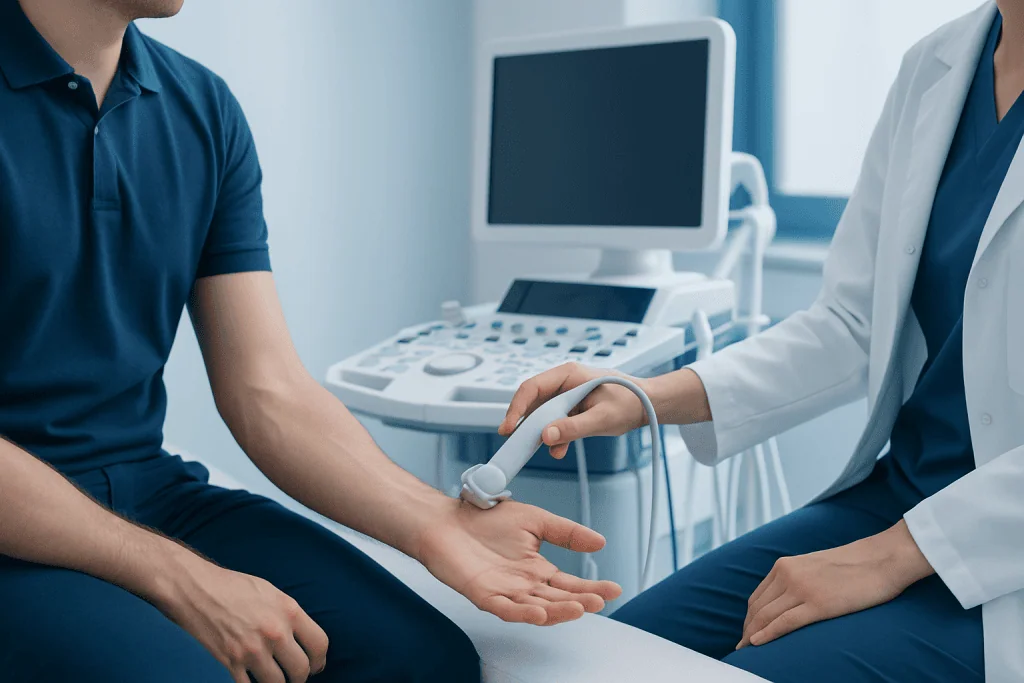
If a fracture or other structural injury is suspected, imaging may be needed. X-rays are commonly used after trauma or when bone injury is a concern. Ultrasound or MRI may help evaluate tendons, muscles, ligaments, or occult injuries that are not clear on X-ray. When numbness or persistent weakness is present, nerve studies can sometimes help identify compression or irritation.
The goal is to identify the exact source of the symptoms rather than treating all forearm pain the same way. This is why persistent or recurrent symptoms should not be self-diagnosed for too long, especially if function is being affected.
Treatment options
Treatment depends on the cause. For mild overuse problems, the first steps often include temporary rest from aggravating activity, ice, activity modification, and short-term support with a brace or splint if advised by a clinician. Simple pain-relieving medicines may help some people, but they should be used according to a doctor or pharmacist’s guidance, especially in people with stomach, kidney, heart, or bleeding risks.
Physiotherapy is often helpful for forearm strain, tendon irritation, and movement-related pain. Exercises may focus on flexibility, gradual strengthening, posture, and technique changes for work or sports. If symptoms are linked to nerve irritation, treatment may also include nerve-gliding exercises, ergonomic changes, or splinting, depending on the diagnosis.
Fractures, major tendon injuries, and some nerve compression problems may need specialist care. A broken forearm bone may require immobilization in a cast or splint, and some cases need orthopedic surgery to restore alignment and function. Imaging such as MRI can sometimes clarify complex soft-tissue injuries when the diagnosis is uncertain. For ongoing symptoms related to hand or wrist nerve compression, doctors may also consider treatments used in carpal tunnel syndrome treatment when appropriate to the confirmed diagnosis.
Recovery time varies. Mild strains may improve in days to weeks, while tendon injuries and fractures can take much longer. Returning too quickly to heavy activity can delay healing, so a gradual, supervised return is usually best.
Prevention and self-care
Not all forearm problems can be prevented, but many overuse-related symptoms improve with good habits. Warming up before sports, increasing training gradually, taking regular breaks from repetitive tasks, and improving workstation setup can all reduce strain. Tools with better grip support and attention to lifting technique may also help.
Stretching and strengthening programs can be useful, especially for people who perform repeated wrist and hand movements. Balanced conditioning of the shoulder, upper back, and hand may reduce stress on the forearm. For people returning after injury, building load gradually is important to avoid flare-ups.
At home, self-care should be practical and measured. Resting from the activity that caused the symptoms, applying a cold pack for short periods, and keeping the arm elevated after a minor injury may reduce discomfort and swelling. However, persistent pain should not be managed with rest alone if it limits work, sleep, exercise, or normal daily tasks.
Prevention also includes listening to early warning signs. Pain that appears repeatedly during a specific movement, increasing grip weakness, or tingling in the fingers may signal that an activity needs to be modified before a more significant problem develops.
When to seek medical care
Medical review is recommended if forearm pain lasts more than a few days, keeps returning, or begins to interfere with lifting, gripping, sports, work, or sleep. Evaluation is also important if the symptoms spread into the hand, elbow, shoulder, or neck, since referred pain and nerve-related problems can be involved.
Urgent care is needed after significant trauma, especially if there is deformity, severe swelling, intense pain, inability to use the arm, or numbness in the hand. A pale, blue, or unusually cold hand should also be assessed immediately because circulation may be affected.
People should also seek care for fever, redness, warmth, or an open wound near the painful area, as these can suggest infection. Those with osteoporosis, blood thinner use, diabetes, or a weakened immune system may need earlier assessment after injury or if symptoms are not settling.
At Acibadem International, multidisciplinary specialists in orthopedics, physical medicine, neurology, and radiology evaluate forearm symptoms and provide care for international patients in JCI-accredited hospitals when further assessment or treatment is needed.
Frequently asked questions
What is the forearm?
The forearm is the part of the upper limb between the elbow and the wrist. It contains the radius and ulna bones, along with muscles, tendons, nerves, and blood vessels that allow hand and wrist movement.
Why does my forearm hurt without an obvious injury?
Forearm pain without a clear injury is often related to overuse, muscle strain, tendon irritation, or repetitive activities such as typing, lifting, or sports. Sometimes the pain comes from a nerve problem or from nearby areas such as the elbow, wrist, or neck.
How can someone tell if forearm pain is serious?
Forearm pain is more concerning if it follows a fall or direct trauma, or if it comes with deformity, severe swelling, weakness, numbness, or inability to move the hand or wrist. Pain with fever, color change, or a cold hand also needs prompt medical evaluation.
Can forearm pain come from the wrist or elbow?
Yes. Pain felt in the forearm may actually start at the elbow or wrist, especially in tendon conditions and nerve compression problems. This is one reason a full examination often includes the neck, elbow, wrist, and hand.
What helps forearm pain at home?
For mild symptoms, short-term rest from aggravating activity, ice, and avoiding repeated gripping or twisting may help. If symptoms persist, recur, or affect daily function, a doctor or physiotherapist should assess the problem rather than relying only on self-care.
Do all forearm injuries need imaging?
No. Imaging is not always necessary for mild overuse symptoms that improve with conservative care. However, X-rays or other scans may be needed after trauma, when a fracture is possible, or when symptoms do not match a simple strain.
This article is for general information only and is not a substitute for professional medical advice. Please consult a qualified doctor about your individual situation.
Joint and spine care in Turkey — expert assessment & treatment
JCI-accredited · board-certified surgeons · reply within 24h
Add us as a Preferred Source to see more of our trusted health content across Google Search, AI Overviews and Discover.

More from the Health Library

Horsetail Extract: An Evidence-Based Guide for Patients

Essential Oils for Bug Bites: What Patients Need to Know

Nocebo Effect: A Complete Medical Overview

Bone Marrow Aspiration — Explained by Medical Evidence, Not Myths

Neem Oil Benefits: An Evidence-Based Guide for Patients