Freckles Sunscreen — Explained by Medical Evidence, Not Myths

Sunscreen helps prevent new freckles and limits darkening of existing freckles. Freckles are usually harmless pigment spots that become more visible with ultraviolet exposure.
Key Takeaways
- Sunscreen helps prevent new freckles and limits darkening of existing freckles.
- Freckles are usually harmless pigment spots that become more visible with ultraviolet exposure.
- Broad-spectrum sunscreen, shade, and protective clothing work better together than sunscreen alone.
- A dermatologist should assess changing, uneven, or unusual pigmented spots.
- Treatments can lighten some freckles, but prevention remains the main strategy.
Freckles sunscreen can help stop freckles from becoming darker and reduce the chance of new freckles forming, but it does not remove freckles that already exist. Consistent daily sun protection, along with other protective habits, is the most evidence-based way to manage freckling caused by ultraviolet exposure.
Overview: what freckles sunscreen really means
Freckles sunscreen is not a product category with special powers to remove freckles. In medical terms, sunscreen helps by reducing the ultraviolet (UV) exposure that triggers pigment production in the skin. This means it can help prevent new freckles from appearing and keep existing freckles from becoming darker, but it does not erase freckles that are already present.
Freckles, also called ephelides, are small flat brown or tan spots that commonly appear on sun-exposed skin such as the face, shoulders, arms, and upper chest. They are more common in people with lighter skin tones and in those who are genetically prone to freckling, but they can occur in many skin types. Freckles often become more noticeable in sunny months and may fade somewhat in winter when UV exposure drops.
The most useful way to think about freckles is that they are a visible sign of skin pigment responding to sunlight. Because of that, the strongest medical evidence supports prevention rather than cure. Daily broad-spectrum sunscreen is a central part of this approach, especially when combined with hats, sunglasses, shade, and sun-aware habits.
Why freckles happen and why sunlight matters

Freckles form when melanocytes, the skin cells that make pigment, produce more melanin in response to UV radiation. In people who are prone to freckling, even modest sun exposure can trigger this process. Freckles are therefore not dirt, not a sign of poor skin care, and not usually a disease. They are a pigment response influenced by both genetics and the environment.
Genes play a major role. Some people inherit a tendency to freckle more easily, especially those with fair skin, light-colored eyes, or red or blond hair. However, the presence of freckles does not depend on one trait alone, and people with darker skin can also develop sun-related spots. What matters most is how an individual’s skin responds to UV exposure over time.
Sunlight includes UVA and UVB rays, both of which can affect the skin. UVB is closely linked to sunburn, while UVA penetrates more deeply and contributes to skin aging and pigment changes. Because both can worsen freckling, dermatologists generally recommend broad-spectrum sunscreen that protects against both UVA and UVB rather than focusing on only one type of ray.
What sunscreen can and cannot do for freckles
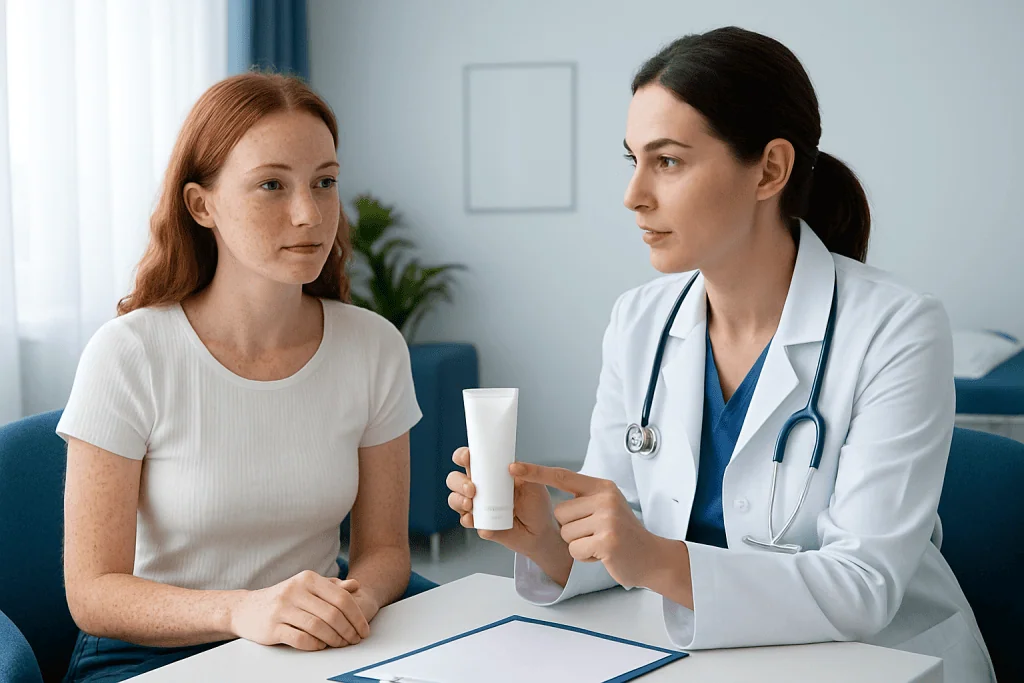
Sunscreen can reduce the UV signal that tells the skin to make more pigment. In practical terms, this helps limit the formation of new freckles and may prevent existing freckles from getting darker during sunny periods. If someone uses sunscreen regularly and correctly, the skin may maintain a more even tone over time because there is less ongoing UV-triggered pigmentation.
Sunscreen does not remove freckles that are already present. Some existing freckles may look lighter after months of careful sun protection because they are no longer being repeatedly stimulated by UV exposure. Still, this is different from active treatment. For freckles that remain visible, doctors may discuss options such as topical pigment-lightening agents, chemical peels, laser treatments, or other dermatologic care when appropriate.
Sunscreen also does not provide complete protection on its own. No sunscreen blocks 100% of UV rays, and real-life protection depends on enough product being applied, applied evenly, and reapplied when needed. For this reason, people who want to minimize freckles usually get the best results from a combined routine:
- Use a broad-spectrum sunscreen with an appropriate SPF every day.
- Reapply during prolonged outdoor time, after swimming, or after sweating.
- Wear wide-brimmed hats and UV-protective sunglasses.
- Choose shade, especially around midday when UV is strongest.
- Use protective clothing for the face, shoulders, arms, and chest when possible.
How to choose and use sunscreen effectively
For freckle prevention, the best sunscreen is one that a person will use consistently every day. Broad-spectrum protection is essential because freckles are linked to overall UV exposure, not just sunburn. Many dermatologists advise choosing an SPF of at least 30 for daily use, while higher-SPF products may be helpful for people who spend longer periods outdoors, have very sun-sensitive skin, or are especially concerned about pigmentation.
Formulation also matters. Creams and lotions often provide reliable coverage for dry or normal skin, while gels or lighter fluids may suit oily or acne-prone skin. Mineral sunscreens that contain zinc oxide or titanium dioxide can be good choices for people with sensitive skin. Tinted sunscreens may be especially useful for visible pigmentation concerns because they can help protect against some visible light exposure and also offer cosmetic blending.
Application is a frequent weak point. Many people use too little sunscreen, miss the ears or hairline, or forget to reapply. For the face, neck, and ears, sunscreen should be applied generously as the final step of morning skin care and before makeup if makeup is worn. Regular reapplication is important during outdoor activities, and sunscreen should be paired with other protective strategies rather than used as permission to stay in direct sun for longer.
People who already have marked sun-related pigmentation or who want expert guidance on prevention and skin assessment may benefit from consulting dermatology specialists. In some cases, broader evaluation for pigment conditions such as skin cancer or other sun-related changes may be appropriate if a spot does not look like a typical freckle.
Freckles, sun spots, and other pigmented marks: knowing the difference
Not every small brown spot is a freckle. Freckles are usually small, flat, evenly colored, and more visible after sun exposure. They often appear in childhood or adolescence and may fade when sun exposure decreases. By contrast, solar lentigines, often called sun spots or age spots, tend to occur later in life and may persist despite seasonal changes.
Another reason this distinction matters is safety. Some pigmented lesions can mimic harmless freckles but actually represent a different condition, including atypical moles or, less commonly, skin cancer. A spot that is new in adulthood, noticeably larger than nearby freckles, irregular in shape, varied in color, itchy, bleeding, or changing over time deserves medical attention.
Dermatologists evaluate pigmented spots by looking at features such as symmetry, border, color, diameter, and evolution over time. If there is any uncertainty, they may use dermoscopy or recommend a biopsy. This is why self-diagnosis has limits, especially when someone has many pigmented lesions or a personal or family history of skin cancer.
When spots are benign but cosmetically bothersome, clinicians may discuss treatments that target excess pigmentation. Depending on the skin type and the diagnosis, options can sometimes include laser treatment or carefully selected chemical peel approaches, always after a proper skin assessment.
Medical and cosmetic treatment options for freckles
Treatment for freckles is usually optional because freckles are generally harmless. Many people choose no treatment at all and focus only on prevention with sunscreen and other sun-protective habits. This is often the most practical strategy, because even after successful lightening, freckles can return or darken again if UV exposure continues.
When treatment is desired, doctors may suggest topical therapies that affect pigment production or help skin turnover. These may include prescription or over-the-counter products chosen by a dermatologist based on skin type, sensitivity, and the exact nature of the spots. Using these products without guidance can irritate the skin, especially if multiple active ingredients are layered together.
In selected cases, procedural treatments may be considered. These can include laser-based methods, intense pulsed light in some settings, or professionally performed peels. The right choice depends on whether the marks are true freckles, lentigines, post-inflammatory pigmentation, or another diagnosis. If someone also has signs of broader sun damage, clinicians may recommend evaluation in a dermatology setting that can address both appearance and skin health, including dermatology care.
Any procedure aimed at pigment should be planned carefully, particularly in darker skin tones, where irritation can sometimes lead to more pigmentation rather than less. A qualified specialist can explain realistic expectations, likely recovery, and how strict sun protection supports better results after treatment.
Prevention and daily self-care habits that make a difference
The most effective self-care plan for freckles is consistent rather than complicated. Daily broad-spectrum sunscreen is the foundation, even on cloudy days and during routine errands, because incidental UV exposure adds up. This is especially important for the face, neck, chest, and hands, which receive repeated exposure throughout life.
Protective behavior should match the environment. Snow, sand, and water can reflect UV rays, increasing exposure. Car windows and office windows may not block all UVA, so indoor daylight can still matter for some people with pigmentation concerns. Planning outdoor time earlier or later in the day and seeking shade can reduce the cumulative UV dose the skin receives.
Skin care should also be gentle. Harsh scrubs, unnecessary exfoliation, or unproven home remedies may irritate the skin and worsen uneven pigmentation. A simple routine with cleanser, moisturizer, and sunscreen is often enough. If a person wants to add brightening ingredients or anti-aging products, it is reasonable to do so gradually and with professional advice when needed.
Children and teenagers who freckle easily can benefit from early sun-safe habits. Teaching regular sunscreen use, hats, and shade-seeking can help reduce future pigment changes and support long-term skin health. Prevention started early is often easier than trying to correct sun damage later.
When to seek medical care
Most freckles do not require medical treatment. However, medical care is appropriate if a spot looks different from the others, appears suddenly in adulthood, changes in size or color, develops an irregular border, becomes raised, or starts to itch, crust, or bleed. These signs do not automatically mean cancer, but they should be evaluated by a qualified doctor.
It is also reasonable to seek care if pigmentation is causing distress, if over-the-counter products are not helping, or if a person is unsure whether the marks are freckles, melasma, lentigines, or another condition. A dermatologist can confirm the diagnosis and help create a safe plan based on skin type, medical history, and goals.
For international patients who want evaluation or treatment, Acibadem International offers multidisciplinary specialist care in JCI-accredited hospitals, including assessment of pigmented skin lesions and management options when needed. Early professional review is the safest approach whenever a skin mark seems unusual or keeps changing.
Frequently asked questions
Can sunscreen get rid of freckles?
No. Sunscreen does not remove freckles that already exist. Its main role is to reduce UV exposure so existing freckles are less likely to darken and new freckles are less likely to form.
Will freckles fade if sunscreen is used every day?
Some freckles may appear lighter over time when the skin is no longer being repeatedly exposed to UV light. However, fading is usually gradual and incomplete, and some freckles remain visible despite excellent sun protection.
What type of sunscreen is best for freckles?
A broad-spectrum sunscreen is the most important choice because it protects against both UVA and UVB rays. Many doctors recommend at least SPF 30 for daily use, with regular reapplication during prolonged outdoor exposure.
Are freckles a sign of skin damage?
Freckles are a pigment response to sun exposure and genetic tendency, so they do reflect that the skin has reacted to UV light. They are usually harmless, but they can signal that the skin is sun-sensitive and would benefit from better protection.
How are freckles different from age spots?
Freckles often appear earlier in life and may become darker in summer and lighter in winter. Age spots, also called solar lentigines, usually appear later and tend to persist rather than fade seasonally.
When should a freckle be checked by a doctor?
A doctor should assess any spot that looks unlike the others, changes over time, has an uneven border or color, becomes raised, or bleeds or itches. If there is any doubt about whether a mark is truly a freckle, a dermatology review is the safest step.
This article is for general information only and is not a substitute for professional medical advice. Please consult a qualified doctor about your individual situation.
Explore treatments in Turkey — costs, top hospitals & a free quote
JCI-accredited · board-certified surgeons · reply within 24h
Add us as a Preferred Source to see more of our trusted health content across Google Search, AI Overviews and Discover.

More from the Health Library

Put Pull: An Evidence-Based Guide for Patients

Dot Physical: What Patients Need to Know
Gua Sha Massage: An Evidence-Based Guide for Patients

Types of Dandruff: An Evidence-Based Guide for Patients

Vervain — Explained by Medical Evidence, Not Myths