Freestyle Lite Test Strips: An Evidence-Based Guide for Patients

Freestyle Lite test strips work only with compatible FreeStyle Lite blood glucose meters. Accurate results depend on correct handwashing, proper strip storage, and following meter instructions.
Key Takeaways
- Freestyle Lite test strips work only with compatible FreeStyle Lite blood glucose meters.
- Accurate results depend on correct handwashing, proper strip storage, and following meter instructions.
- Readings can be affected by expired strips, contamination, insufficient blood sample, or user technique.
- Blood glucose strip results help day-to-day diabetes management but should be interpreted within a patient's care plan.
- Very high, very low, or unexpected glucose readings may require prompt medical advice.
Freestyle Lite test strips are single-use blood glucose strips designed for compatible FreeStyle Lite meters. For patients, the most important points are using the correct meter, storing strips properly, checking expiration dates, and understanding when unusual readings need medical review.
Overview: what Freestyle Lite test strips are and what they do
Freestyle Lite test strips are disposable strips used to measure blood glucose with a compatible FreeStyle Lite meter. A small drop of blood is placed on the strip, and the meter estimates the glucose level in that sample. This helps people with diabetes or other glucose-monitoring needs track patterns and make informed decisions together with their clinician.
These strips are not interchangeable with every glucose meter. Patients should always confirm that the strip matches the exact meter model they use. Using an incompatible strip can lead to an error message or an unreliable reading.
Home glucose testing is one part of diabetes care, not a diagnosis by itself. Readings are usually interpreted alongside symptoms, medications, meals, activity, and longer-term markers such as A1C. For people living with diabetes, routine self-monitoring may support safer day-to-day management when recommended by a doctor.
Who may use them and why glucose monitoring matters
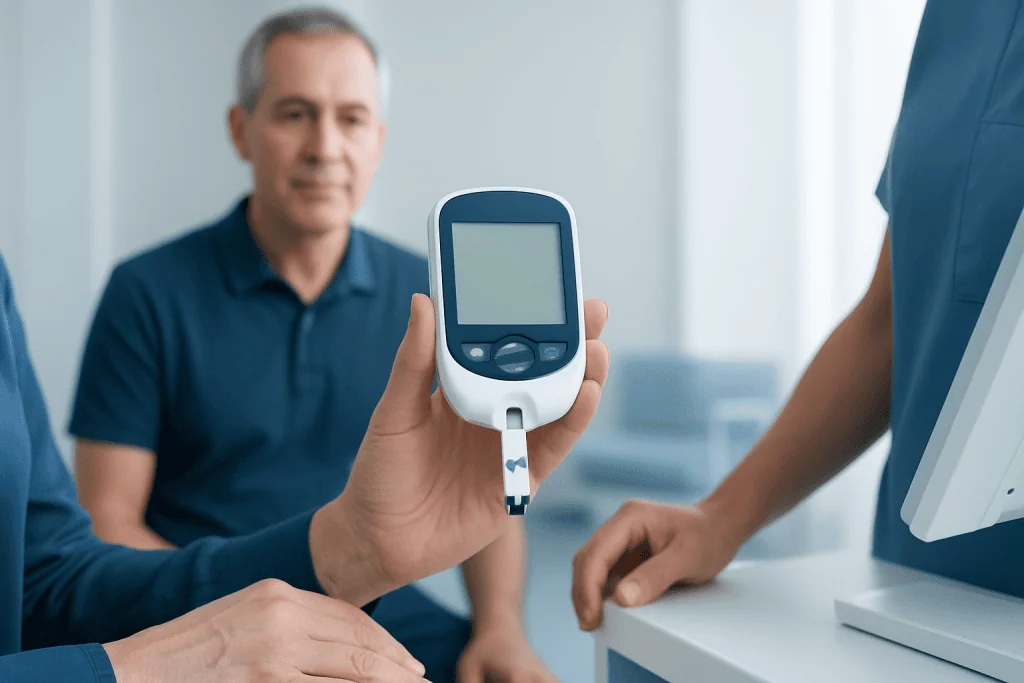
Freestyle Lite test strips may be used by adults and children when a clinician recommends self-monitoring of blood glucose and a compatible meter is available. Some people check glucose several times a day, while others check less often. The schedule depends on the type of diabetes, treatment plan, pregnancy status, and risk of low blood sugar.
Monitoring can help patients see how food, exercise, illness, stress, and medicines affect blood sugar. It may be especially useful for people using insulin or medications that can cause hypoglycemia. In these settings, a blood sugar result can guide immediate self-care, such as eating carbohydrates for low glucose or contacting the care team for persistent highs.
Patients should know that one isolated reading does not always tell the full story. Trends over time are often more meaningful than a single number. Many clinicians review glucose logs together with laboratory tests and, in some cases, continuous glucose monitoring to better understand patterns.
How to use Freestyle Lite test strips correctly

Good technique improves accuracy. Before testing, hands should be washed with soap and water and dried well. This step helps remove food residue, lotions, or other substances that may alter the result. If handwashing is not possible, the finger should at least be cleaned according to the meter manufacturer’s instructions.
Most patients place a new strip into the compatible meter, use a lancing device to obtain a small drop of blood, and touch the edge of the strip to the blood sample. The strip draws blood into the testing area. The meter then displays the glucose result after a short wait.
Simple habits can prevent mistakes:
- Check the strip expiration date before use.
- Store strips in their original container with the lid closed.
- Avoid heat, humidity, and bathroom storage.
- Do not reuse strips.
- Follow the meter’s instructions for coding or setup if required for that device.
If a reading does not match how the person feels, repeating the test with a fresh strip after washing hands may be reasonable. If results continue to look incorrect, the meter, strips, and technique should be reviewed with a pharmacist, diabetes educator, or doctor.
What can affect accuracy and how to avoid common errors
Like all home glucose systems, Freestyle Lite test strips work best when used exactly as directed. Accuracy may be affected by expired strips, improper storage, insufficient blood on the strip, contamination on the skin, or use of the wrong meter. Environmental factors such as excessive heat or moisture can also damage strips before they are used.
Patient-related factors may also influence readings. Testing immediately after eating without understanding the expected timing, squeezing the finger excessively, or sampling from an unclean fingertip can produce confusing results. Dehydration, severe illness, and changes in circulation may sometimes complicate interpretation as well.
It is helpful to compare home readings with symptoms. For example, a patient who feels shaky, sweaty, confused, or unusually tired may be experiencing low blood sugar even before checking the meter. A patient with excessive thirst, frequent urination, blurred vision, or fatigue may have high glucose. When symptoms and readings do not fit together, medical advice is important.
Some patients benefit from a broader review of their diabetes care, including lab testing and specialist input. Depending on the situation, a doctor may discuss options such as endocrinology and metabolic disease care to improve monitoring, medication adjustment, and long-term control.
How results are used in diabetes care
Blood glucose strip results can help guide everyday choices, but they should be used within an individualized care plan. A clinician may advise when to test, what target ranges are appropriate, and what actions to take if results are too low or too high. This plan can differ greatly between people using insulin, oral diabetes medicines, lifestyle treatment alone, or no diabetes medication at all.
Home testing often supports practical decisions such as timing meals, adjusting carbohydrate intake, or recognizing whether exercise is safe at that moment. For patients who use insulin, fingerstick testing may also help confirm symptoms or support dose decisions according to medical instructions. However, patients should not change prescribed treatment in major ways without guidance from their healthcare team.
Doctors may compare self-monitored values with A1C and other assessments to see whether current treatment is working. In some cases, persistent abnormal readings lead to additional evaluation for diabetes complications or related conditions. When diabetes is difficult to manage, coordinated care through diabetes treatment services may help address medication plans, nutrition, and monitoring strategy together.
Storage, safety, and self-care tips for patients
Proper storage is one of the simplest ways to protect accuracy. Test strips should usually be kept in their original vial or packaging, tightly closed, and stored at the temperature range recommended by the manufacturer. They should not be transferred to another container, left in a hot car, or exposed to steam and humidity.
Safe testing also includes lancing hygiene. Lancets are generally for single-person use and should be handled carefully to avoid skin infection or accidental injury. Meters and lancing devices should be cleaned according to manufacturer instructions, especially if used in a shared care setting.
Patients may find it useful to keep a brief log of blood sugar results, symptoms, meals, exercise, and medications. This can make patterns easier to discuss during appointments. Along with testing, healthy daily habits such as regular meals, balanced nutrition, physical activity, and medication adherence remain central to diabetes self-care.
If a patient has repeated unexplained highs or lows, they should not assume the strips are always at fault. The issue may relate to illness, changes in food intake, treatment timing, or progression of an underlying condition. Clinical review can help determine the cause and the safest next step.
When to seek medical care
Medical advice should be sought if blood glucose readings are repeatedly much higher or lower than the range recommended by a doctor, especially when symptoms are present. Urgent assessment is important for signs of severe hypoglycemia, such as confusion, fainting, seizure, or inability to swallow safely. Very high readings with vomiting, deep breathing, abdominal pain, or increasing drowsiness also require prompt care.
Patients should also contact a healthcare professional if they are unsure whether the meter or strips are working properly, or if they keep getting unexpected results despite correct technique. New symptoms such as blurry vision, significant thirst, frequent urination, unintended weight loss, or recurrent infections deserve evaluation. These may indicate poorly controlled glucose or a need to reassess treatment.
For international patients who need assessment or ongoing care, Acibadem International’s multidisciplinary specialists and JCI-accredited hospitals diagnose and treat diabetes-related concerns. A clinician can advise whether fingerstick testing alone is sufficient or whether broader evaluation, including review of diabetes management, is needed.
Frequently asked questions
Do Freestyle Lite test strips work with any glucose meter?
No. Freestyle Lite test strips are intended for compatible FreeStyle Lite meters, not for every blood glucose meter. Patients should always confirm compatibility on the meter and strip packaging or with a pharmacist or clinician.
Can expired test strips give wrong results?
Yes, expired test strips may be less reliable. Patients should check the expiration date and avoid using strips that are outdated, damaged, or stored improperly.
Why does my reading not match how I feel?
A result may be affected by technique, hand contamination, strip problems, or meter issues. If a reading seems unusual, washing and drying hands and repeating the test with a fresh strip may help. If the mismatch continues, medical advice is appropriate.
How should Freestyle Lite test strips be stored?
They should usually be kept in their original container with the lid closed tightly. Heat, moisture, and direct sunlight can damage strips, so bathrooms, kitchens near steam, and hot cars are poor storage locations.
Are fingerstick test strips enough for all people with diabetes?
Not always. Some patients do well with fingerstick monitoring alone, while others benefit from continuous glucose monitoring or more frequent review. The best method depends on the type of diabetes, medications, risk of low blood sugar, and personal treatment goals.
When should a patient seek urgent help for a glucose reading?
Urgent help is needed if a very low or very high reading occurs together with severe symptoms such as confusion, fainting, seizures, vomiting, deep breathing, or severe weakness. Patients should follow their clinician's emergency plan and seek immediate care when serious symptoms are present.
References
- American Diabetes Association
- National Institute of Diabetes and Digestive and Kidney Diseases
- U.S. Food and Drug Administration
- Centers for Disease Control and Prevention
- Mayo Clinic
This article is for general information only and is not a substitute for professional medical advice. Please consult a qualified doctor about your individual situation.
Explore treatments in Turkey — costs, top hospitals & a free quote
JCI-accredited · board-certified surgeons · reply within 24h
Add us as a Preferred Source to see more of our trusted health content across Google Search, AI Overviews and Discover.
Check your numbers in seconds
BMI, calories, due date, blood pressure and 30+ more clinical calculators — free, instant, doctor-reviewed ranges.