Frontal Lobe Dementia: What Patients Need to Know

Frontal lobe dementia usually affects behavior, decision-making, and language more than memory in the early stages. It is most often part of frontotemporal dementia, a group of disorders involving the frontal and temporal lobes.
Key Takeaways
- Frontal lobe dementia usually affects behavior, decision-making, and language more than memory in the early stages.
- It is most often part of frontotemporal dementia, a group of disorders involving the frontal and temporal lobes.
- Diagnosis relies on clinical history, cognitive assessment, brain imaging, and ruling out other causes.
- There is no cure, but treatment can help manage symptoms, improve safety, and support daily life.
- Early specialist evaluation is important when personality, judgment, or speech changes are progressive.
Frontal lobe dementia is a type of dementia that mainly affects behavior, personality, planning, judgment, and sometimes language. It often begins earlier than Alzheimer’s disease and may be mistaken for depression, psychiatric illness, or ordinary stress-related changes at first.
What is frontal lobe dementia?
Frontal lobe dementia is a term people often use when symptoms come mainly from damage in the frontal lobes of the brain. In medical practice, this picture most commonly falls under frontotemporal dementia, a group of disorders that gradually affect the frontal and temporal regions. These areas help control behavior, planning, social judgment, impulse control, language, and aspects of emotional regulation.
Unlike some other dementias, frontal lobe dementia may not begin with obvious forgetfulness. Instead, family members may first notice marked changes in personality, loss of empathy, poor judgment, socially inappropriate behavior, apathy, or difficulty organizing tasks. In some people, language problems such as word-finding difficulty or reduced speech appear early.
This condition can affect people in midlife as well as older adulthood, which is one reason it can be confusing. Because symptoms may look like depression, burnout, marital stress, or a primary psychiatric disorder, diagnosis is sometimes delayed. A careful neurological evaluation helps clarify whether symptoms fit dementia related to frontotemporal degeneration.
Common symptoms and how they affect daily life
Symptoms depend on which brain networks are most affected. In behavioral forms, a person may become unusually impulsive, indifferent, repetitive, rigid, or less aware of social boundaries. Loved ones may describe a person who seems “not like themselves,” even when memory for recent events appears relatively preserved at first.
Language-led forms can cause trouble naming objects, understanding words, producing fluent speech, or following conversation. Some people speak less, use shorter sentences, or struggle to recognize the meaning of familiar words. In practical terms, this may make work, finances, driving, and household responsibilities harder to manage safely.
Other symptoms can include changes in eating habits, increased preference for sweets, loss of motivation, reduced insight, or emotional blunting. As the disease progresses, daily functioning becomes more difficult and support needs increase.
- Behavioral changes: disinhibition, apathy, compulsive routines, poor judgment
- Communication changes: word-finding problems, reduced speech, comprehension difficulty
- Executive dysfunction: trouble planning, multitasking, organizing, and completing tasks
- Emotional changes: reduced empathy, flat affect, irritability, or inappropriate humor
Causes and risk factors

Frontal lobe dementia is caused by progressive degeneration of nerve cells in the frontal and sometimes temporal lobes. This degeneration is linked to abnormal protein buildup in the brain, although the exact pattern varies from person to person. The broad umbrella term frontotemporal dementia includes several biological subtypes.
In some families, the condition is inherited. Certain gene changes are known to increase risk, so a strong family history of early-onset dementia, unexplained personality change, or motor neuron disease can be important. However, not everyone with frontal lobe dementia has a family history, and many cases are sporadic.
Age is a risk factor, but this disorder often starts younger than Alzheimer’s disease. It commonly appears between the ages of 45 and 65, although it can occur earlier or later. Head injury is not considered a proven direct cause, and everyday stress does not cause frontal lobe dementia, though stress may make symptoms more noticeable.
How doctors diagnose frontal lobe dementia
Diagnosis begins with a detailed history from both the patient and someone who knows them well. Because insight can be reduced, family observations are often essential. Doctors look for a gradual, progressive pattern of behavior, language, and executive function changes rather than a sudden change that might suggest stroke, infection, or another acute problem.
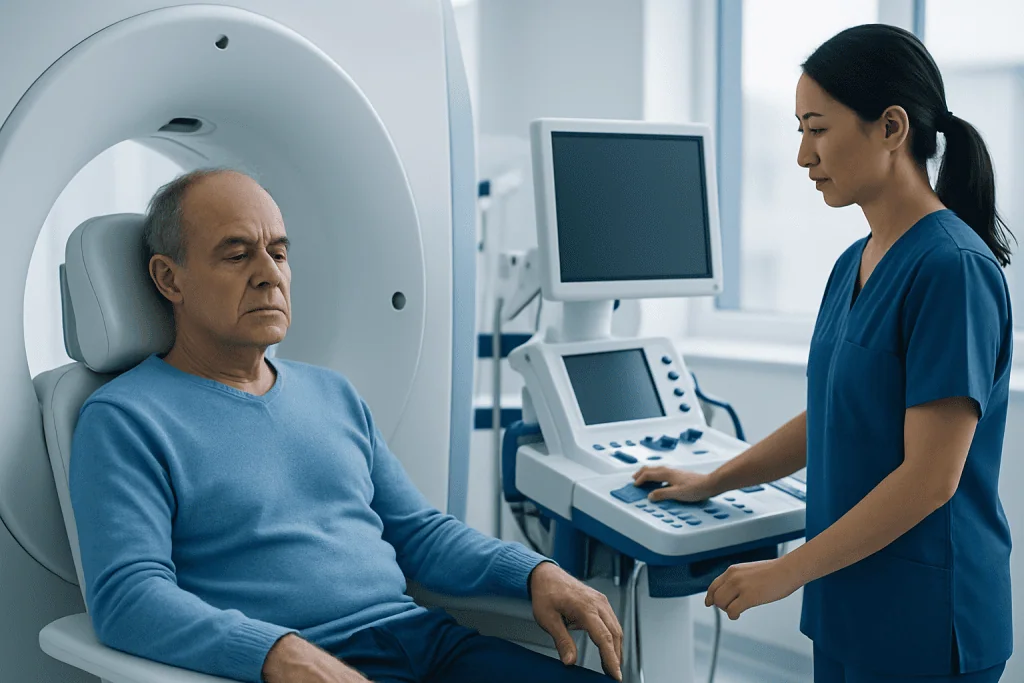
Assessment may include neurological examination, cognitive and neuropsychological testing, blood tests to exclude reversible causes, and brain imaging. Magnetic resonance imaging is commonly used to look for shrinkage in the frontal or temporal lobes and to rule out other structural conditions; in some situations, MRI imaging is paired with additional functional studies if the diagnosis remains unclear.
Clinicians also consider other conditions that can look similar, such as Alzheimer’s disease, severe depression, bipolar disorder, medication effects, thyroid disease, vitamin deficiency, and other neurological illnesses. In selected cases, a more advanced workup through neurology evaluation or genetic counseling may be recommended, especially when symptoms begin early or there is a notable family history.
Treatment and supportive care
There is currently no cure that stops or reverses frontal lobe dementia. Treatment focuses on symptom management, safety, daily function, and caregiver support. A personalized care plan often involves neurologists, psychiatrists, speech and language therapists, occupational therapists, and social workers.
Medicines may sometimes help reduce agitation, compulsive behaviors, depression, anxiety, or irritability, but response varies and some drugs can worsen confusion or side effects. Non-drug approaches are equally important. Structured routines, clear communication, supervision with finances and driving, and environmental adjustments often make day-to-day life safer and less stressful.
For people with communication difficulties, speech and language therapy can help preserve practical communication strategies. If swallowing, movement, or complex behavior changes emerge, broader rehabilitation support may be useful. Near the later stages of care, planning for legal, financial, and future medical decisions can reduce uncertainty for families.
Living with frontal lobe dementia: self-care and family support
Although self-care cannot cure frontal lobe dementia, supportive daily habits can improve comfort and function. Consistent schedules, simplified tasks, calm surroundings, regular exercise as tolerated, and balanced meals may help reduce frustration. Caregivers often find that short, direct sentences and offering one choice at a time work better than lengthy explanations.
Safety planning becomes increasingly important. Depending on symptoms, a person may need help with driving, online banking, medication management, cooking, or being left alone for long periods. Home modifications, identity bracelets, and written routines can be helpful when judgment or impulse control is affected.
Caregiver strain is common and deserves attention. Families benefit from practical education, respite support, and honest conversations about progression. Near the end of the care journey, some international patients seek multidisciplinary guidance; Acibadem International’s specialists in JCI-accredited hospitals diagnose and treat neurodegenerative conditions and support individualized care planning.
When to seek medical care
Medical assessment is important when a person develops progressive changes in personality, judgment, behavior, speech, or ability to manage everyday tasks. An evaluation is especially important if symptoms are new, worsening over months, or affecting work, relationships, finances, or personal safety.
Urgent medical care is needed if changes appear suddenly, because stroke, infection, head injury, seizures, or medication reactions can sometimes mimic dementia-related symptoms. New hallucinations, severe agitation, falls, inability to swallow, rapid decline, or concerns about self-neglect also deserve prompt attention.
Early diagnosis can help families understand what is happening, plan next steps, and access support sooner. Even when no curative treatment is available, specialist care can improve symptom control, safety, communication, and quality of life.
Frequently asked questions
Is frontal lobe dementia the same as Alzheimer’s disease?
No. Frontal lobe dementia usually refers to a form of frontotemporal dementia, which often starts with changes in behavior, personality, judgment, or language rather than memory. Alzheimer’s disease more commonly begins with memory loss and disorientation.
What are the earliest signs of frontal lobe dementia?
Early signs can include unusual impulsivity, apathy, loss of empathy, poor social judgment, compulsive habits, or changes in speech and language. Family members often notice these changes before the person does, because insight may be reduced.
Can frontal lobe dementia be cured?
At present, there is no cure that reverses the underlying brain degeneration. Treatment aims to manage symptoms, support communication and daily function, improve safety, and help caregivers cope with practical challenges.
Does frontal lobe dementia always run in families?
No. Some cases are linked to inherited gene changes, but many occur without a clear family history. A doctor may suggest genetic counseling when symptoms begin at a younger age or several relatives have had similar conditions.
How is frontal lobe dementia diagnosed?
Doctors diagnose it using a detailed history, neurological assessment, cognitive testing, blood tests, and brain imaging. They also rule out other conditions that can mimic dementia, such as depression, thyroid problems, vitamin deficiency, or medication effects.
How fast does frontal lobe dementia progress?
Progression varies from person to person. Some people decline gradually over years, while others develop increasing behavioral, language, or functional problems more quickly. Regular follow-up helps adjust care as needs change.
This article is for general information only and is not a substitute for professional medical advice. Please consult a qualified doctor about your individual situation.
Dementia in Turkey — costs, top hospitals & a free quote
JCI-accredited · board-certified surgeons · reply within 24h
Add us as a Preferred Source to see more of our trusted health content across Google Search, AI Overviews and Discover.

Neurology
Diagnosis and treatment of disorders of the brain, spinal cord, nerves and muscles.
51 specialists in this unitMore from the Health Library

Colon Cleanse — Explained by Medical Evidence, Not Myths

Snake Plant: A Complete Medical Overview

Spooning — Explained by Medical Evidence, Not Myths

Breath Smells Like Poop: A Complete Medical Overview

Pins and Needles in Feet: What Patients Need to Know