Gallbladder Anatomy: What Patients Need to Know
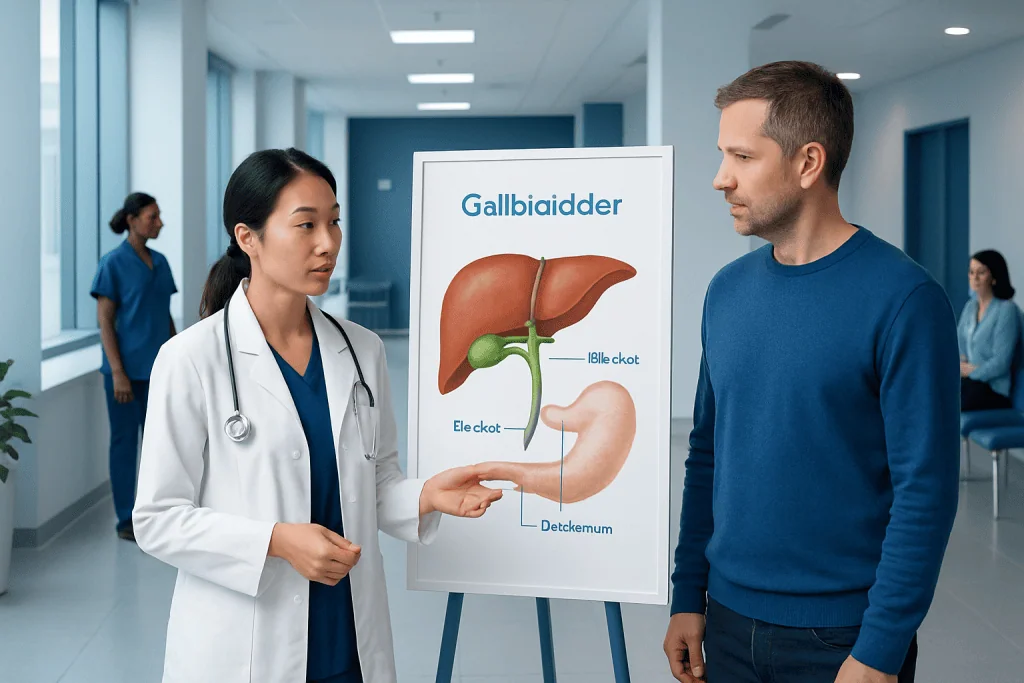
The gallbladder is a small organ beneath the liver that stores and concentrates bile. Its main parts are the fundus, body, neck, and cystic duct, which connect it to the bile ducts.
Key Takeaways
- The gallbladder is a small organ beneath the liver that stores and concentrates bile.
- Its main parts are the fundus, body, neck, and cystic duct, which connect it to the bile ducts.
- The gallbladder helps release bile into the small intestine after meals, especially fatty foods.
- Problems such as gallstones or inflammation can affect normal bile flow and cause pain or digestive symptoms.
- Ultrasound and other imaging tests help doctors evaluate gallbladder structure and function.
- Persistent upper abdominal pain, fever, jaundice, or vomiting should be assessed by a doctor.
Gallbladder anatomy describes a small, pear-shaped organ located under the liver that stores and concentrates bile to help digest fats. For patients, understanding its parts, location, and role in digestion can make symptoms, tests, and treatments easier to understand.
Overview of Gallbladder Anatomy
Gallbladder anatomy refers to the shape, location, internal structure, and connections of the gallbladder within the digestive system. The gallbladder is a small, pear-shaped organ that sits just beneath the liver in the upper right side of the abdomen. Its main job is to store and concentrate bile, a digestive fluid made by the liver.
Although the gallbladder is small, it plays a practical role in digestion. Rather than producing bile itself, it acts as a storage pouch that releases bile when food, especially fat, enters the small intestine. This process helps the body break down fats more efficiently.
For many patients, learning gallbladder anatomy is helpful because it explains where gallbladder pain is felt, why certain scans are ordered, and how conditions such as gallstones can block normal bile flow. Understanding these basics can also make conversations with a doctor easier and less confusing.
Where the Gallbladder Is and What It Looks Like
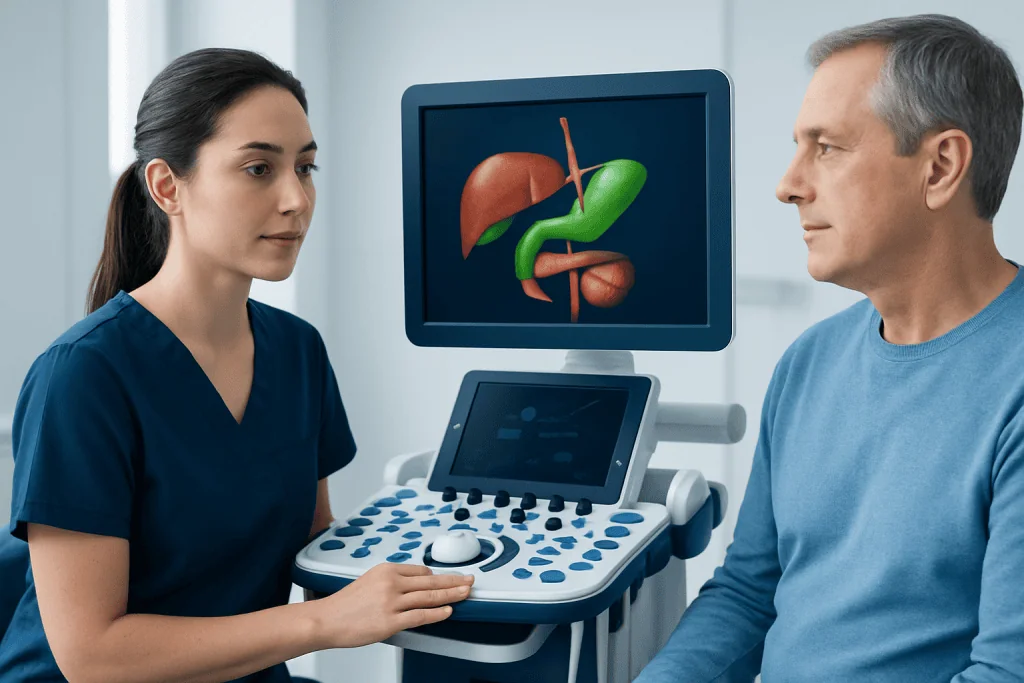
The gallbladder is located under the right lobe of the liver, in a shallow groove on its undersurface. Because of this position, the liver partly covers and protects it. In most adults, the gallbladder is about the size of a small pear, though its exact size can vary depending on how full it is with bile.
It has several main parts. The rounded outer end is called the fundus. The central portion is the body, which stores most of the bile. The narrower section is the neck, which tapers into the cystic duct. These structures together allow the gallbladder to collect, store, and release bile in a controlled way.
The gallbladder wall has layers of tissue that help it contract and push bile outward. Its inner lining absorbs water and electrolytes, which makes bile more concentrated than when it first leaves the liver. This concentrated bile is then ready for release when digestion begins.
How the Gallbladder Connects to the Bile Duct System
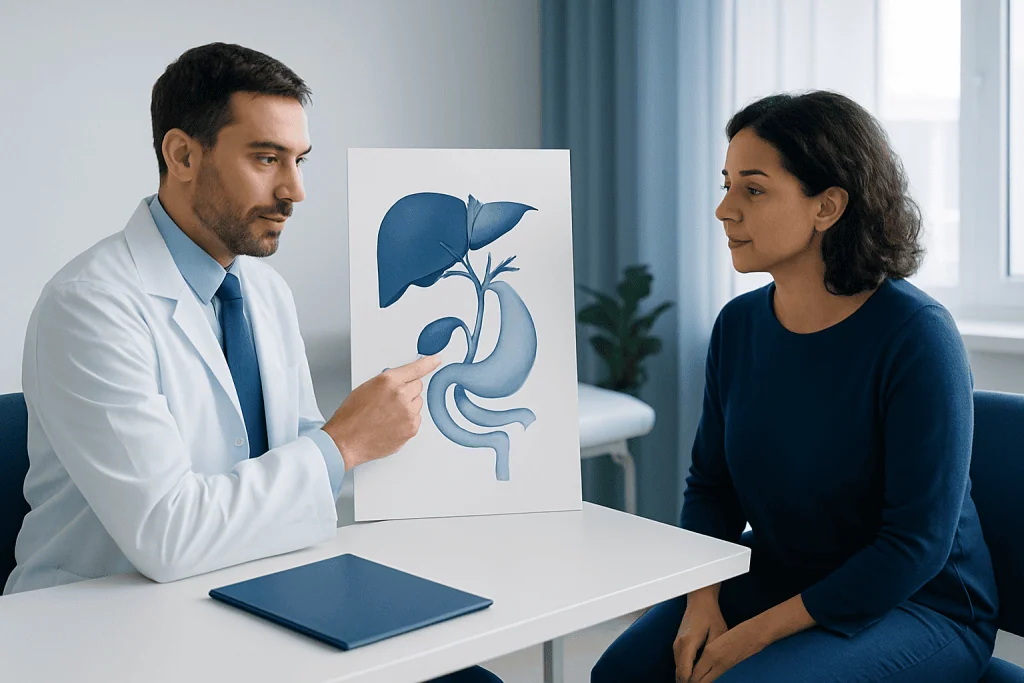
The gallbladder is part of a larger network called the biliary system. Bile is produced in the liver and travels through small liver ducts into the right and left hepatic ducts. These join to form the common hepatic duct. The cystic duct connects the gallbladder to this pathway, allowing bile to move in and out of the gallbladder.
When bile leaves the liver between meals, some of it flows through the cystic duct and enters the gallbladder for storage. When bile is needed for digestion, the gallbladder contracts and sends bile back through the cystic duct. From there, bile travels into the common bile duct and then into the first part of the small intestine, called the duodenum.
This close relationship between the gallbladder and bile ducts is important in medical care. If a gallstone forms in the gallbladder and blocks the cystic duct or common bile duct, pain, inflammation, jaundice, or infection can occur. This is one reason doctors may recommend imaging when symptoms suggest gallstones.
What the Gallbladder Does in Digestion
The gallbladder’s main function is to store and concentrate bile until the body needs it. Bile contains substances that help digest fats and remove certain waste products from the body. After a person eats, especially a meal containing fat, hormones signal the gallbladder to contract.
As the gallbladder contracts, bile moves into the small intestine, where it helps break large fat droplets into smaller ones. This makes it easier for digestive enzymes to do their work and for the body to absorb fat-soluble nutrients. Without this coordinated release, fat digestion may be less efficient.
Even though the gallbladder is useful, it is not essential for survival. If it is removed, the liver still makes bile. Instead of being stored in the gallbladder, bile flows more continuously into the intestine. Many people digest food well after surgery, although some may notice temporary changes in bowel habits while the body adjusts.
Common Problems Related to Gallbladder Anatomy
Because the gallbladder is a storage organ connected to narrow ducts, it can develop problems when bile thickens or its flow is blocked. The most common issue is gallstones, which are hardened deposits that form from substances in bile. Some gallstones cause no symptoms, while others lead to pain after meals, nausea, or bloating.
Another common problem is inflammation of the gallbladder, known as cholecystitis. This often happens when a stone blocks the cystic duct and bile becomes trapped. Inflammation can cause steady pain in the upper right abdomen, tenderness, fever, and sometimes vomiting. In some cases, doctors may also evaluate patients for related problems such as cholecystitis.
Less commonly, structural variations in the bile ducts or gallbladder shape can affect diagnosis or treatment planning. Rarely, polyps, sludge, or tumors may be found on imaging. Not every finding causes symptoms, but these changes should be interpreted by a qualified doctor in the context of the patient’s history and examination.
How Doctors Examine and Diagnose Gallbladder Problems
Doctors usually begin with a medical history and physical examination. They often ask where the pain is felt, whether it is related to meals, and whether symptoms include fever, nausea, vomiting, pale stools, or yellowing of the skin and eyes. This information helps distinguish gallbladder conditions from other digestive problems.
Ultrasound is often the first imaging test because it can show gallstones, gallbladder wall thickening, and signs of blocked bile flow. Blood tests may also be used to look for infection, inflammation, or liver and bile duct abnormalities. In some situations, additional scans such as CT, MRI, or MRCP are used to better define the anatomy of the bile ducts.
If symptoms are ongoing or complications are suspected, a doctor may recommend specialist evaluation in gastroenterology or surgery. In selected patients, treatment may include ERCP to examine and treat bile duct blockage, or laparoscopic gallbladder removal if the gallbladder itself is causing repeated problems.
Treatment, Self-Care, and Living Without a Gallbladder
Treatment depends on the underlying problem rather than anatomy alone. If a person has no symptoms, an incidental finding on imaging may simply be monitored. Symptomatic gallstones, repeated attacks of pain, infection, or duct blockage are more likely to need active treatment. The most common operation is cholecystectomy, which removes the gallbladder.
Many gallbladder operations are performed using minimally invasive techniques. Recovery is often faster than with open surgery, although the best approach depends on the patient’s condition and the surgeon’s judgment. After surgery, the liver continues to make bile, and most people return to normal daily life with little long-term disruption.
Self-care steps may help reduce symptoms while awaiting medical assessment. Eating smaller meals, limiting very fatty foods, staying hydrated, and following medical advice can be useful. However, ongoing or severe symptoms should not be managed only at home, because abdominal pain can have many causes and some require urgent treatment.
Near the end of the care pathway, some patients seek coordinated evaluation and treatment abroad. Acibadem International’s multidisciplinary specialists and JCI-accredited hospitals diagnose and treat gallbladder and bile duct conditions for international patients when appropriate.
When to Seek Medical Care
Medical care is advisable if upper abdominal pain keeps returning, especially after meals, or if it interferes with eating, sleeping, or daily activities. A doctor should also evaluate symptoms such as persistent nausea, repeated vomiting, unexplained bloating, or pain that spreads to the back or right shoulder.
Urgent assessment is important if symptoms are accompanied by fever, chills, jaundice, dark urine, pale stools, or severe tenderness in the upper right abdomen. These signs can suggest a blocked bile duct, infection, or significant inflammation that needs timely treatment.
Because symptoms from the gallbladder can overlap with liver, stomach, pancreas, or heart-related conditions, self-diagnosis is not reliable. A qualified healthcare professional can determine whether symptoms relate to gallbladder anatomy and function or to another medical issue.
Frequently asked questions
What is gallbladder anatomy in simple terms?
Gallbladder anatomy means the gallbladder’s size, shape, location, and its connection to the bile ducts. In simple terms, it is a small organ under the liver that stores bile and releases it to help digest fats.
Where is the gallbladder located?
The gallbladder is located in the upper right part of the abdomen, tucked underneath the liver. Because of this position, gallbladder pain is often felt on the right side under the ribs or in the upper middle abdomen.
What does the gallbladder do?
The gallbladder stores and concentrates bile made by the liver. When a person eats, especially fatty foods, it squeezes bile into the small intestine to support fat digestion.
Can a person live without a gallbladder?
Yes, a person can live without a gallbladder. The liver still makes bile, but instead of being stored, bile flows directly into the intestine. Many people do well after gallbladder removal, though some may have temporary digestive changes.
What are common symptoms of gallbladder problems?
Common symptoms include pain in the upper right abdomen, especially after meals, nausea, bloating, and sometimes vomiting. If fever or jaundice appears, medical evaluation is important because these symptoms may suggest a complication.
How are gallbladder problems diagnosed?
Doctors usually start with a medical history, physical exam, blood tests, and an ultrasound. If more detail is needed, they may use other imaging tests such as MRI-based bile duct imaging or additional scans.
References
- National Institute of Diabetes and Digestive and Kidney Diseases
- American College of Gastroenterology
- National Health Service
- Merck Manual Consumer Version
This article is for general information only and is not a substitute for professional medical advice. Please consult a qualified doctor about your individual situation.
Explore treatments in Turkey — costs, top hospitals & a free quote
JCI-accredited · board-certified surgeons · reply within 24h
Add us as a Preferred Source to see more of our trusted health content across Google Search, AI Overviews and Discover.