

Gamma knife Recovery: Week-by-Week Timeline

Gamma Knife is a form of precisely targeted stereotactic radiosurgery, not an open operation. Many patients have mild short-term effects such as fatigue, headache, scalp tenderness, or nausea for a few days.
Key Takeaways
- Gamma Knife is a form of precisely targeted stereotactic radiosurgery, not an open operation.
- Many patients have mild short-term effects such as fatigue, headache, scalp tenderness, or nausea for a few days.
- Light daily activities may be possible within one to several days, while work and sport should be resumed according to the care team’s advice.
- The treatment effect develops gradually over weeks, months, or sometimes longer, depending on the condition.
- New or worsening neurological symptoms require prompt medical assessment.
- Follow-up scans and specialist appointments are an important part of Gamma Knife recovery.
Gamma Knife recovery is often shorter than recovery after open brain surgery because no surgical incision is made. Most people go home on the day of treatment, but recovery time and follow-up needs depend on the condition treated, the treatment area, and individual health factors.
Gamma Knife Recovery: What to Expect
Gamma Knife recovery is usually faster than recovery after conventional brain surgery because the treatment does not require a large incision or removal of part of the skull. Most patients are observed for a short time after the procedure and return home the same day with a family member or other responsible adult.
It is normal to feel tired on the day of treatment and for several days afterward. Some people also have a mild headache, nausea, tenderness where the head frame was placed, or temporary swelling around the treated area. These effects are often manageable with the medicines recommended by the treating team.
Recovery is not only about how a person feels immediately afterward. Gamma Knife delivers focused radiation to a target in the brain, and its intended effect occurs gradually. The timing of improvement depends on whether the treatment was used for a tumor, an arteriovenous malformation, trigeminal neuralgia, or another neurological condition.
How Gamma Knife Works and Who May Be a Candidate
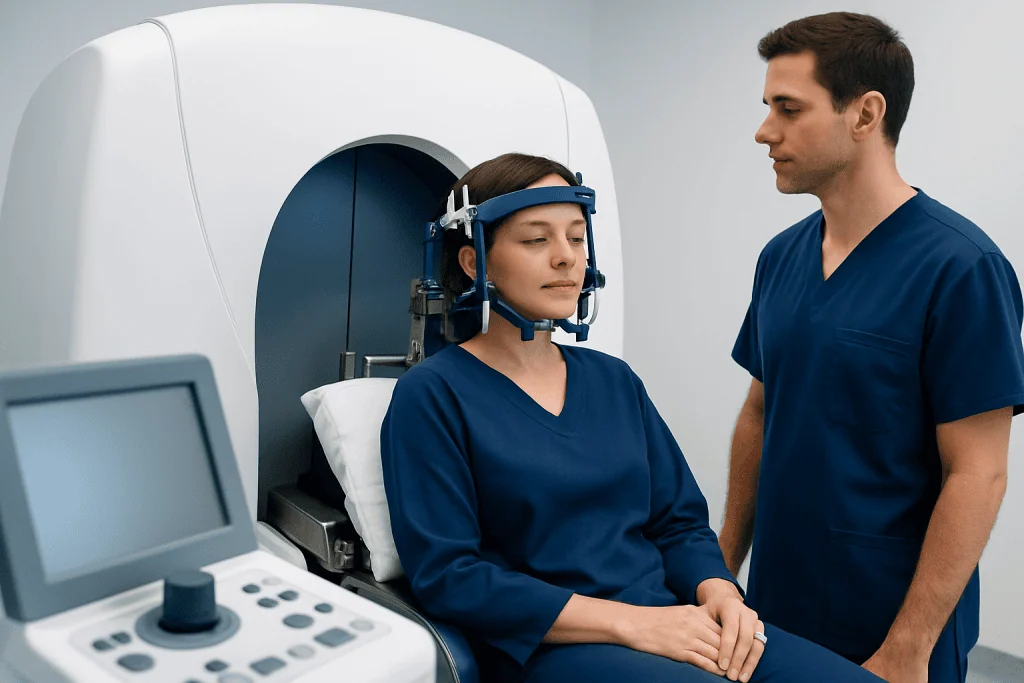
Gamma Knife is a highly precise form of stereotactic radiosurgery. Despite its name, it does not use a knife. Multiple narrow beams of radiation are directed toward a carefully defined target, where they combine to deliver a therapeutic dose while limiting exposure to nearby healthy tissue.
It may be considered for selected brain tumors, metastases, vascular abnormalities, certain movement disorders, trigeminal neuralgia, and other conditions. It can be an option when a target is small or well defined, when open surgery would carry greater risk, or when treatment is needed after previous surgery or radiation.
Candidacy is individualized. Specialists consider the diagnosis, target size and location, symptoms, previous treatments, overall health, and whether symptoms are caused by swelling or pressure that needs a different approach. A detailed consultation and imaging review help determine whether Gamma Knife radiosurgery is appropriate.
What Happens During the Procedure

Before treatment, the clinical team performs planning scans, commonly magnetic resonance imaging (MRI), computed tomography (CT), or both. These scans help identify the exact treatment target and allow the radiosurgery team to create a tailored plan.
On the treatment day, the head is positioned using either a lightweight frame secured with local anesthetic at the pin sites or a fitted mask system, depending on the treatment method and clinical situation. The team then confirms positioning and delivers the planned radiation while the patient lies still. The treatment itself is painless, although it may take minutes to several hours depending on the plan.
After treatment, the frame or mask is removed and the patient is monitored. Most people can eat, drink, and walk before leaving. Driving is generally avoided on the day of treatment, especially if sedating medicine was used or the person has symptoms that could affect safe driving.
- Patients should arrange for someone to take them home.
- Instructions about regular medicines, including steroids, seizure medicines, or blood thinners, should be followed exactly.
- The care team should be told about any new symptoms before discharge.
Gamma Knife Recovery Timeline: Day by Day and Week by Week
Day of treatment to the first 48 hours: Many people feel well enough to go home the same day. Fatigue, a mild headache, nausea, or scalp soreness can occur. Small areas of redness or tenderness may be present where a head frame was attached. Rest, fluids, regular meals, and prescribed or recommended pain relief are often sufficient. Patients should avoid alcohol, driving, and important decisions if they have received sedating medication.
Days 3 to 7: Energy levels may begin to improve, although tiredness can continue. Many people return to gentle routines, such as short walks and usual self-care. If there are no restrictions from the clinical team, desk-based work may be possible within several days; however, people with physically demanding jobs, significant fatigue, seizures, balance problems, or ongoing symptoms may need more time.
Weeks 2 to 4: Most immediate treatment-related discomfort has usually settled. A gradual return to normal activities is often possible, based on symptoms and medical advice. Exercise can typically restart with low-impact activity first, then increase slowly. Contact sports, high-risk activities, and heavy lifting should wait until the treating specialist confirms that they are suitable.
Weeks 4 to 12 and beyond: The biological response to radiation continues. Some conditions, such as trigeminal neuralgia, may improve over weeks or months. Tumors may shrink slowly, remain stable before changing, or show temporary imaging changes related to treatment. Follow-up MRI or CT scans are scheduled to assess response and identify swelling or other delayed effects.
Returning to Work, Exercise, and Everyday Life
The right time to return to work depends more on symptoms and job demands than on a fixed calendar date. A person with a sedentary role may return sooner than someone whose work involves driving, operating machinery, working at heights, heavy physical activity, or high levels of concentration. A phased return may be helpful when fatigue persists.
Light activity, including walking, is commonly encouraged as tolerated. People should listen to their body, rest when needed, and increase activity gradually. The treating team may give additional restrictions when treatment is near areas that affect balance, vision, movement, speech, or seizure control.
Driving should only resume when the person feels fully alert and can safely control a vehicle. Local regulations and medical guidance may require a longer period away from driving for people with seizures, visual changes, weakness, or certain neurological diagnoses. A clinician can provide advice that reflects the individual condition and local requirements.
Benefits, Possible Side Effects, and Follow-Up
A key benefit of Gamma Knife is that it treats a selected target without an open operation. This can mean no surgical wound, no general anesthesia in many cases, and a shorter initial recovery. It may also be used as part of a broader care plan that includes observation, medicines, surgery, chemotherapy, or other forms of radiation therapy.
Possible early effects include fatigue, headache, nausea, scalp tenderness, and short-lived swelling. Less commonly, swelling in or around the treated area can cause symptoms related to its location, such as headache, weakness, numbness, imbalance, seizures, or changes in speech or vision. Delayed effects are possible and vary according to the condition, target, and radiation plan.
Follow-up is essential because treatment response cannot be judged by symptoms alone. The care team may schedule imaging and neurological review over months or years. It is important to attend these appointments even when a person feels well, and to contact the team before stopping prescribed medicines such as steroids or anti-seizure medicines.
When to Seek Medical Care
Patients should contact their treating team promptly if symptoms are worsening rather than improving, if a headache is severe or persistent, or if nausea and vomiting prevent normal fluid intake. New neurological symptoms should not be assumed to be a routine part of recovery.
Urgent medical assessment is needed for sudden weakness or numbness, trouble speaking, confusion, a seizure, new or severe vision changes, severe loss of balance, loss of consciousness, or a sudden severe headache. Emergency services should be contacted if these symptoms are severe, sudden, or accompanied by difficulty breathing or chest pain.
For international patients, Acibadem International’s multidisciplinary specialists and JCI-accredited hospitals can assess neurological conditions and coordinate Gamma Knife treatment and follow-up planning. Patients should bring previous imaging, pathology reports when relevant, and a current medication list to consultations.
Frequently asked questions
How long does Gamma Knife recovery take?
Most people recover from the immediate procedure within a few days and can return to light daily activities relatively quickly. However, the treatment effect develops gradually, often over weeks or months, and follow-up imaging is needed to monitor the response.
Is Gamma Knife recovery painful?
Gamma Knife treatment itself is generally painless. Some people have a mild headache, nausea, fatigue, or scalp tenderness afterward, especially if a head frame was used. The care team can recommend safe ways to manage these symptoms.
When can a person return to work after Gamma Knife?
Some people with desk-based work return within several days to one week if they feel well. Recovery may take longer for physically demanding work or when fatigue, seizures, balance concerns, or neurological symptoms are present. The treating specialist should provide individualized clearance.
When can a person exercise after Gamma Knife?
Gentle walking and everyday movement are often possible soon after treatment if the person feels steady and well. More strenuous exercise should be restarted gradually, and high-impact or contact sports should wait until the clinical team advises that they are safe.
Does Gamma Knife make symptoms worse before they improve?
In some cases, temporary inflammation or swelling around the treatment area can cause symptoms to fluctuate or worsen. This is one reason follow-up and prescribed medicines are important. New or worsening neurological symptoms should be reported promptly.
Will hair fall out after Gamma Knife?
Hair loss is less common than with broader radiation treatment because Gamma Knife is highly targeted. If the treatment area is close to the scalp and the dose affects hair follicles, localized temporary or permanent thinning may occur. The radiation team can explain the likelihood based on the individual plan.
References
- International Stereotactic Radiosurgery Society
- American Association of Neurological Surgeons
- National Cancer Institute
- Radiological Society of North America
- Mayo Clinic
This article is for general information only and is not a substitute for professional medical advice. Please consult a qualified doctor about your individual situation.
Gamma Knife in Turkey — costs, top hospitals & a free quote
JCI-accredited · board-certified surgeons · reply within 24h
Add us as a Preferred Source to see more of our trusted health content across Google Search, AI Overviews and Discover.

Neurology
Diagnosis and treatment of disorders of the brain, spinal cord, nerves and muscles.
51 specialists in this unitMore from the Health Library



Related Specialists

Dr. Abdullah Doğan
Cardiovascular Surgery
Dr. Sibel Işık
Internal Medicine
Dr. Fikret Mert Acar
Cardiology
Dr. Ayşen Yücetürk
Vitro Fertilization and Reproductive Medicine Center