Genetic Testing for Cancer Risk: Who Should Consider It and What Results Mean

Genetic testing for cancer risk checks for inherited gene changes linked to certain cancers. Testing is often most helpful for people with a strong personal or family history of cancer.
Key Takeaways
- Genetic testing for cancer risk checks for inherited gene changes linked to certain cancers.
- Testing is often most helpful for people with a strong personal or family history of cancer.
- Results may be positive, negative, or uncertain, and each result needs careful interpretation.
- A genetic counselor or specialist can explain what testing may and may not mean for the individual and relatives.
- Testing does not predict with certainty whether cancer will or will not happen.
Genetic testing for cancer risk looks for inherited gene changes that may increase a person’s chance of developing certain cancers. It can help guide screening, prevention, and family discussions, but results are most useful when interpreted with genetic counseling and personal medical history.
Overview: What Genetic Testing for Cancer Risk Is
Genetic testing for cancer risk is a medical test that looks for inherited changes, also called variants or mutations, in certain genes. Some of these genes help repair DNA or control how cells grow. When a harmful inherited change is present, the lifetime risk of developing particular cancers may be higher than average.
These tests are different from genetic tests done on a tumor itself. Inherited testing usually uses a blood or saliva sample to look for gene changes present in the body from birth and potentially shared within a family. Tumor testing, by contrast, examines cancer cells to help guide treatment decisions after cancer has developed.
Not all cancers are hereditary. Many cancers happen because of aging, environment, lifestyle factors, or random cell changes over time. Even when cancer runs in a family, it does not always mean there is a known inherited syndrome. Genetic testing is therefore most useful when chosen for the right reasons and interpreted in the context of personal and family history.
Who Should Consider Testing

Genetic testing is not recommended for everyone. It is usually considered when a person’s history suggests an inherited cancer syndrome. This may include cancer diagnosed at a younger-than-usual age, several relatives with the same or related cancers, one person with more than one primary cancer, or uncommon cancer patterns in a family.
Examples that may prompt discussion include breast, ovarian, pancreatic, colorectal, prostate, uterine, or certain rare cancers occurring across generations. People with a known inherited mutation in the family may also consider testing, even if they have never had cancer. In some cases, ancestry may matter too, because certain gene changes are more common in specific populations.
A doctor or genetic counselor may suggest hereditary cancer evaluation for people who have had cancers associated with syndromes such as hereditary breast and ovarian cancer or Lynch syndrome. Sometimes this conversation begins after imaging, pathology review, or treatment planning for a known cancer diagnosis. The goal is to identify whether inherited risk may affect ongoing care or screening for relatives.
- Strong family history of related cancers
- Cancer diagnosed at a young age
- Multiple cancers in the same person
- Rare cancers or unusual tumor features
- Known family mutation
How the Testing Process Works
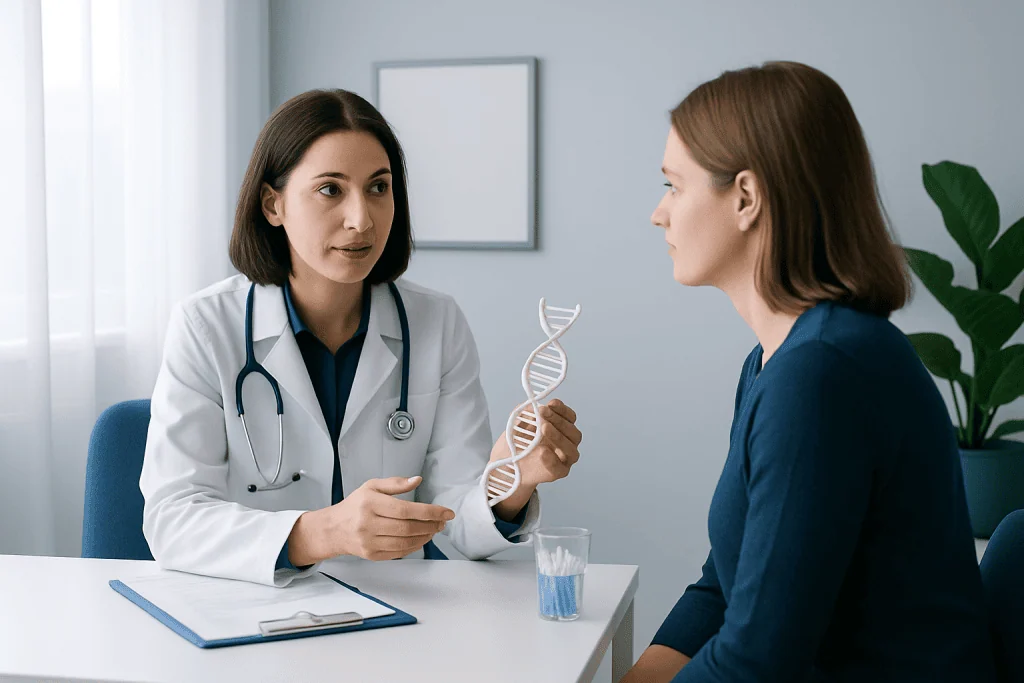
Testing usually begins with genetic counseling or a detailed medical consultation. The clinician asks about personal health history, cancer diagnoses in close and extended relatives, ages at diagnosis, and previous test results. This step helps determine whether testing is likely to be useful and which genes or panels should be considered.
If testing is appropriate, a blood or saliva sample is collected and sent to a specialized laboratory. Some tests look at one gene when a known family mutation exists, while others use a panel that analyzes many genes linked to hereditary cancer risk. Results often take several weeks, depending on the laboratory and the complexity of the analysis.
Pre-test counseling is important because the results can affect emotional well-being, medical choices, and family members. It also helps people understand the limits of testing. A result may not give a simple yes-or-no answer, and not every inherited risk gene is fully understood yet.
What Results Can Mean
Results generally fall into three main categories: positive, negative, or variant of uncertain significance. A positive result means a harmful inherited gene change was found that is known to raise the risk of certain cancers. This does not mean the person currently has cancer or will definitely develop it, but it may support more intensive screening, preventive strategies, or discussion of family testing.
A negative result means no harmful inherited change was found in the genes tested. This can be reassuring, but it does not remove all cancer risk. A person may still have average population risk, risk related to non-genetic factors, or a hereditary factor that current testing could not identify. The meaning of a negative result depends heavily on whether a known family mutation exists.
A variant of uncertain significance means a gene change was found, but science does not yet know whether it is harmful or harmless. This result should usually not be used alone to make major treatment or prevention decisions. Over time, as more evidence becomes available, laboratories may reclassify some uncertain variants.
Some results may influence decisions about cancer screening, surgery, or therapies such as chemotherapy or immunotherapy in selected situations, especially when testing is combined with tumor information and specialist advice. Interpreting the result correctly is essential, which is why follow-up counseling is a key part of the process.
Benefits, Limits, and Emotional Considerations
The main benefit of genetic testing is that it can clarify whether a person may benefit from earlier or more frequent screening. It may also help family members understand their own risk and whether they should consider testing. For some people, the information reduces uncertainty and helps them make informed decisions about prevention and long-term care.
At the same time, testing has limitations. Not every hereditary cancer gene is known, and not every gene change clearly predicts how high the risk will be. A positive result may raise difficult questions about preventive surgery, future family planning, or how and when to inform relatives. A negative result can also be confusing if cancer is common in the family but no mutation is found.
Emotional responses are common and valid. People may feel relief, anxiety, guilt, or worry about their children and siblings. Genetic counseling can support decision-making before and after testing, helping individuals understand practical next steps rather than focusing only on the result itself.
How Results May Affect Care and Prevention
If testing identifies an inherited risk, doctors may recommend a personalized surveillance plan. Depending on the gene involved and the person’s age and health history, this may include earlier mammograms or breast MRI, colonoscopy at younger ages or shorter intervals, gynecologic evaluation, skin exams, or other targeted checks. Some people may also consider preventive medicines or risk-reducing surgery after specialist discussion.
When a person already has cancer, hereditary test results can sometimes affect treatment planning. In selected cases, this may influence whether surgery is recommended, whether close relatives should be tested, or whether advanced options such as radiotherapy are considered within a broader care plan. Decisions are individualized and based on the specific cancer type, stage, and gene findings.
Family communication is another important part of care. If a harmful inherited mutation is found, close biological relatives may have the option of targeted testing for the same change. This can help them start appropriate screening or prevention earlier if needed. For international patients seeking multidisciplinary evaluation, Acibadem International’s specialists in JCI-accredited hospitals assess hereditary cancer risk and coordinate diagnosis and treatment planning.
When to Speak with a Doctor or Genetic Counselor
A person should consider speaking with a doctor if several relatives have had cancer, if cancer occurred at a young age in the family, or if a known mutation has already been identified in a relative. It is also reasonable to ask about testing after a new cancer diagnosis, especially if the tumor type is often associated with inherited syndromes.
Genetic counseling is especially helpful before testing and after receiving results. The counselor or specialist can explain whether testing is appropriate, which test may fit best, and what next steps may follow from each type of result. They can also help with practical questions about family communication and long-term follow-up.
Urgent medical attention is not usually needed simply because someone is considering genetic testing. However, anyone with possible symptoms of cancer should seek prompt medical evaluation rather than relying on genetic information alone. Testing is a tool for risk assessment and planning, not a substitute for routine care or symptom-based diagnosis, which may include PET-CT or other appropriate investigations when clinically indicated.
Frequently asked questions
Does a positive genetic test mean a person will definitely get cancer?
No. A positive result means an inherited gene change is present that raises the risk of certain cancers, but it does not guarantee cancer will develop. Risk depends on the specific gene, family history, age, and other health and lifestyle factors.
If the test is negative, does that mean there is no cancer risk?
No. A negative test can mean no harmful change was found in the genes examined, but everyone still has some baseline cancer risk. In some families, cancer may still be influenced by genes not yet identified or by non-genetic factors.
What is a variant of uncertain significance?
This means the test found a gene change, but experts do not yet know whether it affects cancer risk. It is not the same as a positive result. Doctors usually avoid making major preventive decisions based only on this finding and may re-evaluate it over time.
Who in a family should be tested first?
If possible, testing often starts with a family member who has had cancer, because this gives the clearest information about whether an inherited mutation is present. If a harmful mutation is found, other biological relatives can then have focused testing for that same change.
Is genetic counseling really necessary before and after testing?
In many cases, yes. Genetic counseling helps a person understand the potential benefits, limits, and emotional impact of testing before a sample is taken. After the results return, counseling helps place the findings in context and plan next steps safely.
Can genetic testing help guide treatment if someone already has cancer?
Sometimes it can. Inherited genetic results may influence screening for other cancers, inform surgery discussions, or help doctors consider specific treatment approaches in selected cases. Treatment decisions are always based on the whole clinical picture, not the genetic result alone.
References
- World Health Organization
- National Cancer Institute
- American Cancer Society
- Centers for Disease Control and Prevention
- National Comprehensive Cancer Network
This article is for general information only and is not a substitute for professional medical advice. Please consult a qualified doctor about your individual situation.
Oncology care in Turkey — second opinion and treatment plan
JCI-accredited · board-certified surgeons · reply within 24h
Add us as a Preferred Source to see more of our trusted health content across Google Search, AI Overviews and Discover.

IVF & Reproductive Health
Assisted reproduction and fertility treatments tailored to each couple.
More from the Health Library



Related Specialists

Dr. Damla Akçora
Anesthesiology
Dr. Cezmi Karaca
General Surgery
Prof. Dr. Erkan Yildirim
Radiology
Dr. Ersen Hürmüzlü
Infectious Diseases & Clinical Microbiology