Genome: A Complete Medical Overview

The genome includes all of a person’s DNA, not just individual genes. Genes are segments of DNA, while the genome is the entire genetic instruction set.
Key Takeaways
- The genome includes all of a person’s DNA, not just individual genes.
- Genes are segments of DNA, while the genome is the entire genetic instruction set.
- Genome information can help doctors understand inherited conditions, disease risk, and treatment choices.
- Changes in the genome may be inherited or may develop over time in certain cells, such as cancer cells.
- Genetic and genomic testing should be interpreted with guidance from qualified healthcare professionals.
A genome is the complete set of genetic material in a person or other organism. It includes all DNA instructions that help the body grow, function, and respond to health and disease, which is why genome science has become important in diagnosis, prevention, and personalized care.
Overview: What the Genome Is
The genome is the complete set of genetic material in a cell or organism. In humans, it contains the full DNA instruction manual that helps direct development, body processes, and many inherited traits. When people ask what a genome is, the simplest answer is that it includes all genes plus the DNA between genes.
This is different from a single gene. A gene is one specific section of DNA that carries instructions for making a protein or helping regulate body functions. The genome is much broader: it is the full collection of DNA, organized into chromosomes in the cell nucleus, along with a small amount of DNA found in structures called mitochondria.
Genome science, often called genomics, studies how this complete set of DNA works as a whole. Rather than looking at one gene in isolation, genomics examines how many genes and other DNA regions interact with each other and with lifestyle, age, and the environment. This wider view is increasingly useful in modern medicine.
How the Genome Works in the Human Body
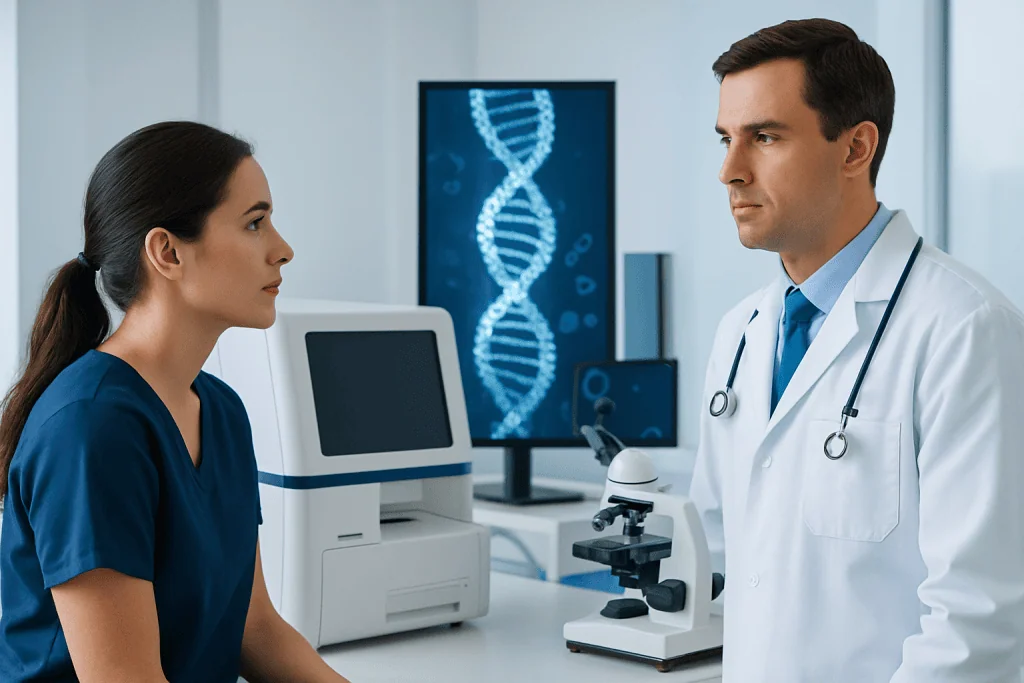
DNA stores biological instructions using a chemical code. These instructions help cells know when to grow, divide, repair damage, and produce proteins. Proteins carry out much of the body’s day-to-day work, from forming tissues to supporting immunity and metabolism.
Most cells in the body contain essentially the same genome, but not every cell uses the same instructions in the same way. For example, a liver cell and a nerve cell have the same DNA, yet they function differently because different genes are switched on or off. This regulation is one reason the genome can guide such a wide range of body functions.
The genome also helps explain why health varies from person to person. Some DNA changes are harmless and simply contribute to normal human differences. Others can affect how the body processes medicines, how likely certain diseases are to develop, or how conditions progress over time.
- Genes are specific DNA segments with functional instructions.
- Chromosomes are structures that package DNA.
- Genome means all genetic material together.
- Genomics is the study of the genome and how it influences health.
Why the Genome Matters in Medicine

The genome has become medically important because it can reveal information about inherited conditions, cancer biology, and response to treatment. In some situations, understanding genomic changes helps doctors make a diagnosis when symptoms alone do not provide a clear answer. It may also help estimate the chance that a condition could run in a family.
In cancer care, for example, doctors may study genomic changes in tumor cells to better understand the disease and plan treatment. Cancer develops when certain cells acquire DNA changes that affect growth control. This is why genomic analysis may be relevant in the evaluation of cancer and oncology conditions and in selecting targeted approaches for some patients.
Genome-based medicine is also used in rare diseases, prenatal assessment, and drug selection in selected cases. However, genomic information is only one part of medical decision-making. Symptoms, examination findings, imaging, laboratory tests, and family history still remain essential.
As this field grows, patients may hear terms such as precision medicine or personalized medicine. These terms refer to tailoring prevention, diagnosis, or treatment using information that can include genomic data, but they do not mean that genetics alone determines health outcomes.
Genome Changes: Inherited and Acquired Variants
Not all genome changes have the same meaning. Some DNA variants are inherited from one or both parents and are present from birth. These inherited variants may have no effect, may explain a family trait, or may increase the chance of a medical condition. In some families, they help explain disorders that affect multiple relatives across generations.
Other genome changes are acquired during life. These are not usually passed on to children because they arise in specific cells after birth. Acquired changes can happen as cells age, after exposure to environmental factors, or during the development of disease. A common example is the DNA changes found in many tumors.
Importantly, finding a variant does not automatically mean disease is present. Many variants are classified as benign, likely benign, or of uncertain significance. This is why test interpretation should be done carefully by specialists who can consider the result in the full medical context, including personal and family history.
People may also encounter the term mutation, although many professionals now prefer the broader and more neutral word variant. This shift helps avoid unnecessary alarm and better reflects that some DNA differences are harmless while others are clinically relevant.
How Genome Testing Is Done
Genome testing usually starts with a clinical reason for testing, such as a strong family history, unexplained symptoms, a suspected inherited disorder, or a known cancer diagnosis. A clinician first reviews the medical background and decides whether testing is likely to be helpful. In many cases, genetic counseling is recommended before and after testing.
Samples are often taken from blood, saliva, or sometimes tissue. The laboratory may analyze a single gene, a panel of genes, the exome, or the whole genome, depending on the clinical question. Some patients may also need supporting studies such as MRI or CT scan when doctors are evaluating structural findings alongside genomic information.
Results can show a clearly relevant variant, no important variant, or a variant of uncertain significance. Each of these outcomes has different implications. A negative result does not always rule out a genetic condition, because current testing cannot detect every type of DNA change and medical knowledge continues to evolve.
For this reason, genomic testing is best viewed as a tool rather than a stand-alone answer. Follow-up may include repeat interpretation later, family testing, referral to specialists, or additional laboratory and imaging investigations based on the clinical picture.
Benefits, Limits, and Ethical Considerations
Genome information can offer important benefits. It may shorten the path to diagnosis, help clarify whether a condition is inherited, guide screening for relatives, and support treatment planning in selected diseases. In some people, genomic findings can reduce uncertainty and help families make informed healthcare decisions.
At the same time, there are limits. Not every disease has a clear genomic explanation, and not every genomic finding leads to a specific treatment. Some results are uncertain, and some reveal information unrelated to the original reason for testing. This can be emotionally complex and may raise questions about privacy, family communication, and future planning.
Ethical issues are an important part of genome medicine. Patients should understand what the test can and cannot show, whether additional unexpected findings may be reported, and how results could matter for relatives. In children, doctors also consider whether a test is medically useful now or better postponed until the child can participate in decisions later.
Because of these considerations, experienced medical teams often combine laboratory expertise, counseling, and specialist care. In selected situations, further evaluation such as PET-CT or review by specialists in genetic diseases may be appropriate to place genomic findings into a broader clinical context.
Prevention, Family History, and Self-Care
A person cannot change the genome they are born with, but many health outcomes still depend on more than genetics alone. Lifestyle, environment, age, infections, stress, and access to medical care can all influence whether a disease develops and how it progresses. This means genomic risk is often only one part of the overall picture.
One practical step is to learn and share family health history. Information about relatives with early-onset disease, repeated cancers, developmental conditions, or unexplained neurologic or metabolic problems can help a doctor decide whether genetic evaluation may be useful. Even limited family information can be valuable.
General self-care remains important for everyone, including people with known genetic risks. Helpful measures include routine checkups, recommended cancer screening, a balanced diet, physical activity, avoiding tobacco, limiting alcohol, getting enough sleep, and following medical advice for chronic conditions. These steps support health whether or not genomic testing is involved.
Patients should be cautious with direct-to-consumer genetic tests interpreted without medical guidance. These tests may provide interesting information, but they may not answer clinical questions clearly and can sometimes be misunderstood. A qualified clinician can explain whether more formal testing is needed.
When to Seek Medical Care
Medical advice should be sought if there is a strong family history of the same disease, especially when it appears at a young age or affects several relatives across generations. Evaluation may also be helpful when a person has unexplained symptoms, developmental concerns, repeated pregnancy loss, or a known relative with a confirmed inherited condition.
People already diagnosed with cancer may be advised to discuss genomic testing with their treatment team, since it can sometimes help guide management. Those who receive an unexpected or confusing genetic test result should not try to interpret it alone. Follow-up with a genetic counselor, medical geneticist, or relevant specialist is the safest next step.
At the end of the diagnostic process, care often involves more than one specialty. Acibadem International’s multidisciplinary specialists and JCI-accredited hospitals diagnose and treat patients who may need genomic evaluation, advanced imaging, and coordinated follow-up for international care.
Frequently asked questions
What is the difference between a gene and a genome?
A gene is a specific segment of DNA that contains instructions related to a function or trait. The genome is the entire set of DNA in a person or organism, including all genes and the DNA between them.
Does the genome determine everything about a person’s health?
No. The genome influences many aspects of health, but it does not act alone. Lifestyle, environment, age, infections, and other medical factors also affect disease risk and overall wellbeing.
Can genome testing diagnose disease?
In some cases, yes. Genome or genetic testing can help identify inherited conditions, explain certain unexplained symptoms, or guide parts of cancer care, but it does not diagnose every disease and must be interpreted in context.
Is a genome change always harmful?
No. Many genome changes are normal human variations and do not cause illness. Some are clinically important, while others remain uncertain until more scientific evidence becomes available.
Who may benefit from genomic testing?
People with a strong family history of disease, suspected inherited disorders, certain cancers, or unexplained developmental or medical problems may benefit. A doctor or genetic counselor can help decide whether testing is appropriate.
Can a person prevent genetic disease if it runs in the family?
Not all inherited risks can be prevented, but early awareness can still be helpful. Knowing family history may support earlier screening, timely follow-up, and informed decisions about health monitoring and care.
This article is for general information only and is not a substitute for professional medical advice. Please consult a qualified doctor about your individual situation.
Explore treatments in Turkey — costs, top hospitals & a free quote
JCI-accredited · board-certified surgeons · reply within 24h
Add us as a Preferred Source to see more of our trusted health content across Google Search, AI Overviews and Discover.

More from the Health Library

Over the Counter Muscle Relaxer: An Evidence-Based Guide for Patients

Vegetables: A Complete Medical Overview

Drooling — Explained by Medical Evidence, Not Myths

Pumpkin Seeds Fiber: An Evidence-Based Guide for Patients

Anti Pelvic Tilt: An Evidence-Based Guide for Patients