Gleek: What Patients Need to Know

Gleek is a spray of saliva, not a disease itself. It often happens when saliva collects under the tongue and is released suddenly.
Key Takeaways
- Gleek is a spray of saliva, not a disease itself.
- It often happens when saliva collects under the tongue and is released suddenly.
- Occasional gleeking is usually harmless.
- Frequent gleeking may be linked to excess saliva, mouth irritation, reflux, dental issues, or salivary gland conditions.
- Medical review is sensible if symptoms are persistent, painful, swollen, foul-tasting, or associated with trouble swallowing.
Gleek is a sudden jet or spray of saliva that usually comes from glands under the tongue. In most people it is harmless and occasional, but frequent episodes or added symptoms can point to irritation, excess saliva, or an underlying mouth or salivary gland problem.
Overview: what gleek means
Gleek is the sudden release of a thin stream or spray of saliva, usually from the area under the tongue. Many people notice it while yawning, talking, eating, stretching the tongue, or moving the jaw in a certain way. In simple terms, it happens when saliva builds up and is expelled quickly through the small openings of the salivary ducts.
For most people, gleek is harmless and occasional. It is not a medical diagnosis on its own. Instead, it is a bodily event related to how the salivary glands work. The mouth normally makes saliva all day to keep tissues moist, begin digestion, and protect the teeth.
What matters medically is the pattern around it. If gleeking starts happening often, becomes bothersome, or comes with pain, swelling, dry mouth, a bad taste, fever, or trouble swallowing, a doctor or dentist may look for a salivary gland or oral health cause. This can include irritation, infection, a blockage, or conditions that lead to too much saliva.
How saliva and the salivary glands are involved
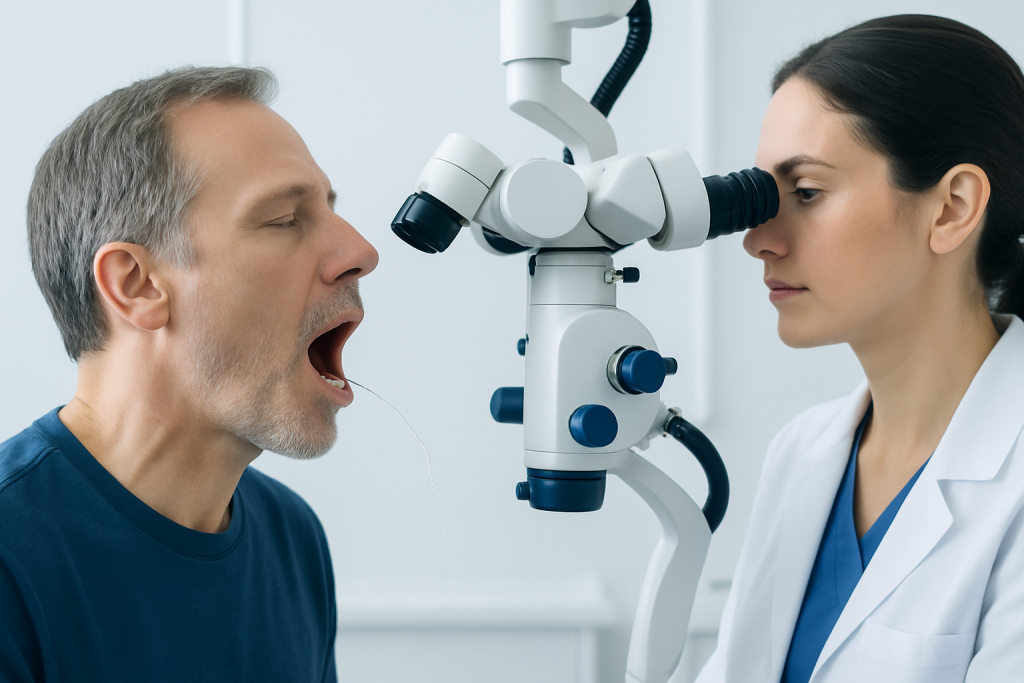
Saliva is produced by several glands in and around the mouth. The major salivary glands include the parotid glands near the cheeks, the submandibular glands under the jaw, and the sublingual glands under the tongue. Many tiny minor glands also contribute moisture throughout the mouth.
Gleek is most often associated with saliva that exits from ducts under the tongue. These ducts are small channels that carry saliva from the glands into the mouth. If saliva briefly pools and pressure changes suddenly with tongue or jaw movement, it can come out in a spray rather than a slow flow.
Saliva production rises with eating, thinking about food, nausea, and mouth irritation. Dehydration can also make saliva feel thicker and less comfortable, which may draw attention to normal gland activity. Problems such as inflammation, stones, or infection in the ducts or glands can change how saliva flows and may make unusual spraying or drooling more noticeable.
When doctors evaluate repeated gleeking, they are usually interested less in the spray itself and more in what it may suggest about saliva quantity, saliva thickness, duct function, oral hygiene, and surrounding tissues.
Possible causes and risk factors

In many healthy people, gleek has no serious cause. It can happen simply because saliva has collected under the tongue and a sudden tongue movement pushes it out. Some people can even trigger it on purpose. Occasional gleeking without other symptoms is generally considered a normal variation.
Frequent gleeking may be more likely when saliva production is increased. This can occur with mouth irritation, teething in children, nausea, acid reflux, certain foods, smoking or vaping, pregnancy-related nausea, and some medicines. Dental issues such as gum inflammation, mouth sores, poor-fitting dental appliances, or oral infections can also stimulate more saliva.
Another group of causes affects the salivary ducts or glands themselves. A blocked duct or salivary stone may interfere with normal flow and lead to pain or swelling, especially at mealtimes. Infection or inflammation of a salivary gland may cause tenderness, fever, swelling, or unpleasant-tasting discharge. More information on salivary gland infection may be helpful when these symptoms are present.
Neurologic or swallowing disorders can also lead to excess saliva or difficulty managing saliva in the mouth. In these situations, gleeking may be less important than symptoms such as drooling, choking, coughing while eating, or recurrent chest infections. Persistent symptoms deserve professional assessment rather than self-diagnosis.
Symptoms that can accompany gleek
Gleek itself is usually just a brief spray of saliva. Many people have no other symptoms. When symptoms do occur, they can help point toward the reason. For example, a dry or irritated mouth may suggest mouth breathing, dehydration, medication effects, or oral irritation, while an unusually wet mouth may reflect increased saliva production.
Symptoms worth noting include mouth or jaw pain, swelling under the tongue or under the jaw, a bad taste, pus-like discharge, fever, difficulty opening the mouth, trouble chewing, or pain that worsens when eating. These can suggest a salivary gland infection, duct blockage, or another oral problem that should be checked.
Some people notice gleeking together with heartburn, sour taste, nausea, or throat irritation. In these cases, reflux may be contributing to mouth irritation and saliva changes. Others may have canker sores, gum disease, cavities, or tongue irritation. Related oral problems are often addressed alongside a full dental treatment assessment when indicated.
Children and adults with frequent drooling, choking, speech changes, or swallowing difficulty need a broader evaluation. These symptoms are not explained by ordinary gleeking alone and may involve the nerves, muscles, or structures used for swallowing.
How doctors diagnose the cause
Diagnosis starts with a medical or dental history. A clinician may ask how often gleeking happens, whether it occurs with meals, whether it can be triggered by tongue movement, and whether there are symptoms such as swelling, pain, dry mouth, reflux, fever, or trouble swallowing. Questions about medicines, smoking, oral hygiene, and recent infections are also useful.
The examination usually focuses on the mouth, tongue, floor of the mouth, teeth, gums, throat, and the salivary glands under the jaw and near the ears. A clinician may gently inspect the salivary duct openings and look for redness, tenderness, reduced saliva flow, thick saliva, or signs of infection. If dental disease is suspected, the person may be referred for a more detailed oral evaluation.
Further tests are not needed for everyone. When symptoms suggest a blocked duct, stone, swelling, or chronic gland disease, imaging such as ultrasound may be used. In selected cases, doctors may request other imaging or specialist evaluation. If swallowing symptoms are present, assessment may overlap with care used for dysphagia.
The goal is not usually to treat gleeking as a separate condition, but to identify whether there is an underlying issue that needs care and whether simple lifestyle steps are enough.
Treatment options and practical self-care
Treatment depends on the cause. If gleeking is occasional and there are no warning signs, no medical treatment is usually needed. Practical measures include staying well hydrated, maintaining good oral hygiene, avoiding tobacco, and noticing whether certain foods, reflux, or mouth irritation seem to trigger episodes.
If there is increased saliva due to irritation or dental problems, treating the source often helps. This may involve addressing gum disease, cavities, ulcers, or ill-fitting dental appliances. If symptoms point to reflux, a doctor may advise dietary measures or other treatment to reduce acid exposure. For persistent oral or throat concerns, evaluation by an ear, nose, and throat specialist may be appropriate, sometimes as part of ENT treatment.
When a salivary duct is blocked or a gland is inflamed, treatment may include hydration, gland massage, sour candies or other saliva-stimulating measures when appropriate, pain relief, and treatment of infection if present. Some people need specialist procedures if a stone or narrowing is found. Management is tailored to the individual and should be guided by a qualified clinician.
If swallowing difficulty, aspiration risk, or neurologic issues are involved, treatment focuses on safe swallowing and the underlying condition rather than the gleek itself. Acibadem International’s multidisciplinary specialists in JCI-accredited hospitals evaluate oral, dental, ENT, and swallowing-related causes for international patients when needed.
When to seek medical care
Occasional gleeking without pain or other symptoms is usually not a sign of illness. Medical review is recommended if it becomes frequent, new, bothersome, or embarrassing enough to affect daily life. A doctor or dentist can help determine whether there is a simple explanation or a condition that needs treatment.
Prompt assessment is especially important if gleeking comes with swelling under the jaw or tongue, fever, severe pain, foul-tasting discharge, visible pus, or symptoms that worsen during meals. These features can suggest infection or blockage of a salivary gland or duct.
Urgent medical attention is needed for trouble breathing, inability to swallow liquids, drooling with choking, sudden facial swelling, or signs of dehydration. These symptoms go beyond ordinary gleeking and should not be ignored.
- See a doctor if gleeking is frequent or starts suddenly without explanation.
- See a dentist if there are tooth, gum, or mouth symptoms.
- Seek urgent care for breathing trouble, severe swelling, or inability to swallow.
Can gleek be prevented?
There is not always a way to prevent gleek completely, especially when it is simply a normal response to saliva pooling and tongue movement. Even so, healthy mouth habits can reduce irritation and improve overall saliva balance. Brushing and flossing regularly, seeing a dentist for routine care, and drinking enough fluids are practical starting points.
People who notice triggers may benefit from keeping a simple symptom note. Tracking episodes alongside meals, reflux symptoms, smoking, stress, mouth sores, or medication changes can reveal patterns. Reducing acidic or irritating exposures, avoiding tobacco, and managing reflux can make episodes less noticeable in some cases.
For those with repeated gland swelling, bad taste, or mealtime pain, prevention depends on treating the underlying salivary gland issue. Early evaluation helps prevent recurrent discomfort and supports better oral function. In many cases, once the cause is managed, gleeking becomes much less frequent or no longer bothersome.
Frequently asked questions
Is gleek normal?
Yes. For many people, gleek is simply a brief spray of saliva and not a disease. If it happens only once in a while and there are no other symptoms, it is usually harmless.
What causes gleek to happen suddenly?
It usually happens when saliva collects under the tongue and is released quickly by tongue or jaw movement. Eating, yawning, talking, mouth irritation, or increased saliva production can make it more noticeable.
Can gleek mean a salivary gland problem?
Sometimes. Frequent gleeking with pain, swelling, bad taste, fever, or symptoms that worsen with meals can point to a blocked duct, salivary stone, or infection. These situations should be evaluated by a doctor or dentist.
How is gleek different from drooling?
Gleek is a sudden spray of saliva, while drooling is saliva that spills out of the mouth because it is not being fully managed or swallowed. Drooling is more likely to suggest a swallowing, muscle, or neurologic issue, especially if it is persistent.
Should a child who gleeks be seen by a doctor?
An occasional episode in a child is often not concerning. Medical advice is sensible if there is frequent drooling, choking, feeding difficulty, mouth pain, swelling, fever, or poor weight gain.
Can dehydration or dry mouth cause gleek?
Dehydration does not usually directly cause gleek, but it can change saliva consistency and make mouth sensations more noticeable. Dry mouth and thick saliva can also occur with medicines, mouth breathing, and some health conditions.
What specialist treats frequent gleek?
The right clinician depends on the cause. A dentist can assess oral and dental causes, a primary care doctor can guide the first evaluation, and an ENT specialist may assess salivary gland or throat-related problems if symptoms persist.
This article is for general information only and is not a substitute for professional medical advice. Please consult a qualified doctor about your individual situation.
Explore treatments in Turkey — costs, top hospitals & a free quote
JCI-accredited · board-certified surgeons · reply within 24h
Add us as a Preferred Source to see more of our trusted health content across Google Search, AI Overviews and Discover.

More from the Health Library

Sensory Overload ADHD — Explained by Medical Evidence, Not Myths

Basaglar: A Complete Medical Overview

Selective Mutism — Explained by Medical Evidence, Not Myths

Shoulder Acne: A Complete Medical Overview

Catarrh: A Complete Medical Overview