Selective Mutism — Explained by Medical Evidence, Not Myths

Selective mutism is most often linked to anxiety, especially social anxiety. Children with selective mutism usually have normal language ability in settings where they feel safe.
Key Takeaways
- Selective mutism is most often linked to anxiety, especially social anxiety.
- Children with selective mutism usually have normal language ability in settings where they feel safe.
- Early assessment and supportive treatment can improve communication and reduce distress.
- Treatment commonly includes behavioral therapy, family and school support, and sometimes mental health care.
- Punishment or pressure to speak usually makes symptoms worse rather than better.
Selective mutism is a recognized anxiety disorder, not stubbornness or a choice to stay silent. A child with selective mutism can usually speak comfortably in some places, such as at home, but becomes unable to speak in specific social settings like school.
Overview: what selective mutism really means
Selective mutism is an anxiety disorder in which a person, most often a child, is able to speak in some situations but cannot speak in others. The pattern is not explained by unwillingness, defiance, or a lack of knowing what to say. Instead, the child experiences a level of anxiety that interferes with speech in particular social settings, such as school, childcare, family gatherings, or unfamiliar public places.
This condition is often misunderstood. Parents, teachers, and even relatives may assume the child is simply shy, oppositional, or “waiting to warm up.” While shyness can coexist with selective mutism, the two are not the same. Selective mutism causes a significant and persistent block in communication that affects daily life, learning, relationships, or emotional well-being.
The condition usually begins in early childhood, often becoming more noticeable when a child starts preschool or school. At home, the same child may talk freely, laugh, argue, sing, and communicate without difficulty. This contrast between settings is one of the clearest clues that the issue is anxiety-based rather than a general speech problem.
Because speech can appear normal in comfortable environments, selective mutism may go unrecognized for some time. Early recognition matters, as timely support can reduce stress, improve participation, and help prevent longer-term social and academic difficulties.
How selective mutism appears in daily life

Selective mutism does not always look the same from one child to another. Some children are completely silent in certain settings. Others may whisper to one trusted person, speak only at home, nod or point instead of answering, or use facial expressions and gestures when speech feels impossible. The key feature is a consistent inability to speak where speaking is expected, despite being able to speak elsewhere.
Children with selective mutism may seem frozen, tense, expressionless, or avoidant when attention is directed toward them. They may lower their head, avoid eye contact, cling to a parent, or appear unusually still in social settings. These behaviors are often signs of anxiety, not a lack of understanding. Many children understand everything being said and would like to respond but feel unable to do so in the moment.
Common patterns can include:
- Speaking normally at home but not at school
- Being unable to answer questions from teachers or unfamiliar adults
- Whispering only to siblings or one close friend
- Avoiding activities that involve speaking, such as reading aloud or ordering food
- Using gestures, writing, or nodding instead of talking
- Showing physical signs of anxiety, such as stiffness, tearfulness, or stomach discomfort
Selective mutism can affect education, friendships, and self-confidence. A child may be perceived as less engaged or less capable than they actually are simply because they cannot express themselves in a high-anxiety setting. This is why looking beyond silence itself is so important.
Causes and risk factors: evidence over myths
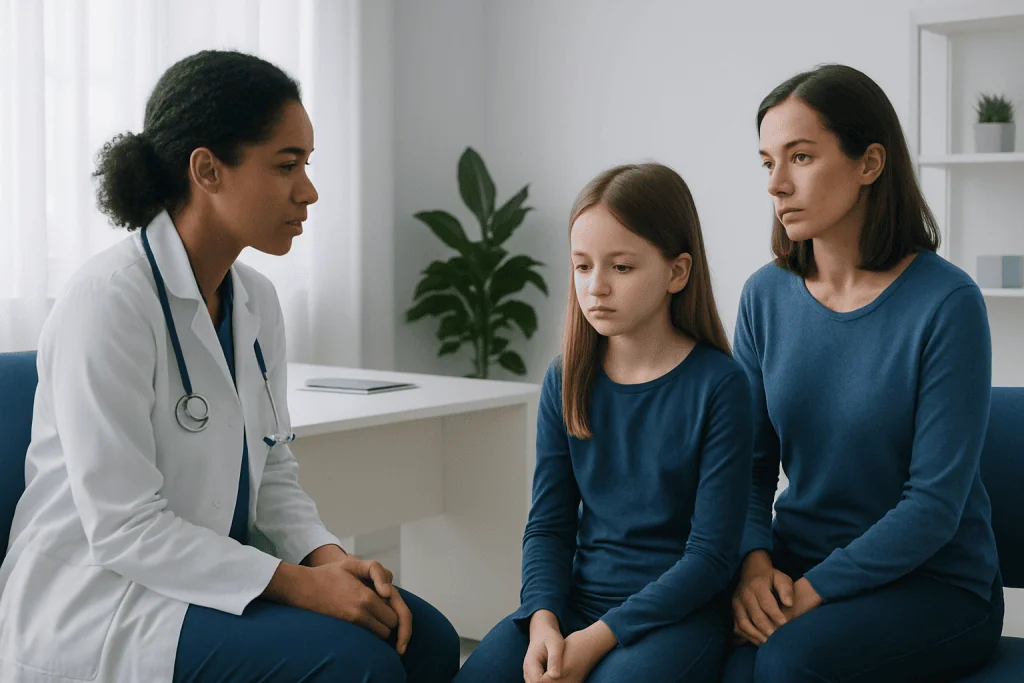
Current medical evidence supports the view that selective mutism is primarily an anxiety-related condition. It is strongly associated with social anxiety and may occur in children who are especially behaviorally inhibited, meaning they are naturally more cautious or sensitive in new situations. The inability to speak is not usually a deliberate choice. It is better understood as an anxiety response that affects communication.
There is no single cause. Several factors may contribute, including a family history of anxiety, a temperament marked by fearfulness in unfamiliar settings, and stressful transitions such as starting school. In some children, language differences, speech sound difficulties, or developmental factors may make social communication feel more demanding and increase anxiety. These factors do not automatically cause selective mutism, but they can shape how symptoms appear.
It is also important to separate selective mutism from other conditions that can affect communication. A hearing problem, a speech or language disorder, autism spectrum disorder, trauma-related responses, or another mental health condition may be considered during assessment if symptoms suggest them. In some cases, selective mutism may occur alongside another diagnosis rather than on its own.
Several myths can delay care. Selective mutism is not caused simply by poor parenting, manipulation, laziness, or a child “getting their way.” Pressuring a child to speak, criticizing them, or speaking for them all the time can unintentionally maintain the cycle of anxiety. Supportive, structured intervention is usually more effective than force or repeated reassurance alone.
How doctors and therapists diagnose selective mutism
Diagnosis is based on a careful clinical assessment rather than a single test. A pediatrician, child psychiatrist, child psychologist, or speech and language professional may be involved. The goal is to understand when the child speaks, when they do not, how long the pattern has been present, and how much it interferes with school, family life, and social development.
Clinicians usually gather information from more than one setting. Parents may describe how the child communicates at home, while teachers explain what happens in the classroom or playground. Videos from home or observations in low-pressure situations can help show that the child has normal or near-normal speech in comfortable environments. This contrast helps distinguish selective mutism from a broader inability to speak.
Assessment may also look for other factors that can affect communication, such as hearing concerns, speech and language differences, developmental conditions, or broader anxiety symptoms. In some cases, clinicians may also screen for related conditions such as autism or other anxiety disorders if the child’s behavior suggests a wider pattern.
A diagnosis is generally considered when the inability to speak in certain social settings is persistent, interferes with daily function, and is not better explained by another communication disorder or by lack of familiarity with the spoken language required in that setting. Because selective mutism can overlap with communication and emotional issues, a team-based assessment is often helpful.
Treatment options: reducing anxiety and building speech step by step
Treatment for selective mutism focuses on lowering anxiety and helping the child communicate more comfortably over time. The most widely used approaches are behavioral and cognitive-behavioral strategies adapted for the child’s age and needs. Therapy is usually gradual. Rather than demanding speech immediately, clinicians work in small steps that help the child succeed without feeling overwhelmed.
Common techniques may include gradual exposure to speaking situations, positive reinforcement for communication attempts, and “stimulus fading,” in which a child begins speaking in a comfortable setting and slowly expands to less familiar people or places. Parents and teachers are often coached to reduce pressure, allow response time, and support communication in predictable ways. When emotional or anxiety symptoms are prominent, psychiatric assessment and care may also be part of the plan.
If a child also has speech or language challenges, support from speech and language therapy can be helpful alongside anxiety-focused treatment. In selected cases, especially when symptoms are severe or persistent, a child mental health specialist may consider medication as part of a broader treatment plan. Medication is not the first or only option for many children, but it may be appropriate when anxiety significantly limits daily functioning.
Treatment works best when home, school, and healthcare professionals use a shared plan. Teachers can help by avoiding sudden demands for verbal responses, offering nonverbal participation options, and creating low-stress opportunities to practice speech. If emotional regulation or family stress is also affecting progress, child and adolescent psychiatry input may help guide coordinated care.
What families and schools can do day to day
Daily support can make a meaningful difference. The most helpful approach is calm, consistent, and low-pressure. Children with selective mutism generally benefit when adults recognize that they are anxious rather than refusing. A supportive environment makes it easier for treatment strategies to work and helps the child feel understood rather than judged.
At home and in school, it can help to praise brave communication attempts without making the child the center of attention. This may include eye contact, gestures, whispering, speaking to a trusted peer, or eventually using a normal voice in a new setting. Adults should try not to rush, repeatedly ask “Why won’t you talk?”, or answer every question for the child before they have a chance to respond. At the same time, avoiding all communication expectations may reinforce fear, so balance is important.
Practical strategies may include:
- Using routines so the child knows what to expect
- Allowing extra time to answer
- Starting with nonverbal participation, then building gradually
- Practicing short speaking tasks in safe, familiar settings
- Coordinating goals between parents, teachers, and therapists
- Reducing pressure during public performances or social introductions
If worries are broad and affect sleep, school attendance, or social participation, clinicians may evaluate for related anxiety conditions, including social anxiety disorder. Near the end of the care pathway, some families also seek multidisciplinary support at centers such as Acibadem International, where JCI-accredited hospitals and specialists assess and treat children and adolescents with communication and anxiety-related conditions.
When to seek medical care
It is a good idea to seek medical advice if a child speaks normally in some places but remains consistently silent in others for more than a short adjustment period. This is especially important when silence interferes with learning, friendships, classroom participation, or everyday activities such as asking for help, using the bathroom at school, or responding to safety questions.
Parents should also consider evaluation if the child seems very distressed in social settings, appears frozen or unable to communicate, or shows a pattern that is getting worse over time. Early care can be helpful even when symptoms seem mild, because selective mutism often improves more smoothly when addressed before the pattern becomes deeply established.
Medical review is also important if there are concerns about hearing, speech development, understanding language, developmental milestones, trauma exposure, or other emotional symptoms. A qualified clinician can determine whether selective mutism is the main issue or whether another condition needs attention as well. Families should not hesitate to ask for support if they are unsure.
Frequently asked questions
Is selective mutism the same as shyness?
No. Shyness is a personality trait, while selective mutism is an anxiety disorder that can prevent a child from speaking in certain settings. A shy child may warm up slowly, but a child with selective mutism may remain unable to speak even when they want to.
Can a child with selective mutism talk normally at home?
Yes. Many children with selective mutism speak freely and naturally at home or with a few trusted people. The difficulty appears mainly in situations that trigger anxiety, such as school or unfamiliar social settings.
Will a child outgrow selective mutism without treatment?
Some children improve over time, but waiting alone is not always the best approach. Without support, symptoms may continue and may affect confidence, learning, and social development. Early assessment can help families choose appropriate strategies.
What is the best treatment for selective mutism?
Treatment is usually individualized, but behavioral therapy and anxiety-focused support are commonly recommended. School involvement and family guidance are often essential. If there are related speech, language, or mental health concerns, treatment may include additional specialists.
Should parents force a child with selective mutism to speak?
Generally, no. Pressure, punishment, or public demands to speak often increase anxiety and can make communication harder. A gradual, supportive approach is usually more effective than forcing speech.
Can selective mutism happen in teenagers or adults?
It is most often recognized in childhood, but symptoms can continue into adolescence if not addressed. In some cases, older children and teenagers may still struggle with severe speaking anxiety in specific settings. Persistent symptoms deserve professional evaluation.
References
- American Psychiatric Association
- National Institute of Mental Health
- American Academy of Child and Adolescent Psychiatry
- National Health Service
- American Speech-Language-Hearing Association
This article is for general information only and is not a substitute for professional medical advice. Please consult a qualified doctor about your individual situation.
Explore treatments in Turkey — costs, top hospitals & a free quote
JCI-accredited · board-certified surgeons · reply within 24h
Add us as a Preferred Source to see more of our trusted health content across Google Search, AI Overviews and Discover.