Golfer’s Elbow: A Complete Medical Overview

Golfer's elbow is usually caused by repetitive strain on the wrist flexor tendons near the inner elbow. Common symptoms include inner elbow pain, tenderness, stiffness, and reduced grip strength.
Key Takeaways
- Golfer's elbow is usually caused by repetitive strain on the wrist flexor tendons near the inner elbow.
- Common symptoms include inner elbow pain, tenderness, stiffness, and reduced grip strength.
- Most people improve with activity modification, targeted exercises, and non-surgical treatment.
- Diagnosis is mainly based on symptoms and physical examination, with imaging used when needed.
- Medical review is important if pain lasts, weakness increases, or numbness develops.
Golfer's elbow is an overuse injury of the tendons that attach to the inner side of the elbow, often causing pain with gripping, lifting, or wrist movement. Although the name suggests a sports injury, it commonly affects anyone who repeats hand, wrist, or forearm motions at work, during exercise, or in daily life.
What golfer's elbow is
Golfer’s elbow, also called medial epicondylitis, is a painful condition that affects the tendons connecting the forearm muscles to the bony bump on the inner side of the elbow. These tendons help bend the wrist and fingers and support gripping. When they are repeatedly overloaded, small areas of tendon damage and irritation can develop, leading to pain and reduced function.
Despite its name, golfer’s elbow does not only affect golfers. It can develop in people who use repeated wrist flexion, gripping, twisting, lifting, or throwing motions. This includes manual workers, racquet sport players, weight trainers, musicians, and people whose work involves tools or repetitive keyboard and mouse use.
It is different from tennis elbow, which affects the outer side of the elbow. Golfer’s elbow causes discomfort on the inside of the elbow and often reflects strain in the wrist flexor and forearm muscles. In some cases, nearby structures such as the ulnar nerve may also become irritated, which can add tingling or numbness to the symptoms.
Signs and symptoms
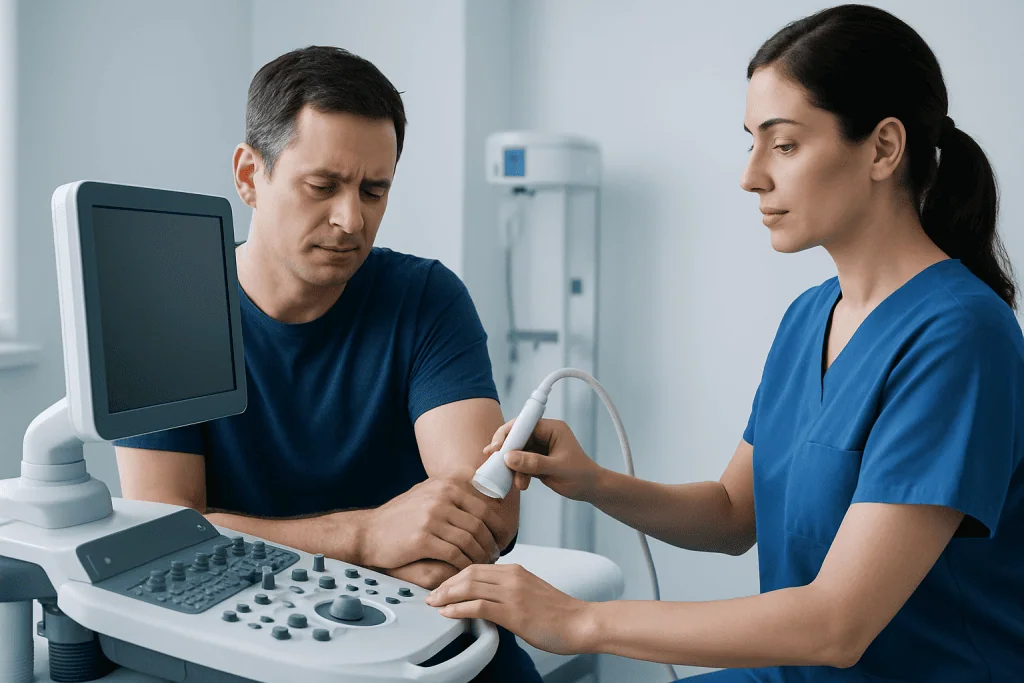
The main symptom of golfer’s elbow is pain or tenderness on the inner side of the elbow. The discomfort may begin gradually and worsen over time, especially during activities that involve gripping, lifting, wrist flexion, or rotating the forearm. Some people feel pain only during activity, while others also notice lingering soreness afterward.
Stiffness around the elbow can make it uncomfortable to fully bend or straighten the arm. Grip strength may feel weaker, making it harder to shake hands, carry bags, open jars, use sports equipment, or hold tools securely. Everyday movements such as turning a doorknob or lifting a kettle can trigger symptoms.
If the ulnar nerve becomes irritated, symptoms may extend beyond tendon pain. A person may notice tingling, numbness, or an unusual sensation traveling into the ring and little fingers. Because these symptoms can overlap with other elbow or nerve conditions, a proper assessment is useful when pain is persistent or not improving.
- Inner elbow pain or tenderness
- Pain that worsens with gripping or lifting
- Forearm tightness or stiffness
- Weak grip strength
- Occasional numbness or tingling in the ring and little fingers
Why it happens and who is at risk

Golfer’s elbow most often develops from repetitive strain rather than from one major injury. Repeated wrist bending, forceful gripping, throwing, or using vibrating or heavy tools can place ongoing stress on the tendon where it attaches at the inner elbow. Over time, the tendon may not recover fully between activities, leading to pain and reduced tolerance to load.
Sports can contribute, especially golf, baseball, tennis, climbing, rowing, and weightlifting. Technique matters as much as training volume. Sudden increases in practice, poor swing mechanics, inadequate warm-up, or equipment that does not suit the user may all increase tendon stress. In non-sport settings, repeated lifting, hammering, typing, or assembly-line work can produce similar strain.
Risk is also influenced by age, general conditioning, and previous injury. Tendons may become less resilient over time, especially when activities increase quickly or recovery is limited. Limited shoulder or wrist mobility, muscle imbalance, and poor ergonomics can also shift more strain to the elbow. In some cases, inner elbow pain may coexist with tennis elbow or with other causes of elbow discomfort, which is why diagnosis should consider the full pattern of symptoms.
How doctors diagnose golfer's elbow
Diagnosis usually begins with a medical history and physical examination. The doctor asks when the pain started, which activities trigger it, whether there is numbness or weakness, and whether the symptoms affect work, sports, or sleep. This conversation helps distinguish golfer’s elbow from nerve compression, joint problems, or referred pain from the neck or shoulder.
During the examination, the doctor checks the point of tenderness on the inner elbow and may ask the person to resist wrist flexion or forearm rotation. Reproducing pain with these movements supports the diagnosis. Grip strength, range of motion, and signs of ulnar nerve irritation are also assessed.
Imaging is not always necessary, especially when symptoms and examination findings are typical. However, ultrasound or MRI may be considered if pain is severe, symptoms persist, another injury is suspected, or surgery is being discussed. X-rays may help rule out arthritis, fracture, or other bony causes of elbow pain. In people with numbness or tingling, nerve studies may occasionally be helpful.
Treatment options and recovery
Most cases improve without surgery. Early treatment usually focuses on reducing tendon strain, controlling pain, and gradually rebuilding strength. Rest does not always mean complete inactivity; rather, it means temporarily reducing or modifying the activities that trigger symptoms. Ice, short-term use of pain-relieving medicines when appropriate, and a supportive brace or strap may help some people during the more painful phase.
Exercise-based rehabilitation is often the central part of recovery. A clinician or therapist may recommend stretching, wrist and forearm strengthening, and progressive loading of the tendon to improve its capacity over time. Attention may also be given to shoulder mechanics, posture, grip technique, and training patterns. When needed, a person may benefit from physical therapy and rehabilitation to guide a safe return to normal activity.
If symptoms continue despite a well-followed rehabilitation plan, additional options may be discussed. These can include supervised injections in selected cases, temporary bracing, or evaluation by an orthopedic specialist. Surgery is usually reserved for ongoing pain and functional limitation that do not improve with conservative treatment over time. In broader assessment of persistent elbow pain, doctors may also consider input from orthopedics and traumatology specialists and, if nerve symptoms are prominent, targeted evaluation to exclude other conditions.
Self-care, prevention, and daily activity changes
Self-care can support healing and reduce the chance of recurrence. The most helpful step is often to identify the movement or task causing overload and modify it. This may mean reducing repetitions, improving sports technique, changing grip size, adjusting workstation setup, using lighter equipment, or taking more frequent breaks during repetitive work.
A gradual return to activity is important. Tendons typically respond better to step-by-step loading than to sudden rest followed by a quick return to full effort. Warming up before sport or exercise, strengthening the forearm and shoulder muscles, and maintaining flexibility in the wrist and elbow can all help lower strain on the tendon attachment.
People should avoid pushing through worsening pain, as this may delay recovery. If home care is not enough, structured support can be useful through sports injuries and rehabilitation or a personalized exercise program. For some patients, chronic elbow symptoms may overlap with broader joint pain concerns, making a full musculoskeletal review especially helpful.
- Reduce or adapt painful activities for a period of time
- Use proper technique in sport and exercise
- Increase training volume gradually
- Strengthen forearm, wrist, shoulder, and upper back muscles
- Improve workstation and tool ergonomics
- Seek guidance if symptoms keep returning
When to seek medical care
Many people with mild golfer’s elbow improve with rest, exercise, and activity changes, but medical assessment is sensible if pain lasts more than a few weeks, keeps coming back, or interferes with work, sport, sleep, or daily tasks. Ongoing symptoms can sometimes mean the tendon needs a more structured rehabilitation plan or that another problem is contributing to the pain.
Prompt evaluation is especially important if there is significant weakness, swelling, loss of movement, sudden injury, or numbness and tingling in the hand or fingers. These features may point to nerve irritation or another elbow condition that needs different treatment. A doctor can also help if home exercises are confusing or if pain returns each time activity resumes.
For international patients who need assessment and coordinated care, Acibadem International’s multidisciplinary specialists in JCI-accredited hospitals diagnose and treat musculoskeletal conditions including persistent elbow pain with individualized plans based on examination and imaging when needed.
Frequently asked questions
Is golfer's elbow the same as tennis elbow?
No. Golfer's elbow affects the tendons on the inner side of the elbow, while tennis elbow affects the outer side. Both are overuse tendon problems, but they involve different muscle groups and tendon attachments.
Can a person get golfer's elbow without playing golf?
Yes. Many people with golfer's elbow do not play golf at all. Repetitive gripping, lifting, tool use, racquet sports, weight training, or work-related forearm strain can all cause it.
How long does golfer's elbow take to heal?
Recovery time varies depending on how long symptoms have been present, how severe they are, and whether the person can reduce the activities causing overload. Some people improve within weeks, while others need several months of guided rehabilitation.
Should the arm be rested completely?
Usually not for long periods. Short-term reduction of painful activity can help, but complete prolonged rest may lead to stiffness and weakness. A gradual, guided return to movement and strengthening is often more effective.
Do braces help golfer's elbow?
A brace or counterforce strap may help some people by reducing strain during activity. It is usually considered a supportive measure rather than the main treatment. Exercise, activity modification, and technique correction remain important.
When is surgery considered for golfer's elbow?
Surgery is usually considered only when symptoms remain significant despite a well-followed period of non-surgical treatment. The decision depends on pain severity, functional limits, examination findings, and sometimes imaging results.
This article is for general information only and is not a substitute for professional medical advice. Please consult a qualified doctor about your individual situation.
Joint and spine care in Turkey — expert assessment & treatment
JCI-accredited · board-certified surgeons · reply within 24h
Add us as a Preferred Source to see more of our trusted health content across Google Search, AI Overviews and Discover.

More from the Health Library

Reishi Mushroom Benefits — Explained by Medical Evidence, Not Myths
Rhomboid Exercises — Explained by Medical Evidence, Not Myths
Varikokelektomi — Explained by Medical Evidence, Not Myths
Broke the Arm: What Patients Need to Know

Loss of Taste — Explained by Medical Evidence, Not Myths