Varikokelektomi — Explained by Medical Evidence, Not Myths

Varikokelektomi treats enlarged scrotal veins by blocking abnormal blood flow while preserving important nearby structures. Not every varicocele needs surgery; treatment is usually based on pain, fertility issues, or testicular growth concerns.
Key Takeaways
- Varikokelektomi treats enlarged scrotal veins by blocking abnormal blood flow while preserving important nearby structures.
- Not every varicocele needs surgery; treatment is usually based on pain, fertility issues, or testicular growth concerns.
- Physical examination, scrotal ultrasound, and sometimes semen testing help guide the decision.
- Microsurgical repair is commonly favored because it can lower the risk of recurrence and complications.
- Recovery is usually gradual, with return to light activity in days and fuller healing over several weeks.
- Anyone with a new scrotal lump, severe pain, or fertility concerns should be assessed by a qualified doctor.
Varikokelektomi is an operation used to treat a varicocele, which is an enlargement of veins in the scrotum. It is most often considered for ongoing pain, testicular changes, or fertility concerns, and the best approach depends on symptoms, exam findings, and personal goals.
What varikokelektomi means
Varikokelektomi is the Turkish term for varicocelectomy, a surgical procedure used to treat a varicocele. A varicocele is a widening of veins within the scrotum, usually on the left side, caused by blood pooling in veins that do not drain efficiently. The operation closes or reroutes these enlarged veins so blood can leave through healthier pathways.
This procedure is not done simply because a varicocele is found. Many varicoceles cause no symptoms and may only be noticed during an examination or fertility evaluation. Doctors usually recommend treatment when there is persistent discomfort, a feeling of heaviness, testicular shrinkage, or concerns about semen quality and fertility.
A myth sometimes encountered online is that every varicocele harms fertility or always requires surgery. Medical evidence does not support that. Some men with varicoceles have normal fertility, while others may benefit from treatment after careful assessment. The aim of varikokelektomi is to improve symptoms or reduce factors that may affect testicular function, not to promise a specific fertility outcome.
How a varicocele can affect health and fertility
The testes work best at a temperature slightly below core body temperature. One theory is that enlarged scrotal veins disrupt normal cooling and create a less favorable environment for sperm production. Varicoceles may also affect blood flow, oxidative stress, and local hormone balance, which can influence testicular function in some patients.
When symptoms occur, they are often mild but bothersome. A dull ache, dragging sensation, or heaviness may become more noticeable after standing for a long time, exercising, or later in the day. Some people also notice visible or palpable enlarged veins, often described as feeling like a “bag of worms.”
Fertility effects vary widely. In some men, a varicocele is found during evaluation for difficulty conceiving, and semen analysis may show low count, reduced movement, or abnormal shape of sperm. In adolescents, doctors may also watch for slowed growth of the affected testicle. For background on the underlying condition, readers may find varicocele helpful.
Who may need varikokelektomi

Doctors consider varikokelektomi when there is a clear medical reason rather than treating every visible varicocele. Common reasons include ongoing scrotal pain that has not improved with conservative measures, infertility with an abnormal semen analysis and a clinically significant varicocele, or testicular size difference in adolescents and young adults.
Conservative care may be tried first in people with mild discomfort. This can include supportive underwear, limiting activities that worsen symptoms, and using a doctor-approved pain reliever if appropriate. If symptoms continue or fertility evaluation suggests the varicocele may be contributing, surgery becomes a more relevant option.
Decision-making is individualized. Age, fertility goals, semen results, examination findings, and the presence of testicular atrophy all matter. A urologist will also consider whether there may be another explanation for symptoms, because not all scrotal pain is caused by a varicocele.
- Persistent aching or heaviness in the scrotum
- Infertility with a palpable varicocele and abnormal semen analysis
- Testicular shrinkage or slower growth on the affected side
- Symptoms that interfere with daily comfort or physical activity
How doctors diagnose and assess it
Diagnosis often begins with a medical history and physical examination. The doctor may examine the scrotum while the patient is standing and may ask him to perform a gentle bearing-down maneuver, which can make enlarged veins easier to feel. Varicoceles are commonly graded based on how easily they are detected on exam.
A scrotal ultrasound is frequently used to confirm the finding, measure testicular size, and check blood flow. Ultrasound can also help rule out other causes of swelling or pain. This is especially useful when the physical exam is unclear, symptoms seem out of proportion, or there is concern about another scrotal condition.
If fertility is part of the concern, semen analysis is a key part of evaluation. Some men may also need hormone tests, depending on the clinical picture. Related conditions that may be discussed during assessment include male infertility and other causes of scrotal symptoms, such as hydrocele.
Treatment options and how surgery is performed
Treatment options include observation, supportive care, image-guided procedures in selected cases, and surgery. Observation may be appropriate when a varicocele is painless, testicular size is normal, and there are no fertility concerns. When treatment is indicated, surgery remains a standard and widely used approach.
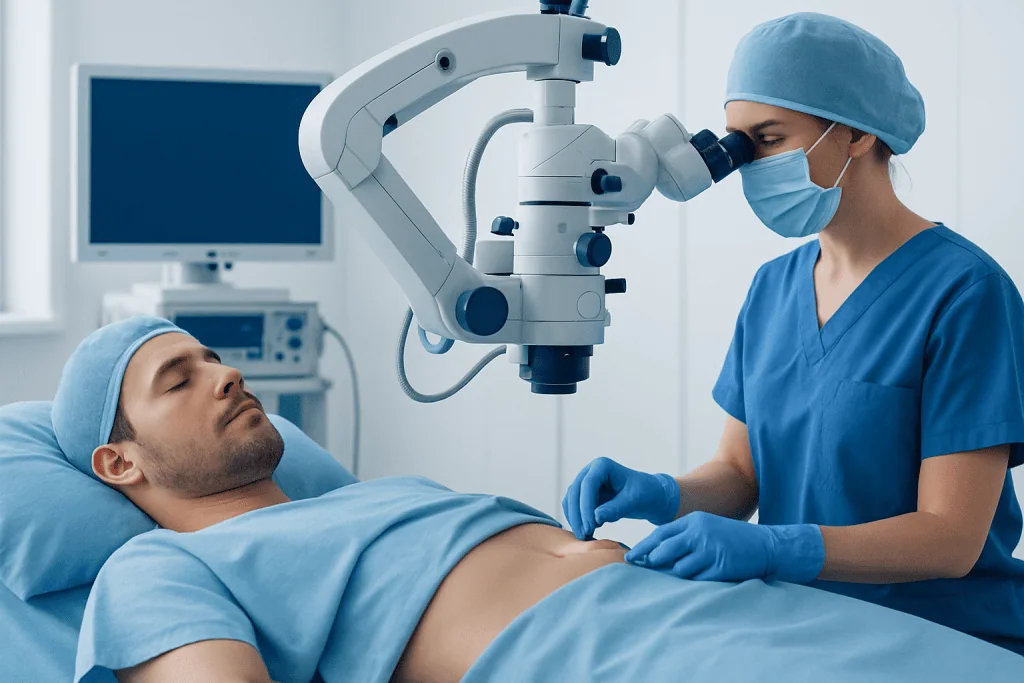
In varikokelektomi, the surgeon identifies the enlarged veins and seals them while preserving the testicular artery, lymphatic vessels, and vas deferens. Several techniques exist, including open inguinal or subinguinal repair, laparoscopic repair, and microsurgical repair. Microsurgical subinguinal varicocelectomy is often preferred because magnification helps protect important structures and may reduce recurrence and postoperative hydrocele.
The procedure is usually done under anesthesia and often as day surgery, depending on the method and the patient’s health. Another treatment approach that may be considered in some centers is vein blockage by radiologic techniques, but suitability varies. Patients undergoing evaluation by a specialist in urology may also discuss broader reproductive options, including support through IVF when fertility factors are complex.
Recovery, results, and possible risks
Recovery after varikokelektomi is usually straightforward, although the exact timeline depends on the surgical method and the individual. Mild soreness, bruising, or swelling can occur for a few days. Most patients can return to desk work and light activity relatively soon, while strenuous exercise, heavy lifting, and sexual activity are generally postponed until the surgeon advises it is safe.
Improvement in pain, when pain was the main reason for surgery, may be gradual rather than immediate. If the goal is fertility, changes in semen quality are not assessed right away because sperm production takes time. Follow-up usually includes symptom review, examination, and when relevant, repeat semen analysis after an appropriate interval.
As with any procedure, there are potential risks. These include recurrence of the varicocele, fluid collection around the testicle called hydrocele, infection, bleeding, persistent pain, or rarely injury to nearby structures. Choosing an experienced surgical team and following postoperative instructions can help lower risk. In selected international centers, including Acibadem International, multidisciplinary specialists in JCI-accredited hospitals evaluate and treat varicocele and related fertility concerns for international patients.
When to seek medical care
Medical review is appropriate for a new scrotal lump, visible enlarged veins, ongoing testicular discomfort, or concerns about fertility. Although a varicocele is often benign, scrotal symptoms should not be self-diagnosed because other conditions can look similar and may need different treatment.
Prompt care is especially important if pain is sudden or severe, swelling appears quickly, there is redness or fever, or the symptoms follow an injury. These features can point to urgent problems that require timely assessment. New onset of a right-sided varicocele or one that does not reduce when lying down also deserves careful evaluation.
Anyone considering surgery should discuss expected benefits, alternatives, and recovery with a qualified urologist. If there are fertility concerns, the most helpful plan often involves a complete reproductive assessment rather than focusing on the varicocele alone.
Frequently asked questions
Is varikokelektomi the same as varicocelectomy?
Yes. Varikokelektomi is another term for varicocelectomy, the operation used to treat a varicocele. Both words refer to surgery that closes enlarged veins in the scrotum.
Does every varicocele need surgery?
No. Many varicoceles do not cause symptoms or fertility problems and can be monitored. Surgery is usually considered when there is pain, testicular size change, or fertility-related concern supported by evaluation.
Can varikokelektomi improve fertility?
It may improve semen parameters in selected patients, especially when there is a clinically significant varicocele and abnormal semen analysis. However, results vary, and surgery does not guarantee pregnancy. A doctor can explain whether the expected benefit is meaningful in an individual case.
How long does recovery take after varikokelektomi?
Many patients return to light daily activities within several days, but complete recovery takes longer. Heavy lifting, vigorous exercise, and sexual activity are usually delayed until the surgeon confirms healing is progressing well.
What are the risks of varikokelektomi?
Possible risks include recurrence, hydrocele formation, infection, bleeding, and persistent discomfort. Serious complications are uncommon, but every procedure carries some risk. Careful surgical technique and follow-up help reduce these problems.
Can a varicocele come back after surgery?
Yes, recurrence is possible, though the risk depends on the technique used and the individual anatomy. Microsurgical methods are often chosen because they can lower recurrence and help preserve important nearby structures.
References
- American Urological Association
- European Association of Urology
- Urology Care Foundation
- National Institute of Diabetes and Digestive and Kidney Diseases
- American Society for Reproductive Medicine
This article is for general information only and is not a substitute for professional medical advice. Please consult a qualified doctor about your individual situation.
IVF & fertility treatment in Turkey — success rates and costs
JCI-accredited · board-certified surgeons · reply within 24h
Add us as a Preferred Source to see more of our trusted health content across Google Search, AI Overviews and Discover.