Graves Disease Eyes Treatment: How It Works, Results and What to Expect

Thyroid eye disease is an autoimmune condition that can occur with Graves disease and needs assessment by both eye and thyroid specialists. Treatment aims to protect vision, relieve symptoms, reduce active inflammation and address lasting structural changes when appropriate.
Key Takeaways
- Thyroid eye disease is an autoimmune condition that can occur with Graves disease and needs assessment by both eye and thyroid specialists.
- Treatment aims to protect vision, relieve symptoms, reduce active inflammation and address lasting structural changes when appropriate.
- Mild disease may improve with lubricating drops, lifestyle measures and close follow-up, while moderate or severe disease may require medicines, radiation or surgery.
- Smoking and secondhand smoke can worsen thyroid eye disease and reduce the effectiveness of treatment.
- Sudden vision changes, reduced colour vision, severe pain or inability to close the eyes require urgent medical assessment.
Graves disease eyes treatment, also called thyroid eye disease treatment, is tailored to disease activity and severity. It may include eye-protection measures, medicines that control inflammation, and surgery for persistent eyelid, muscle or orbital changes after the condition is stable.
Overview: how Graves disease eyes treatment works
Graves disease eyes treatment manages thyroid eye disease, also known as Graves ophthalmopathy or thyroid-associated orbitopathy. The condition occurs when the immune system causes inflammation and swelling in tissues behind and around the eyes. This can lead to dryness, redness, eyelid retraction, bulging eyes, double vision and, less commonly, pressure on the optic nerve.
Treatment is not one single procedure. Care is planned according to whether the disease is active and inflamed or inactive and stable, as well as how much it affects comfort, appearance, eye movement and vision. The main goals are to protect the surface of the eye and vision, reduce inflammation when it is active, and correct persistent changes after the inflammation has settled.
Thyroid eye disease should be managed alongside the underlying thyroid condition. Keeping thyroid hormone levels within the recommended range supports overall health, although eye disease may not improve immediately when thyroid levels are corrected. Coordinated care commonly involves an endocrinologist and an ophthalmologist, often with an oculoplastic or orbital surgeon when surgery is considered.
Who may need treatment and how candidacy is assessed
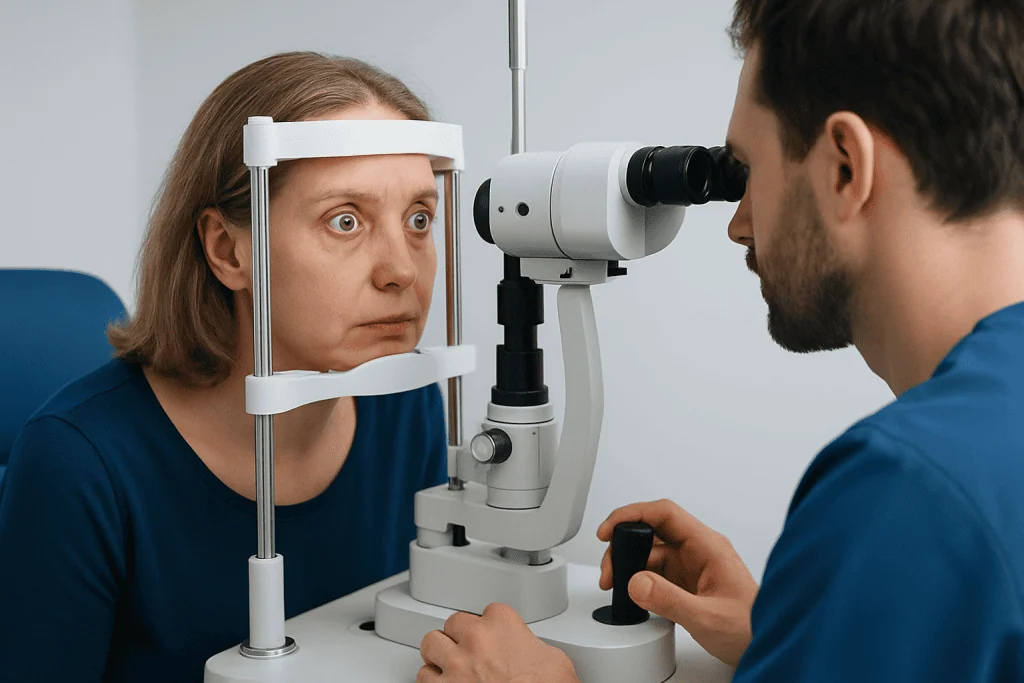
Anyone with suspected thyroid eye disease should have a clinical eye assessment. The clinician will ask about grittiness, tearing, light sensitivity, pain behind the eyes, changes in appearance, double vision and visual symptoms. Examination may include visual acuity, colour vision, eye pressure, eyelid closure, eye movements and an assessment of the cornea and optic nerve.
Imaging, such as CT or MRI scanning of the orbits, may be used when the diagnosis is uncertain, when surgery is being planned or when there are signs of optic nerve compression. Blood tests help assess thyroid function and, where appropriate, thyroid antibodies. Other eye conditions and causes of a prominent eye or double vision should also be considered.
Mild disease may need supportive care and monitoring. Moderate-to-severe active disease may be suitable for anti-inflammatory or immune-modifying treatment, depending on the person’s symptoms, medical history and local clinical guidance. Sight-threatening disease requires urgent specialist treatment. Surgery is generally considered once measurements and symptoms have been stable, except when urgent decompression is needed to protect vision.
- Active disease may cause increasing redness, swelling, pain and changing double vision.
- Inactive disease usually has less inflammation, but eyelid position, eye prominence or double vision may remain.
- Smoking status, diabetes, blood pressure and other health conditions influence treatment choices and safety monitoring.
Treatment pathway: step by step

The first step is usually eye protection and control of thyroid function. Preservative-free lubricating drops or gels can ease dryness, while ointment at night may help people whose eyelids do not close fully during sleep. Sunglasses, head elevation during sleep and, when necessary, temporary prism lenses for double vision may also be useful. People who smoke are strongly encouraged to stop, as smoking can worsen disease activity.
If active inflammation is moderate or severe, a specialist may recommend intravenous corticosteroids, other immune-targeting medicines or, in selected cases, orbital radiotherapy. These treatments are intended to reduce inflammation and prevent worsening, rather than immediately reverse every visible change. They require follow-up because benefits and possible side effects differ among treatments.
Once thyroid eye disease is inactive and stable, rehabilitative surgery may be planned in stages. Orbital decompression creates more room around the eye when prominence or pressure is significant. Eye muscle surgery can improve persistent double vision, and eyelid surgery can improve eyelid closure, comfort or symmetry. The order matters because changes from earlier procedures can affect later alignment and eyelid position.
For people considering procedural care, thyroid eye disease treatment should be discussed with a team experienced in both orbital and thyroid care. A personalised plan should include the expected benefit, alternatives, likely recovery and the possibility that more than one treatment may be needed.
Benefits, risks and recovery timeline
Benefits of treatment can include less eye pain and redness, improved lubrication and eyelid closure, reduced swelling, better double vision control and protection of vision. Results depend on disease severity, whether inflammation is still active and which tissues are affected. Some changes improve gradually, while others require surgical correction after the active phase has ended.
Recovery varies widely. Lubrication and practical measures may ease irritation quickly, although they need ongoing use while dryness persists. Anti-inflammatory treatments are assessed over weeks to months, with regular monitoring. After surgery, bruising, swelling, tightness and temporary changes in sensation can occur; visible swelling often improves over several weeks, while final alignment or cosmetic results may take longer to assess.
All treatments have potential risks. Corticosteroids and other systemic medicines can affect blood sugar, mood, blood pressure, infection risk or other body systems, so they should be prescribed and monitored by an appropriate specialist. Orbital radiotherapy is not suitable for everyone. Surgical risks can include bleeding, infection, altered eye movement, persistent or new double vision, asymmetry, dry eye symptoms and the need for further procedures.
Before any intervention, patients should be given clear instructions about medicines, smoking cessation, follow-up appointments and symptoms that need urgent review. The care team can explain which changes are likely to respond to treatment and which may be less predictable.
Will my eyes go back to normal after Graves disease?
Some people experience substantial improvement, particularly when inflammation is treated early and the disease is mild. Redness, swelling, discomfort and eyelid puffiness may reduce as the active phase settles. However, not every person’s eyes return completely to their pre-disease appearance or function.
Persistent eye prominence, eyelid retraction, dry eye symptoms or double vision can remain after inflammation becomes inactive. Rehabilitative surgery may improve these changes, but it cannot promise a perfect return to a previous appearance. A specialist can give a more individual outlook after examining the eyes and determining whether disease activity is ongoing.
Emotional concerns about appearance are valid and can be discussed openly during care. Supportive treatment, realistic planning and follow-up can help patients make informed choices about whether procedural correction is appropriate.
How long does it take for Graves disease treatment to work?
The time frame depends on the treatment and the problem being treated. Lubricating eye treatments may relieve surface discomfort within days, while efforts to stabilise thyroid hormone levels can take weeks or longer. Improvement in the eye disease itself may be slower because autoimmune inflammation has its own course.
For active moderate-to-severe disease, clinicians usually monitor response to medical treatment over weeks to months. Symptoms such as pain, redness and swelling may improve before structural changes, such as eye prominence or double vision, do. Follow-up is important because treatment may need adjustment if inflammation remains active or vision is at risk.
After corrective surgery, early swelling can temporarily obscure the result. The surgical team will advise when healing is sufficiently advanced to judge the outcome and whether any later stage of treatment should be considered.
Does thyroid eye disease get better? How to reverse Graves' eye disease?
Thyroid eye disease often has an active inflammatory phase followed by a more stable phase. Many people notice that inflammation and discomfort lessen over time, especially with appropriate treatment and avoidance of smoking. However, the course is variable, and some people are left with lasting changes that need further care.
There is no reliable home method to reverse Graves’ eye disease. Treatment focuses on controlling active inflammation, maintaining stable thyroid function, protecting the cornea and optic nerve, and correcting residual structural problems when needed. Taking thyroid medicines exactly as prescribed and attending eye reviews are important parts of this approach.
Self-care can complement medical treatment. Patients may benefit from stopping smoking, avoiding secondhand smoke, using prescribed lubricants, resting the eyes during screen use, sleeping with the head slightly elevated if advised and using prisms or an eye patch only under professional guidance for troublesome double vision. Supplements should not replace specialist care, and any vitamin or mineral product should be discussed with a clinician.
When to seek medical care
People with a known thyroid condition should arrange an eye assessment if they develop persistent dry, red or painful eyes, eyelid swelling, bulging eyes, a change in eyelid position or new double vision. Early assessment can identify active disease and help prevent avoidable surface-eye damage.
Urgent medical care is needed for reduced or blurred vision, reduced colour brightness, a new visual field shadow, severe eye pain, rapidly worsening swelling, an inability to close the eyelids, or double vision that suddenly becomes severe. These symptoms can occasionally indicate pressure on the optic nerve or significant corneal exposure and should not be managed by waiting for a routine appointment.
Acibadem International’s multidisciplinary specialists and JCI-accredited hospitals diagnose and treat thyroid eye disease for international patients. A consultation can help coordinate endocrine and ophthalmic assessment and clarify the most appropriate next steps.
Frequently asked questions
Can Graves disease affect the eyes even when thyroid blood tests are normal?
Yes. Thyroid eye disease can occur before, during or after changes in thyroid hormone levels, and it may occasionally occur in people without current hyperthyroidism. Eye symptoms should therefore be assessed based on clinical findings, not thyroid test results alone.
Is thyroid eye disease the same as Graves disease?
No. Graves disease is an autoimmune condition that commonly causes an overactive thyroid, while thyroid eye disease is an autoimmune inflammation affecting tissues around the eyes. They are related, but their activity and treatment course may differ.
Why is smoking important in Graves disease eyes treatment?
Smoking is linked with a higher risk of developing or worsening thyroid eye disease. It can also reduce response to treatment. Stopping smoking and avoiding secondhand smoke are among the most important practical steps a patient can take.
Can radioiodine treatment worsen thyroid eye disease?
In some people, radioiodine used to treat an overactive thyroid may be associated with worsening eye disease, particularly in smokers or those with active eye symptoms. The thyroid specialist will consider eye status and may recommend preventive measures or an alternative thyroid treatment when appropriate.
Can double vision from thyroid eye disease be treated?
Yes. Temporary prism lenses may help some people while the disease is active or changing. If double vision remains after the condition becomes stable, eye muscle surgery may be considered after a specialist assessment.
What happens if thyroid eye disease is left untreated?
Mild disease may remain stable or improve with supportive care, but untreated dryness can damage the eye surface and active disease can worsen. Rarely, swelling can threaten vision by affecting the optic nerve or preventing eyelid closure. Regular review helps identify people who need more intensive treatment.
References
- American Thyroid Association
- European Group on Graves' Orbitopathy
- American Academy of Ophthalmology
- National Eye Institute
- Mayo Clinic
This article is for general information only and is not a substitute for professional medical advice. Please consult a qualified doctor about your individual situation.
Graves Disease in Turkey — costs, top hospitals & a free quote
JCI-accredited · board-certified surgeons · reply within 24h
Add us as a Preferred Source to see more of our trusted health content across Google Search, AI Overviews and Discover.
Check your numbers in seconds
BMI, calories, due date, blood pressure and 30+ more clinical calculators — free, instant, doctor-reviewed ranges.