Gray Matter: What Patients Need to Know

Gray matter contains many nerve cell bodies and helps the brain process information. It plays a central role in movement, memory, language, sensation, decision-making, and emotion.
Key Takeaways
- Gray matter contains many nerve cell bodies and helps the brain process information.
- It plays a central role in movement, memory, language, sensation, decision-making, and emotion.
- Gray matter can change over time with normal aging, learning, sleep, stress, injury, or neurological disease.
- Brain imaging may show gray matter differences, but results need expert interpretation in the context of symptoms and medical history.
- Healthy habits such as exercise, sleep, blood pressure control, and mental activity support brain health.
- New neurological symptoms such as weakness, seizures, sudden confusion, or severe headache need prompt medical evaluation.
Gray matter is the part of the brain and spinal cord that helps process information, control movement, support memory, and shape emotions and thinking. Patients usually hear about gray matter on brain scans or in discussions about aging, injury, or neurological conditions, but changes in gray matter do not always mean serious disease.
Overview: what gray matter means
Gray matter is the tissue in the brain and spinal cord that contains many nerve cell bodies, along with supporting cells and connections. It helps receive, process, and interpret information. In simple terms, gray matter is deeply involved in how a person thinks, feels, moves, remembers, speaks, and responds to the world.
Patients often come across the term in brain scan reports, neurology consultations, or health articles about aging and brain disease. Gray matter is different from white matter, which mainly contains nerve fibers that carry signals between different brain areas. Both are essential, and they work together continuously.
Gray matter is found in the outer layer of the brain, called the cerebral cortex, and in deeper structures such as the thalamus, basal ganglia, and parts of the limbic system. It is also present in the spinal cord. Because these areas handle different tasks, changes in gray matter can affect symptoms in different ways.
Importantly, gray matter naturally varies from person to person. A scan that mentions gray matter volume, density, or thinning does not by itself provide a diagnosis. Doctors interpret such findings alongside symptoms, examination results, age, and other tests.
What gray matter does in the body
Gray matter supports many of the brain’s most recognizable functions. Different gray matter regions help manage voluntary movement, touch, vision, hearing, language, planning, attention, mood, and memory. This is why changes in one area may cause different symptoms than changes in another.
For example, the frontal lobes are involved in decision-making, behavior, and movement planning. Temporal areas support memory and language processing. Parietal regions help interpret sensation and spatial awareness, while occipital regions process vision. Deep gray matter structures help regulate movement, coordination, motivation, and alertness.
The brain is also adaptable. Learning new skills, recovering after injury, and repeated practice can influence brain networks, including gray matter activity and organization. This does not mean the brain changes in a simple or predictable way, but it does show that brain tissue remains dynamic across life.
- Movement and coordination
- Memory and learning
- Speech and language processing
- Sensation and perception
- Attention, judgment, and problem-solving
- Emotion and behavior regulation
How gray matter changes with age and health

Gray matter changes throughout life. During childhood and adolescence, the brain grows and reorganizes rapidly. In adulthood, some gradual structural changes are expected as part of normal aging. These changes do not necessarily cause disability, and many people remain cognitively healthy as they get older.
Several everyday factors may influence brain health over time, including sleep quality, physical activity, chronic stress, blood pressure, blood sugar control, alcohol use, smoking, hearing loss, and social engagement. Learning, exercise, and rehabilitation can also support brain function and may help maintain healthier brain networks.
In some cases, gray matter changes are linked to medical conditions. These may include stroke, traumatic brain injury, epilepsy, multiple sclerosis, neurodegenerative diseases, infections affecting the nervous system, and certain psychiatric conditions. The pattern, speed, and location of change often matter more than the term itself.
Patients should remember that “gray matter loss” is a broad phrase. It may describe shrinkage, thinning, injury, or other structural differences seen on imaging. The meaning depends on context, which is why specialist review is important when symptoms or scan findings raise concern.
Symptoms that may be linked to gray matter problems
Gray matter itself does not create a single symptom pattern. Instead, symptoms depend on which part of the nervous system is affected and why. Some people have no obvious symptoms, and gray matter differences are found only during imaging done for another reason.
When symptoms do occur, they may involve thinking, memory, speech, movement, sensation, balance, mood, or behavior. For example, an injury affecting motor regions may contribute to weakness or poor coordination, while changes in memory-related areas may be associated with forgetfulness or confusion.
Common symptoms that can be associated with disorders affecting gray matter include headaches, seizures, weakness, numbness, tremor, slowed movement, language difficulty, personality change, or trouble with attention and planning. These symptoms are not specific to gray matter alone and can also occur with many other neurological conditions.
Some conditions that affect brain structure and function may need further evaluation, such as stroke or Parkinson’s disease. A doctor will look at the overall clinical picture rather than relying on one term from a scan report.
What can affect gray matter: causes and risk factors
Gray matter can be affected by many different processes. Normal aging is one. Others include reduced blood flow, inflammation, trauma, infection, seizures, toxic exposures, and diseases that lead to degeneration of nerve cells. Sometimes the cause is clear, and sometimes it is identified only after careful testing over time.
Vascular risk factors are especially important because the brain depends on healthy circulation. High blood pressure, diabetes, high cholesterol, smoking, obesity, and sleep apnea can all affect long-term brain health. Repeated head injury may also contribute to structural and functional changes in the brain.
Neurological diseases such as multiple sclerosis, epilepsy, dementia syndromes, and movement disorders may involve gray matter in different ways. Mental health conditions can also be associated with brain network changes, although imaging findings are not used alone to diagnose most psychiatric disorders.
Family history, age, underlying autoimmune disease, and certain infections may raise risk in some cases. Because the possible causes are broad, patients benefit most from evaluation that focuses on their symptoms, medical background, and risk factors rather than assumptions based on imaging language alone.
How doctors evaluate gray matter changes
If gray matter changes are suspected, evaluation usually begins with a medical history and neurological examination. The doctor asks about symptoms such as memory problems, headaches, weakness, sensory changes, seizures, balance difficulty, or mood and behavior changes. Timing is important, because sudden symptoms are assessed differently from slow, progressive ones.
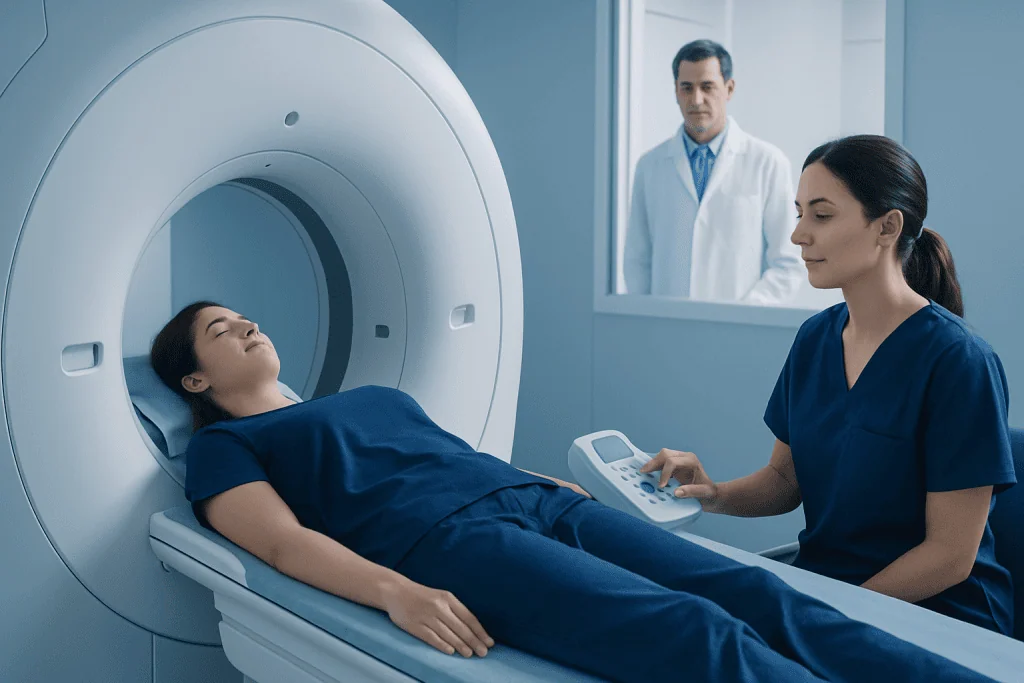
Brain imaging often plays a major role. Magnetic resonance imaging may provide detailed information about brain structure and is commonly used when doctors need to assess areas of possible atrophy, inflammation, injury, or lesions. In some situations, MRI helps clarify whether symptoms relate to a structural brain problem. Other tests may include CT, blood tests, cognitive assessments, EEG for seizures, or spinal fluid analysis, depending on the suspected cause.
The goal is not simply to measure gray matter, but to determine whether there is a meaningful pattern that fits a known condition. This may involve follow-up scans over time, especially if symptoms are evolving. A single imaging finding can be nonspecific, so repeat assessment may be useful.
If a neurological condition is suspected, referral for neurology evaluation may be appropriate. In selected cases, advanced imaging or procedures such as brain MRI can help specialists assess the affected areas more precisely and guide next steps.
Treatment and brain health support
There is no single treatment for gray matter changes because treatment depends on the underlying cause. For example, care for stroke differs from care for epilepsy, multiple sclerosis, traumatic injury, or age-related cognitive concerns. The first step is always to identify the reason for the change and whether it is active, stable, or progressive.
Treatment may include medicines, rehabilitation, management of vascular risk factors, psychological support, sleep treatment, or lifestyle changes. Some patients benefit from physical therapy, occupational therapy, speech therapy, or cognitive rehabilitation. These approaches can help preserve function and improve quality of life, even when structural changes cannot be reversed.
General brain-supportive habits are valuable for most adults. These include regular physical activity, adequate sleep, a balanced eating pattern, not smoking, limiting alcohol, managing blood pressure and diabetes, staying socially engaged, and keeping the mind active through reading, learning, or hobbies. Hearing and vision care also matter because sensory loss can affect cognition and daily functioning.
For international patients who need evaluation, Acibadem International’s multidisciplinary specialists and JCI-accredited hospitals diagnose and treat neurological conditions with coordinated care. If symptoms suggest a structural or functional brain disorder, doctors may recommend further assessment and tailored treatment planning.
When to seek medical care
Medical advice is important if a person develops new or worsening neurological symptoms. This includes memory decline that interferes with daily life, new speech difficulty, unexplained weakness, numbness, persistent balance problems, tremor, seizures, or a clear change in behavior or personality.
Urgent medical care is needed for sudden symptoms such as facial drooping, trouble speaking, sudden weakness on one side, severe confusion, loss of consciousness, or a sudden severe headache. These can be signs of a neurological emergency and should not be watched at home.
It is also reasonable to discuss scan findings with a doctor even when symptoms are mild. Terms such as cortical thinning, atrophy, lesions, or reduced gray matter volume can sound worrying, but they need proper explanation. A qualified clinician can help patients understand what is significant and what may simply require monitoring.
Early evaluation often makes care more effective and more reassuring. When symptoms are addressed promptly, patients are more likely to receive the right diagnosis, targeted treatment, and practical advice for protecting long-term brain health.
Frequently asked questions
What is gray matter in simple terms?
Gray matter is the part of the brain and spinal cord that contains many nerve cell bodies and helps process information. It plays a major role in thinking, memory, movement, sensation, language, and emotions.
Is gray matter the same as white matter?
No. Gray matter mainly helps process and interpret information, while white matter mostly carries signals between different parts of the brain and spinal cord. Both are essential and work together continuously.
Does gray matter decrease with age?
Some gray matter changes can happen with normal aging. However, the meaning of these changes depends on how much is present, where it occurs, and whether symptoms are developing.
Can gray matter recover or improve?
The brain has some ability to adapt, and treatment or rehabilitation can improve function in many situations. Whether structural gray matter changes can be reversed depends on the cause, but healthy habits and medical care can still support better brain function.
How are gray matter problems diagnosed?
Doctors usually combine a medical history, neurological examination, and imaging such as MRI. Additional tests may be used depending on symptoms, including blood tests, cognitive testing, EEG, or other specialized studies.
Does a scan showing gray matter changes mean dementia?
Not necessarily. Gray matter changes can occur for many reasons, including normal aging, past injury, vascular factors, inflammation, or other neurological conditions. A diagnosis such as dementia requires clinical assessment, not just imaging findings.
References
- World Health Organization
- National Institute of Neurological Disorders and Stroke
- National Institute on Aging
- American Academy of Neurology
- Radiological Society of North America
This article is for general information only and is not a substitute for professional medical advice. Please consult a qualified doctor about your individual situation.
Joint and spine care in Turkey — expert assessment & treatment
JCI-accredited · board-certified surgeons · reply within 24h
Add us as a Preferred Source to see more of our trusted health content across Google Search, AI Overviews and Discover.
Check your numbers in seconds
BMI, calories, due date, blood pressure and 30+ more clinical calculators — free, instant, doctor-reviewed ranges.

More from the Health Library

Enmeshment: What Patients Need to Know

High Fiber Cereal: An Evidence-Based Guide for Patients

Wrinkled Fingertips: What Patients Need to Know

Olfactory Nerve: A Complete Medical Overview

Gout in Heel — Explained by Medical Evidence, Not Myths