Gynecomastia surgery Before & After: What Realistic Results Look Like
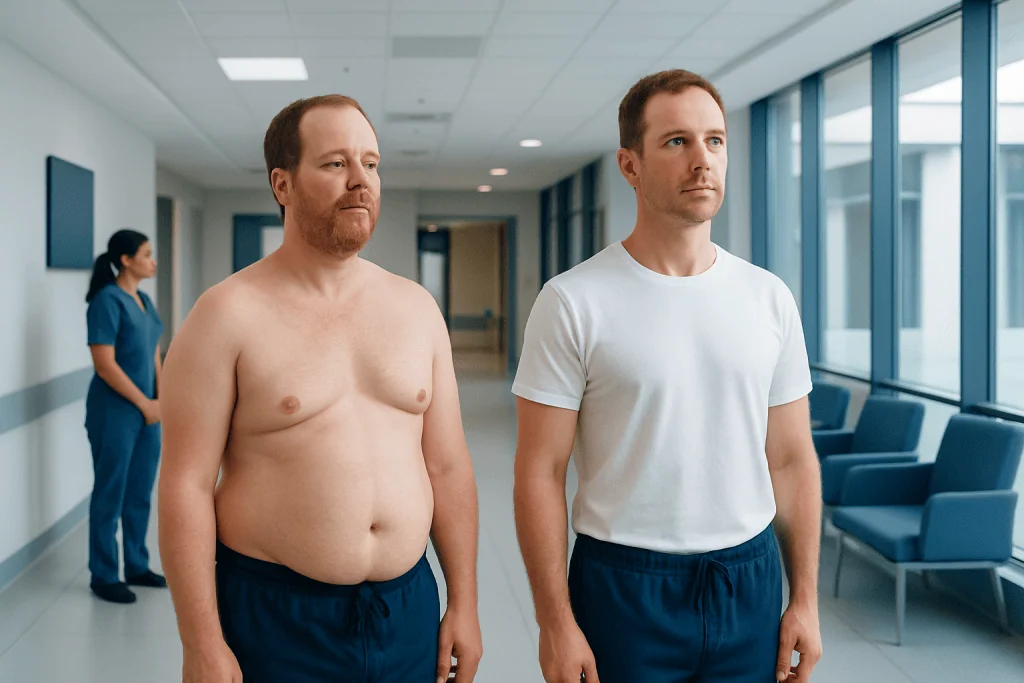
Early after-surgery changes are not the final result; swelling and bruising can temporarily affect chest shape. Most patients see meaningful contour improvement within weeks, while final refinement may take several months.
Key Takeaways
- Early after-surgery changes are not the final result; swelling and bruising can temporarily affect chest shape.
- Most patients see meaningful contour improvement within weeks, while final refinement may take several months.
- Liposuction, gland excision or a combination may be used depending on whether excess tissue is mainly fat, glandular tissue or both.
- A stable weight, good skin elasticity and realistic expectations can support a satisfactory outcome.
- All surgery has risks, including bleeding, infection, contour irregularity, altered nipple sensation and scarring.
- New, one-sided or rapidly changing breast enlargement should be assessed medically before cosmetic treatment is considered.
Gynecomastia surgery before and after results commonly include a flatter chest, reduced nipple puffiness and improved chest contour once postoperative swelling improves. Results vary with the amount and type of tissue removed, skin elasticity, body weight stability and following recovery instructions.
Overview: What Gynecomastia Surgery Before and After Results Look Like
Gynecomastia surgery before and after results generally show a flatter, firmer-looking chest with less breast fullness and, for some people, less projection or puffiness around the nipples. The immediate postoperative appearance is not the final outcome: swelling, bruising, dressings and compression garments can make the chest look uneven or fuller at first.
Gynecomastia is enlargement of breast tissue in males. It can involve fatty tissue, firm glandular breast tissue, excess skin, or a combination of these. Surgery aims to improve chest contour by removing the tissue that is unlikely to resolve with observation, weight changes or treatment of an underlying cause.
Photographs labelled “before and after” can be useful when they are taken at comparable angles, lighting and body positions, and when the timing after surgery is clear. They should be viewed as examples of possible changes rather than a promise of an identical result. For an overview of the operation, candidates and planning process, see gynecomastia surgery.
How Surgery Changes the Chest Contour
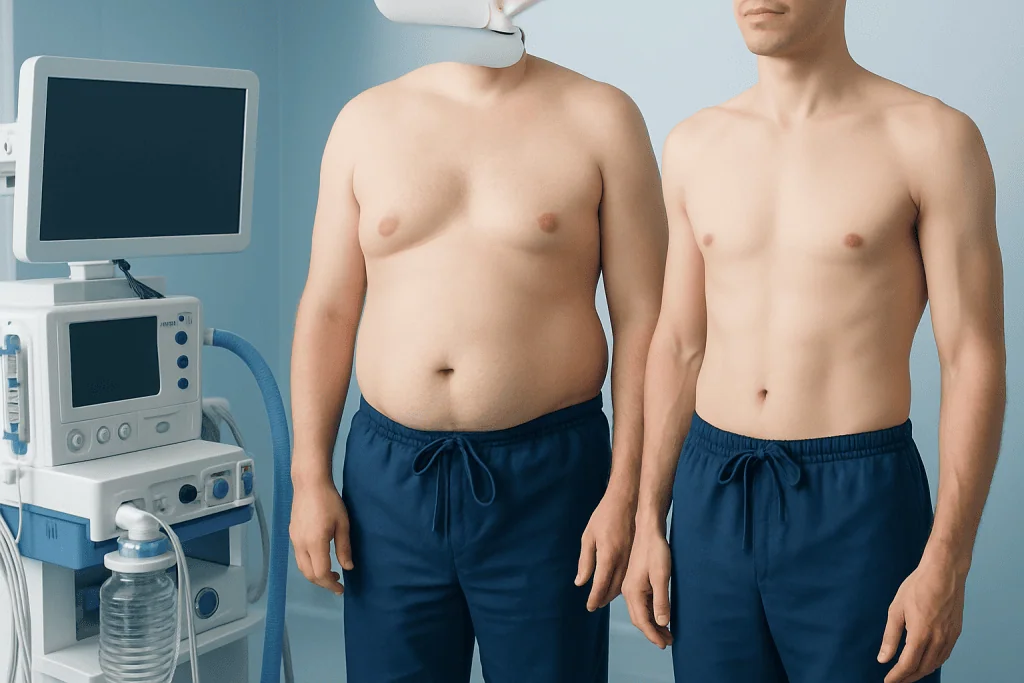
The surgical approach is selected according to the tissue present and the person’s anatomy. When fullness is mostly fatty tissue, liposuction may help reduce volume and shape the chest. Firm glandular tissue, particularly beneath the nipple-areola area, often needs direct surgical excision because it does not respond predictably to liposuction alone.
Many procedures combine liposuction and excision. If there is substantial loose skin, a larger breast size or marked drooping of the nipple, skin removal and nipple repositioning may also be discussed. These more extensive approaches can improve contour but usually require longer scars and recovery.
After an appropriate procedure, the goal is a chest that appears natural in and out of clothing, with a smooth transition from the chest to the surrounding area. Complete symmetry is not always possible because natural chest shape, muscles, ribs and nipple position are not perfectly symmetrical before surgery.
- Before: breast prominence, puffy nipples, fullness at the lower chest or discomfort with fitted clothing may be present.
- Early after: swelling, bruising, numbness and temporary unevenness are common.
- Later after: the contour gradually settles as swelling resolves and scars mature.
Who May Be a Candidate and Why Assessment Matters
Suitable candidates are usually adults or adolescents whose breast enlargement has been stable and whose general health supports elective surgery. A stable body weight, non-smoking status or willingness to stop nicotine use, and the ability to follow aftercare instructions are important considerations. Good skin elasticity can help the skin redrape after volume is removed.
Before surgery, a clinician should determine whether the enlargement is true gynecomastia, excess chest fat, or another condition. A medical history may include puberty timing, medicines and supplements, alcohol or other substance use, weight changes, liver or kidney disease, thyroid symptoms and family history. Some medicines and substances can contribute to breast enlargement.
Further evaluation may be needed when enlargement is new, rapidly growing, one-sided, hard or associated with nipple discharge, skin changes or a testicular lump. Treating an underlying condition or reviewing a contributing medicine may be more appropriate than proceeding directly to surgery. Information about the condition itself is available through gynecomastia.
Realistic expectations are essential. Surgery can reduce excess breast tissue and improve contour, but it cannot guarantee a particular chest shape, eliminate every scar or prevent future enlargement if weight gain, hormones, medicines or other contributors change.
What Happens During the Procedure
Gynecomastia surgery is individualized rather than a single standard operation. During consultation, the surgeon examines chest tissue, skin quality and nipple position, discusses medical history and reviews the likely incision placement. Preoperative photographs may be taken to support planning and later comparison.
The procedure is usually performed under anesthesia. After small incisions are made in discreet locations, liposuction may be used to remove excess fat and contour the area. If glandular tissue is present, the surgeon may remove it through an incision commonly placed along the edge of the areola or in another planned location.
When skin removal is needed, the incision pattern is broader and is planned to balance scar placement with the desired contour. In some cases, temporary drains are used to remove fluid during early healing, although this depends on the technique and surgeon’s judgement.
At the end of surgery, dressings and a compression garment are usually applied. Compression helps limit swelling and supports the healing chest contour. The surgical team provides individual instructions about garment use, showering, wound care, activity and follow-up appointments.
Recovery Timeline and When Results Settle
Recovery varies with the amount of tissue removed and whether skin excision was required. In the first few days, soreness, tightness, swelling and bruising are expected. Pain is usually managed with the plan provided by the surgical team, and strenuous activity should be avoided.
Many people can return to desk-based work and light daily activities within about a week, depending on comfort and the nature of their work. Walking is generally encouraged when safe, but upper-body exercise, heavy lifting and contact activities are usually restricted until the surgeon confirms that healing is adequate.
During the first several weeks, the chest may look swollen, firm or slightly irregular. This does not necessarily indicate a poor outcome. Swelling generally improves progressively, while residual firmness and subtle contour changes can take longer to settle. The final result is commonly assessed over several months as tissues soften and scars mature.
Follow-up visits allow the surgeon to monitor wound healing, manage drains if used and identify concerns early. Maintaining a stable weight and avoiding nicotine products can support healing and help preserve the contour achieved.
Benefits, Risks and Realistic Expectations
The potential benefits of surgery include reduced chest prominence, improved fit of clothing and greater comfort in activities such as swimming, sports or changing rooms. Some people also feel more at ease with their body image. These experiences are individual, and surgery should be chosen for personal reasons rather than external pressure.
As with any operation, there are risks. These can include bleeding, fluid collection, infection, delayed wound healing, visible or widened scars, contour irregularities, asymmetry, changes in nipple sensation, skin loss in rare cases and the possible need for further treatment. Anesthesia also carries its own risks, which are reviewed before the procedure.
A useful way to judge realistic progress is to compare the chest over time rather than day to day. A person who had a moderate amount of glandular tissue removed may see a flatter contour early, but swelling can obscure the final definition. Someone requiring extensive skin removal may have a more dramatic reduction in volume but more noticeable scars.
Before-and-after examples should ideally feature patients with a similar starting chest shape, skin quality and procedure type. A qualified plastic surgeon can explain what changes are medically reasonable for the individual and what limitations may remain.
When to Seek Medical Care
Medical assessment is important before considering surgery if breast enlargement is new, persistent or distressing. Prompt evaluation is particularly important for a hard or fixed lump, enlargement on one side only, nipple discharge or bleeding, skin dimpling, enlarged lymph nodes, unexplained weight loss or a testicular lump. These symptoms have many possible causes, but they should not be assumed to be cosmetic gynecomastia.
After surgery, the care team should be contacted if there is increasing rather than improving pain, marked swelling on one side, fever, spreading redness, drainage from the wound, shortness of breath or any concern about healing. The team can advise whether symptoms need urgent assessment.
For international patients, Acibadem International’s multidisciplinary specialists and JCI-accredited hospitals can assess gynecomastia and provide surgical care when appropriate. A consultation with a qualified clinician remains the best way to establish the cause of breast enlargement and discuss personalized treatment options.
Frequently asked questions
How long does it take to see final gynecomastia surgery before and after results?
Initial flattening may be visible soon after surgery, but swelling and bruising can conceal the final contour. Most improvement develops over the first weeks to months, while scar maturation and subtle contour refinement may continue for several months.
Will gynecomastia surgery leave scars?
All surgical incisions create scars, although surgeons aim to place them in less noticeable areas when possible. Small incisions used for liposuction or gland removal may fade over time, while skin-removal procedures generally leave longer scars.
Can gynecomastia come back after surgery?
Removed glandular tissue usually does not regrow, but new chest fullness can occur with weight gain, hormonal changes, certain medicines or substances, or an untreated underlying condition. Identifying possible causes before surgery can help reduce this risk.
Is liposuction enough for gynecomastia?
Liposuction may be appropriate when excess tissue is mainly fat. If firm glandular tissue is present, direct excision is often needed for a flatter result, and many patients benefit from a combined approach.
When can a person exercise after gynecomastia surgery?
Light walking is often encouraged early in recovery, but the timing for gym exercise, upper-body training and heavy lifting varies by procedure and healing progress. The operating surgeon should provide individualized clearance before strenuous activity resumes.
What makes someone a good candidate for gynecomastia surgery?
Candidates commonly have stable breast enlargement, a stable weight, good overall health and realistic expectations about scars and symmetry. They should also have an appropriate medical evaluation, especially if the enlargement is new or has concerning features.
References
- American Society of Plastic Surgeons
- Mayo Clinic
- National Health Service
- Merck Manual Consumer Version
This article is for general information only and is not a substitute for professional medical advice. Please consult a qualified doctor about your individual situation.
Gynecomastia Surgery in Turkey — costs, top hospitals & a free quote
JCI-accredited · board-certified surgeons · reply within 24h
Add us as a Preferred Source to see more of our trusted health content across Google Search, AI Overviews and Discover.