Lasik Risks & Side Effects Explained by Surgeons

Most LASIK side effects improve over days to months, especially dry eye and night-vision symptoms. Some people are not suitable candidates because of corneal shape, unstable prescription, eye disease or certain health conditions.
Key Takeaways
- Most LASIK side effects improve over days to months, especially dry eye and night-vision symptoms.
- Some people are not suitable candidates because of corneal shape, unstable prescription, eye disease or certain health conditions.
- LASIK permanently reshapes the cornea, so the decision should follow a comprehensive evaluation by an ophthalmologist.
- Rare complications can reduce best-corrected vision or require further treatment, including enhancement surgery or corneal care.
- Urgent assessment is needed for severe pain, rapidly worsening vision, significant redness or discharge after surgery.
LASIK risks include temporary dry eye, glare, halos and fluctuating vision during healing. Serious complications are uncommon but possible, so a detailed eye assessment, realistic expectations and careful follow-up are essential before choosing surgery.
LASIK Risks at a Glance
LASIK is a laser vision-correction procedure used to reduce dependence on glasses or contact lenses in people with short-sightedness, long-sightedness or astigmatism. It is widely performed and can provide excellent vision for appropriately selected patients, but it is elective surgery and no procedure is entirely risk-free.
The most common LASIK side effects are dry or gritty eyes, light sensitivity, glare, halos around lights and variable clarity of vision during early healing. These effects often settle with time and prescribed eye drops. Less commonly, vision may remain affected by dry eye, night-vision symptoms, residual refractive error or changes in the cornea.
A thorough preoperative assessment is the most important safety step. It helps the surgeon identify people whose corneas, prescription, tear film, eye health or general health make LASIK less suitable. For a broader overview of the procedure, patients can review LASIK vision correction treatment.
How LASIK Works and What Happens During Surgery
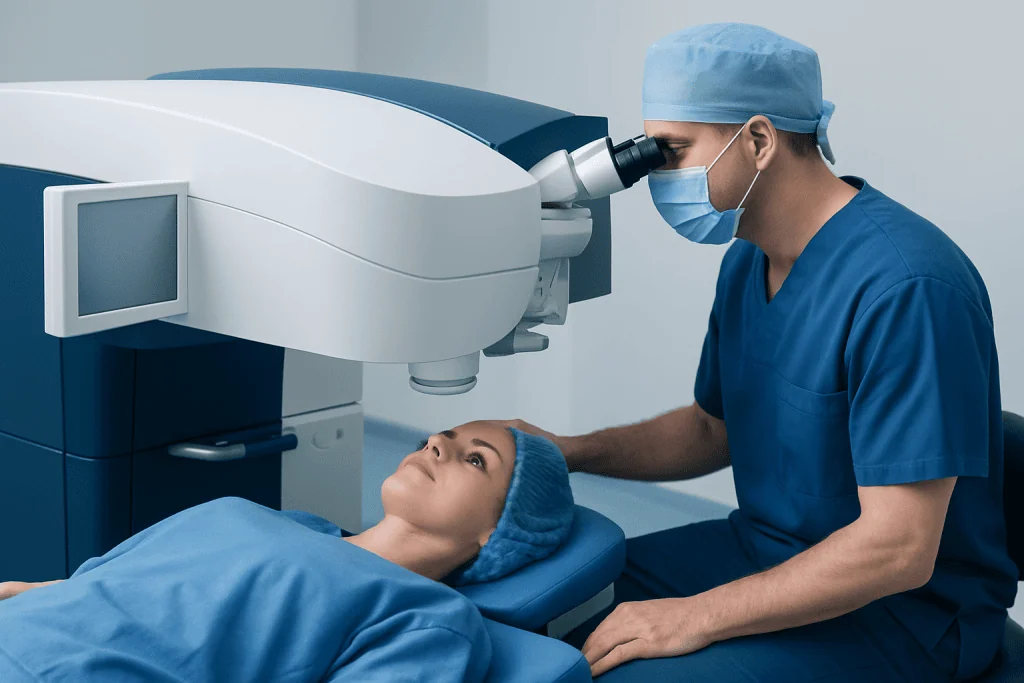
Clear vision depends on the cornea, the transparent front surface of the eye, bending light accurately onto the retina. In refractive errors, the shape of the eye or cornea causes light to focus in front of or behind the retina. LASIK uses a computer-guided laser to reshape corneal tissue so that light is focused more accurately.
After numbing drops are applied, a surgeon creates a very thin corneal flap, usually with a femtosecond laser. The flap is gently lifted, and an excimer laser removes a precise amount of tissue from the layer beneath. The flap is then repositioned without stitches. Both eyes are often treated on the same day, although individual plans vary.
People generally remain awake during the procedure and may feel pressure but should not experience sharp pain. Vision is often noticeably clearer within the first day or two, but visual quality and comfort can continue changing as the cornea and tear film recover.
LASIK is not the only refractive surgery option. Depending on corneal thickness, prescription, age and eye health, an ophthalmologist may discuss alternatives such as surface laser procedures, implantable lenses or continued use of glasses and contact lenses.
Who Is a Suitable Candidate?
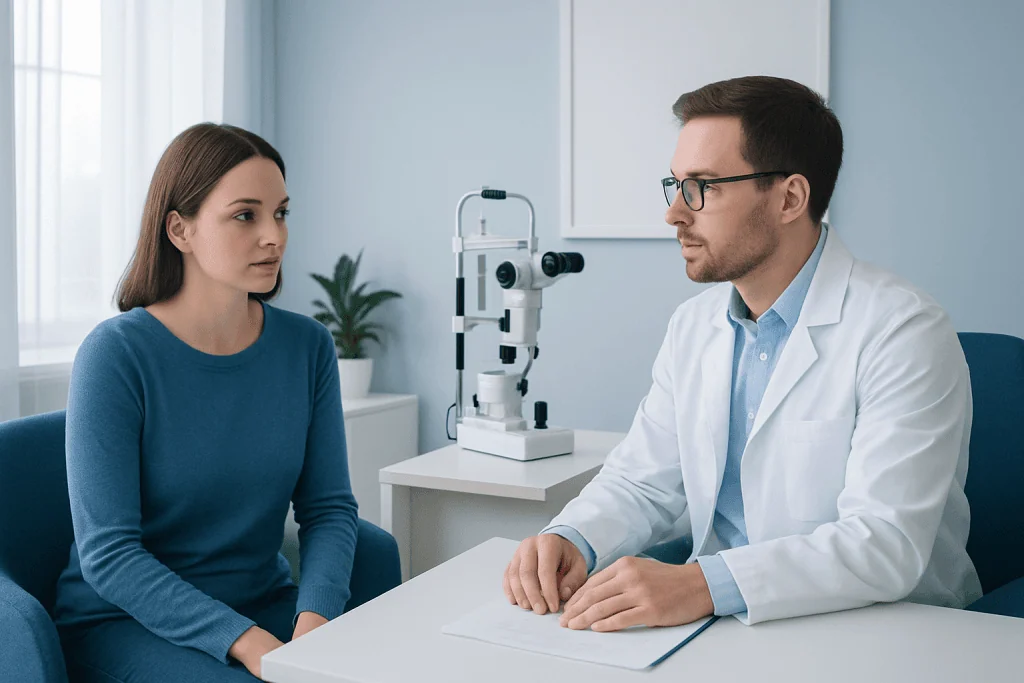
Good candidacy is not based on prescription alone. LASIK is generally considered for adults whose glasses or contact lens prescription has been stable for an appropriate period and whose eyes are otherwise healthy. The exact assessment includes corneal thickness and shape, pupil size, tear production, refraction, eye pressure and a detailed examination of the front and back of the eye.
LASIK may be postponed or avoided when the prescription is changing, the cornea is too thin or irregular, or there is active eye inflammation, infection, significant dry eye, cataract or certain retinal conditions. A condition that weakens or bulges the cornea, such as keratoconus, requires specialist evaluation and is usually a reason not to have standard LASIK.
Pregnancy and breastfeeding can temporarily change vision and the eye surface, so surgery is commonly deferred until refraction has stabilised. Some autoimmune conditions, diabetes that is not well controlled and medicines that affect healing may also influence suitability. These factors do not always rule out laser vision correction, but they require individualized advice.
Realistic expectations matter. LASIK aims to reduce reliance on corrective lenses, not guarantee perfect vision in every setting for life. Age-related near-vision changes, known as presbyopia, can still develop or progress, and reading glasses may be needed later even after successful distance correction.
Common Side Effects and Recovery Timeline
During the first several hours after LASIK, tearing, burning, a foreign-body sensation, blurred vision and sensitivity to light are common. Patients are normally advised to rest their eyes, avoid rubbing them and use prescribed drops exactly as directed. Vision can fluctuate during the first days and weeks.
Dry eye is among the most frequent side effects because corneal nerves are affected during flap creation and laser treatment. This can temporarily alter tear production and eye-surface sensation. Lubricating drops, other dry-eye measures and follow-up care are often helpful; symptoms improve for many people as the nerves and tear film recover.
Glare, starbursts, halos and reduced contrast sensitivity may be most noticeable at night, particularly early in recovery. These symptoms can be more important for people who drive frequently in the dark or work in low-light conditions. They often improve, but occasionally persist and should be discussed before surgery as part of informed consent.
- First day: discomfort usually eases, but vision may be hazy or variable.
- First week: many people return to routine activities, with continued drop use and eye-protection advice.
- First month: vision and dry-eye symptoms commonly continue to stabilise; follow-up visits remain important.
- Following months: healing and visual refinement continue, especially with higher prescriptions or pre-existing dry eye.
Less Common LASIK Risks and Possible Complications
Although uncommon, complications can occur. The corneal flap may wrinkle, shift, become inflamed or heal irregularly. Infection is rare but potentially serious, which is why patients must follow hygiene instructions, avoid swimming or getting unclean water in the eyes during the advised period, and attend follow-up visits.
Some patients have undercorrection, overcorrection or astigmatism that remains after healing. Glasses, contact lenses or, in selected cases, an enhancement procedure may be considered once vision has stabilised. Not every residual prescription can or should be retreated, because the remaining corneal thickness and overall eye health must be considered.
Very rarely, progressive corneal weakening and bulging, called ectasia, can develop after laser surgery. Careful corneal mapping before surgery is designed to reduce this risk by identifying unsuitable corneas. Treatment may include specialty contact lenses or corneal cross-linking when clinically appropriate.
A small number of people experience a reduction in best-corrected visual acuity, meaning their vision with glasses may not be as sharp as before surgery. Persistent pain, severe dry eye or ongoing night-vision problems are also possible. These outcomes are not typical, but they are important to understand before making a decision.
Benefits, Limitations and Safer Decision-Making
For suitable candidates, LASIK can reduce day-to-day reliance on glasses or contact lenses and may make sports, travel and routine activities more convenient. The procedure is quick, and functional vision often returns relatively rapidly. However, convenience should be balanced against the fact that the cornea is permanently reshaped.
The safest decision is informed and individualized. Patients should share their full eye history, general health conditions, medicines, occupation, hobbies and night-driving needs. They should also tell the clinician about contact lens use, because lenses can temporarily affect corneal measurements and may need to be stopped before testing according to the ophthalmologist’s instructions.
Questions worth asking include whether the prescription is stable, whether the corneal maps and thickness support LASIK, what alternatives are suitable, what side effects are most relevant to the individual, and what follow-up care is planned. A reputable assessment should allow time to consider the information rather than pressure someone into immediate treatment.
People with significant dry eye, irregular corneas or complex prescriptions may benefit from evaluation by a corneal and refractive surgery specialist. Acibadem International’s multidisciplinary specialists and JCI-accredited hospitals assess and treat eye conditions for international patients, including those considering laser vision correction.
When to Seek Medical Care
After LASIK, patients should attend every scheduled review even if their vision seems good. The clinical team checks flap position, corneal healing, pressure and visual recovery, and can adjust dry-eye care or identify problems early.
Urgent medical assessment is appropriate for severe or increasing eye pain, sudden or rapidly worsening vision, marked redness, increasing swelling, thick discharge, injury to the eye, or a new curtain-like shadow, flashes or many new floaters. These symptoms do not always indicate a serious complication, but they should not be managed by waiting at home.
Patients should also contact their eye surgeon if blurred vision, discomfort, light sensitivity, halos or dryness are not improving as expected, or if prescribed drops cause troublesome symptoms. They should avoid rubbing the eyes and should not use non-prescribed eye drops unless advised by an eye-care professional.
Frequently asked questions
Is LASIK safe?
LASIK is generally considered safe for carefully selected patients when performed by an appropriately trained ophthalmic surgeon. However, it has possible side effects and rare complications, so safety depends on accurate screening, suitable corneal measurements and proper postoperative care. An individual assessment is necessary to judge personal risk.
What are the most common LASIK side effects?
Dry eye, temporary blurred or fluctuating vision, light sensitivity, glare, halos and starbursts around lights are common early effects. Many people find these improve during healing, although the timeline differs between individuals. Persistent symptoms should be reviewed by the treating eye-care team.
Can LASIK cause permanent vision problems?
Permanent vision problems are uncommon, but they are possible. Examples include persistent dry eye, continuing night-vision symptoms, loss of best-corrected visual sharpness or corneal complications. Careful candidacy assessment lowers risk but cannot remove it completely.
How long does it take to recover from LASIK?
Many people notice improved vision within a day or two and can resume some routine activities quickly. Full visual stability and eye-surface recovery may take weeks or months, particularly when dry eye is present. The surgeon's activity restrictions and follow-up plan should be followed closely.
Who should not have LASIK?
LASIK may not be appropriate for people with unstable vision, thin or irregular corneas, significant dry eye, active eye disease or some retinal conditions. It is also usually deferred during pregnancy and breastfeeding. A comprehensive eye examination is the only reliable way to determine suitability.
Will reading glasses still be needed after LASIK?
LASIK corrects the prescription present at the time of surgery but does not prevent presbyopia, the normal age-related reduction in near focusing ability. Many people need reading glasses later in adulthood, even if distance vision remains clear. Some patients may discuss monovision strategies, which have advantages and trade-offs.
References
- American Academy of Ophthalmology
- U.S. Food and Drug Administration
- Royal College of Ophthalmologists
- National Eye Institute
This article is for general information only and is not a substitute for professional medical advice. Please consult a qualified doctor about your individual situation.
LASIK in Turkey — costs, top hospitals & a free quote
JCI-accredited · board-certified surgeons · reply within 24h
Add us as a Preferred Source to see more of our trusted health content across Google Search, AI Overviews and Discover.