Hair transplant in Turkey: Hospitals, Safety & What to Expect

Hair transplantation redistributes healthy follicles from a donor area, usually the back or sides of the scalp, to thinning areas. FUE and FUT are established techniques; the best approach depends on hair characteristics, scalp condition and the extent of hair loss.
Key Takeaways
- Hair transplantation redistributes healthy follicles from a donor area, usually the back or sides of the scalp, to thinning areas.
- FUE and FUT are established techniques; the best approach depends on hair characteristics, scalp condition and the extent of hair loss.
- A hospital-based assessment should identify the cause of hair loss and confirm that the donor area can support the planned transplant.
- Most transplanted hairs shed initially, while visible new growth usually begins after several months and matures over time.
- Possible risks include swelling, temporary numbness, infection, scarring and an uneven or limited growth result.
- International patients should plan accommodation, transport, aftercare instructions and a route for contacting the clinical team after returning home.
A hair transplant in Turkey may be an appropriate option for selected people with stable hair loss when it is performed by an experienced medical team in a regulated hospital setting. Safety depends on careful candidacy assessment, transparent planning, sterile surgical practice, realistic expectations and reliable follow-up care.
Overview: Is a Hair Transplant in Turkey Safe?
A hair transplant in Turkey can be safe when it is carried out in a properly regulated clinical setting by qualified professionals, following an individual medical assessment and clear aftercare plan. The procedure is not suitable for every type of hair loss, so a responsible provider will first assess the scalp, donor hair supply, medical history and expectations.
Hair transplantation is a surgical procedure that moves hair follicles from a fuller donor area—most often the back and sides of the scalp—to areas affected by thinning or baldness. It does not create new follicles, and it cannot stop ongoing hair loss in untreated areas. The goal is usually a natural-looking improvement in coverage rather than a guarantee of complete density.
For people travelling internationally, hospital standards, clinician credentials, communication, infection-control practices and continuity of care are as important as the technique itself. A treatment plan should explain who performs each stage of the procedure, what follow-up is available and how concerns will be managed after travel.
How Hair Transplantation Works
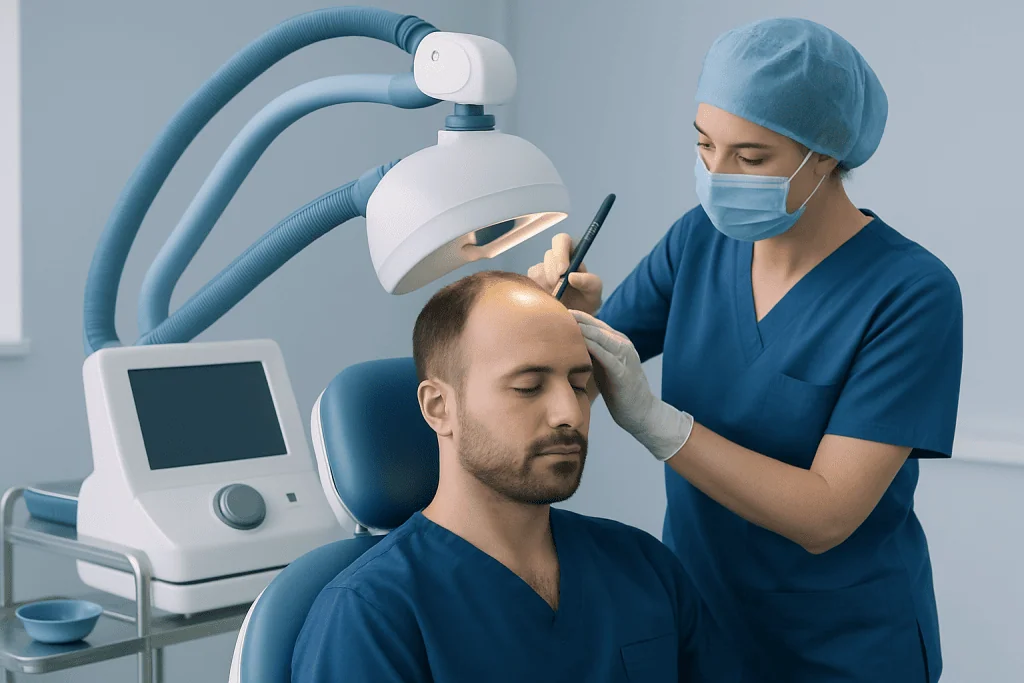
The two most widely used surgical approaches are follicular unit extraction (FUE) and follicular unit transplantation (FUT), sometimes called strip surgery. In FUE, individual follicular units are removed from the donor area with a small instrument. In FUT, a narrow strip of scalp is removed and divided into follicular units under magnification. Both methods aim to preserve naturally occurring groups of one to several hairs.
After harvesting, the team prepares recipient sites in the thinning area. Their angle, direction and placement are important because they influence how natural the hairline and future growth pattern appear. The follicles are then placed carefully into these sites. Local anaesthetic is commonly used, so the patient is awake but the scalp is numbed during surgery.
Technique selection should be based on clinical needs rather than a trend or package label. Donor density, hair texture, scalp flexibility, hairstyle preferences, previous surgery and the amount of coverage needed can all affect the recommended approach. For a detailed overview of the procedure, patients can explore hair transplant treatment options.
Who May Be a Candidate?

Hair transplantation is most commonly considered for people with androgenetic alopecia, also called pattern hair loss. This type of hair loss tends to progress gradually and may affect the hairline, crown or central scalp. A transplant may also be considered in selected cases of stable hair loss from injury, burns or certain scars, provided the scalp has an adequate blood supply and the underlying condition is inactive.
A suitable candidate usually has sufficient healthy donor hair and a pattern of loss that can be planned conservatively. Hair loss that is rapidly progressing, patchy, inflammatory or linked to illness, nutritional deficiency, medication or hormonal changes should be evaluated before surgery. Some causes can improve with medical treatment, and operating too early may lead to an unnatural appearance as further hair loss develops.
During consultation, clinicians may ask about family history, medications, smoking, allergies, past scalp procedures and medical conditions that could affect healing. They may examine the scalp and hair shafts, take photographs and discuss whether non-surgical treatment may help protect existing hair. Stable expectations are essential: a transplant redistributes limited donor hair and may not be able to restore a previous youthful hairline or full density.
- People with stable pattern hair loss and adequate donor density may be candidates.
- People with uncontrolled medical conditions or an active scalp infection may need treatment or clearance first.
- Patients with unexplained, sudden or patchy shedding should receive a diagnosis before considering surgery.
What to Expect: Assessment, Procedure and Travel Planning
Before a hair transplant in Turkey, a careful consultation should confirm the diagnosis, map the donor and recipient areas, and agree on a realistic hairline design. Patients should disclose all medicines and supplements, including those that affect bleeding or healing. The clinician may provide individual instructions about smoking, alcohol, scalp products and medication adjustments; medicines should never be stopped without advice from the prescribing doctor.
On the procedure day, the scalp is prepared and local anaesthetic is administered. The donor follicles are harvested, sorted and protected while recipient sites are created. Grafts are then placed in the planned pattern. The duration varies according to the technique and number of follicles required. Patients should receive written instructions covering wound care, sleeping position, washing, activity restrictions and emergency contact details before leaving the clinic or hospital.
International patients benefit from arranging travel around the early recovery period rather than treating the procedure as a brief cosmetic stop. Accommodation close to the treatment facility, a reliable transfer plan, language support where needed and time for the first postoperative review can make care more manageable. It is sensible to ask in advance whether a named clinician or team will be available for questions after the patient returns home.
Acibadem International’s multidisciplinary specialists and JCI-accredited hospitals diagnose and treat hair loss concerns for international patients, with coordinated support around the clinical process and follow-up planning.
Recovery Timeline and Expected Results
In the first days after surgery, small scabs, mild redness, swelling and tenderness can occur in the donor and recipient areas. These effects are often temporary. The scalp should be handled gently, and patients should follow the clinical team’s washing and activity instructions closely. Scratching, rubbing or picking scabs can dislodge grafts or irritate healing skin.
Many people return to light daily activities within days, but visible signs of the procedure can take longer to settle. Strenuous exercise, swimming, sun exposure and activities that increase sweating may need to be avoided for a period advised by the surgeon. Headwear should only be used according to the aftercare instructions so it does not place pressure on newly placed grafts.
It is common for transplanted hairs to shed in the weeks after the procedure. This does not necessarily mean the follicles have been lost; the follicles enter a resting phase before new hair grows. Early new growth may begin after several months, while the appearance usually continues to develop over many months. Hair grows at different rates, and final density depends on factors such as graft survival, donor characteristics, ongoing hair loss and adherence to aftercare.
Because natural hair loss may continue, some people may benefit from medical treatment or may consider additional procedures in the future. A clinician can explain options for maintaining existing hair and whether they are medically appropriate.
Benefits, Risks and How to Choose a Safer Provider
A successful hair transplant can improve hair coverage and help some people feel more comfortable with their appearance. The transplanted follicles are generally selected from areas more resistant to pattern hair loss, but no surgical outcome can be predicted with certainty. Careful planning is particularly important at the hairline, where an overly low or dense design may look less natural if hair loss progresses.
As with any procedure involving the skin, possible risks include bleeding, infection, swelling, pain, itching, temporary numbness, inflammation around follicles, scarring and changes in skin colour. Some patients experience temporary shedding of nearby existing hair, sometimes called shock loss. Poor graft growth, an unnatural direction of growth or uneven density can also occur and may require further assessment or correction.
When comparing providers, patients should ask who will conduct the consultation, administer anaesthesia, harvest follicles, create recipient sites and place grafts. They should also ask about the facility’s licensing and accreditation, infection-prevention procedures, clinician qualifications, emergency arrangements, written consent process and follow-up policy. A reputable team should be willing to discuss limitations and potential complications, not only expected benefits.
Patients should be cautious about decisions based mainly on promotional images, rushed online assessments or promises of a particular number of grafts or guaranteed results. A personalised plan based on examination is safer than a one-size-fits-all approach.
When to Seek Medical Care
Medical assessment is advisable before hair transplantation when hair loss is sudden, patchy, painful, associated with scaling or redness, or accompanied by other symptoms such as fatigue, weight changes or menstrual changes. These features may point to a condition that needs diagnosis and treatment rather than surgery. A dermatologist or qualified clinician can help identify the cause of hair loss.
After a transplant, patients should contact the surgical team promptly if they develop increasing pain, spreading redness, fever, pus-like drainage, significant bleeding, worsening swelling or signs of an allergic reaction. These symptoms do not always indicate a serious problem, but timely assessment can help protect healing and address complications early.
It is also important to seek advice if worries about appearance, hair loss or recovery are causing significant distress. Supportive, realistic guidance can help patients make informed decisions and avoid unsafe treatments or repeated procedures that may exhaust donor hair.
Frequently asked questions
How long does a hair transplant in Turkey take?
The procedure length depends on the technique, the size of the area being treated and the number of follicular units required. It is commonly performed over one day, although some treatment plans may require more time. The clinical team should explain the expected schedule during the consultation.
Is FUE better than FUT for hair transplantation?
Neither technique is universally better. FUE may leave many small, scattered scars, while FUT leaves a linear scar in the donor area. The appropriate method depends on donor hair, scalp characteristics, hairstyle preferences and the treatment goal.
When will transplanted hair start growing?
The transplanted hairs often shed in the first weeks, which is a common part of the growth cycle. New growth may become noticeable after several months and continues to mature gradually. Individual timelines vary, so follow-up with the clinical team is important.
Will a hair transplant stop future hair loss?
No. A transplant moves follicles into thinning areas but does not stop ongoing loss in non-transplanted hair. A doctor may discuss medical or supportive options that could help maintain existing hair when appropriate.
Can international patients travel soon after a hair transplant?
Travel planning should be discussed with the treating team because timing depends on the procedure, the early review schedule and individual recovery. Patients should have written aftercare instructions and a clear way to contact the clinic after returning home. Avoiding pressure, injury and unnecessary strain on the scalp is important during early healing.
What should patients ask a hair transplant provider before booking?
Patients should ask about the diagnosis, the proposed technique, who will perform each surgical step and what results are realistically achievable. They should also ask about hospital or clinic regulation, infection-control standards, possible complications, aftercare and how follow-up will be managed after international travel.
References
- American Academy of Dermatology
- International Society of Hair Restoration Surgery
- National Health Service
- Mayo Clinic
This article is for general information only and is not a substitute for professional medical advice. Please consult a qualified doctor about your individual situation.
Hair transplant in Turkey — costs, graft counts & a free assessment
JCI-accredited · board-certified surgeons · reply within 24h
Add us as a Preferred Source to see more of our trusted health content across Google Search, AI Overviews and Discover.