

Headgear Braces — Explained by Medical Evidence, Not Myths
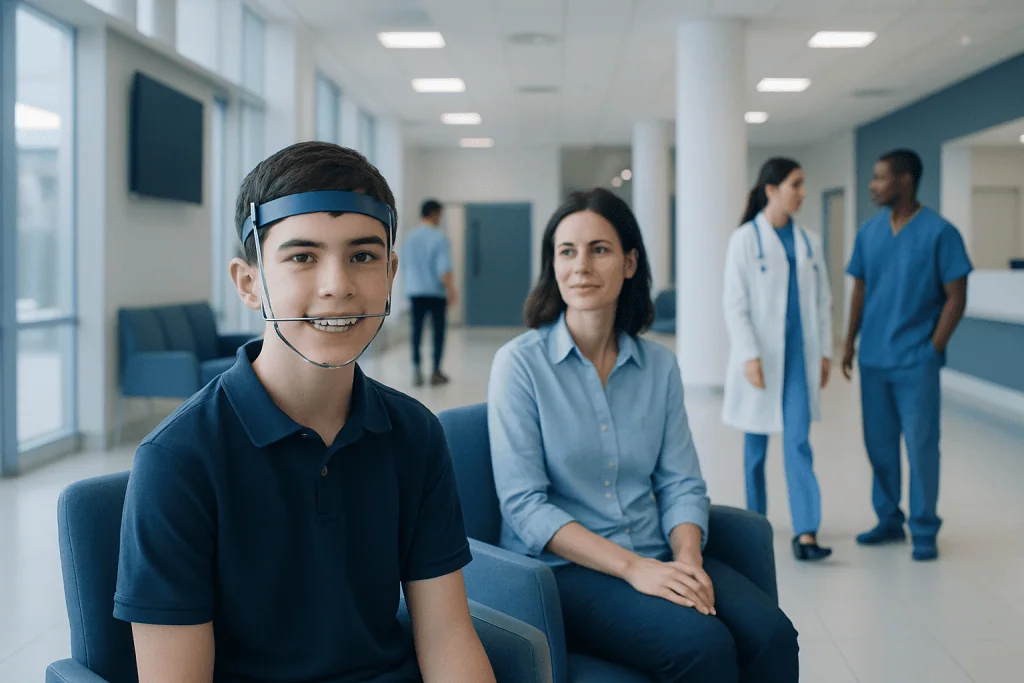
Headgear braces help correct certain bite and jaw alignment problems by applying gentle, steady force. They are most commonly used in growing children and teens, not as a routine treatment for every orthodontic case.
Key Takeaways
- Headgear braces help correct certain bite and jaw alignment problems by applying gentle, steady force.
- They are most commonly used in growing children and teens, not as a routine treatment for every orthodontic case.
- Successful treatment depends on careful fitting, regular follow-up, and wearing the device exactly as instructed.
- Common side effects include temporary pressure, soreness, and speech adjustment, but severe pain is not expected.
- Good oral hygiene, appliance care, and timely review visits help improve comfort and treatment results.
Headgear braces are orthodontic devices worn outside the mouth to guide jaw growth and tooth movement, most often in children and teenagers whose bones are still developing. They are used for selected bite problems when regular braces alone may not provide enough control.
What are headgear braces?
Headgear braces are orthodontic devices designed to help move teeth and guide jaw growth from outside the mouth. They are usually attached to braces or to bands on the back teeth and use gentle, controlled force to improve how the upper and lower jaws meet. In simple terms, headgear braces are not a separate type of braces but an additional tool orthodontists may recommend for specific bite problems.
They are used most often in children and teenagers because the bones of the face and jaws are still growing. This makes it possible to influence jaw development in a way that is harder to achieve after growth is complete. In some cases, headgear can reduce the need for more complex treatment later, although each treatment plan is individualized.
Many myths suggest that headgear is outdated or routinely painful. In reality, orthodontic headgear is now used more selectively, based on clear clinical reasons. When prescribed appropriately and worn as instructed, it remains an evidence-based option for managing certain orthodontic problems safely and effectively.
Why headgear may be recommended
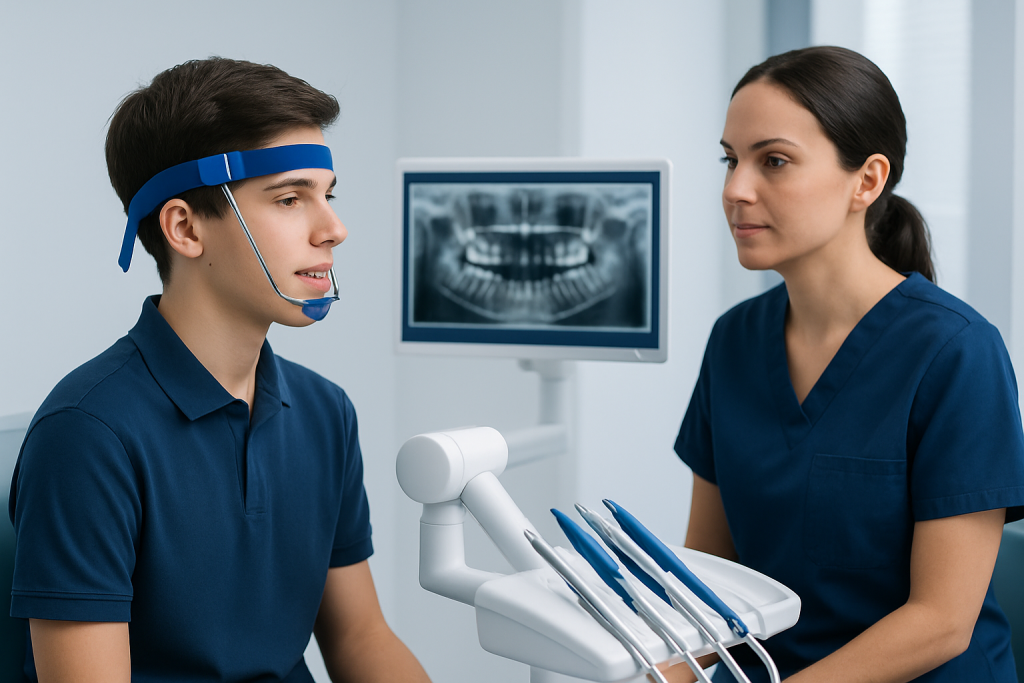
The main purpose of headgear braces is to correct problems that involve both the teeth and the way the jaws relate to each other. An orthodontist may recommend them when the upper teeth or upper jaw are too far forward, when back teeth need to be held in place while other teeth move, or when jaw growth needs guidance during childhood or adolescence.
One common reason is a significant overjet, where the upper front teeth project too far ahead of the lower teeth. Headgear may also be used for some forms of Class II malocclusion, often described as a bite relationship in which the upper teeth are too far forward relative to the lower teeth. In selected cases, it can help create space, improve facial balance, and support more stable alignment.
Not every child with braces needs headgear. Many bite problems can be treated with braces alone, clear aligners, or other orthodontic appliances. If jaw growth guidance is part of the goal, the orthodontist may discuss headgear alongside other options used in orthodontic treatment to explain why it is the best fit for that person’s age, growth stage, and bite pattern.
Types of headgear braces and how they work
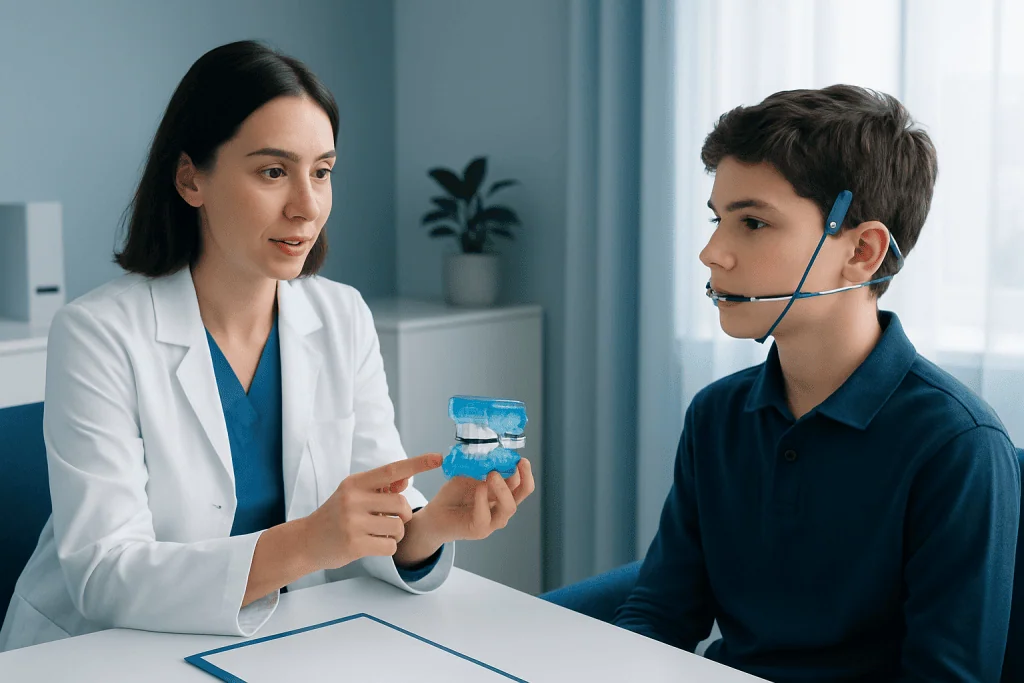
There is more than one type of orthodontic headgear, and the design depends on the treatment goal. Cervical pull headgear uses a neck strap and is often chosen to help guide the upper molars and upper jaw in certain Class II cases. High-pull headgear attaches around the head and is used when more upward and backward control is needed. Reverse-pull headgear, also called a facemask, is used differently and may help bring the upper jaw forward in selected cases.
Although the designs look different, the principle is similar: the appliance delivers gentle force over time. That force can slow, redirect, or support growth in parts of the jaw while also helping teeth move into a healthier position. Because timing matters, headgear is usually most useful during active growth.
Orthodontists choose the type after examining the bite, facial proportions, tooth position, and jaw relationship. X-rays, photographs, and dental impressions or digital scans help determine whether the concern is mainly dental, mainly skeletal, or a combination of both. This matters because headgear is intended for targeted use, not as a one-size-fits-all device.
- Cervical pull headgear: often used for certain upper jaw and molar positioning problems
- High-pull headgear: may help control upper molars and vertical growth patterns
- Reverse-pull facemask: may be used when the upper jaw needs forward guidance
What treatment feels like and what to expect
When headgear braces are first fitted, it is normal to feel pressure on the teeth, cheeks, or back teeth where the appliance connects. This pressure usually eases as the mouth adjusts. Some children notice temporary speech changes, mild soreness, or extra saliva for a few days, but these effects are generally manageable and improve with use.
The orthodontist will explain exactly how many hours a day the appliance should be worn. Headgear often works best when it is worn consistently, usually during time at home and sleep rather than at school or during sports. Because results depend greatly on regular wear, the success of treatment is linked not only to the appliance design but also to following instructions carefully.
Appointments are needed to check fit, comfort, and progress. The orthodontist may adjust the force level over time and monitor how the teeth and jaws are responding. If the bite problem is severe or associated with other oral issues, the treatment plan may also involve a broader dental assessment through dental treatment and monitoring for related concerns such as malocclusion.
Children should never try to adjust the appliance on their own. The facebow or straps should be used only exactly as instructed. If a part becomes bent, loose, or uncomfortable, the safest step is to stop using it until the orthodontic team advises what to do next.
Benefits, limits, and common concerns
The benefit of headgear braces is that they can help address orthodontic problems that involve growth as well as tooth position. In the right patient, they may improve bite function, reduce protrusion of upper front teeth, help create space, and support facial balance during development. For some children, this early guidance can simplify later orthodontic treatment.
At the same time, headgear has limits. It is not the ideal solution for every bite problem, and it cannot replace all other forms of orthodontic care. Once growth is largely complete, its ability to change jaw relationships becomes more limited. Some patients may need alternatives such as functional appliances, elastics, other orthodontic devices, or, in selected adults, surgical planning.
A common concern is appearance and willingness to wear the device. This is understandable, especially for school-age children and teenagers. Orthodontists often plan wear times that are practical and discreet, such as evenings and overnight, to help families balance treatment goals with daily life.
Another concern is safety. Modern orthodontic guidance emphasizes proper fitting and careful instruction. Headgear should always be removed for rough play, contact sports, and situations where it could be pulled unexpectedly. If used responsibly and reviewed regularly, it is considered a safe treatment option in appropriate cases.
Caring for headgear and supporting treatment at home
Good hygiene and routine care are important during any orthodontic treatment. Teeth should be brushed carefully around brackets, bands, and wires, and the headgear parts that go in or near the mouth should be cleaned as instructed by the orthodontic team. Keeping the appliance clean helps reduce plaque buildup, bad breath, and gum irritation.
Families can support treatment by creating a simple daily routine. Wearing the device at the same times each day can make it easier for children to adapt. A written checklist or phone reminder may help with consistency, especially in the first weeks.
It is also helpful to watch for signs that the fit has changed. Red areas, cheek irritation, loose bands, bent parts, or a sudden change in how the bite feels should be reported. If pain is significant or the appliance seems damaged, treatment should not continue until the orthodontist has reviewed it.
Regular dental and orthodontic appointments remain important throughout treatment. In international centers such as Acibadem International, multidisciplinary specialists in JCI-accredited hospitals evaluate bite and jaw concerns and coordinate care for children, teenagers, and adults who need individualized assessment.
When to seek medical care
A routine orthodontic review is appropriate if a child has prominent front teeth, difficulty closing the lips comfortably, a bite that seems far forward or far back, early wear on teeth, or chewing problems. Parents may also seek assessment if a dentist notices crowding, jaw asymmetry, or a developing bite problem during regular checkups.
Medical or dental care should be sought sooner if headgear causes severe pain, persistent swelling, mouth injury, broken parts, or sudden difficulty opening or closing the mouth. Care is also needed if the appliance no longer fits properly or if a child cannot wear it safely as instructed. These issues do not always signal an emergency, but they should be assessed promptly by a qualified professional.
Children with jaw growth concerns may also benefit from evaluation when there is a family history of significant bite problems or when a visible underbite develops early. In some cases, a broader review may include assessment for jaw disorders or discussion of related dental and facial development options through maxillofacial surgery if needed later in life.
Frequently asked questions
Do headgear braces still work, or are they outdated?
Headgear braces are still used when there is a clear orthodontic reason for them. They are not routine for every patient, but they remain an evidence-based option for selected bite and jaw growth problems, especially in growing children.
At what age are headgear braces usually used?
They are most often prescribed for children and teenagers who are still growing. This is because the treatment can help guide jaw development more effectively before growth is complete.
Are headgear braces painful?
They usually cause pressure or mild soreness at first rather than severe pain. Most discomfort improves as the mouth adjusts, but ongoing or intense pain should be checked by an orthodontist.
How long do headgear braces need to be worn each day?
The exact schedule depends on the orthodontic plan and the type of headgear used. Many patients wear it mainly at home and during sleep, and consistent daily use is important for the treatment to work well.
Can adults use headgear braces?
Adults are less likely to benefit from headgear for jaw growth because facial growth is already complete. However, an orthodontist may discuss other treatment options for adult bite correction depending on the underlying problem.
What problems can headgear braces correct?
They are commonly used for selected overbites, prominent upper front teeth, certain Class II bite relationships, and some upper jaw growth problems. In some cases, reverse-pull appliances may also help when the upper jaw needs forward guidance.
This article is for general information only and is not a substitute for professional medical advice. Please consult a qualified doctor about your individual situation.
Explore treatments in Turkey — costs, top hospitals & a free quote
JCI-accredited · board-certified surgeons · reply within 24h
Add us as a Preferred Source to see more of our trusted health content across Google Search, AI Overviews and Discover.

More from the Health Library

Case Manager Responsibilities: A Complete Medical Overview

Health — Explained by Medical Evidence, Not Myths

4 Worst Blood Pressure Drugs: A Complete Medical Overview

Milk Bath: What Patients Need to Know
Transfeminine — Explained by Medical Evidence, Not Myths
Boil Inside the Virgina: An Evidence-Based Guide for Patients
Oral & Dental Health Specialists at Acibadem

Dt. Akif Aydın Şen
Oral & Dental Health
Dt. Alara Güler
Oral & Dental Health
Dt. Alara Naz Kenir Çelik
Oral & Dental Health
Dr. Alen Palancıoğlu
Oral Dental & Maxillofacial Surgery