Health Technology News: How to Tell Breakthroughs From Hype

A true medical breakthrough is supported by strong clinical evidence, not only by headlines or laboratory results. Early studies, company announcements, and conference presentations may be encouraging but are not the same as proven patient benefit.
Key Takeaways
- A true medical breakthrough is supported by strong clinical evidence, not only by headlines or laboratory results.
- Early studies, company announcements, and conference presentations may be encouraging but are not the same as proven patient benefit.
- Safety, cost, access, and regulatory approval all matter when evaluating new health technology.
- Patients should look for information from trusted medical organizations, peer-reviewed research, and qualified clinicians.
- The best question is not whether a technology sounds impressive, but whether it improves care in real-world settings.
Health technology news can be exciting, but not every headline signals a true medical breakthrough. Learning how to judge evidence, safety, and practical benefit can help readers separate promising advances from early-stage hype.
Overview: Why Health Technology News Can Be Hard to Judge
Health technology news often highlights exciting ideas such as artificial intelligence tools, robotic surgery, wearable sensors, digital therapies, and new imaging methods. These developments can lead to meaningful improvements in diagnosis, treatment, and monitoring. However, headlines are often designed to attract attention, and they may simplify what the technology can actually do.
A promising announcement is not always the same as a proven advance. Some reports are based on early laboratory work, small pilot studies, or company press releases rather than large clinical trials. In healthcare, a tool may look impressive in theory but still fail to improve patient outcomes when used in everyday practice.
For patients and families, the most helpful approach is a calm and curious one. Instead of asking whether a new technology is revolutionary, it is better to ask what problem it solves, who it helps, how it was tested, and whether trusted experts consider the evidence strong enough to change care.
What a Real Medical Breakthrough Usually Looks Like
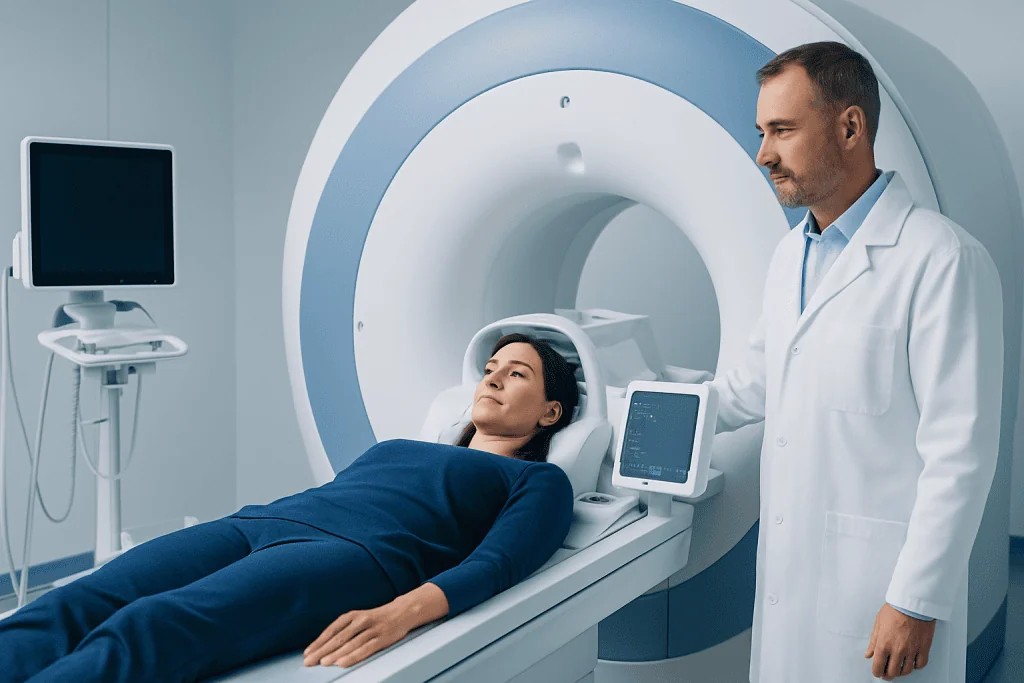
A genuine medical breakthrough usually does more than introduce something new. It clearly improves an important part of care, such as making diagnosis more accurate, reducing complications, helping treatment work better, or improving quality of life. Novelty alone is not enough. A device or software platform can be innovative without changing outcomes in a meaningful way.
Strong breakthroughs are usually supported by several layers of evidence. These may include peer-reviewed studies, testing in different patient groups, comparison with current standard care, and confirmation by independent researchers. The strongest examples also show that the technology works outside ideal research conditions, where patients are more diverse and healthcare settings are more complex.
Another sign of a meaningful advance is that it can be integrated into real care safely and responsibly. For example, a new imaging platform may be useful only if trained specialists can interpret it accurately, or an AI decision tool may be valuable only if clinicians can use it without increasing errors or delays.
In short, a breakthrough should answer three simple questions: does it work, is it safe, and does it help patients more than existing options? If the answer to any of these remains unclear, the story may still be promising but should be viewed as early progress rather than established medical change.
Common Signs of Hype in Medical Innovation Coverage

Hype often appears when the language is much stronger than the evidence. Words such as “miracle,” “game-changer,” “cure,” or “revolutionary” can be misleading, especially when the report does not explain the study design or the limits of the findings. Responsible medical reporting usually includes uncertainty, context, and expert interpretation.
Another warning sign is when a story relies on a very small study, animal research, or testing in a laboratory but presents the findings as if they were ready for broad patient use. Early-stage science matters, but many ideas that seem encouraging at first do not lead to effective treatment in people.
Readers should also be cautious if an article focuses heavily on the technology itself but says little about outcomes that matter to patients. These outcomes include symptom relief, survival, fewer side effects, better recovery, easier access to care, or lower risk of complications. Technical accuracy or speed alone does not always translate into better health.
Other common signs of hype include missing information about regulatory status, cost, conflicts of interest, or comparison with standard care. If a report mentions that a product is “available soon” but does not explain whether it has been properly evaluated, it is sensible to wait for stronger evidence before drawing conclusions.
How to Evaluate the Evidence Behind a Headline
When reading health technology news, it helps to start with the source. Articles based on peer-reviewed medical journals, established academic centers, or recognized public health organizations are generally more reliable than unverified social media posts or promotional material. Even then, readers should look beyond the headline and ask what was actually studied.
Important questions include: Was the study done in humans? How many people took part? Was there a comparison group? Were the patients followed long enough to detect benefits and harms? Did the study measure real clinical outcomes or only technical performance? These details help show whether the findings are truly relevant to patient care.
It is also useful to know the difference between types of evidence. A case report or small pilot study may suggest a technology is worth exploring. A randomized controlled trial usually provides stronger evidence. Systematic reviews and guidance from expert organizations can be even more helpful because they place individual studies in a wider context.
Finally, readers should consider who funded the work and whether independent experts have commented on it. Industry-supported innovation is common and can be valuable, but transparency matters. The most trustworthy coverage acknowledges both the promise of a new technology and the questions that still need answers.
Key Areas Driving Today’s Health Technology News
Several fields appear often in health technology news because they are moving quickly and may reshape care. One of the most visible is AI in healthcare. AI tools may help clinicians review scans, identify patterns in medical data, support triage, or predict risk. These uses can be helpful, but their performance depends on the quality of the data used to train them and the way they are introduced into clinical practice.
Wearables and remote monitoring are also expanding. Smartwatches, continuous sensors, and connected home devices may help track heart rhythm, blood sugar, sleep, activity, or recovery. These tools can support prevention and long-term management, but they may also create false alarms, over-monitoring, or anxiety if the data are not interpreted carefully by healthcare professionals.
Robotic and minimally invasive procedures remain a frequent topic as well. In some situations, advanced surgical technology may improve precision, shorten recovery, or reduce hospital stay. However, benefits vary by procedure, surgeon experience, and patient condition. Reports about robotic surgery should ideally explain where the method is most helpful and how outcomes compare with established approaches.
Advanced diagnostics are another fast-growing area. Newer methods in imaging, molecular testing, and digital pathology may allow earlier or more precise diagnosis. For example, stories about MRI or PET-CT are most meaningful when they explain how these tools affect diagnosis, treatment planning, or follow-up, rather than only describing the technology itself.
Questions Patients Should Ask Before Trusting a New Technology
Patients do not need to be scientists to ask good questions about medical innovation. A few simple questions can make health technology news much easier to understand. These questions can also support better conversations with doctors when a patient is considering a new test, app, device, or treatment approach.
Helpful questions include:
- What problem is this technology supposed to solve?
- Has it been tested in patients like me?
- Does it improve outcomes, or only make a process faster or more convenient?
- What are the possible risks, downsides, or uncertainties?
- Is it approved or recommended by relevant health authorities or professional societies?
- How does it compare with the current standard of care?
- Will it be accessible, affordable, and practical to use?
These questions matter because even good technologies are not equally useful for everyone. A monitoring tool that helps one patient may add little value for another. A very sensitive test may find more abnormalities, but not all findings are clinically important. In some cases, more information does not always mean better care.
When patients discuss new options with a clinician, the goal should be individualized care. A trusted healthcare professional can explain whether a reported innovation is relevant to a person’s age, symptoms, diagnosis, and overall health plan.
Why Regulation, Ethics, and Real-World Use Matter
Medical technology should not be judged only by whether it is innovative. It should also be assessed for safety, fairness, privacy, and real-world performance. Regulatory review helps determine whether a device, diagnostic tool, or software application meets required standards before broader use. Even after approval, continued monitoring remains important.
This is especially true for digital health tools and AI systems. Performance can vary across hospitals, populations, and data systems. A tool that works well in one setting may be less accurate in another if the patient population differs. For that reason, experts look for evidence that a technology performs consistently and does not worsen health inequalities.
Privacy and informed consent are also important. Many digital tools collect sensitive personal health information, sometimes continuously. Patients should understand what data are being collected, who can access them, and how they are protected. Convenience should not come at the cost of poor data security or unclear consent.
Real-world use matters because medicine happens in busy clinics and hospitals, not only in controlled studies. A technology may be technically advanced but still difficult to use, time-consuming, expensive, or hard to interpret. The strongest innovations are those that fit responsibly into care pathways and support both patients and clinicians.
A Practical Approach to Reading Future Health Technology News
The best way to read health technology news is with balanced optimism. Innovation has transformed many parts of medicine, from earlier diagnosis to less invasive treatment and better monitoring of chronic conditions. At the same time, not every headline represents a major step forward, and some ideas need years of study before their value becomes clear.
Readers can protect themselves from misinformation by relying on reputable sources, checking whether claims are backed by patient-centered evidence, and avoiding articles that promise dramatic results without explaining limitations. It is also wise to remember that no technology replaces sound medical judgment, clinical expertise, and shared decision-making.
When a report seems especially relevant, patients should bring it to a qualified doctor and ask how it applies to their own care. This conversation is often more useful than trying to interpret complex claims alone. For people seeking evaluation or treatment, Acibadem International’s multidisciplinary specialists and JCI-accredited hospitals care for international patients using evidence-based diagnostic and treatment approaches, including advanced tools when clinically appropriate.
In the end, the most reliable sign of a true breakthrough is not excitement but proven benefit. If a new technology is safe, well tested, practical, and clearly helpful to patients, its value usually becomes clearer over time.
Frequently asked questions
How can someone tell if health technology news is trustworthy?
A trustworthy report usually explains the evidence clearly, names the source of the research, and includes limitations. It should also describe whether the findings come from laboratory work, early human studies, or larger clinical trials. Reliable coverage avoids exaggerated language and places the innovation in medical context.
Does a new medical technology always mean better care?
No. New technology can improve care, but only if it provides real benefits such as better accuracy, safer treatment, easier recovery, or improved quality of life. Some innovations are useful in selected situations, while others do not perform better than existing methods.
Why are early study results sometimes reported so confidently?
Early findings often attract attention because they are new and exciting. However, early research may involve small numbers of patients or very controlled conditions, so the results may not hold up later. Careful follow-up studies are needed before a technology can be considered proven.
What role does AI play in health technology news?
AI is a major topic because it may support tasks such as image analysis, risk prediction, and workflow efficiency. Still, AI tools need careful validation, oversight, and monitoring to make sure they are accurate, fair, and safe in real-world healthcare settings.
Should patients ask their doctor about a technology they saw in the news?
Yes. Bringing a news story to a doctor can be a good way to understand whether the technology is relevant to a person’s condition. A clinician can explain the current evidence, possible risks, and whether the option fits the patient’s overall care plan.
Why do regulation and approval matter so much?
Regulatory review helps make sure that medical technologies meet standards for safety and performance before wider use. Approval does not mean a technology is perfect, but it does add an important layer of oversight. Ongoing monitoring remains necessary after a product enters clinical practice.
References
- World Health Organization
- U.S. Food and Drug Administration
- National Institutes of Health
- European Medicines Agency
- BMJ
This article is for general information only and is not a substitute for professional medical advice. Please consult a qualified doctor about your individual situation.
Explore treatments in Turkey — costs, top hospitals & a free quote
JCI-accredited · board-certified surgeons · reply within 24h
Add us as a Preferred Source to see more of our trusted health content across Google Search, AI Overviews and Discover.