Hemodynamic Monitoring: An Evidence-Based Guide for Patients

Hemodynamic monitoring combines bedside examination with measurements such as blood pressure, heart rate, oxygen levels and urine output. Monitoring may be noninvasive, using cuffs and sensors, or invasive, using catheters placed in an artery or vein when closer measurement is needed.
Key Takeaways
- Hemodynamic monitoring combines bedside examination with measurements such as blood pressure, heart rate, oxygen levels and urine output.
- Monitoring may be noninvasive, using cuffs and sensors, or invasive, using catheters placed in an artery or vein when closer measurement is needed.
- A single number rarely tells the full story; clinicians interpret trends alongside symptoms, laboratory results and the person’s overall condition.
- Not everyone in hospital needs invasive monitoring; it is used when the expected benefit outweighs the risks.
- The monitoring itself does not treat an illness, but it helps the team make timely, individualized treatment decisions.
Hemodynamic monitoring is the clinical assessment of how effectively the heart pumps blood and how well circulation delivers oxygen to the body’s organs. It helps healthcare teams detect changes early and tailor fluids, medications, breathing support and other treatment in people who are seriously ill or undergoing major procedures.
What Hemodynamic Monitoring Means
Hemodynamic monitoring is the process of checking how blood moves through the body and whether organs are receiving enough oxygen-rich blood. “Hemodynamic” refers to the forces and flow of blood in the circulatory system. Healthcare professionals use this information to understand how the heart, blood vessels, lungs and kidneys are responding to illness, surgery, anesthesia or treatment.
At its simplest, monitoring includes routine measurements such as heart rate, blood pressure, breathing rate, oxygen saturation, temperature and urine output. In more complex situations, clinicians may also estimate or measure cardiac output—the amount of blood pumped by the heart each minute—along with pressures in blood vessels and indicators of tissue oxygen delivery.
The purpose is not to achieve one “perfect” reading. Instead, the care team looks for meaningful patterns over time and relates them to the patient’s symptoms, examination findings, medical history and test results. This approach can support safer decisions about fluids, medicines that affect blood pressure or heart function, ventilator settings and the timing of other treatments.
Why It May Be Used

Hemodynamic monitoring is most often used in emergency departments, operating rooms, recovery areas, intensive care units and specialized cardiac care settings. It may be needed when circulation could change quickly or when a person has a condition that makes fluid balance and blood pressure management more complex.
Examples include major surgery, severe infection, significant blood loss, serious trauma, acute heart problems, severe breathing failure, shock, or worsening kidney function. It may also be considered for selected patients with advanced heart failure or complex cardiovascular disease, particularly when standard bedside observations do not provide enough information for safe treatment planning.
Monitoring can help distinguish between different reasons for low blood pressure or poor organ perfusion. For example, a person may need fluids because circulating volume is low, while another may need medication to support blood vessel tone or improve heart pumping. The correct approach depends on the clinical situation, so measurements are always interpreted by trained professionals rather than in isolation.
- During surgery: to guide anesthesia and fluid management in higher-risk operations.
- During critical illness: to assess response to treatment and identify deterioration early.
- After complex procedures: to support recovery while anesthesia, pain control and fluid shifts resolve.
What Healthcare Teams Measure
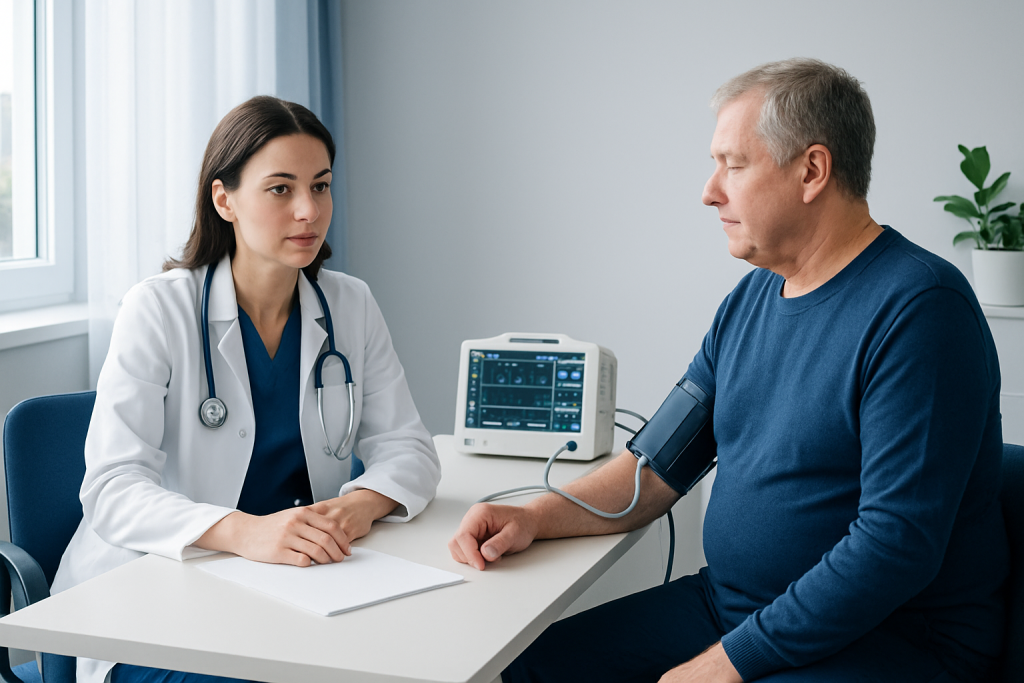
Blood pressure is one of the most familiar measurements. It reflects the pressure of blood against artery walls, but it does not directly show whether the heart is pumping enough blood for the body’s needs. Mean arterial pressure, a calculated average pressure during a heartbeat, may be followed in some hospitalized patients because it relates to organ blood flow.
Cardiac output and cardiac index provide information about pumping performance. Cardiac index adjusts output for body size, helping clinicians compare values more meaningfully between people. Other measurements may include central venous pressure, stroke volume, pulse pressure variation, blood oxygen levels, lactate and mixed or central venous oxygen saturation. Each has limitations and is used in an appropriate clinical context.
Healthcare teams also watch practical signs of circulation. These can include alertness, skin temperature and color, capillary refill, breathing effort, urine output, swelling, daily weight and changes in laboratory tests. A patient may therefore have several measurements taken at once, because no single test fully represents circulatory health.
Results can be affected by pain, anxiety, fever, medications, body position, heart rhythm changes and mechanical ventilation. For this reason, the direction of change—improving, stable or worsening—may be more informative than one reading. Patients and families can ask the team what is being measured, why it matters and what changes would prompt a different treatment plan.
Noninvasive and Invasive Monitoring Methods
Noninvasive monitoring does not require a catheter placed inside a blood vessel. It includes an automated blood pressure cuff, pulse oximeter on a finger or ear, electrocardiogram leads, temperature measurements and ultrasound assessment at the bedside. Some devices can estimate cardiac output from a finger cuff, chest sensors or other external signals. These methods are generally easier to apply and carry fewer procedure-related risks, although accuracy can vary by device and patient condition.
Invasive monitoring involves placing a thin catheter into a blood vessel under sterile conditions. An arterial line, commonly placed in the wrist artery, provides continuous blood pressure readings and allows repeated blood sampling. A central venous catheter placed in a large vein may be used to give medications, obtain samples and support assessment of circulation in selected patients.
In certain complex cases, clinicians may use specialized catheters or advanced technologies to measure cardiac output and pressures more directly. These tools are not routinely needed for every patient. Their use depends on the severity of illness, the question the team needs answered, the availability of less invasive alternatives and the person’s individual risks.
Any invasive line can cause discomfort, bruising, bleeding, infection, blood vessel injury or clotting, although careful insertion, securement and regular review help reduce these risks. The team should remove invasive devices as soon as they are no longer needed. Patients who are awake can tell staff about increasing pain, numbness, coldness, swelling or bleeding near a line site.
How Monitoring Guides Treatment
Hemodynamic monitoring does not replace clinical judgment, and it is not a treatment by itself. Rather, it provides information that may guide treatment choices and show whether those choices are helping. In critical care, this can include carefully adjusting intravenous fluids, medicines that raise or lower blood pressure, medications that support heart pumping, oxygen therapy or ventilator settings.
Giving fluid is not automatically beneficial for every low blood pressure reading. Too little fluid can worsen organ perfusion, while excess fluid can contribute to swelling and place strain on the heart and lungs. Clinicians may use a monitored response to a small intervention, ultrasound findings and repeated observations to decide whether additional fluid is likely to help.
When reduced heart pumping is suspected, the team may arrange an echocardiogram or other heart assessment. People with known or newly identified heart disease may require care that addresses the underlying cause as well as the immediate circulation problem. Conditions such as heart failure can require individualized management based on symptoms, heart function and other health conditions.
Decisions are also guided by the patient’s goals of care, age, overall health and response to therapy. Good monitoring is therefore a continuing process: measure, interpret, treat when appropriate, reassess and reduce the intensity of monitoring as the person stabilizes.
What Patients and Families Can Expect
Before planned surgery or a procedure, the anesthesiology or surgical team may explain whether enhanced monitoring is anticipated and why. In an emergency, immediate stabilization may take priority, but clinicians should provide updates as soon as practical. Consent processes vary according to the procedure, setting and the patient’s ability to participate in decisions.
For a blood pressure cuff, ECG stickers or a pulse oximeter, patients usually feel little more than temporary pressure from the cuff or mild skin irritation from adhesive pads. An arterial or central line is typically inserted using local anesthetic when circumstances allow. Patients may feel pressure or brief discomfort, and the site is covered with a sterile dressing afterward.
Alarms are common in monitored settings and do not always mean an emergency. They may signal movement, a loose sensor, a changed reading or a technical issue. Staff review alarms in the context of the patient’s condition. Families should avoid adjusting devices or tubing themselves, but can promptly alert staff if an alarm sounds repeatedly or if the patient seems uncomfortable.
It is reasonable to ask whether monitoring is still necessary each day, what the main goals are, and how results are influencing care. Clear communication can help patients and families feel informed during what may be an unfamiliar hospital experience.
When to Seek Medical Care
Hemodynamic monitoring is performed by healthcare professionals and is not something people usually arrange for themselves outside a clinical setting. Urgent medical evaluation is important for symptoms that may indicate a serious circulation, heart or lung problem, especially if they are sudden, severe or worsening.
Emergency care should be sought for chest pressure or pain, severe shortness of breath, fainting, new confusion, blue or gray lips, signs of a stroke, heavy bleeding, or a rapid decline in alertness. Call local emergency services rather than driving if symptoms are severe or a person is not safe to travel.
Prompt medical advice is also appropriate for persistent dizziness, a new irregular heartbeat sensation, swelling with breathlessness, unusually reduced urine output, fever or chills after a recent invasive procedure, or increasing redness, drainage, bleeding, pain, numbness or coldness around a catheter site. These symptoms do not always signal a serious problem, but they should be assessed.
Acibadem International’s multidisciplinary specialists and JCI-accredited hospitals provide diagnostic and treatment services for international patients who need evaluation of complex heart, surgical or critical-care concerns. Individual recommendations should always be made by the treating medical team.
Frequently asked questions
Is hemodynamic monitoring the same as blood pressure monitoring?
Blood pressure monitoring is one important part of hemodynamic monitoring, but the terms are not the same. Hemodynamic monitoring may also assess heart rate, cardiac output, oxygen delivery, fluid balance, blood oxygen levels and signs that organs are receiving adequate blood flow.
Is invasive hemodynamic monitoring painful?
Placement of an arterial or central line can cause brief discomfort, but local anesthetic is commonly used when the situation allows. Once the line is in place, the site may feel tender, and staff regularly check it for bleeding, infection, circulation changes and discomfort.
Who needs an arterial line?
An arterial line may be used when continuous, beat-to-beat blood pressure measurement is needed or when frequent blood samples are expected. This can occur during some major operations or critical illnesses, but it is not necessary for most hospital patients.
Can a smartwatch provide hemodynamic monitoring?
Consumer wearables may track pulse and, in some devices, estimate selected health measures, but they do not replace hospital-grade hemodynamic monitoring. They cannot reliably assess cardiac output, tissue oxygen delivery or the complex circulation changes seen in serious illness.
What do low blood pressure readings mean?
Low blood pressure can be normal for some people and may not cause symptoms. In a person who is ill or has symptoms such as fainting, confusion, weakness or cold skin, it can indicate reduced circulation and needs clinical assessment in the full medical context.
How long does hemodynamic monitoring last?
The duration depends on why it was started and how quickly the person’s condition stabilizes. Healthcare teams aim to use the least invasive method for the shortest time needed, reviewing invasive lines and intensive monitoring regularly.
This article is for general information only and is not a substitute for professional medical advice. Please consult a qualified doctor about your individual situation.
Explore treatments in Turkey — costs, top hospitals & a free quote
JCI-accredited · board-certified surgeons · reply within 24h
Add us as a Preferred Source to see more of our trusted health content across Google Search, AI Overviews and Discover.
Check your numbers in seconds
BMI, calories, due date, blood pressure and 30+ more clinical calculators — free, instant, doctor-reviewed ranges.

More from the Health Library

Types of Dandruff: An Evidence-Based Guide for Patients

Gracilis Muscle: What Patients Need to Know

Acne Prone Skin: A Complete Medical Overview

Pupil: An Evidence-Based Guide for Patients

Neurons: An Evidence-Based Guide for Patients