Hepatic Artery: A Complete Medical Overview

The hepatic artery delivers oxygen-rich blood to the liver, while the portal vein brings nutrient-rich blood from the digestive system. Its anatomy can vary from person to person, which is important during imaging, surgery, and interventional procedures.
Key Takeaways
- The hepatic artery delivers oxygen-rich blood to the liver, while the portal vein brings nutrient-rich blood from the digestive system.
- Its anatomy can vary from person to person, which is important during imaging, surgery, and interventional procedures.
- Problems such as narrowing, blockage, aneurysm, or injury may reduce liver blood flow and sometimes require urgent care.
- Diagnosis often relies on Doppler ultrasound, CT angiography, MR angiography, or catheter-based angiography.
- Treatment depends on the cause and may include monitoring, medicines, endovascular procedures, or surgery.
- After liver transplant, hepatic artery complications are taken seriously because early treatment can protect the transplanted liver.
The hepatic artery is the main blood vessel that brings oxygen-rich blood to the liver and supports the bile ducts, gallbladder, and nearby structures. Understanding its normal anatomy and the problems that can affect it can help patients make sense of symptoms, imaging findings, and treatment decisions.
Overview: what the hepatic artery is
The hepatic artery is an artery that carries oxygen-rich blood from the heart to the liver. In everyday terms, it is a key part of the liver’s circulation system, helping the liver cells, bile ducts, and nearby tissues receive the oxygen they need to work properly. Although the liver also receives a large amount of blood from the portal vein, the hepatic artery remains essential because it provides the higher-oxygen supply.
Most often, the common hepatic artery branches from the celiac trunk, then continues toward the liver and gives rise to smaller branches. The proper hepatic artery usually divides into right and left hepatic arteries, which supply the two main sides of the liver. Small anatomical variations are common, and many people have a slightly different branching pattern without any symptoms.
This topic matters most when doctors are evaluating liver disease, planning abdominal surgery, assessing liver injury, or following a liver transplant. The hepatic artery is also important in interventional radiology, where specialists may use its branches to deliver treatments directly to liver tumors or to stop bleeding in emergencies.
How the hepatic artery works with the liver
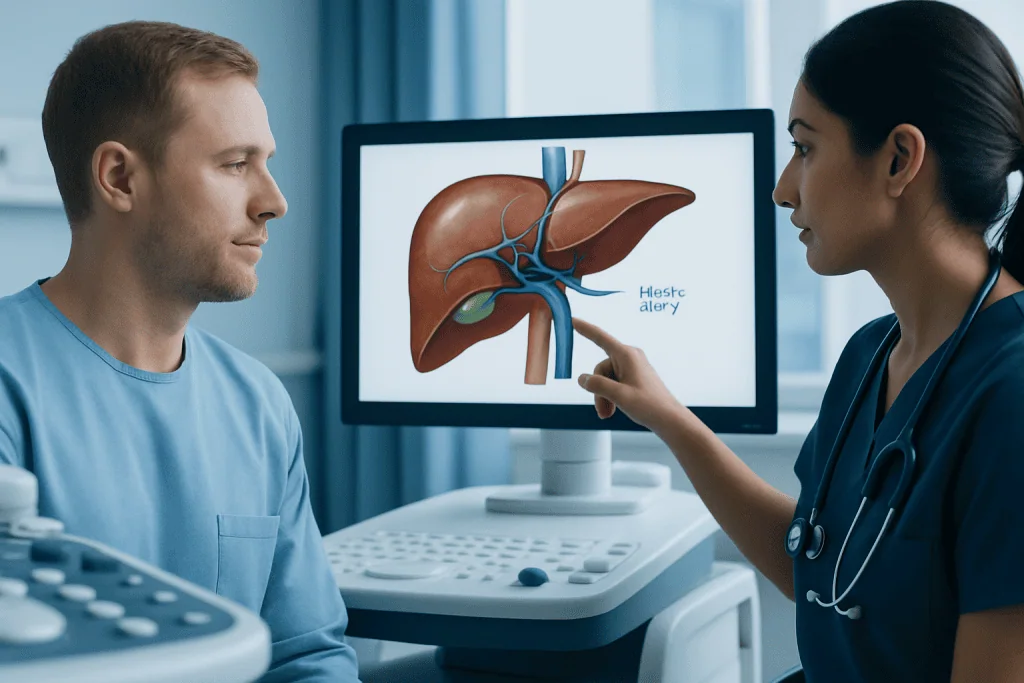
The liver has a dual blood supply, which makes it different from many other organs. The portal vein brings nutrient-rich blood from the stomach, intestines, pancreas, and spleen, while the hepatic artery delivers oxygen-rich arterial blood. Together, these two sources support the liver’s many jobs, including metabolism, detoxification, bile production, and protein synthesis.
The hepatic artery is especially important for the bile ducts. Even if the portal vein continues to bring blood to the liver tissue, problems in the hepatic artery can affect the bile ducts more quickly because they depend heavily on arterial blood flow. This is one reason why hepatic artery complications can be serious after liver surgery or transplantation.
Doctors also pay close attention to this artery when interpreting liver scans. A liver lesion’s appearance during the arterial phase of a CT or MRI can help distinguish different conditions. For example, blood-flow patterns seen through the hepatic artery may help evaluate liver masses and guide next steps such as liver cancer assessment or biopsy planning.
Common disorders and complications

Several conditions can affect the hepatic artery. One is hepatic artery thrombosis, which means a blood clot blocks the artery. This can reduce or cut off oxygen supply to the liver or bile ducts and is especially important after liver transplantation, where early diagnosis is critical. Another problem is hepatic artery stenosis, a narrowing of the vessel that can reduce blood flow and sometimes lead to clot formation.
Hepatic artery aneurysm is a less common but important disorder. An aneurysm is a weakened, bulging area in the artery wall. Some aneurysms cause no symptoms and are found incidentally on imaging, while others may cause pain, grow over time, or rarely rupture and bleed. Pseudoaneurysms, which are related to injury or a defect in the vessel wall, may develop after surgery, trauma, infection, or procedures.
The artery can also be affected by trauma, inflammation, external compression, or accidental injury during abdominal operations. In some people with severe liver disease, changes in liver blood flow may alter how the hepatic artery behaves, although the underlying problem is usually in the liver itself rather than the artery. Conditions involving the liver as a whole, such as cirrhosis, may therefore lead doctors to study hepatic arterial flow as part of a wider evaluation.
- Thrombosis: blockage from a clot
- Stenosis: narrowing of the vessel
- Aneurysm or pseudoaneurysm: abnormal dilation or wall injury
- Traumatic or surgical injury
- Bleeding related to liver procedures or abdominal trauma
Symptoms and warning signs
Many hepatic artery problems do not cause clear symptoms at first. Some are discovered only because a person has imaging for another reason, routine transplant follow-up, or evaluation of abnormal liver tests. When symptoms do occur, they often depend on the cause, the speed of blood-flow reduction, and whether bleeding or damage to the bile ducts is present.
Possible symptoms can include upper abdominal pain, nausea, weakness, fever, jaundice, or worsening liver function tests. If blood supply to the bile ducts becomes impaired, a person may develop jaundice, dark urine, pale stools, itching, or signs of cholangitis. After liver transplant, doctors may suspect a hepatic artery problem if recovery is not progressing as expected or if liver blood tests rise suddenly.
Bleeding is more urgent. A ruptured aneurysm or arterial injury may cause sudden severe abdominal pain, low blood pressure, dizziness, fainting, or vomiting blood in some cases. These symptoms need prompt medical attention. Mild or vague symptoms are common in many abdominal conditions, so diagnosis should not be based on symptoms alone.
Causes, risk factors, and why anatomy matters
The causes of hepatic artery disease vary. Blood clots may form after liver transplantation, vascular surgery, trauma, or severe narrowing of the artery. Atherosclerosis, technical issues at a surgical connection, infection, inflammation, and clotting disorders can also contribute. Aneurysms may be linked to vessel-wall weakness, prior injury, infection, pancreatitis, or previous procedures involving the liver or bile ducts.
One important point is that hepatic artery anatomy is not identical in everyone. Some people have a replaced right or left hepatic artery, meaning the vessel arises from an unexpected source instead of the usual pattern. These variations are not abnormal in themselves, but they are highly relevant before operations such as gallbladder surgery, liver resection, transplant surgery, or catheter-based treatment.
Because of this, careful imaging before treatment can reduce risk and improve planning. Surgeons and interventional radiologists want to know exactly where the artery runs, which branches are present, and how close they are to tumors, bile ducts, or surgical sites. That planning may be especially helpful if a patient is undergoing a liver-focused procedure such as liver transplant or treatment for a vascular complication.
How doctors diagnose hepatic artery problems
Diagnosis usually begins with a medical history, physical examination, blood tests, and imaging. Blood tests may show abnormal liver enzymes, bilirubin changes, or signs of inflammation, but they cannot by themselves confirm a hepatic artery disorder. Imaging is usually the key step because it shows blood flow and vessel structure directly.
Doppler ultrasound is often used first, especially after liver transplant, because it is noninvasive and can assess the speed and direction of blood flow. CT angiography and MR angiography provide more detailed pictures of the artery, its branches, and nearby tissues. These scans can identify narrowing, blockage, aneurysm, bleeding, or postoperative complications.
In some cases, catheter angiography is needed. This test allows a specialist to view the artery in real time and may also allow treatment during the same session. For example, if doctors find a narrowed area or a bleeding branch, they may consider an endovascular procedure such as angiography with targeted therapy. Diagnosis is individualized, balancing urgency, symptoms, transplant status, and the patient’s overall liver health.
Treatment options and follow-up
Treatment depends on the specific problem, how severe it is, and whether the person has underlying liver disease or a liver transplant. Small, stable aneurysms may sometimes be monitored, while narrowing or blockage may need more active treatment. If infection, inflammation, or a clotting tendency is contributing, doctors also address those underlying issues.
Endovascular treatment is often an important option. Through a catheter placed in a blood vessel, specialists may open a narrowed artery with balloon angioplasty, place a stent in selected cases, or block a bleeding vessel or aneurysm using embolization techniques. These minimally invasive approaches can be useful when anatomy and the patient’s condition are suitable. In other situations, open surgery or urgent re-operation may be necessary, especially after trauma or complex postoperative complications.
When blood flow is reduced because of advanced liver disease rather than a primary artery problem, treatment focuses on the liver condition itself. Some patients may need highly specialized liver care, including liver transplantation when appropriate. Near the end of the care pathway, multidisciplinary evaluation is often valuable; Acibadem International’s multidisciplinary specialists and JCI-accredited hospitals diagnose and treat hepatic artery and liver-related conditions for international patients.
Follow-up is important even after successful treatment. Doctors may repeat Doppler ultrasound or cross-sectional imaging to confirm that blood flow has improved and to watch for recurrence, new narrowing, or delayed complications involving the bile ducts or liver tissue.
When to seek medical care
Medical attention is important if a person develops unexplained upper abdominal pain, jaundice, fever, or abnormal liver blood tests, especially after liver surgery, liver transplant, gallbladder surgery, abdominal trauma, or a recent interventional procedure. These symptoms do not always mean there is a hepatic artery problem, but they should be assessed by a qualified doctor.
Urgent care is needed for severe abdominal pain, fainting, marked weakness, sudden low blood pressure, signs of internal bleeding, vomiting blood, or rapidly worsening jaundice. People recovering from liver transplantation should follow their transplant team’s instructions closely and report new symptoms without delay, because early recognition of vascular complications can help protect the liver and bile ducts.
For general self-care, patients should keep follow-up appointments, take prescribed medicines as directed, and attend recommended imaging visits. It is also helpful to tell healthcare teams about previous abdominal surgery, liver disease, clotting disorders, or unusual vascular anatomy if it has been identified on past scans.
Frequently asked questions
What does the hepatic artery do?
The hepatic artery supplies oxygen-rich blood to the liver. It also plays an important role in nourishing the bile ducts and supporting normal liver function.
Is the hepatic artery the liver’s only blood supply?
No. The liver has a dual blood supply: the hepatic artery and the portal vein. The portal vein brings nutrient-rich blood from the digestive organs, while the hepatic artery provides oxygen-rich arterial blood.
Can a person have a hepatic artery problem without symptoms?
Yes. Some hepatic artery conditions, such as mild narrowing or a small aneurysm, may be found incidentally on imaging. Symptoms are more likely if blood flow drops significantly, bleeding occurs, or the bile ducts are affected.
Why is the hepatic artery important after liver transplant?
After transplant, the hepatic artery is especially important because the transplanted liver and bile ducts rely on a healthy arterial blood supply. If the artery becomes narrowed or blocked, early treatment may reduce the risk of graft injury or biliary complications.
How are hepatic artery disorders usually diagnosed?
Doctors often start with blood tests and Doppler ultrasound, then use CT angiography or MR angiography for more detail. In selected cases, catheter angiography is used because it can both confirm the diagnosis and help guide treatment.
Are hepatic artery anatomical variations dangerous?
Usually not. Many people have natural variations in the way the hepatic artery branches, and these do not cause symptoms by themselves. However, they are important for surgeons and radiologists to know before operations or procedures.
This article is for general information only and is not a substitute for professional medical advice. Please consult a qualified doctor about your individual situation.
Explore treatments in Turkey — costs, top hospitals & a free quote
JCI-accredited · board-certified surgeons · reply within 24h
Add us as a Preferred Source to see more of our trusted health content across Google Search, AI Overviews and Discover.

More from the Health Library

Chocolate Almond Milk: What Patients Need to Know

Nicotine: A Complete Medical Overview

My Airway: An Evidence-Based Guide for Patients

Haloperidol — Explained by Medical Evidence, Not Myths

Blue Poop: A Complete Medical Overview