Herbst Appliance — Explained by Medical Evidence, Not Myths
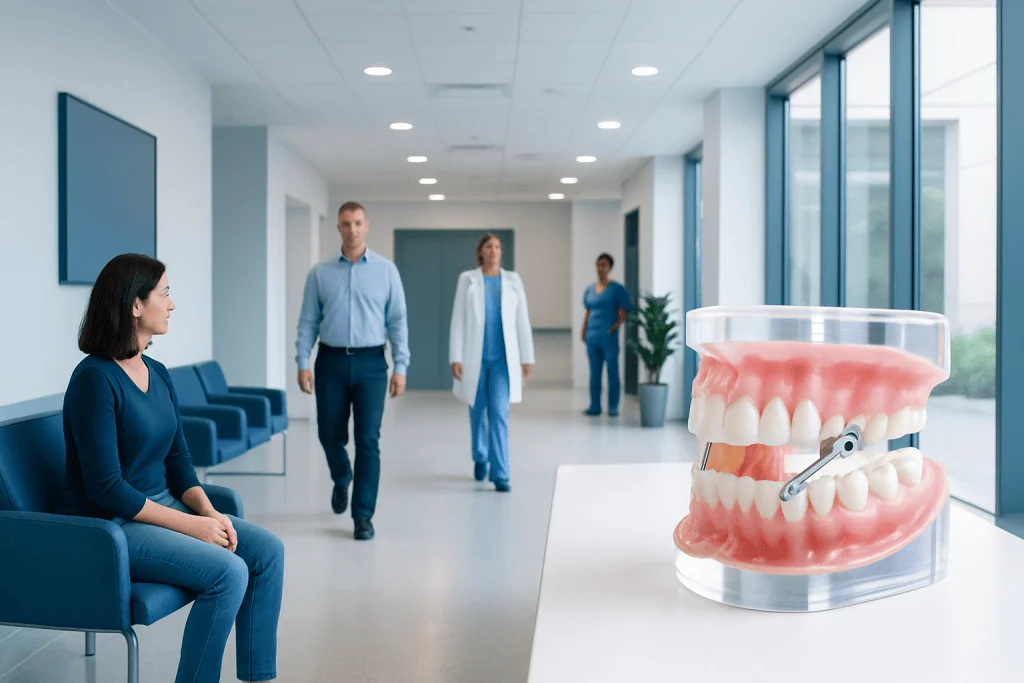
The herbst appliance is a fixed device commonly used to treat Class II bite problems and significant overbite. It works by holding the lower jaw in a more forward position while the child or teen grows.
Key Takeaways
- The herbst appliance is a fixed device commonly used to treat Class II bite problems and significant overbite.
- It works by holding the lower jaw in a more forward position while the child or teen grows.
- Because it is fixed in place, it does not rely as much on patient cooperation as removable devices do.
- Temporary discomfort, cheek irritation, and eating adjustments are common at first and usually improve.
- Regular orthodontic follow-up is important to monitor jaw development, tooth movement, and appliance function.
A herbst appliance is a fixed orthodontic device used to guide the lower jaw forward and help correct certain bite problems, especially a pronounced overbite linked to jaw position. It is most often used in growing children and teenagers, usually as part of a broader orthodontic treatment plan.
Overview: what a herbst appliance does
A herbst appliance is a fixed orthodontic device designed to correct a bite pattern in which the upper teeth sit too far ahead of the lower teeth. In many cases, this relates to a lower jaw that is positioned relatively far back. The appliance gently holds the lower jaw forward over time, helping improve the relationship between the jaws and teeth.
It is most often recommended for growing children or teenagers with Class II malocclusion, a common form of bite imbalance. Because the appliance is attached to the teeth and remains in place full time, it works continuously rather than depending on how often a child remembers to wear it. This is one reason orthodontists may choose it when steady correction is important.
The herbst appliance is not a cosmetic tool alone. Its main purpose is functional: to improve bite alignment, support healthier jaw positioning, and create a better foundation for later orthodontic finishing if needed. In many patients, it is followed by braces or clear aligner-based refinement to fine-tune tooth positions.
How the device works
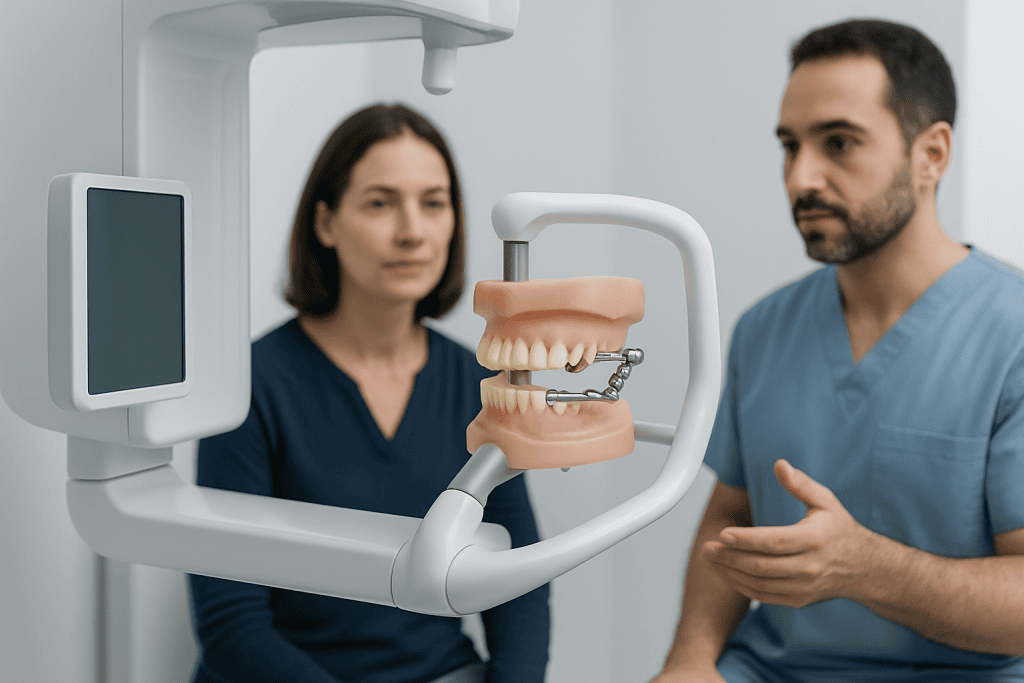
The appliance usually connects the upper and lower back teeth with small metal arms or telescoping mechanisms on each side. These side components are designed to posture the lower jaw forward whenever the mouth closes. Over time, this forward positioning can help influence jaw growth direction and improve the way the teeth meet.
The exact effect varies from person to person. In growing patients, treatment may support favorable skeletal change, dental change, or both. That means some of the improvement may come from the jaw relationship, while some comes from movement of the teeth into a more balanced bite.
Because the appliance is fixed, it works throughout the day and night, including during talking, chewing, and swallowing. This continuous action is different from removable functional appliances, which may be effective only if worn as prescribed. Orthodontists select the design and timing based on age, growth stage, and the type of bite problem present.
In some cases, the herbst appliance is combined with other orthodontic methods such as orthodontic treatment to achieve a more complete correction. The goal is not simply to move teeth, but to create a stable, healthy bite that functions comfortably.
Who may benefit from a herbst appliance

The herbst appliance is commonly used for children and adolescents who are still growing. It is especially helpful when the upper front teeth appear prominent because the lower jaw sits relatively backward. Orthodontists often identify this pattern during a bite assessment, facial profile evaluation, and imaging review.
Not every overbite requires a herbst appliance. Some overbites are mainly caused by the positions of the teeth rather than the relationship of the jaws. Others may be mild enough to respond to conventional braces alone. For this reason, proper diagnosis matters more than choosing a device based on appearance or online advice.
Patients who may benefit include those with:
- Class II malocclusion related to jaw position
- A pronounced overjet, where the upper front teeth project forward
- Growth potential that allows functional jaw guidance
- Difficulty with removable appliances because of inconsistent wear
A dentist or orthodontist may also assess for associated concerns such as crowding, narrow dental arches, and habits that affect oral development. In some children, bite problems overlap with conditions such as jaw disorders, which may need broader evaluation.
Symptoms and bite features it is used to address
Most people who need a herbst appliance do not have a disease in the usual sense. Instead, they have a structural bite pattern that may affect appearance, dental function, or oral health over time. The most visible feature is often an overjet, where the upper front teeth extend noticeably in front of the lower teeth.
Other signs can include difficulty biting food efficiently, lip strain when closing the mouth, uneven tooth wear, and a receding-looking chin profile related to lower jaw position. Some children may be more prone to trauma to the upper front teeth if those teeth are very prominent. Speech is usually not the main reason for treatment, but some patients notice temporary speech adaptation after the appliance is fitted.
It is important to distinguish this from other oral or jaw concerns. For example, jaw pain, clicking, or locking may point to a different issue such as temporomandibular joint disorders, which may require separate evaluation. A herbst appliance is chosen to correct bite relationships, not as a general treatment for all jaw symptoms.
Diagnosis and treatment planning
Diagnosis begins with a clinical orthodontic evaluation. The clinician examines how the teeth fit together, how far the upper front teeth project, and whether the bite problem is mainly skeletal, dental, or mixed. Growth stage is an important factor because the appliance is most useful when there is still meaningful jaw development to guide.
Records often include dental photographs, impressions or digital scans, and imaging such as panoramic or cephalometric X-rays. These help measure tooth position, jaw relationships, and eruption patterns. The orthodontist also looks at oral hygiene, gum health, and whether the back teeth can support a fixed appliance safely.
Treatment planning focuses on realistic goals. In some patients, the aim is to reduce overjet and improve jaw balance during growth. In others, the appliance is one phase of a longer orthodontic plan that may later include braces for detailed alignment. If there are concerns about impacted teeth, skeletal asymmetry, or more complex jaw structure, the patient may need more comprehensive dental or maxillofacial assessment.
For selected patients with significant structural issues, clinicians may discuss related approaches ranging from pediatric dental care to advanced jaw-focused treatment plans. The right approach depends on age, anatomy, and the specific bite problem rather than on a single device alone.
What treatment is like: benefits, side effects, and care
Placement of a herbst appliance is usually done in a dental or orthodontic setting. Once fitted, the patient may feel pressure on the teeth, tightness in the jaw muscles, and irritation of the cheeks or lips for several days. These effects are common and often ease as the mouth adapts. Soft foods and careful chewing can help during the adjustment period.
One benefit of the appliance is that it works full time without needing daily reminders to wear it. This can make treatment more predictable in appropriate patients. It may also shorten or simplify part of the correction process compared with removable functional devices in children who are unlikely to wear those consistently.
Like any fixed orthodontic device, it has practical drawbacks. Food can collect around the appliance more easily, so brushing and cleaning need extra attention. Patients are usually advised to avoid very hard, sticky, or chewy foods that could loosen or damage the mechanism. Follow-up visits allow the orthodontist to check fit, progress, and any wear on the appliance components.
After the active herbst phase, many patients continue with braces or another orthodontic finishing stage to refine tooth alignment and stabilize the bite. Families should understand that the appliance is often one part of treatment, not always the entire treatment by itself.
Prevention, self-care, and realistic expectations
A herbst appliance does not prevent bite problems from starting, but early dental assessment can help identify children who may benefit from timely orthodontic guidance. Many professional groups recommend regular dental visits throughout childhood so concerns with jaw growth, crowding, and eruption can be recognized early.
Good self-care during treatment helps protect both the teeth and the appliance. Daily brushing around bands and attachments is essential, and some patients benefit from interdental brushes or water flossing tools if recommended by their dental team. Limiting sugary snacks and drinks also lowers the risk of plaque buildup and enamel problems while a fixed appliance is in place.
Families should also keep expectations realistic. The appliance can improve bite relationships, but results depend on the patient’s growth pattern, the severity of the malocclusion, and whether further orthodontic treatment is needed. Mild soreness or temporary changes in chewing are common at first, but persistent pain is not something to ignore.
Near the end of care, a multidisciplinary dental team may review whether the bite is stable and whether any additional treatment is needed. Acibadem International’s multidisciplinary specialists and JCI-accredited hospitals provide diagnosis and treatment planning for international patients with orthodontic and jaw alignment concerns.
When to seek medical care
Routine orthodontic follow-up is important throughout treatment, even if the appliance seems comfortable. Families should contact a dentist or orthodontist if part of the device becomes loose, broken, or difficult to move, or if the child suddenly cannot close the mouth comfortably in the usual way.
Medical or dental review is also advisable if there is ongoing mouth ulceration, bleeding gums, significant difficulty eating, or pain that does not improve after the first adjustment period. Jaw locking, severe asymmetry, fever, swelling, or signs of infection are not expected effects of routine orthodontic treatment and should be assessed promptly.
If a child has facial injury, especially to the mouth or front teeth, urgent dental evaluation may be needed because prominent upper teeth can be more vulnerable to trauma. When in doubt, seeking timely professional advice is safer than trying to adjust a fixed appliance at home.
Frequently asked questions
What is a herbst appliance used for?
A herbst appliance is used to correct certain bite problems, especially Class II malocclusion with a prominent overjet or overbite related to lower jaw position. It helps guide the lower jaw forward and improve how the upper and lower teeth meet.
Is a herbst appliance only for children?
It is most commonly used in growing children and teenagers because growth can help the treatment work more effectively. In adults, orthodontists may use other strategies depending on the exact bite pattern and whether jaw growth has finished.
Does the herbst appliance hurt?
It can cause temporary discomfort, pressure, or cheek irritation after placement and after adjustments. These symptoms usually improve as the mouth adapts, but persistent or severe pain should be checked by the treating clinician.
How long does a herbst appliance stay in place?
Treatment time varies depending on the patient’s age, growth stage, and bite problem. Many patients wear it for several months as part of a larger orthodontic plan, followed by another phase such as braces.
Can a patient eat normally with a herbst appliance?
Most patients can return to fairly normal eating after an adjustment period, but they usually need to avoid hard, sticky, and very chewy foods. Soft foods are often more comfortable in the first days after placement.
Is a herbst appliance better than removable functional appliances?
It is not automatically better for every patient, but it has the advantage of working full time because it is fixed in place. This can be especially helpful when consistent wear of a removable device is unlikely.
This article is for general information only and is not a substitute for professional medical advice. Please consult a qualified doctor about your individual situation.
Explore treatments in Turkey — costs, top hospitals & a free quote
JCI-accredited · board-certified surgeons · reply within 24h
Add us as a Preferred Source to see more of our trusted health content across Google Search, AI Overviews and Discover.

More from the Health Library

Lactated Ringers: What Patients Need to Know

Farts: A Complete Medical Overview

Manic Depression — Explained by Medical Evidence, Not Myths

Corned Beef Is Healthy: A Complete Medical Overview

Chlorhexidine Mouthwash: A Complete Medical Overview