

Pediatric Dentistry
Pediatric dentistry provides preventive and restorative dental care for infants, children, and teenagers in a child-friendly setting. It supports healthy teeth, gums, bite development, and positive dental habits.
Quick answer
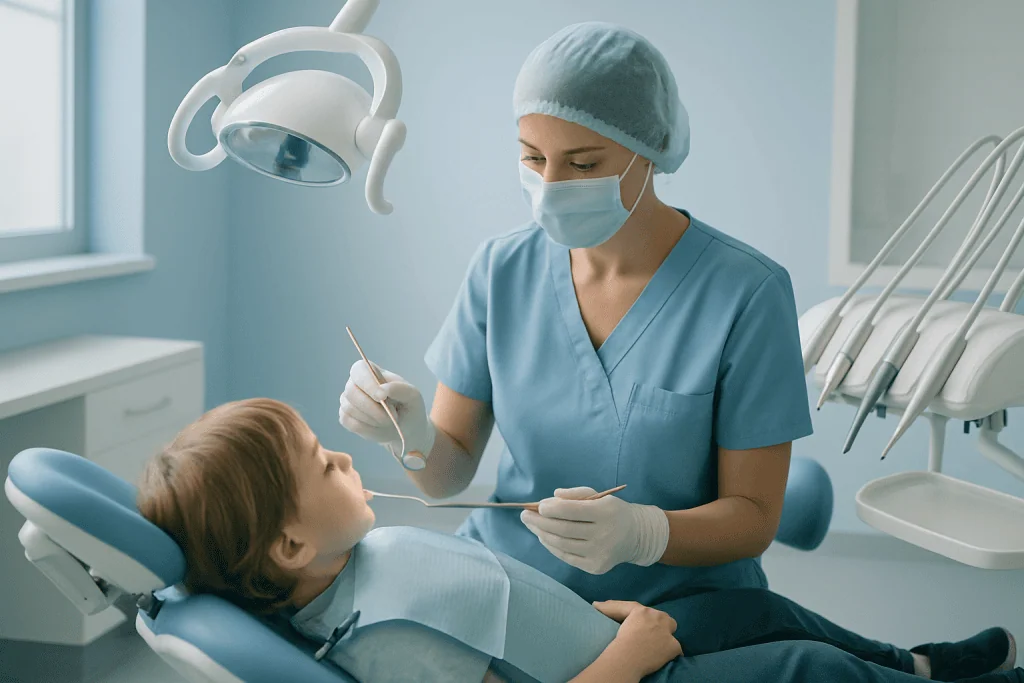
Pediatric dentistry is dental care tailored to infants, children, and teenagers, focusing on prevention, early diagnosis, and treatment of tooth, gum, and bite problems as they grow. At Acibadem in Turkey, care is provided in a child-friendly setting and may include checkups, cleaning, fluoride applications, fillings, sealants, and guidance on oral hygiene and dental development.
Helping Children Build Healthy Smiles With Confidence
A child’s dental visit is rarely only about teeth. For many families, it is also about trust, comfort, communication and the hope that early experiences with healthcare will feel safe rather than frightening. Parents may worry about tooth decay, pain, delayed tooth eruption, thumb sucking, dental trauma, orthodontic concerns, or how their child will tolerate treatment. International families may have additional questions: Will the dentist understand my child’s age and temperament? Will treatment be explained clearly? Can care be coordinated if my child needs sedation, imaging, orthodontic assessment or medical clearance?
Pediatric dentistry is designed around these concerns. It provides dental care for infants, children and teenagers in a way that respects their physical development, emotional needs and long-term oral health. Children are not simply smaller adults. Their teeth, jaws, bite, habits and ability to cooperate change rapidly from birth through adolescence. A pediatric dental approach focuses on prevention, early diagnosis, conservative treatment where appropriate, and helping children develop confidence in dental care.
Good dental health in childhood matters more than many people realize. Baby teeth help children chew, speak clearly and maintain space for permanent teeth. Untreated cavities can cause pain, infection, sleep disruption, difficulty eating and missed school. Early bite problems or oral habits may influence jaw development. A positive dental routine can also reduce anxiety and improve cooperation with care over many years.
At Acibadem, pediatric dentistry is delivered within a medical environment that can support children with simple dental needs as well as those who require more coordinated care. The aim is to protect oral health while making each visit as calm, clear and age-appropriate as possible for the child and family.
What Pediatric Dentistry Is
Pediatric dentistry is a specialized field of dental care focused on infants, children, adolescents and, in some cases, young adults with special healthcare needs. It includes preventive services, diagnosis, restorative treatment, management of dental injuries, monitoring of tooth and jaw development, and guidance for healthy habits at home.
The pediatric dentist evaluates not only the teeth but also the gums, bite, jaw growth, oral hygiene, diet, fluoride exposure, eruption pattern, airway-related concerns and behavioral factors that may affect care. The goal is to identify problems early, treat them appropriately and reduce the likelihood of more complex dental disease later.
Preventive pediatric dentistry often includes dental examinations, professional cleaning, fluoride application, fissure sealants, oral hygiene instruction and nutritional counseling. Restorative care may involve fillings, crowns for baby teeth, pulp treatment, space maintainers or extractions when a tooth cannot be saved. Pediatric dentists also manage urgent problems such as toothache, dental abscess, chipped or knocked-out teeth and injuries to the lips, gums or mouth.
Another important part of pediatric dentistry is behavior guidance. Some children are naturally relaxed during treatment; others need time, explanation and reassurance. Pediatric dental teams use child-friendly communication, gradual familiarization, positive reinforcement and treatment planning that matches the child’s developmental stage. When needed and medically appropriate, sedation or treatment under general anesthesia may be considered, particularly for very young children, extensive dental needs, severe anxiety or children with special medical or developmental conditions.
In a hospital-based setting, pediatric dentistry can be coordinated with other specialties such as pediatrics, anesthesiology, ear, nose and throat, orthodontics, oral and maxillofacial surgery, radiology or pediatric cardiology when a child’s condition requires broader planning. This is especially important for international patients who may need assessment, treatment and follow-up guidance within a limited travel period.
Who May Need Pediatric Dentistry
Every child benefits from pediatric dental care, even when there is no obvious problem. The first dental visits are preventive: they allow the dentist to assess tooth eruption, feeding habits, oral hygiene, fluoride needs and early signs of decay. Parents also receive practical guidance about brushing, toothpaste amount, bottle use, snacks, pacifiers, thumb sucking and what to do in case of a dental injury.
Some children need pediatric dental evaluation because parents notice symptoms. Common reasons include tooth sensitivity, pain while eating, dark spots or visible cavities, swollen gums, bad breath that does not improve with brushing, bleeding gums, delayed tooth eruption, crowded teeth, mouth breathing, snoring, grinding, jaw discomfort, or a tooth that has changed color after trauma. A child may avoid chewing on one side, wake at night with dental pain, refuse certain foods, or become irritable without being able to explain the discomfort clearly.
Pediatric dental needs may also become apparent during routine medical visits or school health checks. A pediatrician may identify enamel defects, tongue-tie concerns, mouth breathing, dental decay, facial swelling or developmental issues affecting feeding and speech. Orthodontic concerns may be noticed when permanent teeth begin to erupt, especially if there is crowding, crossbite, open bite, deep bite or an early loss of baby teeth.
Diagnosis begins with a careful medical and dental history. The dentist asks about the child’s symptoms, previous dental experiences, medications, allergies, medical conditions, diet, brushing habits, fluoride exposure and any history of dental trauma. For younger children, the examination may be performed with the parent nearby or holding the child in a reassuring position. Older children and teenagers may be examined in the dental chair with age-appropriate explanations.
When imaging is needed, pediatric dental X-rays are selected carefully and used only when the expected benefit outweighs exposure. Digital imaging can help detect cavities between teeth, evaluate tooth roots, identify developing permanent teeth, assess infection and plan treatment. For complex trauma, unusual eruption patterns or surgical planning, more detailed imaging may occasionally be recommended. The dentist then explains the findings and discusses treatment options, timing and expected recovery.
Children with special healthcare needs may require more individualized planning. This includes children with autism spectrum disorder, developmental delay, cerebral palsy, congenital heart disease, bleeding disorders, immune conditions, cancer treatment history, craniofacial differences or significant dental anxiety. In these situations, dental treatment may need to be coordinated with the child’s physician, and the visit may be adapted to the child’s sensory, communication and medical needs.
Conditions and Indications Pediatric Dentistry Addresses
Pediatric dentistry covers a broad range of preventive and restorative needs. The most common condition is dental caries, or tooth decay. Cavities can develop quickly in children, especially when teeth are exposed frequently to sugars, sticky snacks, sweetened drinks or nighttime bottle feeding. Early decay may appear as white chalky areas near the gumline; later it may become brown, black, cavitated or painful. Treating decay early helps preserve tooth structure and prevent infection.
Gum inflammation is another common concern. Gingivitis may occur when plaque remains along the gumline, especially around erupting teeth, orthodontic appliances or areas that are difficult for the child to brush. Professional cleaning, improved home care and monitoring usually help restore gum health before more serious problems develop.
Pediatric dentists also manage tooth eruption and development. Some children lose baby teeth early because of decay or trauma, which can allow neighboring teeth to shift into the empty space. A space maintainer may be recommended to help preserve room for the permanent tooth. Other children may have delayed eruption, extra teeth, missing teeth, enamel defects or teeth that erupt in an unusual position. These findings may require monitoring, imaging or referral for orthodontic planning.
Dental trauma is a major indication for pediatric dental care. Falls, sports injuries and accidents can chip, loosen, displace or knock out teeth. Management depends on whether the injured tooth is a baby tooth or a permanent tooth, the child’s age, the type of injury and how quickly care is received. Urgent evaluation is important because timely treatment can reduce pain, protect developing teeth and improve the chance of saving an injured permanent tooth.
Pediatric dentistry also addresses oral habits such as thumb sucking, pacifier use, tongue thrusting, mouth breathing and grinding. Some habits are normal at certain ages and simply need monitoring. Others may contribute to bite changes, speech concerns or jaw development issues if they continue for too long. The dentist helps parents understand when to observe, when to intervene and when orthodontic or medical assessment may be appropriate.
Teenagers may need care for cavities, gum inflammation, dental sports injuries, wisdom tooth assessment, orthodontic-related hygiene problems, cosmetic concerns, tooth sensitivity or enamel wear from grinding. Adolescence also brings lifestyle factors such as frequent snacking, energy drinks, sports beverages and inconsistent oral hygiene, all of which can affect dental health.
For children with extensive decay, severe anxiety or inability to cooperate safely in the dental chair, pediatric dentistry may include comprehensive treatment under sedation or general anesthesia. This is planned carefully, with attention to the child’s medical history, dental needs and the safest environment for care.
How Pediatric Dental Care Is Performed
Pediatric dental care begins before any procedure is performed. The first step is to understand the child as a whole person: age, medical background, previous dental experiences, level of anxiety, communication style and family expectations. Parents are encouraged to share what helps their child feel comfortable, whether the child has sensory sensitivities, and whether there are medical considerations that may affect treatment.
During the examination, the dentist assesses the teeth, gums, bite, oral soft tissues and jaw development. For infants and toddlers, the visit may focus on early eruption, feeding habits, brushing technique and prevention. For school-age children, the dentist evaluates cavities, oral hygiene, spacing, bite development and the need for sealants or orthodontic monitoring. For teenagers, the assessment may include gum health, wisdom teeth, sports protection, diet-related enamel changes and oral hygiene around braces or aligners.
If X-rays are required, digital dental imaging may be used to minimize exposure while providing clear information for diagnosis. Small intraoral images can reveal cavities between teeth or root problems. Panoramic imaging may be helpful for evaluating developing permanent teeth, missing teeth, extra teeth, jaw structure or wisdom teeth. In selected complex cases, three-dimensional imaging may support surgical or trauma-related planning, but it is not necessary for routine care.
Preventive treatment usually includes professional cleaning to remove plaque and tartar, followed by polishing when appropriate. Fluoride may be applied to strengthen enamel and reduce cavity risk. Fissure sealants may be recommended for permanent molars with deep grooves where food and bacteria can collect. Sealants are thin protective coatings placed on the chewing surfaces of back teeth; they do not require drilling and are often completed quickly.
When a cavity is found, the treatment depends on its size, location and whether the affected tooth is a baby tooth or a permanent tooth. Small cavities may be restored with tooth-colored filling material. Larger cavities in baby molars may require a pediatric crown to protect the tooth until it naturally falls out. If decay reaches the nerve tissue inside a baby tooth, pulp treatment may be needed to remove infected tissue and preserve the tooth when appropriate. If a tooth is severely damaged, infected or cannot be restored, extraction may be recommended.
Space maintainers may be placed when a baby tooth is lost too early and there is a risk that surrounding teeth will drift. These small appliances help preserve space for the permanent tooth. They are checked periodically and removed when no longer needed.
For dental trauma, care is tailored to the injury. A chipped tooth may be smoothed, bonded or restored. A loosened tooth may need monitoring, stabilization or treatment of the nerve if complications develop. A knocked-out permanent tooth is a true dental emergency; prompt professional care is important. A knocked-out baby tooth is not usually replanted because of the risk to the developing permanent tooth, but the child still needs evaluation for injury and follow-up.
Behavior guidance is built into every step. The dental team may use “tell-show-do,” where the child hears what will happen, sees the instrument or action in a nonthreatening way, and then experiences the procedure. Short appointments, positive language, distraction, parent presence when helpful and gradual exposure can make treatment easier. The approach is adjusted according to the child’s age, maturity and emotional readiness.
Some children require additional support. Nitrous oxide, often known as laughing gas, may be considered for mild to moderate anxiety in selected cases. Oral or intravenous sedation may be appropriate for certain children depending on the procedure, medical history and level of cooperation. General anesthesia may be recommended when extensive dental treatment is needed, when the child is too young to cooperate safely, or when special healthcare needs make routine chairside care difficult. In these cases, treatment is planned with appropriate pre-anesthesia assessment and monitoring by qualified medical professionals.
The duration of pediatric dental care varies. A routine checkup and cleaning may take less than an hour. A filling or sealant appointment may also be relatively short. More complex restorative treatment, trauma management or treatment under anesthesia takes longer and may require additional preparation and recovery time. International families are usually guided in advance about how many visits may be needed, what documents to bring, and whether medical reports or previous X-rays should be reviewed before travel.
After treatment, parents receive instructions for eating, brushing, pain control and follow-up. Many children return to normal activities the same day after routine preventive care or simple restorations. After extractions, pulp treatment, crowns or sedation, the dentist may recommend softer foods, careful chewing, temporary activity limits or monitoring for swelling, fever, persistent bleeding or unusual discomfort.
Why Acting Early Matters
Early dental care can prevent small problems from becoming painful, complicated or costly to treat. A tiny cavity may be managed with a simple restoration, while untreated decay can spread to the nerve of the tooth and cause infection. Dental infections in children can progress quickly and may lead to facial swelling, fever, difficulty eating or, rarely, more serious medical complications. Early intervention reduces the chance that a child will need urgent care, extraction or treatment under anesthesia.
Early action is also important for development. Baby teeth maintain space for permanent teeth. If they are lost too soon, neighboring teeth may shift and create crowding or eruption problems. Bite issues such as crossbite or severe crowding may be easier to guide when identified during growth rather than after jaw development is more complete.
Timely care also shapes a child’s emotional relationship with dentistry. Children who first meet a dentist during an emergency may associate dental care with pain, fear and urgency. Preventive visits, by contrast, allow children to become familiar with the dental environment before a serious problem occurs. This can improve cooperation and reduce anxiety over time.
For international families, acting early can also simplify planning. A child with mild decay or a developing orthodontic concern may need straightforward treatment and follow-up recommendations. A child with untreated infection, multiple cavities or dental trauma may require more urgent coordination, imaging, anesthesia planning or staged care. Seeking evaluation before symptoms become severe gives families more options and more time to make informed decisions.
Benefits of Pediatric Dentistry
The benefits of pediatric dentistry extend from immediate comfort to long-term oral development and healthier habits.
| Benefit | What It Means for You |
|---|---|
| Early detection of problems | Cavities, eruption issues, gum inflammation and bite concerns can be identified before they become more difficult to treat. |
| Prevention-focused care | Cleanings, fluoride, sealants and home-care guidance help reduce the risk of decay and support healthier daily routines. |
| Child-centered treatment | Appointments are adapted to the child’s age, temperament and ability to cooperate, helping reduce fear and resistance. |
| Protection of growth and development | Monitoring baby teeth, permanent teeth and bite development can help preserve function, speech, chewing and future orthodontic options. |
| Coordinated care when needed | Children with complex dental, medical or behavioral needs can be evaluated with input from relevant specialists when appropriate. |
| Improved comfort and quality of life | Treating tooth pain, infection or sensitivity can help children eat, sleep, speak and participate in school and play more comfortably. |
Recovery Timeline After Pediatric Dental Treatment
Recovery depends on the type of care provided, but most children resume normal routines quickly after preventive or minor restorative treatment.
| Time Period | What Patients Can Expect |
|---|---|
| Day 1 | After cleaning, fluoride or sealants, children usually return to normal activities immediately. After fillings, crowns, extractions or sedation, mild numbness, tenderness or tiredness may occur. |
| First Week | Most children adapt well to restorations. Soft foods may be recommended after extractions or more extensive treatment. Parents should watch for persistent pain, swelling, fever or bleeding. |
| First Month | The dentist may review healing, check bite comfort, monitor treated teeth and reinforce brushing, diet and fluoride guidance. Space maintainers or crowns may require adjustment if they feel uncomfortable. |
| Longer Term | Regular checkups help monitor tooth eruption, jaw development, cavity risk and oral habits. Preventive visits are usually scheduled according to the child’s risk and dental history. |
Factors That Influence a Good Result
A good outcome in pediatric dentistry depends on several factors, many of which can be improved with early guidance and consistent follow-up. The child’s cavity risk is one of the most important. Frequent sugar exposure, nighttime feeding after teeth erupt, sticky snacks, acidic drinks, inadequate brushing and limited fluoride exposure can all increase the likelihood of decay. A personalized prevention plan helps families understand which habits matter most for their child.
The stage at which a problem is diagnosed also affects treatment. Early enamel changes may be monitored or managed preventively. Small cavities may need conservative restoration. Larger cavities, infection or tooth fracture may require more involved care. The earlier a child is evaluated, the more likely it is that treatment can be simpler and less stressful.
The child’s age and cooperation influence how treatment is planned. A calm teenager may tolerate a routine filling easily, while a toddler with multiple cavities may require a different approach. Pediatric dentists consider whether treatment can be performed safely in the chair, whether visits should be staged, and whether sedation or general anesthesia is the safer and more humane option for the child.
Medical history is another important factor. Certain heart conditions, immune disorders, bleeding conditions, allergies, medications or previous hospitalizations may change the way dental treatment is planned. Children receiving cancer therapy, organ transplant care or long-term medications may need close coordination between dental and medical teams. This is particularly important before procedures that could increase infection or bleeding risk.
Quality of materials and technique also matters. Pediatric dental restorations must withstand chewing, fit comfortably and protect the tooth until it is naturally replaced or until permanent dentition matures. The dentist selects materials and approaches based on the tooth, the child’s age, the expected lifespan of the tooth and the extent of damage.
Finally, long-term success depends heavily on family partnership. Even excellent dental treatment can fail if a child continues frequent sugar exposure or struggles with brushing. Parents play a central role by supervising brushing, using the recommended toothpaste amount, encouraging water instead of sweet drinks, limiting frequent snacking and attending follow-up visits. For older children and teenagers, motivation and education become part of the treatment plan so they can take increasing responsibility for their own oral health.
Why International Patients Choose Acibadem for Pediatric Dentistry
Families traveling for a child’s healthcare need more than a dental appointment. They need careful communication, reliable coordination and clinicians who understand both pediatric needs and the concerns of parents seeking care away from home. Acibadem provides pediatric dentistry within a broad hospital network where dental care can be connected with medical specialties when a child’s situation requires it.
Acibadem’s JCI-accredited hospitals follow structured quality and patient safety standards. For pediatric dentistry, this is especially relevant when children need sedation, general anesthesia, medical clearance or coordinated specialist input. A child with a heart condition, developmental difference, bleeding disorder, airway concern or complex dental infection may benefit from evaluation in a hospital environment where appropriate medical support is available.
Care planning is individualized. Some children need a preventive visit and parent education. Others need restorative treatment, trauma care, space management, orthodontic assessment or full-mouth rehabilitation under anesthesia. The dental team evaluates the child’s dental findings, age, behavior, medical history and travel schedule before recommending a plan. The objective is to treat what is necessary, avoid unnecessary procedures and support long-term oral health after the family returns home.
Multidisciplinary collaboration is available when needed. Pediatric dentists may coordinate with pediatricians, anesthesiologists, orthodontists, oral and maxillofacial surgeons, radiologists or other specialists. Complex cases can be reviewed in a structured way so that treatment decisions reflect the child’s overall health, not only the dental problem visible in the mouth.
Modern diagnostic pathways help support accurate planning. Digital dental imaging, intraoral evaluation tools and appropriate radiologic assessment can help detect cavities, infections, eruption problems, trauma-related changes and developmental concerns. Technology is used selectively, with attention to radiation safety and the clinical question being answered. For the child, this can mean clearer diagnosis, more precise treatment planning and fewer unexpected steps during care.
International patient services are an important part of the experience. Families may need help scheduling appointments, transferring medical records, arranging interpretation, understanding pre-treatment instructions or coordinating follow-up. Acibadem International supports patients in multiple languages, helping parents communicate concerns clearly and understand the recommended plan. This is particularly valuable when a child is anxious, when parents are comparing treatment options, or when medical and dental information must be reviewed before arrival.
For families from the United States and other countries, traveling abroad for pediatric dental care may raise questions about standards, safety and continuity. Acibadem’s approach emphasizes evidence-based treatment protocols, careful assessment and transparent explanation. Parents are encouraged to ask why a treatment is recommended, what alternatives exist, how discomfort will be managed, what recovery should look like and what follow-up is needed at home.
The child’s emotional comfort remains central. A technically successful procedure is only part of pediatric dentistry. Children remember how they were spoken to, whether they felt frightened, and whether adults listened. Pediatric dental teams aim to make visits understandable and respectful, using communication that matches the child’s age and personality. For some children, this means a slow introduction and a short preventive visit. For others, it means completing needed treatment efficiently under appropriate anesthesia so repeated stressful appointments can be avoided.
Taking the Next Step for Your Child’s Oral Health
If your child has tooth pain, visible cavities, dental trauma, delayed tooth eruption, gum swelling or anxiety about dental care, an early pediatric dental evaluation can clarify what is happening and what options are available. Even if your child has no symptoms, preventive dental visits help protect developing teeth and support healthy habits from the beginning.
For international families, a consultation or second opinion can be especially useful before making travel plans. Sharing previous dental records, X-rays, medical reports and photographs when available can help the clinical team understand your child’s needs and advise on the likely treatment pathway, number of visits and any preparation required.
Pediatric dentistry is most effective when it combines prevention, accurate diagnosis, gentle communication and thoughtful treatment planning. With the right support, children can receive the care they need while building a healthier relationship with dental visits for the years ahead.
This information is general and is not a substitute for professional medical or dental advice. A qualified clinician should evaluate your child’s individual condition and recommend care based on their specific needs.
Preparation
- Parents should bring the child’s medical history, medication list, allergy information, and any previous dental records or X-rays. Children are encouraged to eat normally unless sedation or a specific dental procedure is planned. The dentist explains the visit in age-appropriate language to reduce anxiety.
Aftercare
- After routine checkups or cleaning, children can usually return to normal activities immediately. If fillings, extractions, fluoride, or sealants are performed, parents receive instructions on eating, brushing, and pain control. Regular follow-up visits help monitor tooth development and prevent cavities.
Turkey vs UK, Germany & USA
Pediatric dentistry costs and patient experience vary by the child’s needs, the type of care required, and the clinic or hospital setting. International families often compare destinations based on access to pediatric dental specialists, language support, accreditation, and the services included in a care package.
The comparison below highlights cost and experience factors for pediatric dentistry in Turkey, the UK, Germany, and the USA.
| Factor | Turkey | UK | Germany | USA |
|---|---|---|---|---|
| Price drivers | Procedure type, sedation needs, materials, imaging, and hospital setting can affect the final cost. | Costs may vary between public access and private pediatric dental care, with private fees depending on complexity. | Costs are influenced by insurance status, private clinic fees, materials, and specialist involvement. | Costs can vary widely by insurance coverage, provider network, sedation, and facility fees. |
| Hospital and specialist factors | International hospitals may offer pediatric dentists, anesthesiology support, and coordinated care for children. | Specialist pediatric dental care may be available through hospital or private referral pathways. | Care may involve dental specialists, university clinics, or private practices depending on the child’s needs. | Pediatric dental specialists and hospital-based dentistry are available, with costs depending on provider and facility type. |
| Accreditation and quality | Families may choose JCI-accredited hospital settings with child-focused protocols and multilingual coordination. | Quality standards are regulated through national healthcare and dental governance systems. | Care is delivered under national healthcare regulations and professional dental standards. | Quality oversight depends on state licensing, professional standards, and facility accreditation. |
| Waiting times | International patient departments may help coordinate appointments and treatment planning with shorter scheduling pathways for private care. | Waiting times can vary between public services and private clinics, especially for specialist or hospital-based care. | Scheduling depends on region, insurance pathway, and specialist availability. | Access can be faster in private care but depends on insurance approval, specialist availability, and location. |
| Travel and language logistics | International patient services may assist with interpretation, appointment planning, airport transfers, and accommodation coordination. | Travel is simpler for local patients, while international families may need to arrange interpreter and accommodation support separately. | International families may need language support depending on the clinic and region. | Travel and accommodation planning can be significant for international families, and interpreter support varies by provider. |
| Typical package inclusions | A package may include consultation, dental examination, imaging if needed, treatment planning, procedure coordination, interpreter support, and follow-up guidance. | Private packages may include consultation and treatment, while add-ons such as imaging, sedation, or follow-up can be billed separately. | Packages vary by clinic and may separate consultation, diagnostics, materials, and sedation. | Billing may be itemized, with separate charges for consultation, imaging, procedure, anesthesia, and facility use. |
What affects your final cost
- The child’s diagnosis and whether care is preventive, restorative, orthodontic, or urgent.
- The number and complexity of teeth needing treatment.
- Whether sedation, general anesthesia, or hospital-based care is required.
- The type of materials used, such as fillings, crowns, sealants, or space maintainers.
- Diagnostic needs, including clinical examination and dental imaging.
- The experience of the pediatric dental team and the accreditation status of the facility.
- Travel, accommodation, interpretation, and follow-up arrangements for international families.
Compare your options
Pediatric dentistry includes several preventive and restorative options. Suitability is decided by a pediatric dentist or relevant specialist after examining the child and reviewing their dental and medical history.
| Option | What it is | Typical use | Key considerations |
|---|---|---|---|
| Preventive dental check-up and cleaning | A child-friendly examination, professional cleaning, oral hygiene guidance, and risk assessment. | Routine monitoring of teeth, gums, bite development, and dental habits. | Helps detect problems early and supports positive dental behavior. |
| Fluoride treatment and sealants | Protective treatments applied to strengthen enamel or cover grooves in chewing teeth. | Children at risk of tooth decay or with deep tooth grooves. | May reduce decay risk when combined with brushing, diet guidance, and regular reviews. |
| Tooth-colored fillings | Restoration of a decayed or damaged tooth using dental filling material. | Small to moderate cavities in baby or permanent teeth. | Cost and durability depend on tooth location, cavity size, and material choice. |
| Pediatric crowns | A protective cover placed over a weakened baby tooth or young permanent tooth. | Larger cavities, teeth after pulp treatment, or teeth with developmental defects. | Material choice, cooperation level, and need for anesthesia can affect planning. |
| Pulp therapy | Treatment of the inner part of a baby tooth or young permanent tooth when decay or trauma reaches deeper tissues. | To preserve a tooth when the nerve area is affected but the tooth can still be maintained. | Requires specialist assessment and may be followed by a crown for protection. |
| Space maintainers and bite monitoring | Appliances or follow-up used to guide tooth eruption and maintain space after early tooth loss. | Children who lose baby teeth early or show bite development concerns. | Regular monitoring is needed as the child grows. |
| Sedation or general anesthesia dentistry | Dental treatment performed with relaxation medication or anesthesia support. | Children with high anxiety, extensive treatment needs, special healthcare needs, or limited cooperation. | Requires careful medical evaluation, qualified anesthesia support, and an appropriate clinical setting. |
Trusted care for international patients
General information only — not medical or financial advice. Final costs depend on the factors above and your individual case; request a free, personalised quote.
Doctors Performing This Treatment

Assoc. Prof. Dr. Ferit Bayram
Oral & Dental HealthDr. Ali Riza Özdurmuş
Oral & Dental Health
Dr. Arzu Morçiçek
Oral & Dental Health
Dr. Bedii Ender Topçu
Oral & Dental HealthDr. Begüm Öykü Kesim
Oral & Dental Health
Dr. Ceyda Sabancı
Oral & Dental HealthDr. Deniz Turgut
Oral & Dental Health
Dr. Destina Suay Sarı
Oral & Dental Health
Dr. Emre Çengelli
Oral Dental & Maxillofacial Surgery
Dr. Eylül Türsen
Oral & Dental HealthDr. Ezgi Gülüm
Oral Dental & Maxillofacial Surgery
Dr. Halime Bayram
Oral & Dental Health
Dr. Havva Gölalan
Oral & Dental Health
Dr. Helin Kuşsever Topçu
Oral & Dental Health
Dr. Melike Zeynep Çapoğlu
Oral & Dental Health
Dr. Merve Ağartıoğlu
Oral & Dental Health
Dr. Metin Kınacı
Oral & Dental Health
Dr. Mücahit Güner
Oral & Dental Health
Dr. Pelin Açık
Oral & Dental Health
Dr. Sebiha Nihal Yılmaz
Oral Dental & Maxillofacial SurgeryDr. Seda Saygılı Özaydın
Oral & Dental Health
Dr. Uğur Önder
Oral & Dental Health
Dr. Zeynep Ekin Kılınç
Oral & Dental Health
Dr. Çağla Su Doğangün Ayduk
Oral & Dental HealthMedical Units
Available at These Hospitals












Frequently Asked Questions
What affects the cost of pediatric dentistry?
Cost depends on the child’s diagnosis, the type of treatment, the number of teeth involved, materials used, imaging needs, sedation or anesthesia requirements, and whether care is provided in a clinic or hospital setting.
How can I get a personalised quote for my child?
A personalised quote is prepared after a specialist reviews the child’s dental concerns, photographs or records if available, medical history, and treatment goals. Acibadem International can arrange a free consultation to help clarify the recommended plan and estimated package details.
Is pediatric dental treatment in Turkey suitable for international families?
Many international families consider Turkey because private hospitals can coordinate pediatric dental appointments, interpreter support, travel logistics, and follow-up guidance. The suitability of treatment and travel should be confirmed by the specialist based on the child’s needs.
Does sedation increase the cost?
Sedation or general anesthesia can increase the overall cost because it may require anesthesia evaluation, specialist staff, monitoring, medications, and an appropriate clinical or hospital environment.
What is usually included in a pediatric dentistry package?
A package may include consultation, dental examination, treatment planning, selected procedures, interpretation support, and care coordination. Imaging, sedation, additional procedures, medications, or follow-up visits may be included or listed separately depending on the plan.