Herpes Photos in Different Stages: A Complete Medical Overview

Herpes outbreaks often progress through predictable stages, from early tingling to healing skin. Both oral and genital herpes can look different depending on skin tone, body area, and whether it is a first episode or a recurrence.
Key Takeaways
- Herpes outbreaks often progress through predictable stages, from early tingling to healing skin.
- Both oral and genital herpes can look different depending on skin tone, body area, and whether it is a first episode or a recurrence.
- Photos may suggest herpes, but testing is often needed to distinguish it from other causes of sores or rashes.
- Antiviral treatment can shorten symptoms and reduce transmission risk when started promptly.
- Medical care is especially important for first episodes, severe pain, pregnancy, eye symptoms, or a weakened immune system.
Herpes photos in different stages typically show a pattern that starts with tingling or burning, then small fluid-filled blisters, open sores, crusting, and gradual healing. Images can be helpful for recognition, but they cannot confirm a diagnosis because herpes can look different from person to person and may resemble other skin conditions.
Overview: What Herpes Photos in Different Stages Usually Show
Herpes photos in different stages usually show a sequence rather than one single appearance. In many people, an outbreak begins with skin that looks normal but feels unusual, such as tingling, itching, burning, or tenderness. This may be followed by grouped small blisters, then shallow painful sores, then crusting or scabbing in some locations, and finally healing skin. Not every person goes through every step in the same way, and recurrent outbreaks are often milder than the first episode.
Herpes simplex virus comes in two main types: HSV-1 and HSV-2. Either type can affect the mouth or the genital area, although HSV-1 is more often linked with oral herpes and HSV-2 more often with genital herpes. The location of the sores changes how they look. For example, oral lesions may crust more visibly on the lips, while sores on moist genital tissue may stay ulcer-like rather than forming a clear scab.
Photos can be useful for general education, but they have limits. Lighting, skin tone, image quality, and the stage of healing can change what an outbreak looks like. In addition, herpes can resemble several other conditions, including pimples, ingrown hairs, aphthous ulcers, contact dermatitis, fungal infections, and other sexually transmitted infections. Because of this, diagnosis should not rely on appearance alone.
How Herpes Changes from Early Symptoms to Healing
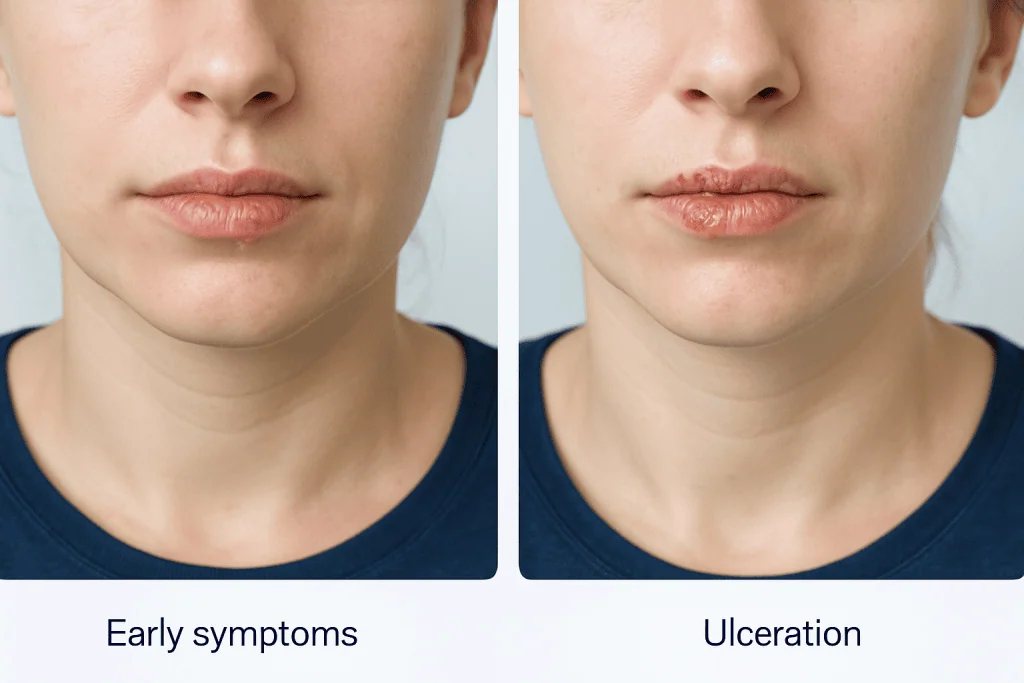
Many clinicians describe herpes outbreaks in stages. The first stage is often a prodrome, which means warning symptoms before visible sores appear. A person may notice tingling, itching, burning, or unusual sensitivity in one small area. This phase can last hours to a couple of days. During this time, the skin may still look normal or only slightly red.
The next stage is the blister phase. Small, clear, fluid-filled bumps may appear in a cluster on a red base. These can be subtle at first, especially in the genital area or on darker skin tones, where redness may be less obvious. The blisters may break open quickly, which is why some people never notice them and only see the sores that follow.
After the blisters rupture, shallow ulcers or raw-looking sores may develop. This is often the most uncomfortable stage. Sores may sting, burn, or cause pain with eating, urination, or sexual contact depending on the location. In oral herpes, the lesions may dry out and form a crust on the lip. In genital herpes, a classic crust is less common on moist tissue, and the area may simply become less inflamed as it heals.
The final stage is healing. New skin gradually forms, pain decreases, and the area returns to normal. First outbreaks often last longer and may be more extensive than recurrences. Recurring herpes episodes may stay limited to one spot, cause fewer lesions, and heal more quickly.
What Oral and Genital Herpes Can Look Like
Oral herpes often affects the lips, border of the lips, skin around the mouth, gums, tongue, or inside the mouth. On the outer lip, the classic picture is a cluster of small blisters that later crust over, often called a cold sore. Inside the mouth, lesions may look more like shallow ulcers than blisters. Some people also notice swollen gums, bad breath, or pain with swallowing during a first episode.
Genital herpes may appear on the vulva, vagina, cervix, penis, scrotum, buttocks, anus, or nearby skin. The lesions may begin as tiny bumps or blisters and then become tender sores. In some cases, especially recurrent outbreaks, there may be only a small fissure, an irritated patch, or one sore rather than a group. Because of this variability, genital herpes is sometimes mistaken for shaving irritation, friction injury, or a yeast-related rash.
Skin tone also affects appearance. On lighter skin, redness around the lesions may be more visible. On darker skin, herpes may appear as darker, purplish, grayish, or less obviously inflamed spots, while pain or tenderness is still present. This is one reason why educational photos should include a range of skin tones whenever possible.
Some people with herpes have no noticeable sores at all. Others may have symptoms that are so mild they do not recognize them as herpes. Even without obvious lesions, the virus can sometimes still be transmitted. Related infections can overlap with genital warts or other causes of genital lesions, so a careful medical assessment is helpful when symptoms are new or uncertain.
Causes, Triggers, and Risk Factors
Herpes is caused by the herpes simplex virus, which spreads through direct contact with infected skin, saliva, or genital secretions. Transmission can happen during kissing, oral sex, vaginal sex, anal sex, or close skin-to-skin contact. A person can spread the virus when sores are visible, but viral shedding can also occur when the skin looks normal.
After the first infection, the virus stays in the body and can reactivate later. Recurrences may be triggered by factors such as illness, fever, sun exposure, emotional stress, skin irritation, menstruation, or reduced immune defenses. However, triggers vary widely, and some outbreaks happen without any clear reason.
Risk factors include having a partner with herpes, having multiple sexual partners, inconsistent condom use, and conditions or treatments that weaken the immune system. The first outbreak may be more severe in people who have never had prior exposure to the virus. New symptoms after oral-genital contact may reflect oral or genital herpes caused by either HSV-1 or HSV-2.
Because herpes can be confused with other infections and inflammatory conditions, clinicians may also consider related diagnoses such as HPV infection or bacterial skin conditions when evaluating genital or oral lesions. The exact cause matters because treatment, counseling, and follow-up can differ.
How Doctors Diagnose Herpes
Diagnosis begins with the medical history and a physical examination. A doctor will usually ask when symptoms started, whether pain or tingling came before the sores, whether there have been previous episodes, and whether there was recent sexual or skin contact with someone who had similar symptoms. The appearance and location of the lesions can provide important clues, but they are not always definitive.
If active sores are present, a swab test from the lesion is often the most helpful way to confirm herpes. Testing is most accurate when a fresh lesion is sampled early in the outbreak. In some situations, blood tests that look for antibodies to HSV-1 and HSV-2 may also be used, especially when there are no current sores but a person wants to understand past exposure.
Doctors may also test for other sexually transmitted infections or skin conditions when symptoms overlap. This is especially important if lesions are atypical, severe, recurrent, or not responding as expected. If symptoms involve the eye, urgent specialist evaluation is needed because herpes can affect vision.
Diagnostic support may sometimes include other specialty evaluations, depending on symptoms and the body area involved. If a broader sexual health workup is needed, clinicians may recommend assessment through services related to a sexual health and general medical check-up.
Treatment Options and Day-to-Day Care
Herpes cannot currently be removed from the body, but treatment can help control symptoms and reduce outbreaks. Antiviral medicines are commonly used for first episodes, recurrences, and long-term suppression in selected patients. They work best when started early, ideally as soon as tingling, burning, or the first lesions appear. A clinician will decide whether episodic treatment or suppressive therapy is more appropriate.
Self-care during an outbreak focuses on comfort and protecting the skin. Keeping the area clean and dry, avoiding friction, wearing loose clothing, and not picking at lesions can support healing. For oral sores, cool fluids and gentle oral care may help. For genital symptoms, urinating with water poured over the area or while sitting in a bath may reduce stinging for some people.
It is also important to reduce transmission. People are generally advised to avoid kissing, oral sex, vaginal sex, or anal sex while symptoms are present and until lesions have healed. Condoms and dental barriers can lower risk but do not fully prevent spread because nearby skin may still carry the virus.
People with frequent or severe outbreaks may benefit from a discussion with an infectious disease, dermatology, gynecology, or urology specialist. In complex cases, coordinated care may include related assessments in dermatology evaluation or gynecology care, depending on where the symptoms occur.
Prevention, Long-Term Outlook, and Emotional Well-Being
Living with herpes often becomes easier with time. Many people find that outbreaks become less frequent or less intense after the first year or two. Learning personal triggers, starting prescribed treatment early, and maintaining general health habits such as adequate sleep and stress management can all help reduce the impact of recurrences.
Prevention centers on communication and practical precautions. Informing partners, avoiding sexual contact during outbreaks, and using barrier protection are sensible steps. Suppressive antiviral therapy may be recommended for people with frequent recurrences or for those who want to reduce the chance of transmission to a partner.
The emotional side of herpes also deserves attention. A new diagnosis can cause embarrassment, anxiety, or fear about relationships, even though herpes is common and manageable. Clear information and supportive medical care can make a significant difference. Counseling may help if distress, relationship concerns, or stigma become overwhelming.
For international patients who need diagnosis or treatment planning, Acibadem International’s multidisciplinary specialists and JCI-accredited hospitals provide evaluation and care for herpes and other infectious or skin conditions in a coordinated setting.
When to Seek Medical Care
Medical care is important for a first episode of suspected herpes, especially if the sores are painful, widespread, or associated with fever, swollen glands, body aches, or difficulty urinating. Prompt evaluation helps confirm the diagnosis and allows treatment to begin as early as possible. Early treatment can shorten symptoms and may reduce complications.
Urgent medical attention is needed if there are symptoms involving the eye, severe headache, confusion, extensive rash, dehydration, inability to eat or drink, or severe pain. People who are pregnant, immunocompromised, or caring for a newborn should seek advice quickly because herpes can have special implications in these situations.
A doctor should also be consulted if sores keep returning, if the diagnosis is uncertain, or if a person has a partner with herpes and wants testing or prevention guidance. New genital sores should never be self-diagnosed from online photos alone, since several other treatable conditions can look similar.
Frequently asked questions
Can herpes be diagnosed just by looking at photos?
Photos can suggest a typical pattern, but they cannot confirm herpes. Many conditions can mimic it, so a clinician may recommend a swab test or blood test depending on the situation.
What stage of herpes is most contagious?
The risk of transmission is usually highest when blisters or open sores are present. However, herpes can also spread when the skin looks normal because the virus may shed without obvious symptoms.
Do herpes sores always crust over?
No. Oral herpes on the lips often crusts as it dries, but genital herpes on moist tissue may heal without a noticeable scab. The exact appearance depends on the body area and the stage of the outbreak.
How long do herpes outbreaks usually last?
A first outbreak often lasts longer than a recurrence and may take a couple of weeks or more to fully settle. Recurrent episodes are usually shorter and milder, especially when treatment is started early.
Can herpes look like a pimple or ingrown hair?
Yes. Mild herpes can resemble a pimple, razor burn, a small crack in the skin, or an ingrown hair. This is one reason why persistent, painful, or recurrent sores should be medically evaluated.
Should someone seek care for a first suspected herpes outbreak?
Yes. A first episode is a good reason to see a doctor because testing is most useful early, and treatment works best when started promptly. Medical advice is especially important during pregnancy, with severe symptoms, or if eye symptoms are present.
References
- Centers for Disease Control and Prevention
- World Health Organization
- American Academy of Dermatology
- National Institute of Allergy and Infectious Diseases
- American Sexual Health Association
This article is for general information only and is not a substitute for professional medical advice. Please consult a qualified doctor about your individual situation.
Explore treatments in Turkey — costs, top hospitals & a free quote
JCI-accredited · board-certified surgeons · reply within 24h
Add us as a Preferred Source to see more of our trusted health content across Google Search, AI Overviews and Discover.

More from the Health Library

Acidic Water: What Patients Need to Know

Pramipexole — Explained by Medical Evidence, Not Myths

Golden Berries: A Complete Medical Overview

Stress Fracture: What Patients Need to Know

Ph of Blood: A Complete Medical Overview