High ph in urine: Common Causes, Warning Signs, and When to See a Doctor

High pH in urine often has harmless explanations, including diet and temporary body chemistry changes. A persistently alkaline urine result can sometimes point to a urinary tract infection, certain kidney stones, or a metabolic condition.
Key Takeaways
- High pH in urine often has harmless explanations, including diet and temporary body chemistry changes.
- A persistently alkaline urine result can sometimes point to a urinary tract infection, certain kidney stones, or a metabolic condition.
- Urine pH is interpreted together with symptoms, urine culture, and other lab findings rather than by itself.
- Medical review is sensible if high urine pH is repeated, occurs with pain or fever, or is accompanied by blood in the urine.
- Self-care should focus on hydration and follow-up testing rather than trying to change urine pH without guidance.
High pH in urine means the urine is more alkaline than usual. It is not a diagnosis on its own, but it can be linked to recent meals, medications, vomiting, urinary tract infections, kidney stone risk, or other medical conditions, especially if it keeps appearing on repeat tests.
Overview: What high pH in urine means
High pH in urine means the urine is more alkaline than average. Urine pH normally changes through the day based on food, hydration, medicines, and how the kidneys help balance acids and bases in the body. Because of that, one isolated result does not always mean there is a medical problem.
In general, urine is considered more alkaline when the pH rises above the usual range seen in many laboratories. A high reading may appear on a routine urinalysis, a home test strip, or testing done for urinary symptoms. The most important question is not simply whether the pH is high, but whether it is persistent and whether there are other abnormal findings such as bacteria, white blood cells, crystals, blood, or protein.
For some people, high urine pH is related to recent eating patterns, especially meals rich in fruits and vegetables. For others, it may reflect vomiting, some medications, a urinary tract infection, or a tendency to form certain types of kidney stones. When doctors evaluate alkaline urine, they look at the whole clinical picture rather than the number alone.
How urine pH is measured and what can affect it
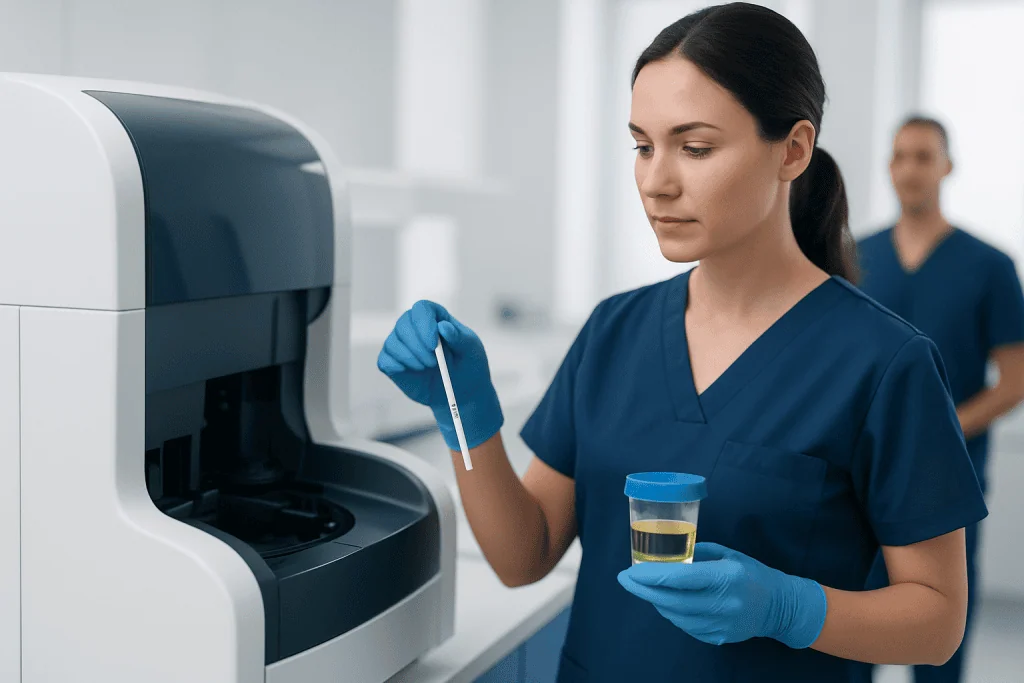
Urine pH is commonly measured during a standard urinalysis. A sample is tested with a dipstick and, if needed, examined under a microscope. Home urine strips can give a rough estimate, but the result can be affected by timing, storage, contamination, and how the strip is read.
Urine pH can vary naturally over the course of a day. It may be lower after fasting overnight and can rise after meals. Drinking more fluids, taking antacids or certain prescription medicines, and eating a diet high in plant foods can all make urine more alkaline for a time. A sample that sits too long before testing may also become artificially more alkaline.
Because of these normal shifts, doctors may repeat the test or order a fresh sample if the result does not match the person’s symptoms. If there is concern for a urinary problem, a clinician may also recommend a urine culture, blood tests to check kidney function and electrolytes, or imaging when stone disease is suspected.
Common causes of high pH in urine

Many cases of alkaline urine are explained by non-serious factors. Diet is one of the most common. Meals rich in vegetables, fruits, and citrus can make urine more alkaline even though some of these foods taste acidic. Taking alkali-containing products, such as some antacids, may have a similar effect.
Another common cause is loss of stomach acid through prolonged vomiting. When the body loses acid, overall chemistry shifts and the kidneys may produce more alkaline urine. Some medications can also influence urine pH, either directly or by changing the body’s acid-base balance. This is one reason doctors review both prescription and over-the-counter products when interpreting a urine test.
Infections can matter too. Certain bacteria in the urinary tract can split urea and raise urine pH, making the urine distinctly alkaline. This pattern can occur with urinary tract infection and may increase the chance of specific stone types forming. Less commonly, persistently high urine pH may be seen with kidney tubular disorders or other conditions that affect how the kidneys handle acid.
High urine pH is also relevant in some stone formers. Certain stones, including struvite and some calcium phosphate stones, are more likely in alkaline urine. If a person has repeated stone symptoms, imaging and metabolic evaluation may be advised, sometimes alongside care for kidney stones.
Warning signs that may suggest an underlying problem
High pH in urine does not always cause symptoms by itself. The concern usually comes from symptoms that happen alongside the test result. Pain or burning with urination, needing to urinate often, lower abdominal discomfort, cloudy or foul-smelling urine, and fever may point toward a urinary infection that needs assessment.
Flank pain, nausea, sudden waves of severe pain, or blood in the urine can suggest a kidney stone or another urinary tract issue. Persistent vomiting, dehydration, confusion, or weakness can be signs that the body’s fluid and acid-base balance is being affected more broadly. These symptoms deserve prompt medical attention, especially if they are worsening.
Sometimes the only clue is a pattern on repeated testing. If high urine pH keeps appearing along with crystals, recurrent infections, or stone episodes, doctors may look more closely for an ongoing cause. The goal is not only to explain the lab result, but also to prevent complications such as recurring infection or stone formation.
How doctors diagnose the cause
Diagnosis starts with context. A clinician will ask about urinary symptoms, recent meals, vomiting, supplements, prescription medicines, and any history of kidney stones or recurrent infections. They may also ask how the urine sample was collected, because contamination or delays in testing can affect pH.
A urinalysis is usually the first step. It can show whether bacteria, nitrites, white blood cells, blood, protein, or crystals are present. If infection is possible, a urine culture helps identify the organism and guide treatment. When stones are suspected, imaging such as ultrasound or CT may be considered, and a specialist may recommend urology evaluation for recurrent or complicated urinary problems.
Blood tests may be used to check kidney function, electrolytes, and acid-base balance. In selected cases, especially when high urine pH is persistent without a clear explanation, doctors may investigate for kidney tubular disorders or other metabolic causes. The exact workup depends on the person’s age, symptoms, and other health conditions.
Treatment options and what happens next
Treatment depends on the reason the urine is alkaline, not on the pH number alone. If diet or a temporary factor is responsible, no medical treatment may be needed beyond observation and repeat testing. If dehydration or vomiting is involved, restoring fluids and addressing the underlying illness often helps normalize the result.
When a urinary tract infection is present, treatment is directed at the infection based on clinical evaluation and, when appropriate, urine culture results. If stones are suspected or confirmed, care may include pain control, hydration advice, stone analysis, preventive strategies, or procedures depending on the stone’s size and location. For patients needing more detailed assessment, kidney stone treatment may be part of the plan.
If the cause relates to medication use, a doctor may review whether any changes are appropriate. For underlying metabolic or kidney-related conditions, treatment focuses on correcting the acid-base problem and protecting kidney health. Because self-adjusting urine pH can be unhelpful or even risky, it is best for people to avoid trying to acidify or alkalinize urine on their own without professional advice.
Prevention and self-care
There is no single ideal urine pH for everyone at all times, so prevention is really about urinary health overall. Good hydration is one of the simplest supportive steps. Drinking enough fluid helps maintain urine flow and may lower the risk of some urinary problems, although exact needs vary from person to person.
People with recurrent infections or stones may benefit from more tailored guidance. That can include not delaying urination, following instructions for proper urine sample collection, and discussing diet in the context of their stone type or medical history. A clinician may recommend further review if repeated tests continue to show alkaline urine without a clear explanation.
If urinary symptoms are ongoing or stones are recurring, specialist assessment can help identify patterns that routine testing may miss. In appropriate cases, evaluation through a comprehensive check-up may help bring together urine findings, blood tests, imaging, and prevention advice. Near the end of the care pathway, Acibadem International’s multidisciplinary specialists and JCI-accredited hospitals also evaluate and treat urinary conditions for international patients when needed.
When to seek medical care
Medical advice is recommended if high pH in urine appears on repeated tests, especially when there are symptoms or other abnormal urinalysis findings. A clinician should also assess alkaline urine if there is a history of recurrent urinary tract infections, kidney stones, kidney disease, or unexplained vomiting.
Urgent care is important if a person has fever, severe back or side pain, blood in the urine, trouble passing urine, dehydration, persistent vomiting, or signs of serious illness. These symptoms can point to infection, obstruction, or significant fluid and electrolyte imbalance. Prompt evaluation helps identify the cause and start the right treatment.
For people without symptoms, a single high urine pH result is often not an emergency. Still, it is reasonable to discuss it with a doctor if it keeps recurring or if there are concerns about medications, diet, or kidney health. Repeat testing under proper conditions often clarifies whether the finding is temporary or clinically meaningful.
Frequently asked questions
Is high pH in urine dangerous?
Not usually by itself. High pH in urine is a lab finding, not a diagnosis, and it is often related to diet or a temporary change in body chemistry. It becomes more important if it persists or happens with symptoms such as pain, fever, or blood in the urine.
What pH is considered high in urine?
Laboratories may use slightly different reference ranges, but a urine pH on the alkaline side is generally considered higher than usual when it is clearly above the mid-to-neutral range. Doctors do not rely on the number alone. They interpret it together with symptoms and the rest of the urinalysis.
Can diet cause high pH in urine?
Yes. A diet rich in fruits and vegetables can make urine more alkaline, and this can be a normal effect. That is why one urine test result may not reflect a disease, especially if there are no symptoms.
Does high pH in urine mean a urinary tract infection?
Not always. Some urinary tract infections can raise urine pH, especially those caused by certain bacteria, but many other factors can do the same. A urine culture and symptom review are usually needed to confirm whether infection is present.
Can high urine pH be related to kidney stones?
Yes. Alkaline urine can be associated with some types of stones, including struvite and certain calcium phosphate stones. If someone has repeated stone symptoms or recurrent alkaline urine, a doctor may suggest further testing.
Should a person try to lower urine pH at home?
It is best not to try to change urine pH without medical guidance. The right approach depends on the cause, and self-treatment may delay proper diagnosis or be unhelpful. Hydration and follow-up testing are safer first steps while waiting for professional advice.
References
- National Institute of Diabetes and Digestive and Kidney Diseases
- MedlinePlus
- Mayo Clinic
- American Urological Association
- National Kidney Foundation
This article is for general information only and is not a substitute for professional medical advice. Please consult a qualified doctor about your individual situation.
Explore treatments in Turkey — costs, top hospitals & a free quote
JCI-accredited · board-certified surgeons · reply within 24h
Add us as a Preferred Source to see more of our trusted health content across Google Search, AI Overviews and Discover.