Hip Abduction: A Complete Medical Overview

Hip abduction moves the leg away from the center of the body. The gluteus medius and gluteus minimus are the main hip abductor muscles.
Key Takeaways
- Hip abduction moves the leg away from the center of the body.
- The gluteus medius and gluteus minimus are the main hip abductor muscles.
- Weakness or pain with hip abduction can affect walking, balance, and pelvic control.
- Causes range from overuse and tendon irritation to arthritis, bursitis, injury, or nerve problems.
- Diagnosis usually relies on a physical exam and may include imaging when symptoms persist or follow injury.
- Treatment often includes activity changes, physical therapy, and care for the underlying cause.
Hip abduction is the movement that takes the leg out to the side, away from the body’s midline. It plays a central role in balance, walking, pelvic stability, and many daily activities, and problems with this motion can point to muscle, tendon, nerve, or joint conditions.
Overview: What hip abduction means
Hip abduction is the motion of moving the leg out to the side, away from the body’s midline. This movement happens at the hip joint and is essential for everyday tasks such as stepping sideways, getting out of a car, climbing stairs, standing on one leg, and keeping the pelvis level while walking.
In practical terms, hip abduction is not just a gym exercise or a range-of-motion term used in anatomy. It is part of how the body keeps balance and controls alignment from the pelvis down to the knee and ankle. When hip abduction is strong and well-coordinated, walking tends to feel smooth and stable. When it is weak or painful, a person may notice limping, unsteadiness, or discomfort along the outer hip.
The main muscles that create hip abduction are the gluteus medius, gluteus minimus, and tensor fasciae latae. These muscles work together with the core, thigh muscles, and small stabilizing structures around the pelvis. Because the movement depends on both strength and joint health, hip abduction can be affected by muscle strain, tendon problems, inflammation, nerve irritation, or conditions such as hip pain.
Why hip abduction matters in daily life
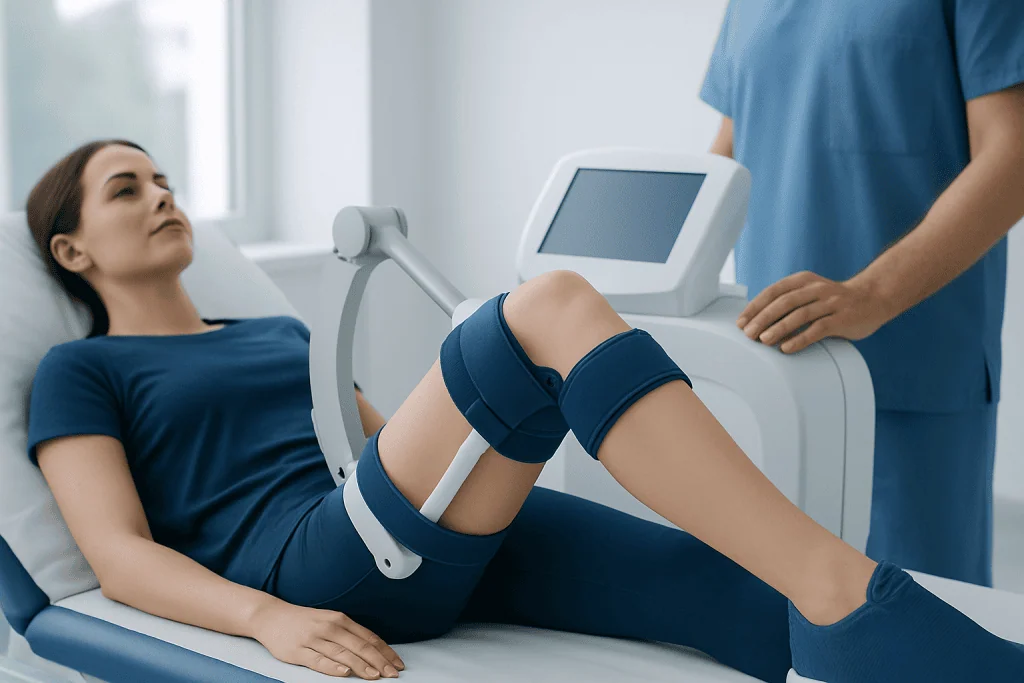
Hip abduction is especially important during walking. Each time one foot lifts off the ground, the muscles on the opposite side of the hip help keep the pelvis from dropping. This allows the body to stay upright and move efficiently. If these muscles are weak, a person may lean the trunk to one side or develop an altered gait pattern.
This movement also supports athletic activities such as running, skating, tennis, dancing, and strength training. Side stepping, changing direction, and landing from a jump all rely on the hip abductors to control the leg and pelvis. Even people who are not athletes use hip abduction repeatedly throughout the day when turning, reaching, or maintaining balance on uneven ground.
Because hip abduction helps align the lower body, poor function can affect nearby areas too. Weakness or pain at the hip may place added stress on the knee, lower back, and sacroiliac region. For this reason, clinicians often look at hip abduction when assessing broader movement problems, not just isolated hip symptoms.
Symptoms linked to hip abduction problems

Symptoms related to hip abduction often include pain on the outside of the hip, weakness when lifting the leg to the side, and difficulty standing on one leg. Some people describe a sense of instability, especially while walking, climbing stairs, or getting up from a chair. Others notice discomfort when lying on the affected side at night.
Depending on the cause, the pain may be sharp with certain movements or more of a dull ache after activity. It may also be accompanied by tenderness over the outer hip, reduced range of motion, or limping. In tendon-related problems, symptoms often worsen gradually with repeated use. After an injury, pain can start suddenly and may be associated with bruising or swelling.
Warning signs can include severe pain after a fall, inability to bear weight, visible deformity, fever, or numbness and weakness spreading down the leg. These features suggest that a more urgent assessment may be needed. Persistent hip abduction pain should not be ignored, especially if it interferes with walking or sleep.
Common causes and risk factors
Hip abduction problems can develop for many reasons. A common cause is irritation or injury of the hip abductor tendons, especially the gluteus medius tendon. This may happen with repetitive activity, sudden increases in exercise, prolonged standing on one leg, or biomechanical strain. Some people also develop pain from inflammation around the outer hip, often referred to as greater trochanteric pain syndrome, which can overlap with bursitis.
Joint conditions can also limit hip abduction. Osteoarthritis of the hip may reduce range of motion and cause stiffness or groin and outer-hip pain. Muscle strains, direct trauma, and overuse injuries are also frequent causes, especially in active adults. In some cases, lower back or nerve conditions can create weakness that affects the hip abductors even when the hip joint itself is not the main problem.
Risk factors include older age, reduced muscle strength, poor movement mechanics, obesity, previous hip or pelvic injury, and certain sports or occupations that involve repetitive side-to-side movement. People who sit for long periods may also develop deconditioned gluteal muscles, which can contribute to weakness and poor pelvic control. Because symptoms can overlap, a medical evaluation is useful when pain or weakness does not improve.
How doctors evaluate hip abduction
Diagnosis starts with a medical history and physical examination. A doctor will usually ask where the pain is felt, how long symptoms have been present, whether there was an injury, and what activities make the symptoms better or worse. They may observe walking, assess balance, and test the strength of the hip abductors by asking the patient to move the leg sideways against resistance.
The examination may also include checking range of motion, tenderness over the outer hip, signs of pelvic drop during single-leg standing, and whether the lower back or knee is also involved. This helps distinguish muscle weakness, tendon irritation, joint disease, and referred pain from other areas. If there are signs of a fracture, significant injury, or persistent symptoms, imaging such as X-rays, ultrasound, or MRI may be recommended.
Imaging is not needed for every person with mild or short-term symptoms, but it can be helpful when the diagnosis is unclear or treatment has not worked as expected. In some cases, laboratory tests may be used if infection or inflammatory disease is a concern. The goal is to identify the underlying cause so treatment can be tailored appropriately.
Treatment options for hip abduction pain or weakness
Treatment depends on the cause, symptom severity, and a person’s activity level. For many people, the first steps include temporary activity modification, relative rest, ice or heat as advised by a clinician, and a gradual return to movement. Physical therapy is often central to recovery because it can improve gluteal strength, pelvic control, flexibility, and walking mechanics. A structured program may include targeted physical therapy and rehabilitation to restore function safely.
If pain is linked to inflammation or overuse, doctors may recommend supportive measures such as posture and gait correction, sleep-position changes, and exercises that reduce excessive strain on the outer hip. Medications may sometimes be used for short-term symptom relief, depending on the person’s health profile. When joint disease is part of the problem, management may also focus on preserving mobility and reducing stress on the hip.
Some patients need additional evaluation by an orthopedic specialist, especially if symptoms are prolonged, strength loss is significant, or imaging shows structural damage. In selected cases, treatment may involve injections or surgery, particularly for severe tendon tears or advanced joint disease. When a broader musculoskeletal assessment is needed, this may include orthopedic care and imaging such as MRI to clarify the diagnosis. Near the end of the care pathway, Acibadem International’s multidisciplinary specialists and JCI-accredited hospitals also diagnose and treat hip-related conditions for international patients.
Prevention and self-care
Many hip abduction problems can be reduced by maintaining hip and core strength, increasing activity gradually, and paying attention to movement quality. Warm-up before exercise, strength training with proper form, and recovery between workouts can all help lower the chance of overuse injuries. People who start a new walking, running, or gym program should increase intensity step by step rather than abruptly.
Daily habits matter as well. Avoiding long periods in one position, using supportive footwear when appropriate, and keeping a healthy body weight may reduce stress on the hips. If a person already has mild symptoms, it may help to avoid repeatedly crossing the legs, sleeping directly on the painful side, or doing high-load side-leg exercises without guidance.
Self-care should be supportive rather than aggressive. Gentle stretching, low-impact activity, and exercises recommended by a clinician or physiotherapist are usually safer than pushing through pain. If symptoms persist beyond a short period, return quickly after activity, or cause limping, professional advice is the best next step.
When to seek medical care
Medical care is advisable if hip abduction pain lasts more than a few weeks, keeps returning, disturbs sleep, or makes walking difficult. A person should also seek assessment if there is noticeable weakness, repeated loss of balance, or symptoms that interfere with exercise, work, or daily activities.
Prompt evaluation is important after a fall, sports injury, or sudden sharp pain that limits weight-bearing. Urgent care is also appropriate for fever, redness, marked swelling, numbness, severe pain, or a visible change in hip or leg position. These symptoms can suggest a more serious problem that needs timely treatment.
For ongoing or complex symptoms, a clinician may check for related conditions affecting the hip, pelvis, spine, or surrounding soft tissues. Early assessment can help clarify the diagnosis, guide safe activity, and reduce the risk of prolonged weakness or altered movement patterns.
Frequently asked questions
What is hip abduction in simple terms?
Hip abduction is the movement of lifting the leg out to the side, away from the center of the body. It happens at the hip joint and helps with balance, walking, and side-to-side movements.
Which muscles are responsible for hip abduction?
The main muscles are the gluteus medius and gluteus minimus, with help from the tensor fasciae latae. These muscles stabilize the pelvis and control leg position during standing and walking.
Why does hip abduction cause pain sometimes?
Pain with hip abduction can come from muscle strain, tendon irritation, bursitis, arthritis, or less commonly nerve-related problems. The exact cause depends on where the pain is felt, how it started, and what other symptoms are present.
Can weak hip abductors affect walking?
Yes. Weak hip abductors can make the pelvis less stable during walking, which may cause limping, side leaning, or a feeling of unsteadiness. Over time, this may also increase stress on the knee or lower back.
How is a hip abduction problem diagnosed?
Doctors usually diagnose it through a history and physical examination, including strength and walking tests. If symptoms are persistent, severe, or related to injury, imaging such as X-rays, ultrasound, or MRI may be used.
What helps improve hip abduction weakness?
A targeted exercise plan, often guided by a physiotherapist, is commonly the most effective approach. Treatment may also include activity changes and care for the underlying condition causing the weakness or pain.
This article is for general information only and is not a substitute for professional medical advice. Please consult a qualified doctor about your individual situation.
Joint and spine care in Turkey — expert assessment & treatment
JCI-accredited · board-certified surgeons · reply within 24h
Add us as a Preferred Source to see more of our trusted health content across Google Search, AI Overviews and Discover.

More from the Health Library

Badam Tel for Skin — Explained by Medical Evidence, Not Myths

Diarrhea Reflux — Explained by Medical Evidence, Not Myths

Progressive Muscle Relaxation: What Patients Need to Know

Ashwagandha and Magnesium: An Evidence-Based Guide for Patients

Sore Throat at Night Time Only: A Complete Medical Overview

Crooked Nose: An Evidence-Based Guide for Patients
Physical Medicine & Rehabilitation Specialists at Acibadem

Dr. Ayhan Ulusoy
Orthopedic Surgery & Traumatology
Dr. Aykut Türken
Orthopedic Surgery & Traumatology
Fzt. Aylin Kurt
Physical Medicine & Rehabilitation
Dr. Aynur Göksel
Physical Medicine & Rehabilitation