Home treatment for corns between toes: A Complete Medical Guide for Patients

Corns between toes often form because shoes, toe shape, and moisture create repeated friction and pressure. The most effective home care is reducing rubbing with better footwear, toe spacers, and protective padding.
Key Takeaways
- Corns between toes often form because shoes, toe shape, and moisture create repeated friction and pressure.
- The most effective home care is reducing rubbing with better footwear, toe spacers, and protective padding.
- Gentle soaking and careful use of a pumice stone may help, but cutting the skin at home is not safe.
- People with diabetes, poor circulation, nerve problems, or signs of infection should avoid self-treatment and see a doctor.
- A corn that keeps coming back may need professional assessment to find the pressure point causing it.
Home treatment for corns between toes usually helps when the problem is mild and caused by rubbing, pressure, and moisture. The safest approach is to relieve friction, keep the area dry, soften thickened skin gently, and seek medical advice if pain, redness, drainage, or diabetes is present.
Overview: what home treatment can and cannot do
Home treatment for corns between toes can be effective when the corn is small, uncomplicated, and mainly caused by rubbing between two toes. In many cases, symptoms improve when pressure is reduced, the skin is kept dry, and the thickened area is protected while it heals. The aim is not to “pull out” the corn, but to remove the irritation that led the skin to thicken in the first place.
Corns that form between the toes are often called soft corns because moisture in this area makes the skin feel white, rubbery, or softened rather than hard and dry. Even though they may look different from hard corns on the top or bottom of the foot, they develop for the same basic reason: repeated friction and pressure. They are not the same as warts, and they are not caused by an infection.
Home care works best when the underlying cause can be corrected, such as wearing narrower shoes less often or using a spacer to stop toes from rubbing. If the pressure continues, the corn may return even after the thickened skin becomes thinner. This is why successful home treatment is usually a combination of symptom relief and prevention.
How to recognize a corn between the toes
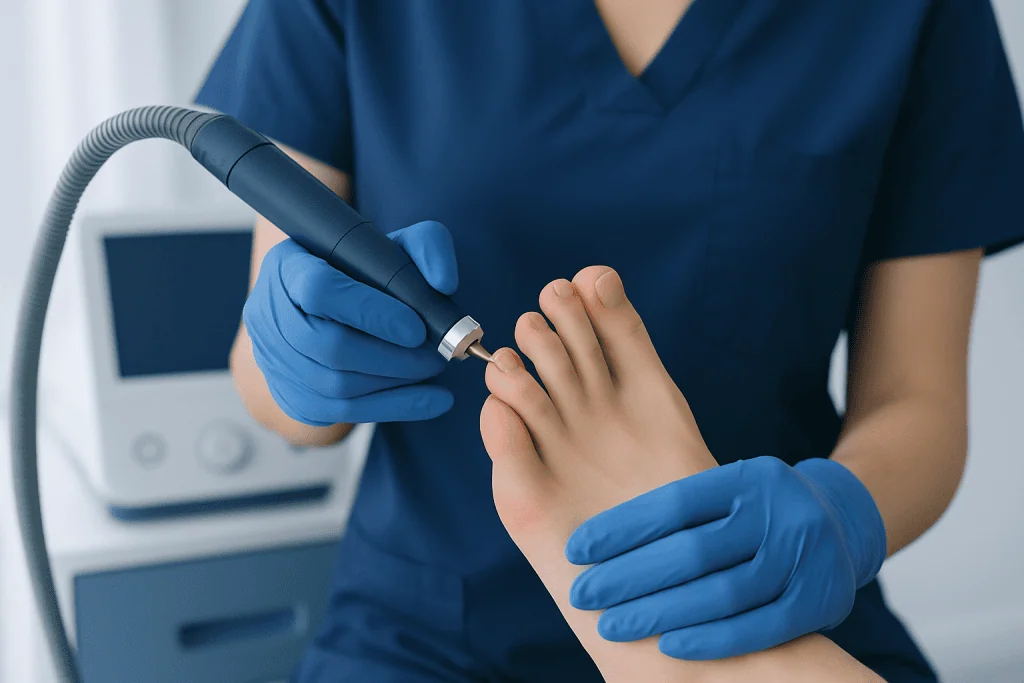
A corn between the toes usually appears as a small, well-defined area of thickened skin where one toe presses against another. Because the space between the toes stays warm and damp, the corn may look pale, white, or macerated rather than yellow and dry. It can feel tender, especially when walking, standing, or wearing tight shoes.
Many people describe the pain as a sharp, localized soreness, as if there is a pebble or rough spot between the toes. The surrounding skin may feel sensitive from ongoing friction. If the area becomes increasingly red, swollen, warm, or starts to drain fluid, this may suggest irritation or infection rather than a simple corn.
Corns can sometimes be confused with calluses, blisters, athlete’s foot, or plantar warts. A callus is usually broader and less clearly defined, while a wart may interrupt normal skin lines and can be painful when squeezed from the sides. If the diagnosis is uncertain or the skin changes do not improve, a doctor may need to examine the foot more closely, especially to rule out other causes such as foot fungus.
Why corns develop between toes
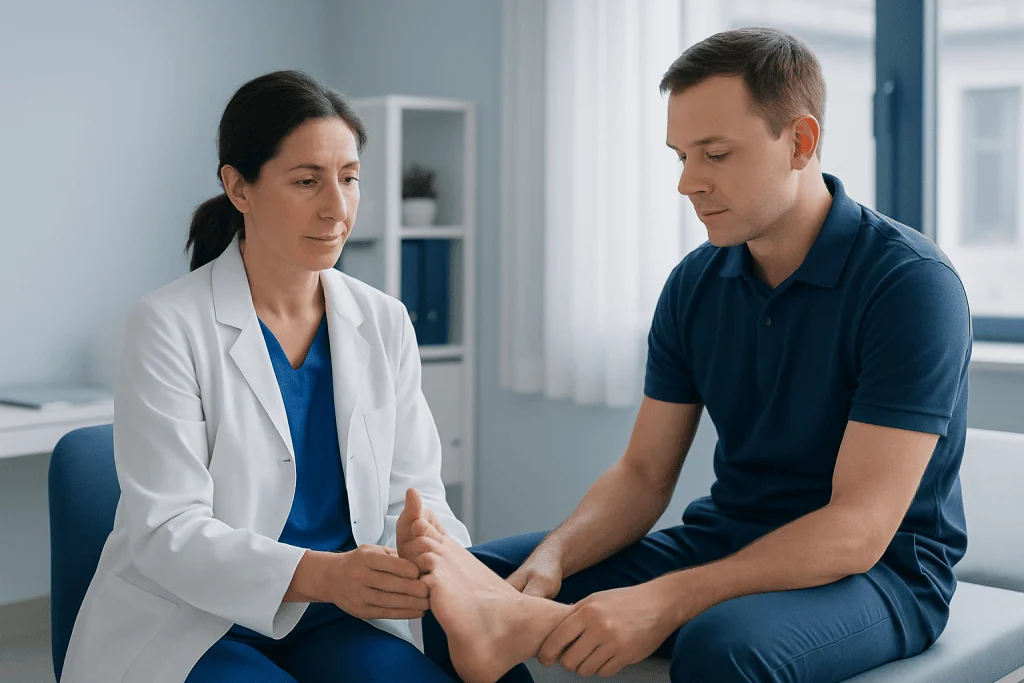
The main reason corns form is repeated mechanical stress. Between the toes, this often happens when shoes squeeze the front of the foot and push the toes together. Over time, the skin responds by becoming thicker at the exact point of pressure. This thickened spot acts as protection at first, but it can become painful if the pressure continues.
Moisture is another important factor. Sweat and limited airflow soften the skin, making it more vulnerable to friction. This is why corns between the toes often feel softer than corns on the outer foot. People who wear closed shoes for long hours, have naturally crowded toes, or have bunions or hammertoes may be more likely to develop them.
Risk factors include:
- Tight, narrow, or ill-fitting shoes
- High heels that shift body weight toward the toes
- Toe deformities such as hammertoes or overlapping toes
- Excess sweating or damp socks
- Walking patterns that create repeated pressure points
- Not wearing socks or wearing socks that trap moisture poorly
When corns are recurrent, it can help to assess the overall foot structure. In some people, the problem is linked to pressure distribution, bunions, or toe crowding that may need podiatric or orthopedic advice. Related structural issues can overlap with conditions such as ingrown toenail or irritation from neighboring nails and skin folds.
Safe home treatment steps that usually help
The first and most important step is to remove the source of friction. Shoes should have a wide toe box so the toes are not pressed together. Soft, breathable socks can help keep the area drier, and changing socks during the day may be useful for people who sweat heavily. Toe separators or spacers may reduce direct rubbing if they fit comfortably and do not create new pressure points.
Protection is often as important as skin care. Non-medicated corn pads, soft foam sleeves, or cushioning placed between the toes can reduce contact and make walking more comfortable. These products should fit gently rather than tightly. If a device increases pain, leaves marks, or causes numbness, it should not be used.
Gentle softening can also help. Soaking the foot in warm water for a short time may soften thickened skin, after which a pumice stone or foot file can be used very lightly to reduce excess buildup. The skin should never be cut with scissors, blades, or other sharp tools at home. After drying carefully between the toes, a simple moisturizer can be applied to the surrounding dry skin, but heavy creams should not be left packed between the toes where they may increase moisture.
Some people ask about medicated corn removers containing salicylic acid. These can irritate healthy skin if they spread beyond the corn, and they are not safe for everyone. Anyone with diabetes, reduced sensation, poor circulation, fragile skin, or uncertain diagnosis should avoid acid-based treatments unless a clinician specifically recommends them. If more advanced pressure relief is needed, a doctor may suggest customized support or orthopedic insoles to reduce recurring friction.
What to avoid during self-care
Home treatment is safest when it is gentle. Digging into the corn, cutting it, or trying to remove it all at once can break the skin and create a route for infection. This is especially important between the toes, where moisture makes skin more delicate and slower to recover from injury.
Adhesive medicated pads should not be used casually, particularly if the surrounding skin is healthy but soft or thin. Strong chemicals can damage nearby tissue and may cause burning, soreness, or ulceration. Home freezing products or harsh scraping methods are also not appropriate unless a doctor has confirmed the problem is not a corn but another lesion.
It is also best not to ignore recurring pain. A corn that repeatedly comes back may be a sign of ongoing shoe pressure, altered walking mechanics, or toe deformity. If the skin is regularly irritated, expert assessment may help identify whether foot care, orthotics, or another form of management is needed.
When to seek medical care
Medical care is recommended if a corn between the toes is very painful, keeps returning, or does not improve with careful home treatment. A doctor should also assess the area if there is redness spreading beyond the lesion, swelling, warmth, bleeding, pus, or a bad odor. These changes may point to infection or another condition that needs more than simple pressure relief.
People with diabetes, peripheral neuropathy, poor circulation, immune suppression, or a history of foot ulcers should not attempt aggressive self-treatment. Even a small break in the skin can become a serious problem in these situations. Professional foot assessment is the safest option before using acids, files, or pads.
During a medical visit, the clinician may confirm that the lesion is a corn rather than a wart, fungal problem, cyst, or skin disease. They may carefully trim thickened skin, recommend footwear changes, provide padding, or investigate toe alignment and pressure patterns. When structural causes are important, treatment may overlap with orthopedics or other foot-focused care.
Medical diagnosis and treatment options
Diagnosis is usually based on a physical examination. The doctor will look at where the lesion sits, how the skin lines appear, whether there is a central core, and what happens when pressure is applied. They may ask about footwear, occupation, activity level, previous foot problems, and whether the corn improves when shoes are changed.
Treatment in clinic often begins with professional debridement, which means carefully reducing the thickened skin using sterile instruments. This can improve comfort quickly because it removes the dense material pressing into the underlying tissue. The doctor may also recommend protective devices, toe spacers, moisture management, or shoe modifications to stop recurrence.
If the problem is driven by toe shape, bunions, or abnormal foot mechanics, longer-term management may include orthotics, physical support devices, or referral for specialist evaluation. In selected cases, persistent pressure caused by deformity may need more targeted intervention. Acibadem International’s multidisciplinary specialists in JCI-accredited hospitals diagnose and treat foot conditions for international patients, including assessment of skin lesions and pressure-related toe problems when conservative care is not enough.
Prevention and day-to-day foot care
Preventing corns between the toes usually means controlling the three factors that trigger them: pressure, friction, and moisture. Shoes should fit comfortably in width and length, with enough room for the toes to move naturally. A wide toe box is often more important than simply choosing a larger shoe size.
Daily foot care can also make a difference. Washing and drying the feet well, especially between the toes, helps limit maceration. Socks made from breathable materials may reduce moisture buildup, and changing damp socks promptly is helpful for active people or those in warm climates.
For people who are prone to recurrence, a regular routine may help:
- Inspect the toes often for early thickening or redness
- Use protective spacers or cushions if advised
- Moisturize dry skin on the feet, but keep the spaces between toes dry
- Replace worn shoes that create uneven pressure
- Seek early advice if toe deformities or gait changes develop
Good prevention is often more effective than repeated removal. When a pressure point is corrected early, a soft corn may shrink and stop causing symptoms rather than becoming a chronic cycle of rubbing and pain.
Frequently asked questions
Can a corn between the toes go away on its own?
It can improve if the pressure and friction causing it are removed. This usually means changing footwear, protecting the area, and keeping the skin dry. If the rubbing continues, the corn often returns even if it seems smaller for a while.
Is it safe to remove a corn between the toes at home?
Gentle home care is usually safe for otherwise healthy people, but cutting or digging out the corn is not recommended. The skin between the toes is delicate and can break easily, increasing the risk of infection. People with diabetes, poor circulation, or numbness should seek medical advice instead of self-treating.
What is the best home treatment for corns between toes?
The most effective approach is to reduce pressure with wider shoes, cushioned protection, and toe spacers if they fit well. Keeping the area dry and gently smoothing thickened skin after soaking may also help. Treatment works best when the cause of friction is corrected at the same time.
Should medicated corn pads be used between the toes?
They may help some people, but they should be used carefully because the skin between the toes is soft and sensitive. Medicated pads can irritate nearby healthy skin if the chemical spreads. If the diagnosis is uncertain or there are circulation or nerve problems, it is safer to ask a clinician first.
How can someone tell the difference between a corn and athlete's foot?
A corn is usually a small, focused area of thickened skin at a pressure point, while athlete's foot often causes itching, peeling, scaling, or cracking over a broader area. Corns tend to hurt with direct pressure, especially in tight shoes. If the area is very itchy, spreading, or not clearly pressure-related, a doctor can help confirm the cause.
When is a corn between the toes a reason to see a doctor?
Medical review is important if the lesion is very painful, comes back often, or shows signs of infection such as redness, warmth, swelling, or drainage. It is also important for people with diabetes, circulation problems, nerve damage, or immune suppression. A doctor can confirm the diagnosis and address the reason it keeps forming.
References
- American Academy of Dermatology
- American Podiatric Medical Association
- National Health Service
- Mayo Clinic
- Merck Manual Consumer Version
This article is for general information only and is not a substitute for professional medical advice. Please consult a qualified doctor about your individual situation.
Explore treatments in Turkey — costs, top hospitals & a free quote
JCI-accredited · board-certified surgeons · reply within 24h
Add us as a Preferred Source to see more of our trusted health content across Google Search, AI Overviews and Discover.