Horsefly: What Patients Need to Know

Horsefly bites are usually painful at the time of the bite and may leave redness, swelling, and itching afterward. Most bites can be managed with washing, cooling the area, and avoiding scratching.
Key Takeaways
- Horsefly bites are usually painful at the time of the bite and may leave redness, swelling, and itching afterward.
- Most bites can be managed with washing, cooling the area, and avoiding scratching.
- Medical care is important if there are signs of infection, a large allergic reaction, or symptoms affecting breathing or the face.
- Horseflies do not usually stay attached like ticks, and they do not leave a stinger like bees.
- Protective clothing, insect repellents, and avoiding peak insect activity can help prevent bites.
A horsefly is a biting fly that can cause a sudden, painful skin reaction, often with redness, swelling, and lingering irritation. Most horsefly bites settle with basic wound care, but worsening pain, spreading redness, or breathing symptoms should be assessed by a doctor.
Overview: what a horsefly bite means
A horsefly is a large biting fly that feeds by cutting the skin and drawing blood. For patients, this matters because the bite is often immediately painful, more noticeable than a mosquito bite, and sometimes followed by marked redness, swelling, or itching for several hours to days.
In most cases, a horsefly bite is uncomfortable but not dangerous. The main concerns are skin irritation, scratching that damages the skin, and, less commonly, a local infection or an allergic reaction. A careful look at symptoms helps distinguish a routine bite from one that needs medical advice.
Horseflies are different from bees, wasps, and ticks. They do not leave a stinger behind, and they do not usually remain attached to the skin. If there is uncertainty about what caused a bite, a doctor may also consider other conditions such as tick-borne illnesses or other insect-related skin reactions.
Common symptoms after a horsefly bite

The most typical symptom is sharp pain at the time of the bite. Afterward, the area may become red, raised, warm, and itchy. Some patients notice a small wound or broken skin because horseflies cut rather than gently pierce the skin.
Swelling can vary from mild puffiness to a larger local reaction, especially on the arms, legs, or around the eyes. The bite may also ooze a small amount of clear fluid or bleed slightly at first. These reactions can look dramatic but still remain within the range of a normal local response.
Symptoms that deserve closer attention include increasing tenderness, spreading redness, pus, fever, or swollen lymph nodes. These can suggest a skin infection such as cellulitis, particularly if the area has been scratched repeatedly.
- Immediate pain or burning
- Redness and swelling
- Itching or irritation
- A visible bite mark or small cut in the skin
- Temporary warmth around the bite
Why horsefly bites react this way
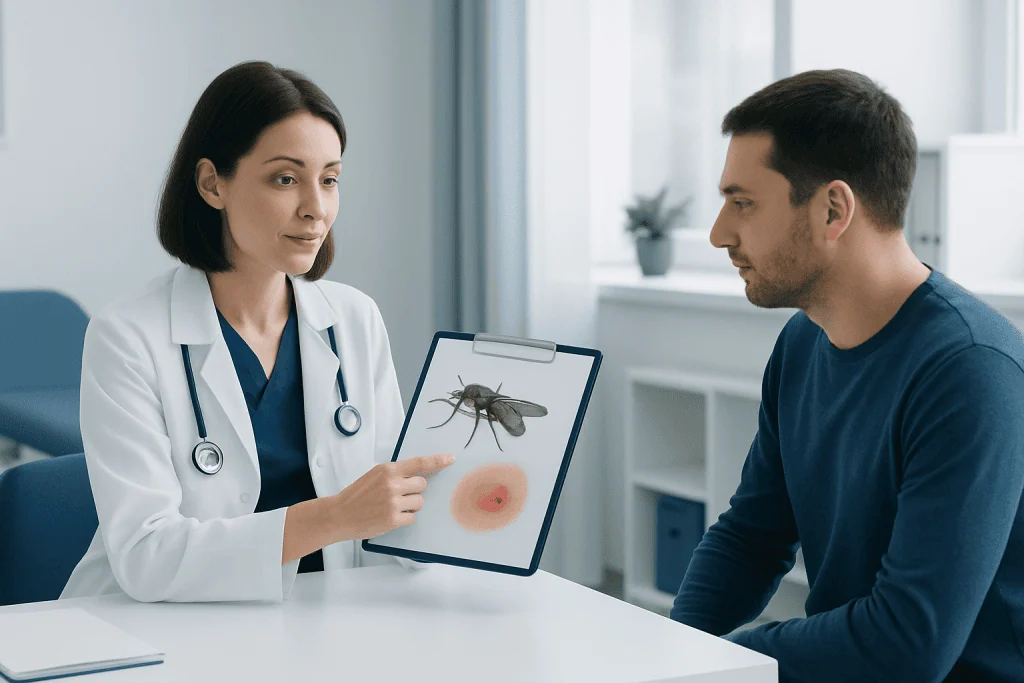
Horsefly bites tend to hurt because the insect uses mouthparts that cut the skin. This causes more tissue irritation than a mosquito bite and explains why the area may sting, bleed, or feel sore soon afterward.
The body then responds to the bite with inflammation. Chemicals released by the immune system lead to redness, swelling, itching, and warmth. In some people, especially those with sensitive skin or a history of allergies, the local reaction can be larger and last longer.
Risk of infection rises when the skin is broken and then scratched. Dirt under the fingernails or repeated rubbing can introduce bacteria into the area. This does not mean every painful bite is infected, but it is one reason gentle skin care is important from the start.
People who spend time outdoors near water, farms, stables, wooded areas, or livestock may be more exposed. Warm weather, bare skin, and dark clothing can also make bites more likely in some settings.
How doctors assess a horsefly bite
A doctor usually diagnoses a horsefly bite by asking about recent outdoor exposure and examining the skin. The appearance, timing, and symptoms are often enough to identify a likely insect bite and to separate it from rashes, allergic skin conditions, or skin infections.
The assessment focuses on whether the reaction is local, allergic, or infected. A small red swollen area with itching is usually managed conservatively. If there is severe swelling, facial involvement, fever, or worsening pain, the clinician may look more carefully for complications or another cause.
Testing is not usually needed for an uncomplicated horsefly bite. However, if a patient develops widespread hives, breathing difficulty, or repeated severe reactions to insect bites, the doctor may recommend evaluation by an allergy specialist. In rare situations where there is concern about skin infection, clinicians may discuss dermatology evaluation or related care.
Treatment options and home care
The first step is to wash the bite gently with soap and water. A cool compress can help reduce pain and swelling, and keeping the area clean lowers the chance of infection. Patients should avoid scratching, squeezing, or applying harsh products that can further irritate the skin.
For many people, symptom relief is enough. Non-prescription measures such as a soothing anti-itch cream or an oral antihistamine may help, depending on individual needs and medical history. If there is significant pain, a standard over-the-counter pain reliever may be considered if a doctor or pharmacist says it is appropriate.
If the bite becomes infected, treatment may require medical evaluation and sometimes prescription medicine. When swelling is severe, persistent, or difficult to distinguish from another skin condition, a clinician may recommend allergy assessment or infectious diseases care when clinically appropriate.
- Wash the area gently
- Apply a cool compress for short periods
- Keep nails short and avoid scratching
- Monitor for spreading redness or drainage
- Seek medical advice before using any medicine if pregnant, breastfeeding, or managing chronic illness
Prevention and self-care outdoors
Prevention focuses on reducing exposure. Horseflies are often active in warm months and around water, fields, or animals. Wearing long sleeves, trousers, and closed shoes can reduce the amount of exposed skin, especially during outdoor activities.
Insect repellents can be helpful when used according to the product instructions. It also helps to avoid lingering near areas where horseflies are common, such as stables, marshy ground, or places with standing water. Light-colored clothing may be less attractive to some biting insects than dark clothing.
After outdoor activity, checking the skin and cleaning any new bites early can prevent complications. If a child has been bitten, adults should watch for scratching and keep the area clean. Patients with recurring severe skin reactions may benefit from discussing a prevention plan with a doctor.
When to seek medical care
Most horsefly bites can be cared for at home, but some situations should not be ignored. Medical advice is important if the redness keeps expanding, the skin becomes increasingly painful, pus appears, or fever develops. These changes can suggest an infection rather than a simple bite reaction.
Urgent care is needed for signs of a serious allergic reaction, including trouble breathing, wheezing, swelling of the lips or tongue, dizziness, or fainting. Very large swelling around the eyes, severe facial swelling, or symptoms that affect swallowing also need prompt assessment.
Patients should also seek care if the bite does not improve over several days, if they have a weakened immune system, or if they are unsure whether the lesion is a bite at all. Near the end of the care pathway, it may be reassuring to know that Acibadem International’s multidisciplinary specialists in JCI-accredited hospitals diagnose and treat skin reactions, allergies, and related infections for international patients.
Frequently asked questions
Are horsefly bites dangerous?
Most horsefly bites are not dangerous, but they can be quite painful and may cause strong local swelling or itching. The main concerns are infection from scratching and, less commonly, an allergic reaction that needs medical attention.
How long does a horsefly bite last?
Pain is often strongest at the time of the bite and usually improves within hours. Redness, swelling, and itching may last a few days, though larger local reactions can take longer to settle.
Can a horsefly bite get infected?
Yes, any broken skin can become infected, especially if it is scratched repeatedly. Warning signs include increasing pain, spreading redness, warmth, pus, or fever.
What is the best immediate treatment for a horsefly bite?
The area should be washed with soap and water and cooled with a clean compress. Keeping the skin clean and avoiding scratching are simple but important steps that often help most.
How is a horsefly bite different from a tick bite or bee sting?
A horsefly bite is usually immediately painful and may leave a small cut or bleeding point. Unlike a tick, the insect does not stay attached, and unlike a bee, it does not leave a stinger behind.
Should a child with a horsefly bite see a doctor?
A child should be seen if there is severe swelling, facial involvement, fever, worsening redness, or signs of breathing difficulty. For mild bites, home care and close observation are often enough.
This article is for general information only and is not a substitute for professional medical advice. Please consult a qualified doctor about your individual situation.
Explore treatments in Turkey — costs, top hospitals & a free quote
JCI-accredited · board-certified surgeons · reply within 24h
Add us as a Preferred Source to see more of our trusted health content across Google Search, AI Overviews and Discover.

More from the Health Library

Bile Duct Obstruction: A Complete Medical Overview

Latanoprost — Explained by Medical Evidence, Not Myths

Fatal Mld: An Evidence-Based Guide for Patients

Vasodilator — Explained by Medical Evidence, Not Myths

Platelet Count — Explained by Medical Evidence, Not Myths