Bile Duct Obstruction: A Complete Medical Overview

Bile duct obstruction means bile cannot flow normally through the biliary system. Common causes include gallstones, inflammation, narrowing of the ducts, and tumors affecting the bile ducts, pancreas, or nearby organs.
Key Takeaways
- Bile duct obstruction means bile cannot flow normally through the biliary system.
- Common causes include gallstones, inflammation, narrowing of the ducts, and tumors affecting the bile ducts, pancreas, or nearby organs.
- Typical signs are jaundice, dark urine, pale stools, itching, nausea, and pain in the upper abdomen.
- Diagnosis usually combines blood tests with imaging such as ultrasound, MRCP, CT, or ERCP.
- Treatment focuses on relieving the blockage and treating the underlying cause.
- Urgent medical care is important if jaundice occurs with fever, chills, severe pain, or confusion.
Bile duct obstruction is a blockage that prevents bile from flowing normally from the liver and gallbladder into the small intestine. It can lead to jaundice, dark urine, pale stools, itching, abdominal pain, and sometimes infection, but the outlook is often good when the cause is identified and treated promptly.
Overview
Bile duct obstruction is a condition in which one of the ducts that carries bile becomes partly or completely blocked. Bile is a digestive fluid made by the liver. It helps the body digest fats and also carries waste products, including bilirubin, out of the liver. When bile cannot flow normally, it backs up into the liver and bloodstream, leading to symptoms such as yellowing of the skin and eyes.
The blockage may occur inside the bile ducts themselves or because of pressure from a nearby condition, such as inflammation or a mass. The problem can affect the small ducts inside the liver or the larger ducts outside the liver, including the common bile duct. Some people develop symptoms gradually, while others become unwell more suddenly.
This condition is not a single disease but a medical finding with many possible causes. That is why evaluation is important: treatment is different for a gallstone, a scar-related narrowing, an infection, or a tumor. In many cases, bile duct obstruction can be relieved with minimally invasive procedures, surgery, or treatment of the underlying disease.
How the bile ducts work and why blockage matters

The biliary system includes the liver, gallbladder, and bile ducts. The liver makes bile continuously. Bile then travels through small channels inside the liver into larger ducts, and from there it may either flow directly into the small intestine or be stored in the gallbladder until needed after a meal.
When a duct is blocked, bile cannot reach the intestine efficiently. This can affect digestion, especially of fats, and can cause pale or clay-colored stools because less bile pigment reaches the bowel. Bilirubin may build up in the blood, causing jaundice and dark urine. Some people also notice generalized itching because bile components accumulate in the body.
Blockage also matters because it can raise the risk of infection in the biliary tree, a condition called cholangitis. This can become serious if not treated quickly. Persistent obstruction can also injure the liver over time, so medical assessment should not be delayed when symptoms suggest a blocked bile duct.
Symptoms and possible complications
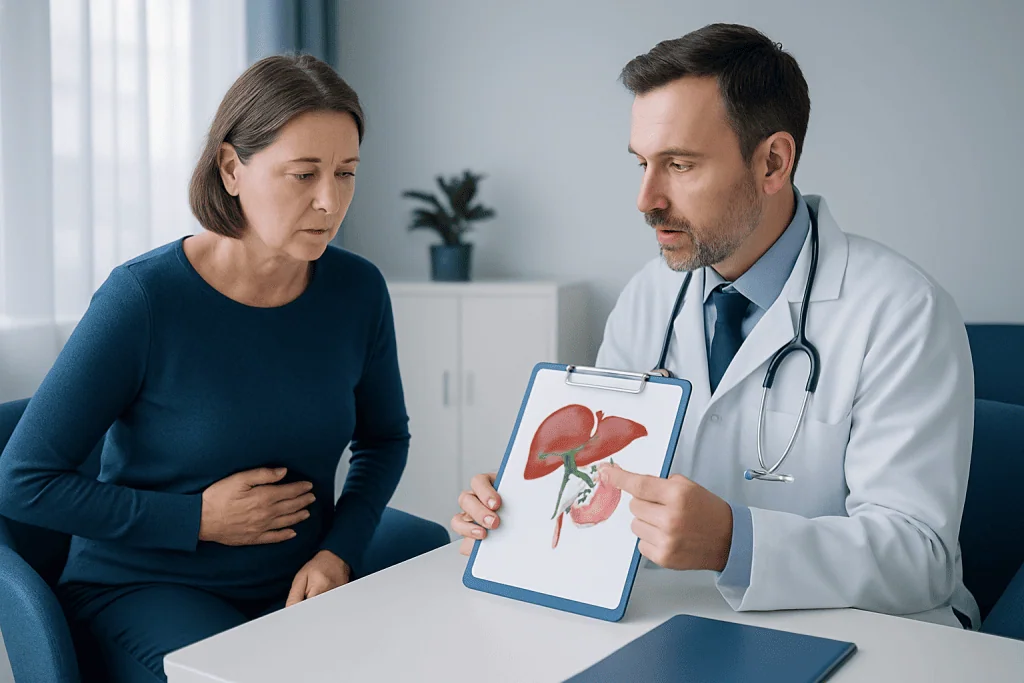
Symptoms depend on how severe the obstruction is, where it is located, and how quickly it develops. Some people have mild discomfort at first, while others notice clear signs of jaundice. A complete blockage usually causes more obvious symptoms than a partial one.
Common symptoms include:
- Yellowing of the skin or eyes
- Dark urine
- Pale, gray, or clay-colored stools
- Itching
- Pain in the upper right or middle abdomen
- Nausea or vomiting
- Loss of appetite
- Fever or chills if infection is present
Potential complications include infection of the bile ducts, inflammation of the gallbladder or pancreas, poor absorption of fats and fat-soluble vitamins, and liver damage if the blockage lasts a long time. If obstruction is caused by gallstones, it may occur alongside gallstones or gallbladder inflammation. Prompt treatment helps reduce the chance of these complications.
Causes and risk factors
Gallstones are one of the most common causes of bile duct obstruction. A stone may leave the gallbladder and become stuck in the common bile duct, preventing bile from passing. This is a frequent reason for sudden pain and jaundice, especially in people with a history of gallbladder stones.
Other causes include inflammation, scarring, or narrowing of the ducts, known as strictures. These may develop after surgery, due to chronic pancreatitis, or from conditions that cause repeated inflammation of the biliary system. Infections and certain parasites can also affect the ducts in some parts of the world.
Tumors may block the ducts from within or compress them from outside. These can include cancers of the bile ducts, pancreas, liver, gallbladder, or nearby lymph nodes. In some patients, the obstruction is linked to pancreatic cancer or another digestive tract disease. Less commonly, congenital abnormalities, cysts, or injury to the bile ducts may be responsible.
Risk factors vary by cause, but may include gallstones, older age, obesity, prior biliary surgery, pancreatitis, certain liver or autoimmune diseases, and a personal history of gastrointestinal tumors. A doctor considers the pattern of symptoms and the patient’s medical history to guide further testing.
Diagnosis and tests
Diagnosis starts with a medical history and physical examination. The doctor asks about jaundice, abdominal pain, stool and urine color, itching, fever, weight loss, previous gallstones, liver disease, and recent surgery. On examination, there may be tenderness in the upper abdomen or visible jaundice.
Blood tests are usually the first step. These often include liver function tests and bilirubin levels, which can show a pattern suggesting blocked bile flow. Additional tests may assess infection, inflammation, and how well the liver is working.
Imaging is central to confirming the diagnosis and finding the cause. Ultrasound is commonly used first because it can detect dilated bile ducts and gallstones. CT can help evaluate surrounding organs. MRCP, a specialized MRI study, provides a detailed noninvasive view of the bile ducts. If direct treatment may be needed, a doctor may recommend ERCP to diagnose and sometimes relieve the blockage during the same procedure.
In selected cases, endoscopic ultrasound, biopsy, or tissue sampling is needed to clarify whether narrowing is benign or cancer-related. The goal is not only to confirm bile duct obstruction, but also to identify the exact reason it happened so the safest treatment plan can be chosen.
Treatment options
Treatment depends on what is causing the obstruction, how severe it is, and whether infection or liver injury is present. In general, care has two goals: restore bile flow and treat the underlying condition. If there are signs of infection or significant illness, treatment may need to happen urgently in hospital.
For stone-related blockage, endoscopic treatment is often used first. During ERCP, the doctor may remove a stone, widen the opening of the duct, or place a stent to improve drainage. If the gallbladder is the source of repeated stones, doctors may later recommend gallbladder surgery to help prevent recurrence.
If the duct is narrowed by scar tissue or inflammation, treatment may include dilation or stenting, sometimes combined with medicines depending on the cause. When a mass or tumor is responsible, the plan may involve further imaging, biopsy, surgery, endoscopic drainage, or cancer treatment. In patients whose obstruction is related to pancreatic disease, assessment by a team experienced in pancreatic cancer treatment may be appropriate.
Some people need surgery if endoscopic options are not possible or if the anatomy is complex. In cases of severe jaundice, dehydration, or infection, supportive care such as fluids, symptom relief, and antibiotics may be needed. Near the end of the diagnostic and treatment pathway, patients may benefit from multidisciplinary evaluation; Acibadem International’s specialists in JCI-accredited hospitals diagnose and treat bile duct obstruction for international patients.
Prevention, self-care, and recovery
Not every case of bile duct obstruction can be prevented, especially when the cause is a congenital problem or a tumor. However, some steps may lower risk. Managing conditions linked to gallstones, maintaining a healthy weight, and avoiding rapid weight-loss plans may help reduce the chance of stone formation in some people.
Self-care at home cannot remove a blocked bile duct, so new jaundice or persistent symptoms should not be treated only with diet changes or supplements. While waiting for medical assessment, it may help to stay hydrated and avoid heavy or fatty meals if these worsen discomfort. Alcohol should generally be avoided until the cause is known, especially if liver tests are abnormal.
Recovery depends on the cause and the type of treatment used. Many people improve once bile flow is restored, with jaundice and itching gradually easing over days to weeks. Follow-up is important to review test results, monitor liver function, and make sure the underlying problem has been fully addressed.
When to seek medical care
Medical review is important whenever symptoms suggest bile duct obstruction. A person should arrange prompt evaluation if they develop yellowing of the skin or eyes, dark urine, pale stools, persistent upper abdominal pain, unexplained itching, or nausea that does not improve. Even when symptoms seem mild, testing is needed to identify the cause.
Urgent care is needed if jaundice occurs with fever, chills, severe abdominal pain, vomiting, confusion, faintness, or signs of dehydration. These features may suggest infection, severe blockage, or another complication that needs rapid treatment. Anyone with a known liver, gallbladder, or pancreatic condition should contact a qualified doctor promptly if symptoms change or worsen.
Frequently asked questions
What is bile duct obstruction?
Bile duct obstruction is a partial or complete blockage in the tubes that carry bile from the liver and gallbladder to the small intestine. When bile cannot flow normally, it can build up and cause jaundice, itching, dark urine, pale stools, and digestive symptoms.
What are the first signs of a blocked bile duct?
Early signs often include yellowing of the eyes or skin, dark urine, pale stools, itching, and pain in the upper abdomen. Some people also notice nausea, poor appetite, or fatigue. Symptoms can appear gradually or start more suddenly, depending on the cause.
Can bile duct obstruction go away on its own?
Sometimes a very small stone may pass, but a suspected bile duct obstruction should not be assumed to resolve on its own. Because blockage can lead to infection or liver problems, medical assessment is important to confirm whether the duct is still obstructed and whether treatment is needed.
Is bile duct obstruction always caused by gallstones?
No. Gallstones are a common cause, but blockage can also result from inflammation, scarring, strictures, pancreatitis, cysts, or tumors involving the bile ducts, pancreas, liver, or nearby tissues. The underlying cause determines the most appropriate treatment.
How do doctors diagnose bile duct obstruction?
Doctors usually combine symptom review, physical examination, blood tests, and imaging. Ultrasound is often the first scan, and MRCP, CT, or ERCP may be used to confirm the blockage and identify its cause more clearly.
What is the treatment for bile duct obstruction?
Treatment focuses on restoring bile flow and treating the reason for the blockage. This may involve ERCP to remove stones or place a stent, surgery, antibiotics if infection is present, or further treatment for a narrowing or tumor.
When is bile duct obstruction an emergency?
It can become an emergency when jaundice is accompanied by fever, chills, severe abdominal pain, confusion, or ongoing vomiting. These symptoms may suggest infection of the bile ducts or a severe blockage, both of which need urgent medical care.
This article is for general information only and is not a substitute for professional medical advice. Please consult a qualified doctor about your individual situation.
Persistent digestive symptoms? Get evaluated in Turkey
JCI-accredited · board-certified surgeons · reply within 24h
Add us as a Preferred Source to see more of our trusted health content across Google Search, AI Overviews and Discover.

More from the Health Library

Zenker’s Diverticulum: A Complete Medical Overview

Cashew Nuts Nuts: A Complete Medical Overview

Alleviating Gas in Newborns: An Evidence-Based Guide for Patients

Mitral Valve Prolapse: A Complete Medical Overview

Sauna Advantages: An Evidence-Based Guide for Patients