How Do I Get Rid of Spots? Here Is What the Evidence Says

There is no single treatment for all spots; the cause matters. Acne spots, dark marks, and new skin growths are managed differently.
Key Takeaways
- There is no single treatment for all spots; the cause matters.
- Acne spots, dark marks, and new skin growths are managed differently.
- Gentle cleansing, sun protection, and evidence-based products help more than scrubbing or picking.
- A doctor should assess spots that change quickly, bleed, hurt, or do not heal.
- Diagnosis may involve a skin examination and, sometimes, a biopsy or lab tests.
Most spots are harmless and often relate to acne, irritation, blocked pores, or pigment changes after inflammation. The best way to get rid of spots depends on what kind they are, so careful self-care and, when needed, medical assessment are more effective than harsh home remedies.
Overview: what helps spots most often
For many people asking, “how do I get rid of spots,” the reassuring answer is that spots are often harmless and commonly linked to acne, clogged pores, irritation, insect bites, or temporary dark marks left behind after inflammation. Many improve with time, gentle skin care, and avoiding picking or squeezing. The most effective approach starts with identifying what kind of spot is present rather than treating every mark the same way.
That matters because “spots” can mean several different things: pimples, blackheads, whiteheads, red bumps, brown patches, rough patches, tiny cysts, or new moles and skin growths. Acne-related spots may respond to ingredients such as benzoyl peroxide, salicylic acid, retinoids, or azelaic acid. Dark spots after acne or irritation often need sun protection and pigment-fading treatments, while suspicious or persistent lesions need medical review instead of home treatment.
Although most spots are not serious, some deserve prompt attention. Red flags include a spot that changes shape or color, bleeds, crusts, does not heal, becomes very painful, spreads quickly, or is associated with fever or significant swelling. A doctor can examine the skin, ask about timing and triggers, and decide whether the spot is a routine skin issue or something that needs tests or specialist care.
What kinds of spots can appear on the skin?
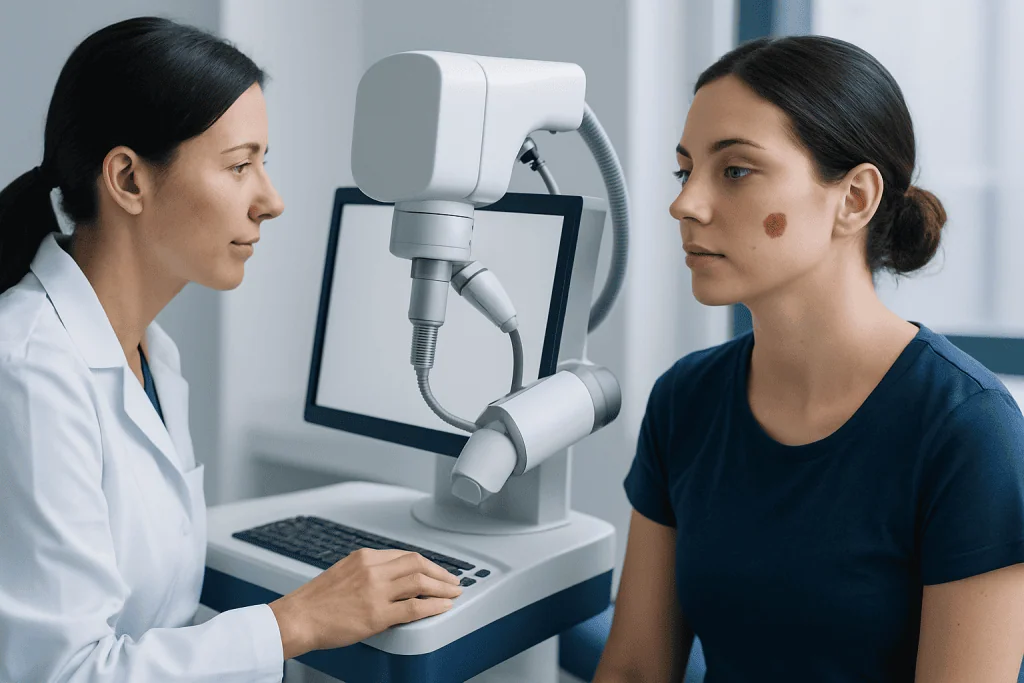
Common spots include acne lesions such as blackheads, whiteheads, papules, pustules, nodules, and cysts. Acne happens when pores become blocked with oil and dead skin cells, often with inflammation and bacteria contributing. These spots tend to occur on the face, chest, shoulders, and back. If acne is widespread or leaves scars, a dermatologist may advise structured acne treatment.
Not all spots are acne. Brown or gray marks may be post-inflammatory hyperpigmentation, especially after acne, eczema, or minor injuries. Rough, itchy, or flaky spots may reflect dermatitis or psoriasis. Small white bumps can be milia. Red spots may arise from irritation, allergy, heat rash, infection, or broken blood vessels. New pigmented lesions can also be freckles, sun spots, or moles.
Because appearances can overlap, it is easy to mislabel a skin change. For example, a persistent red patch may be irritation, a fungal rash, or a precancerous lesion. A dark spot may be a harmless lentigo, but it could also need assessment if it changes. This is why home care works best for clearly mild, familiar spots, while unusual, evolving, or treatment-resistant lesions should be checked professionally.
Evidence-based ways to get rid of spots at home

For acne-type spots, the best-supported home treatments are simple and consistent. Washing with a mild cleanser twice daily, using non-comedogenic moisturizers, and applying broad-spectrum sunscreen can reduce irritation and help prevent marks from becoming more noticeable. Over-the-counter benzoyl peroxide may help inflamed pimples, while salicylic acid may help unclog pores. Adapalene, a topical retinoid available in some countries without prescription, can also help acne over time.
For dark spots left after acne or irritation, daily sun protection is one of the most important steps. Ultraviolet exposure can make hyperpigmentation darker and more persistent. Ingredients such as azelaic acid, niacinamide, vitamin C, and retinoids may gradually improve discoloration. Results usually take weeks to months rather than days, so patience matters.
Harsh methods are less helpful than many people expect. Scrubbing, picking, squeezing, using undiluted acids, or layering many active products at once can worsen inflammation and increase the chance of scarring or pigmentation. A simple routine is usually safer: gentle cleanser, treatment product, moisturizer, and sunscreen in the morning. If irritation develops, it is sensible to reduce frequency and seek professional advice.
- Choose fragrance-free, non-comedogenic skin care when possible.
- Introduce one active ingredient at a time.
- Avoid picking spots, even if they seem ready to pop.
- Use sunscreen daily, especially when treating dark marks.
Common causes and factors that make spots worse
Oil production, hormones, friction, and genetics all influence acne-type spots. Hormonal fluctuations around puberty, menstruation, pregnancy, or conditions that affect hormones can contribute to breakouts. Tight clothing, sports equipment, oily hair products, and frequent face touching may also aggravate the skin. Stress does not directly cause every spot, but it can worsen some inflammatory skin conditions.
Dark spots are more likely after inflammation, especially if spots are picked or if the skin is exposed to sunlight without protection. Some people are naturally more prone to post-inflammatory hyperpigmentation. Medications, cosmetic products, and irritants can also trigger rashes or pigment changes. In some cases, recurring or unusual lesions may point to an underlying condition rather than a simple cosmetic concern.
A changing mole or a new spot that looks different from others is not something to self-diagnose. While many pigmented lesions are benign, doctors look for features such as asymmetry, irregular borders, multiple colors, increasing size, and evolution over time. People who have many moles, significant sun exposure, or a personal or family history of skin cancer should be especially attentive to skin changes.
How doctors diagnose spots
If a spot needs medical review, a doctor usually begins with a focused history and skin examination. They may ask when the spot first appeared, whether it itches or hurts, whether it bleeds, if it has changed in size or color, what products have been used, and whether there is any personal or family history of skin disease. In many cases, diagnosis is made clinically by looking closely at the skin.
When the cause is uncertain, additional steps may be helpful. A dermatologist may use dermoscopy, a magnified lighted tool that helps assess pigmented lesions and other skin changes in more detail. If infection is suspected, swabs or scrapings may be taken. If the lesion is persistent, unusual, or concerning, a skin biopsy may be recommended to confirm the diagnosis.
For acne that appears severe, widespread, scar-forming, or linked to hormonal symptoms, doctors may look for contributing factors and discuss a treatment plan. This can include prescription creams, oral medicines, or procedures. Diagnostic accuracy is important because the right treatment for acne, eczema, pigment change, or a suspicious mole is not the same.
Medical treatments for stubborn, severe, or suspicious spots
When home treatment is not enough, medical options depend on the cause. Acne may be treated with prescription retinoids, topical or oral antibiotics in selected cases, hormonal therapies for some patients, or other dermatologist-guided medicines. If breakouts are severe or leaving scars, a specialist may recommend more advanced acne treatment options tailored to skin type and severity.
For persistent dark spots, doctors may suggest stronger topical treatments or in-office procedures. Chemical peels, certain laser treatments, and other pigment-directed approaches can help selected patients, but they must be chosen carefully to avoid irritation or worsening discoloration. For patients with acne scars or texture concerns after spots have healed, procedures such as laser treatment may sometimes be considered after a proper skin assessment.
If a spot is suspicious for skin cancer or another significant skin disease, treatment focuses on the diagnosis rather than cosmetic improvement. That may involve close monitoring, biopsy, excision, or other specialist care. In some situations, evaluation may connect with broader skin cancer assessment pathways. Near the end of the care journey, patients may also seek support from multidisciplinary specialists; Acibadem International’s JCI-accredited hospitals evaluate and treat skin conditions for international patients when needed.
Prevention and self-care that support clearer skin
Preventing new spots is often easier than trying to remove every mark after it appears. A regular skin care routine with gentle cleansing, a suitable moisturizer, and daily sunscreen can reduce irritation and help maintain the skin barrier. People prone to acne often benefit from avoiding heavy, pore-clogging products and removing makeup before sleep.
Lifestyle measures can also help, although they are not instant cures. It can be useful to shower after sweating, keep phone screens and pillowcases clean, and avoid rubbing the skin with helmets, masks, or straps when possible. Some people notice breakouts triggered by specific hair products or cosmetics; choosing labeled non-comedogenic products may help. A balanced diet and general health habits support skin health overall, even though no single food explains every breakout.
The most protective self-care step for dark spots is sun protection. Broad-spectrum sunscreen, shade, and hats can reduce contrast between existing spots and surrounding skin and may help treatments work better. Above all, picking should be avoided. Picking increases inflammation, delays healing, and raises the chance of scarring and pigmentation.
When to seek medical care
Most spots can be watched for a short time if they are mild, familiar, and improving. Medical advice is sensible if a spot lasts longer than expected, recurs often, spreads, becomes painful, or does not respond to reasonable home care. Acne should also be assessed if it is causing emotional distress, scarring, or widespread inflammation.
Prompt review is important for a spot that bleeds without clear reason, crusts repeatedly, changes shape or color, has irregular borders, or looks notably different from other moles or marks. New spots accompanied by fever, facial swelling, pus, or significant redness may indicate infection and need timely care. Any rapidly evolving lesion deserves attention, even if it is not painful.
Children, pregnant people, and anyone with a weakened immune system should be especially cautious about unusual skin changes. A clinician can decide whether reassurance, prescription treatment, minor procedures, or referral is needed. Early assessment can both ease worry and help prevent avoidable complications such as scarring or delayed diagnosis.
Frequently asked questions
How do I get rid of spots quickly?
The fastest safe approach depends on the type of spot. Acne spots may improve with benzoyl peroxide or salicylic acid, while dark spots fade more slowly and usually need sunscreen plus time. Avoid squeezing or scrubbing, because that often makes spots last longer.
Are spots usually harmless?
Yes, many spots are harmless and related to acne, irritation, bites, or temporary pigment changes. Still, any spot that changes, bleeds, does not heal, or looks unusual compared with other marks should be checked by a doctor.
What is the difference between acne spots and dark spots?
Acne spots are active lesions such as pimples, blackheads, or inflamed bumps. Dark spots are often marks left behind after inflammation has settled, known as post-inflammatory hyperpigmentation. They are treated differently, so identifying which one is present matters.
Can toothpaste, lemon juice, or home scrubs remove spots?
These methods are not recommended. They can irritate the skin, damage the skin barrier, and increase the risk of burns, pigmentation, or scarring. Evidence-based products and gentle care are safer and usually more effective.
How long do spots take to go away?
A minor pimple may settle within days, but deeper or inflamed spots can take longer. Dark marks often fade over weeks to months, especially if sunscreen is used consistently. If a spot persists or worsens, medical advice is appropriate.
When should someone see a dermatologist for spots?
A dermatologist is helpful when spots are severe, recurrent, painful, scarring, or not improving with basic treatment. Specialist assessment is also important for changing moles, unexplained bleeding, non-healing lesions, or uncertain diagnoses.
This article is for general information only and is not a substitute for professional medical advice. Please consult a qualified doctor about your individual situation.
Explore treatments in Turkey — costs, top hospitals & a free quote
JCI-accredited · board-certified surgeons · reply within 24h
Add us as a Preferred Source to see more of our trusted health content across Google Search, AI Overviews and Discover.

More from the Health Library

8 Dpo Symptoms: Common Causes, Related Conditions, and When to See a Doctor

Is Arthritis Hereditary? Causes, Explanations, and Next Steps

Hand Goes Numb While Sleeping: Common Causes, Related Conditions, and When to See a Doctor

Itchy Inside Toes Explained: Common Triggers and Red Flags
Colitis Symptoms: Common Causes, Related Conditions, and When to See a Doctor