How Long Does Novocaine Last? Here Is What the Evidence Says

For most routine dental procedures, numbness often lasts 1 to 3 hours, but full sensation can take several hours to return. The exact duration depends on the anesthetic used, whether epinephrine was added, the injection site, and individual metabolism.
Key Takeaways
- For most routine dental procedures, numbness often lasts 1 to 3 hours, but full sensation can take several hours to return.
- The exact duration depends on the anesthetic used, whether epinephrine was added, the injection site, and individual metabolism.
- Mild tingling, heaviness, and difficulty smiling, speaking, or drinking normally for a short time are expected effects.
- Persistent numbness, severe swelling, rash, fever, or breathing difficulty are not typical and need medical review.
- Dentists and doctors evaluate prolonged numbness by reviewing the procedure, examining the area, and checking for nerve irritation, infection, or other causes.
How long does novocaine last? In most people, the deepest numbness from a dental local anesthetic lasts about 1 to 3 hours, and the strange heavy or tingling feeling may take a bit longer to fully fade. This is usually harmless, but numbness that persists much longer than expected or comes with severe swelling, worsening pain, or trouble breathing should be assessed by a doctor or dentist.
Overview: how long does novocaine last?
People often use the word “Novocaine” to mean any numbing injection given at the dentist, but many modern dentists use other local anesthetics instead. Even so, the practical question is the same: how long does novocaine last? In most cases, the strongest numbness lasts around 1 to 3 hours, while lips, cheeks, or tongue may feel unusual for several hours more.
This temporary numbness is a normal effect of local anesthesia. It allows dental work to be done comfortably by blocking pain signals in a small area. A heavy, swollen, or tingling feeling can happen as sensation returns, and this usually settles on its own without treatment.
The timing varies from person to person. It depends on the exact anesthetic, the dose, whether a medicine such as epinephrine was included to prolong the effect, and where the injection was given. Numbness in the lower jaw often feels more noticeable and may seem to last longer than numbness after treatment in the upper teeth.
What affects how long dental numbness lasts
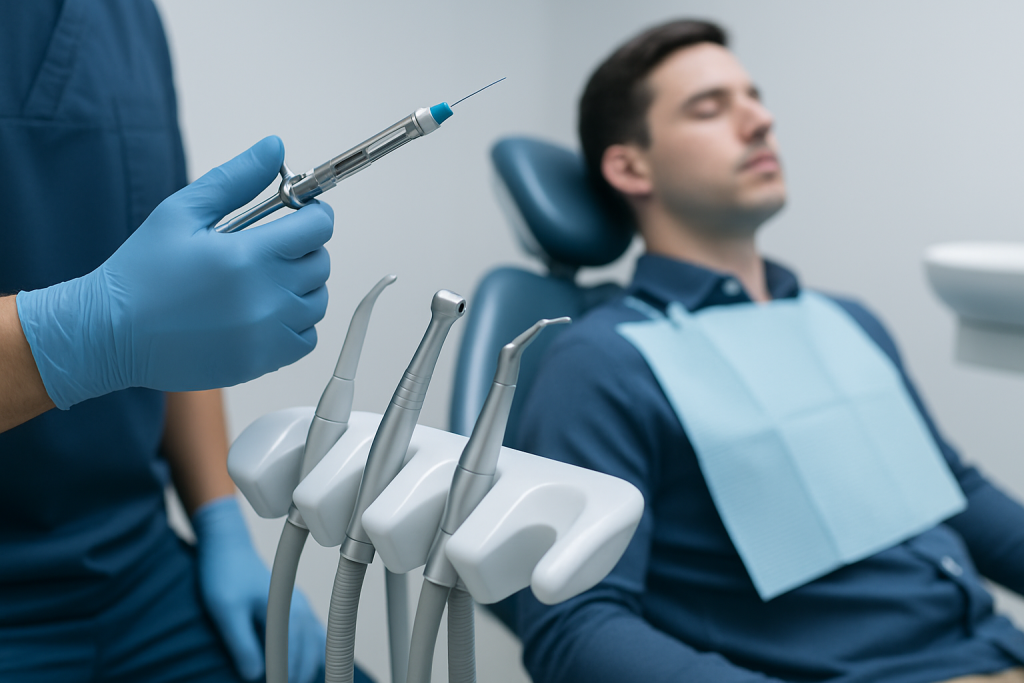
Several factors influence how long numbness continues after a dental injection. The first is the type of local anesthetic used. Some are shorter-acting, while others are designed to provide a longer period of pain control during and after a procedure.
Another important factor is whether the injection contains epinephrine. This medicine narrows nearby blood vessels, which can slow the body’s removal of the anesthetic and extend numbness. This is common in dentistry because it can improve pain control and reduce bleeding during treatment.
The injection site also matters. Areas supplied by larger nerves, especially in the lower jaw, can stay numb longer. Individual factors such as body chemistry, circulation, liver function, anxiety level, and the presence of inflammation in the area may also change how the anesthetic behaves.
- Type of local anesthetic used
- Presence or absence of epinephrine
- Location of the tooth or tissue treated
- Amount of anesthetic required for the procedure
- Individual metabolism and health factors
What is normal after a numbing injection

Most temporary effects after a dental numbing injection are expected and not a sign of harm. The cheek, lip, tongue, or gum may feel thick, heavy, clumsy, or “asleep.” Speaking, smiling, drinking from a cup, or controlling saliva may feel awkward until sensation returns.
Some people notice mild soreness where the needle entered, a small bruise, or jaw tenderness from keeping the mouth open during treatment. Children and adults can accidentally bite a numb lip or cheek, which may later cause swelling or a sore area once the anesthesia wears off.
As feeling comes back, tingling or a pins-and-needles sensation can happen. This is often part of normal nerve recovery after the anesthetic wears off. If symptoms are gradually improving, that is usually reassuring.
When the dental issue itself is causing pain, the return of sensation may reveal discomfort from the underlying tooth or gum problem. For example, a person being treated for a tooth abscess may notice pain once the anesthetic fades, even if the numbness itself wore off normally.
When prolonged numbness may need medical review
In most cases, prolonged numbness is still temporary and improves without lasting problems. However, numbness that continues much longer than expected deserves attention, especially if there is no clear sign that it is slowly fading. Persistent altered sensation can occasionally happen because a nerve was irritated by the injection, by swelling, or by the dental condition itself.
People should contact their dentist or doctor if numbness lasts well beyond the time they were told to expect, especially if it is still unchanged the next day. Medical review is also important when numbness is accompanied by increasing pain, marked swelling, pus, fever, or difficulty opening the mouth, because these can suggest infection or another problem needing treatment.
Urgent care is needed right away for trouble breathing, widespread rash, faintness, rapidly expanding swelling, or symptoms of a serious allergic reaction. Although this is uncommon, it requires prompt assessment. Numbness with facial weakness, severe headache, confusion, or symptoms affecting one side of the body should also be evaluated urgently, since not all numbness after a procedure is caused by the anesthetic alone.
How doctors and dentists evaluate persistent numbness
If numbness lasts longer than expected, a clinician usually begins by asking detailed questions about the timing. They may ask when the injection was given, which tooth or area was treated, what medicine was used if known, and whether the feeling is improving, staying the same, or getting worse. This timeline helps separate a normal prolonged effect from a possible complication.
The examination often includes checking sensation in the lip, tongue, cheek, and gums, looking for swelling, bruising, bite injury, signs of infection, or weakness in facial movement. The dentist may also assess the treated tooth and surrounding tissues. If nerve irritation is suspected, the clinician may map the area of numbness and monitor recovery over time.
In some cases, dental imaging is needed to look for infection, inflammation, or another structural cause. If the main concern is ongoing dental disease rather than the anesthetic itself, treatment might focus on the source problem, such as root canal treatment or tooth extraction when clinically appropriate.
If symptoms suggest a broader neurological or medical issue, referral for further evaluation may be recommended. The goal is to confirm that the symptoms fit the expected recovery pattern and to identify less common causes that need prompt care.
Treatment, self-care, and what to avoid while numb
There is usually no special treatment needed for routine post-procedure numbness. The safest approach is to protect the numb area until normal feeling returns. Hot drinks, chewing, and crunchy foods are best avoided because it is easier to burn or bite the lip, tongue, or cheek without noticing.
Soft foods and room-temperature drinks are often easier to manage. Good oral hygiene should continue unless the dentist has advised otherwise, but brushing should be gentle around a freshly treated area. If there is mild injection-site soreness or normal discomfort after dental work, the dentist may recommend standard pain relief options appropriate for that person.
People should not try to rub, pinch, or repeatedly test the numb area, as this can worsen irritation. If swelling, severe pain, or persistent symptoms raise concern, follow-up care is more useful than home experiments. In some situations, the underlying dental problem may need treatment such as dental implant replacement after extraction or gum treatment if gum disease is contributing to symptoms.
When to seek medical care
Most numbness after a dental injection fades as expected and is not dangerous. Still, people should seek medical or dental advice if numbness lasts much longer than they were told, if it is not gradually improving, or if the area becomes increasingly painful. Ongoing numbness of the tongue, lip, or chin can be especially important to review because it may reflect irritation of a sensory nerve.
Prompt assessment is also sensible if there is significant swelling, fever, a bad taste with drainage, difficulty swallowing, or trouble opening the mouth. These symptoms may point to an infection that needs professional treatment. A related condition such as gum disease can also contribute to ongoing oral symptoms and should be addressed.
Emergency care is needed for breathing difficulty, severe allergic symptoms, spreading facial swelling, or new neurological symptoms such as facial droop, confusion, or limb weakness. Near the end of the care pathway, some patients choose assessment in specialized centers; Acibadem International’s multidisciplinary specialists and JCI-accredited hospitals diagnose and treat dental and oral health conditions for international patients.
Frequently asked questions
How long does novocaine last after a filling?
After a routine filling, the strongest numbness often lasts about 1 to 3 hours. The lip, cheek, or tongue may still feel heavy or tingly for several more hours, especially if the lower jaw was numbed or epinephrine was used.
Why is my lip still numb hours after the dentist?
This is often a normal effect of local anesthesia, particularly after injections in the lower jaw. If the numbness is gradually improving, that is usually reassuring, but it should be checked if it persists much longer than expected or does not change at all.
Can novocaine last all day?
A lingering altered sensation can sometimes last much of the day, depending on the anesthetic and the treatment area. However, complete dense numbness for an unusually long time should be discussed with a dentist or doctor.
Is tingling normal when the numbness wears off?
Yes, mild tingling or pins-and-needles can happen as sensation returns. It is commonly part of the normal recovery process after a local anesthetic wears off.
What should be avoided while still numb?
It is best to avoid chewing, hot drinks, and biting the inside of the cheek or lip until feeling returns. Soft foods and careful sipping can help prevent accidental injury.
When should numbness after dental anesthesia be treated as urgent?
Urgent assessment is needed for trouble breathing, severe rash, rapidly worsening swelling, or symptoms such as facial weakness or confusion. These are not typical effects of routine dental anesthesia and should be evaluated promptly.
References
- American Dental Association
- National Institute of Dental and Craniofacial Research
- Mayo Clinic
- Merck Manual
- Cleveland Clinic
This article is for general information only and is not a substitute for professional medical advice. Please consult a qualified doctor about your individual situation.
Explore treatments in Turkey — costs, top hospitals & a free quote
JCI-accredited · board-certified surgeons · reply within 24h
Add us as a Preferred Source to see more of our trusted health content across Google Search, AI Overviews and Discover.