How Long Does Radiation Take: How It Works, Results and What to Expect

Most radiation therapy visits last 10–30 minutes, including positioning and safety checks. A course of external-beam radiation may be given once, over a few days, or over several weeks.
Key Takeaways
- Most radiation therapy visits last 10–30 minutes, including positioning and safety checks.
- A course of external-beam radiation may be given once, over a few days, or over several weeks.
- Planning scans and treatment preparation often take longer than daily radiation sessions.
- Side effects commonly build gradually during treatment and may continue briefly after it ends.
- The care team can explain the expected schedule, benefits, and likely side effects for an individual treatment plan.
Radiation treatment appointments usually take about 10–30 minutes, although the time when radiation is actually delivered is often only a few minutes. The full treatment course can range from one session to several weeks, depending on the type of cancer, the treatment goal, and the radiation technique used.
How long does radiation take?
For many people, a radiation therapy appointment takes around 10–30 minutes from arrival in the treatment room to completion. The radiation itself is usually delivered in only a few minutes. Much of each visit is used to position the body precisely, review imaging when needed, and make sure treatment is delivered accurately.
The total length of a radiation course varies widely. Some treatments are completed in a single visit, while others are delivered daily on weekdays for one to eight weeks. Shorter schedules are now possible for some cancers because modern planning and delivery methods can target radiation more precisely. The most appropriate timetable depends on the cancer type, location, stage, previous treatments, overall health, and whether the aim is cure, reducing recurrence risk, or symptom relief.
Before treatment begins, there is also a preparation period. This may include a consultation, a planning CT scan or other imaging, contouring of the treatment area, and creation of an individualized radiation plan. These steps are important for safety and accuracy and may take several days to a few weeks.
How radiation therapy works
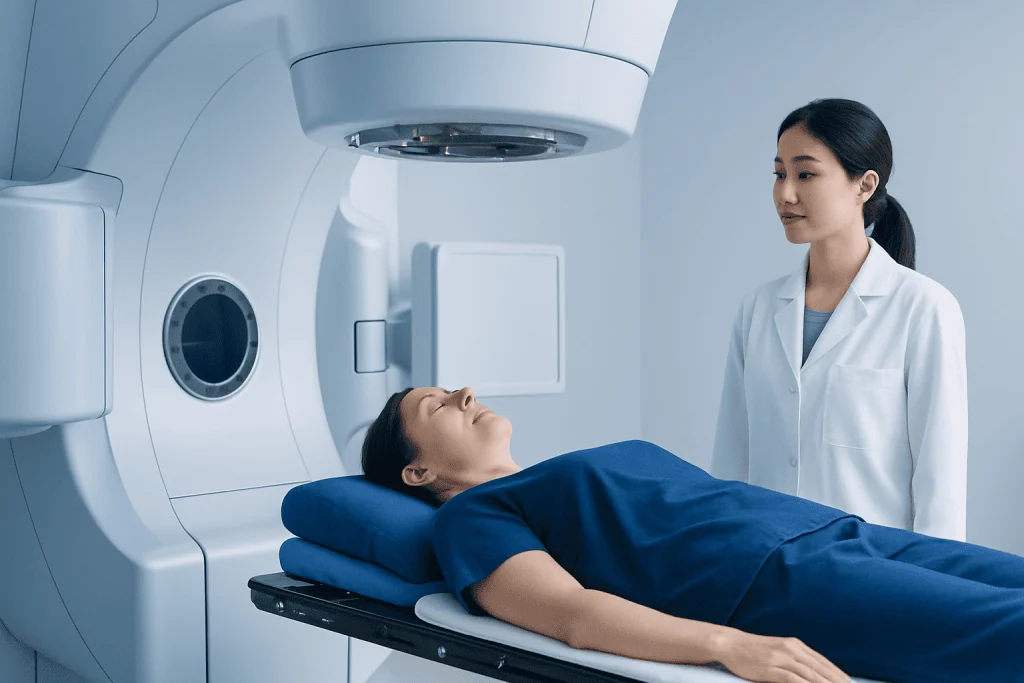
Radiation therapy uses high-energy beams or radioactive material to damage the DNA inside cancer cells. Cancer cells are often less able than healthy cells to repair this damage, so they may stop dividing and gradually die. The body then clears damaged cells over time.
External-beam radiation is the most common form. A machine outside the body directs carefully shaped beams toward the treatment area. The machine does not touch the person and treatment is painless while it is being given. Depending on the clinical situation, the team may use techniques such as image-guided radiation therapy, intensity-modulated radiation therapy, stereotactic radiation, or proton therapy.
Internal radiation, also called brachytherapy, places a radiation source in or near the tumor for a planned period. Systemic radioactive medicines may be used for certain cancers as well. These approaches have different schedules, safety instructions, and recovery expectations from external-beam treatment.
Who may be a candidate for radiation therapy

Radiation therapy may be used alone or alongside surgery, chemotherapy, immunotherapy, hormone therapy, or targeted medicines. It can be given before surgery to shrink a tumor, after surgery to reduce the chance of cancer returning in a specific area, or as the main treatment when surgery is not suitable.
It may also be used to manage symptoms caused by cancer, such as pain, bleeding, pressure, or difficulty swallowing. In this setting, treatment is often delivered over a shorter schedule, with the goal of improving comfort and daily functioning.
A radiation oncologist assesses whether radiation is suitable by reviewing the diagnosis, pathology results, scans, prior treatments, medical history, and personal priorities. The team also considers whether nearby healthy organs can be protected adequately. A previous course of radiation does not always rule out further treatment, but it requires careful specialist planning.
People considering cancer treatment may benefit from understanding the broader cancer care pathway, including how surgery, systemic treatments, and radiation can be coordinated.
What happens step by step
Consultation and planning: The radiation oncologist explains the purpose of treatment, alternatives, expected benefits, and possible side effects. A simulation appointment follows, commonly using CT imaging to map the treatment area. Small skin marks, temporary ink marks, or tiny permanent dots may be used as positioning guides. For some body areas, an immobilization device such as a mask, cushion, or body mold helps reproduce the same position each day.
Plan development and checks: Radiation oncologists, medical physicists, and dosimetrists create and verify a plan that aims to deliver the prescribed dose to the target while limiting exposure to nearby healthy tissue. This work takes place between simulation and the first session.
Daily treatment visits: At each appointment, radiation therapists help position the patient on the treatment table. Imaging may be performed before treatment to confirm alignment. The person is alone in the room during beam delivery, but the team watches and communicates through cameras and an intercom. The machine may rotate or make sounds, but it does not cause pain.
Review appointments: During a multi-week course, the care team usually checks in regularly to discuss symptoms, skin care, nutrition, medicines, and practical concerns. Detailed information about radiotherapy can help patients prepare questions for these visits.
Results, benefits, and recovery timeline
Radiation does not usually produce an immediate visible result. Cancer cells may continue to be damaged after the last session, and tumors can take weeks or months to shrink on imaging. Follow-up scans and examinations are scheduled according to the cancer type and treatment goal, so the team can assess response at the right time.
Benefits may include tumor control, a lower likelihood of local recurrence after other treatment, or relief of cancer-related symptoms. For symptom-focused radiation, improvement can sometimes begin within days to a few weeks, although timing differs between individuals and symptoms.
Many people can continue some usual activities during external-beam radiation, but fatigue may increase gradually. Side effects often become more noticeable after the first couple of weeks of treatment, may peak near the end or shortly afterward, and commonly improve over the following weeks. The exact recovery timeline depends largely on the body area treated and the total treatment plan.
Rest, balanced nutrition, hydration, gentle activity when tolerated, and attending review visits can support recovery. The care team should be told about any symptom that interferes with eating, drinking, sleep, mobility, or normal daily life, as supportive treatments are often available.
Possible side effects and how they are managed
Radiation side effects are usually limited to the area being treated. Common short-term effects include tiredness, skin redness or sensitivity, temporary hair loss in the treated area, and inflammation in nearby tissues. For example, treatment to the head and neck can affect the mouth or throat, while pelvic treatment can affect the bowel or bladder.
Not everyone has the same side effects, and many are manageable with early support. The radiation team may recommend gentle skin care, changes to diet, mouth care, activity adjustments, pain relief, or medicines for nausea, bowel, urinary, or other symptoms. Patients should avoid applying creams, supplements, or home remedies to the treatment area without checking with the team.
Some side effects can occur months or years later, depending on the body part treated and the dose received. These may include tissue stiffness, changes in skin color or texture, bowel or bladder changes, fertility effects, or changes in function of an organ near the treatment field. Careful planning reduces risks, but cannot remove them entirely. The radiation oncologist can explain the relevant risks for an individual plan.
External-beam radiation does not make a person radioactive. It is generally safe to be around family members, including children and pregnant people, after each session. Specific precautions may be needed with some internal or systemic radioactive treatments, and the care team will provide clear instructions.
When to seek medical care
Patients should contact their radiation oncology team promptly if side effects are worsening, if pain is not controlled, or if symptoms make it difficult to eat, drink, take prescribed medicines, sleep, or manage daily activities. The team can assess whether treatment-related support, a medication adjustment, or an earlier review is needed.
Urgent medical care is appropriate for severe shortness of breath, chest pain, confusion, fainting, sudden weakness or numbness, uncontrolled bleeding, a high fever, severe dehydration, or an allergic reaction. These symptoms may not always be caused by radiation, but they should be assessed without delay.
Follow-up remains important after treatment ends, even when a person feels well. Acibadem International’s multidisciplinary specialists and JCI-accredited hospitals support international patients with coordinated diagnosis and treatment planning, including radiation care and follow-up.
Frequently asked questions
How long is each radiation treatment session?
Most external-beam radiation appointments last about 10–30 minutes. Positioning, imaging, and safety checks take up much of this time, while the actual radiation delivery is often only a few minutes. The first treatment visit may take longer than later sessions.
How many weeks does radiation therapy usually last?
A radiation course may last from one day to several weeks. Some people receive one or a few treatments, while others attend on weekdays for three to eight weeks. The schedule is individualized according to the cancer, treatment goal, and radiation method.
Does radiation hurt during treatment?
External-beam radiation is not felt while the machine is delivering treatment. The person may need to lie still in a particular position, which can be uncomfortable for some people, but it should not be painful. The treatment team can help with positioning concerns.
How soon will radiation side effects start?
Some side effects can begin during the first days of treatment, but many develop gradually over one to three weeks. They may continue or briefly worsen after the final session before improving. The timing and type of effects depend on the area treated.
Can a person work while receiving radiation therapy?
Many people can work during radiation treatment, especially with shorter daily visits, but fatigue and other side effects may affect schedules. Flexible work arrangements, rest periods, and practical support can be helpful. A doctor can advise based on the treatment area and expected symptoms.
Is a person radioactive after external radiation therapy?
No. External-beam radiation does not leave radiation in the body, so a person is not radioactive after treatment. Internal radiation and radioactive medicines can involve temporary precautions, which the treating team will explain clearly.
References
- National Cancer Institute
- American Cancer Society
- American Society for Radiation Oncology
- Cancer Research UK
- World Health Organization
This article is for general information only and is not a substitute for professional medical advice. Please consult a qualified doctor about your individual situation.
Oncology care in Turkey — second opinion and treatment plan
JCI-accredited · board-certified surgeons · reply within 24h
Add us as a Preferred Source to see more of our trusted health content across Google Search, AI Overviews and Discover.